
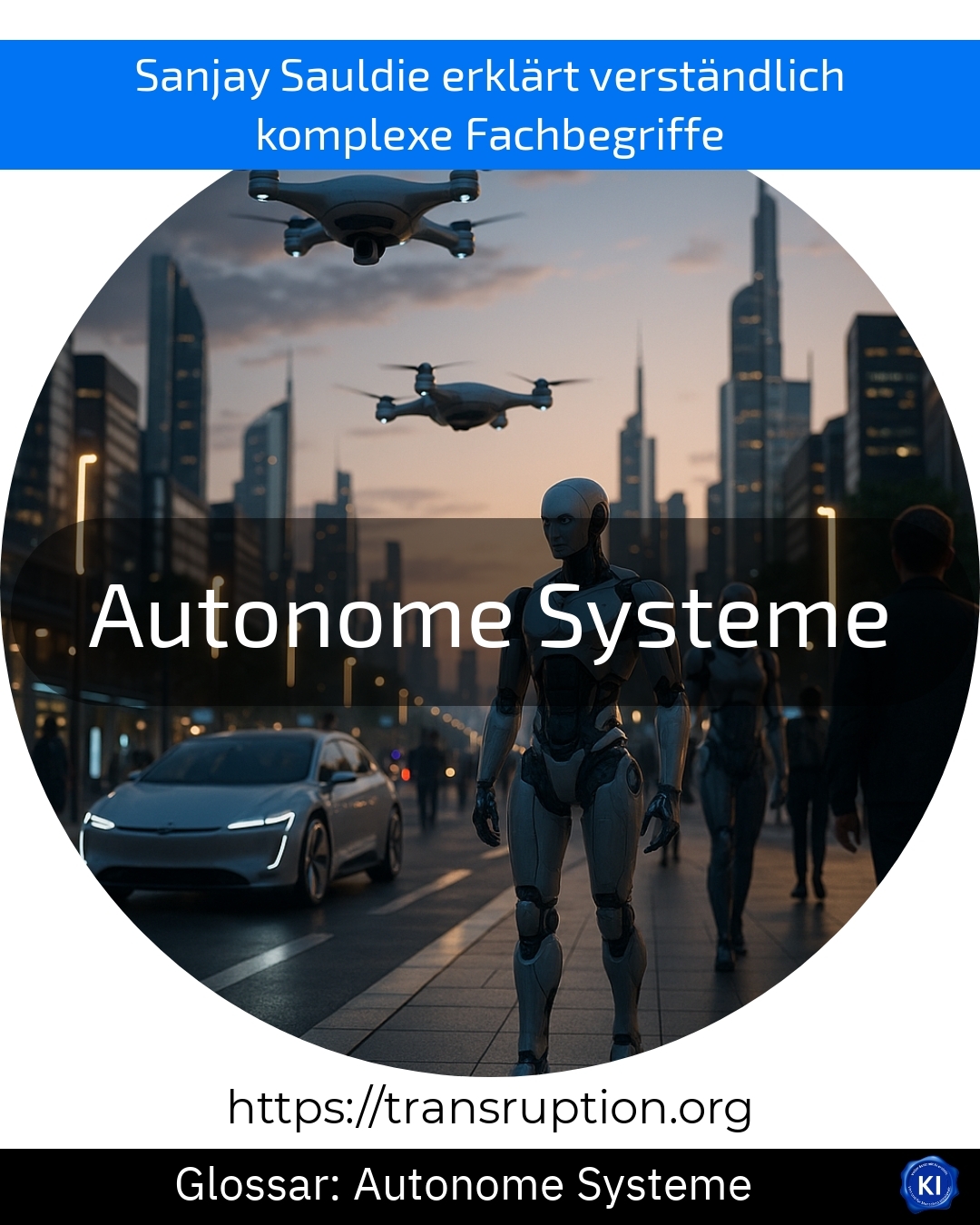
The term „autonomous systems“ is particularly at home in the fields of automation, artificial intelligence and the Internet of Things. It describes technical systems that perform tasks largely autonomously and without direct human control. This means that autonomous systems make their own decisions, react flexibly to changes and often learn over time.
A classic example of this is autonomous driving. Modern cars are now equipped with sensors, cameras, and special computers. They can brake autonomously, stay in their lane, or even drive completely from A to B without human intervention. The major advantage here is that processes can become faster, safer, and more efficient.
Autonomous systems are also often used in industry. Robots can transport goods or control machines independently. They recognise obstacles and automatically adapt their behaviour.
Autonomous systems are therefore an important building block of digital transformation. They relieve people of routine tasks, save time and reduce costs in the long term. Companies that rely on such technologies can react more flexibly to new challenges and gain a competitive advantage.











 Deutsch
  English (UK)