
Approximate Bayesian Computation originates from the fields of Artificial Intelligence, Big Data and Smart Data, and Digital Transformation. The term describes a method for working with very large or complex datasets where traditional statistical methods reach their limits.
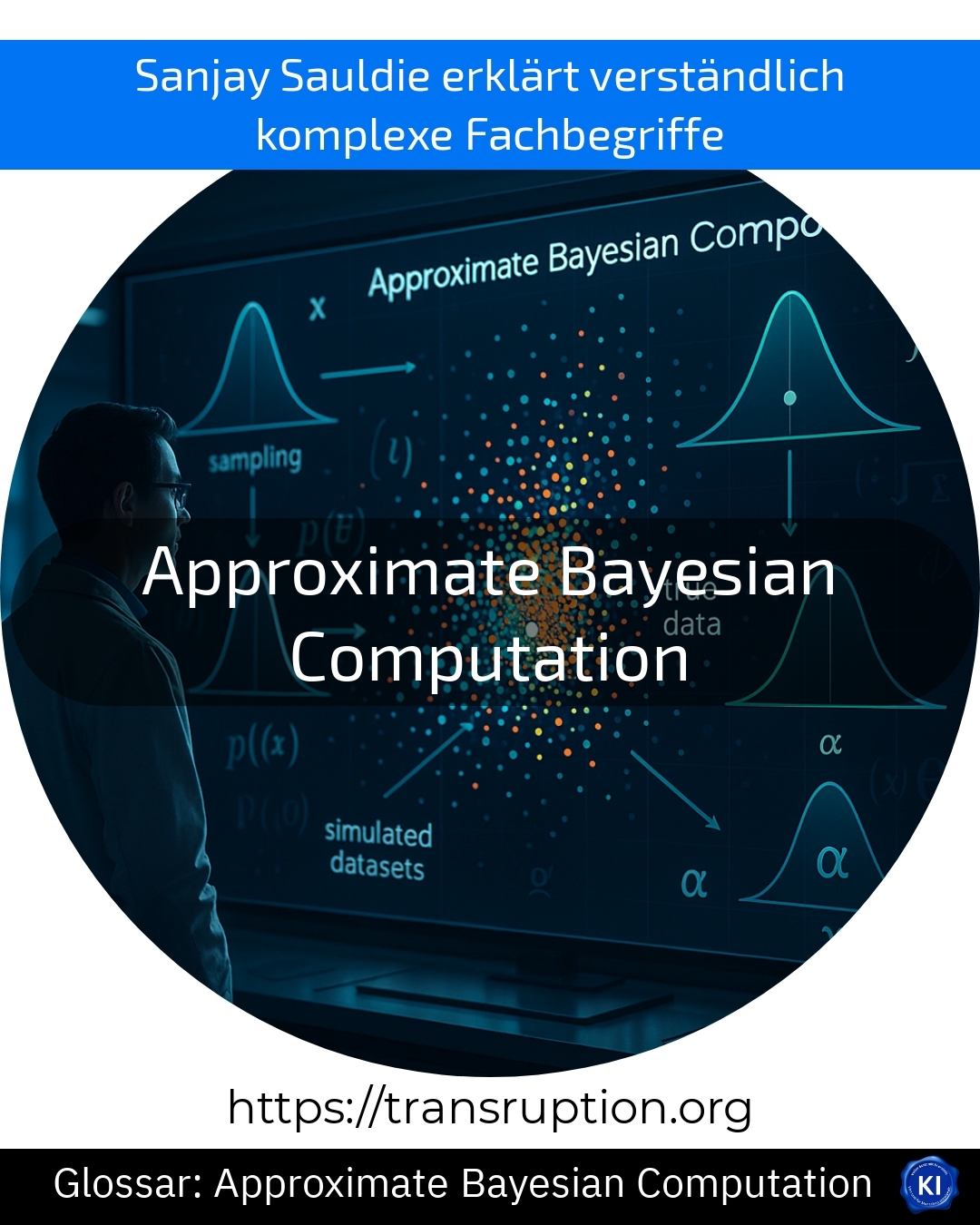
Imagine you want to find out what the most important factors for a successful marketing campaign are, based on customer data. However, there are so many different influences and so much data that it's impossible to calculate all possibilities step by step. This is where Approximate Bayesian Computation helps: instead of calculating everything precisely, the method makes clever approximations. It generates many random example scenarios, checks which ones fit the real observations, and estimates the most important factors from them.
An everyday example could be an online shop: To find out which products will sell well in the near future, the system uses Approximate Bayesian Computation to better predict trends with the help of simulations and existing data - even if the data is huge and confusing.
This allows Approximate Bayesian Computation to rapidly obtain well-founded analyses for complex questions without relying on complete, but often overly intricate, calculations.











 Deutsch
  English (UK)