
Do you actually know why some organisations effortlessly keep pace with technological change, while others fall behind and lose touch despite enormous investments in modern systems?
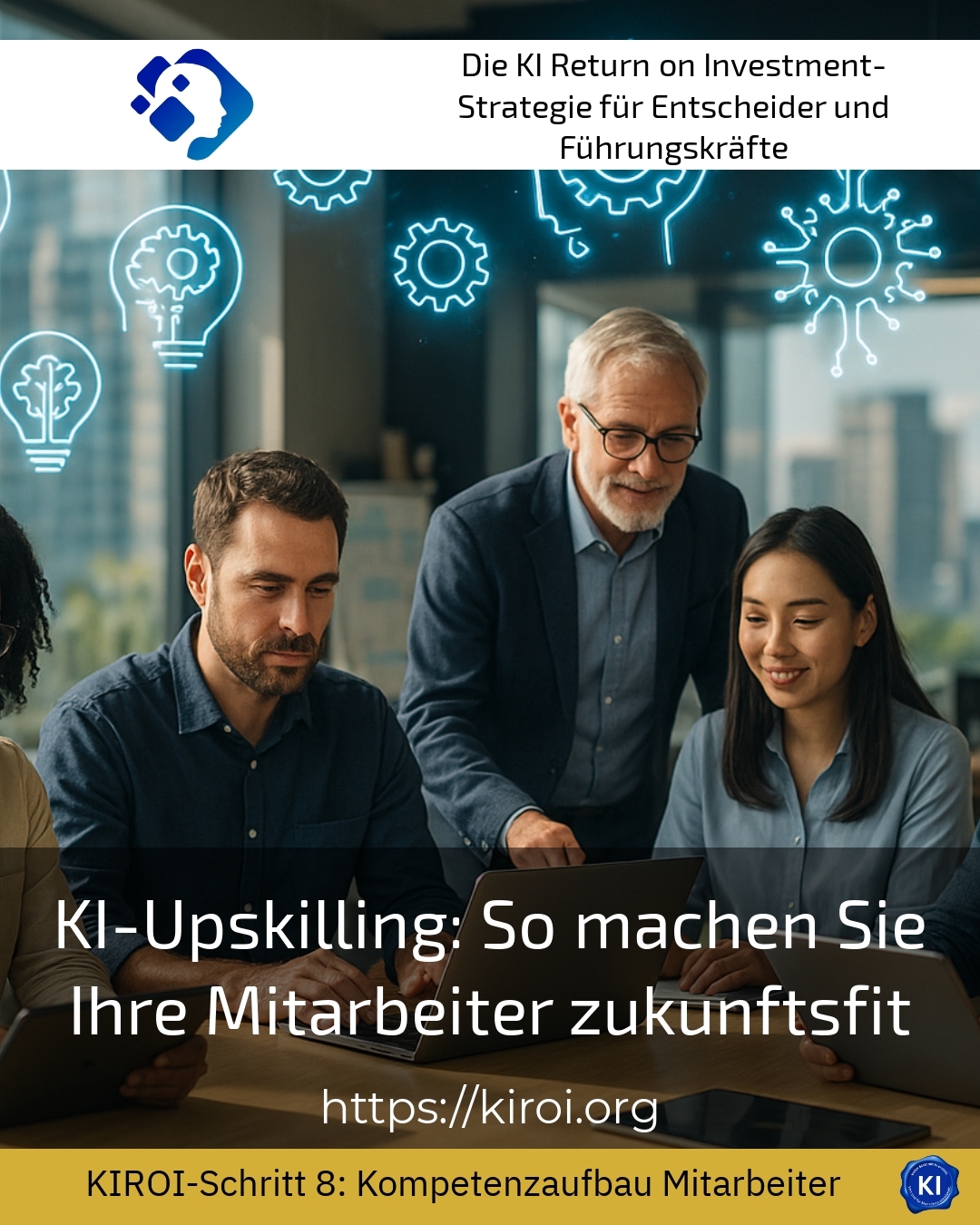
The answer lies not in the technology itself, but in the people who are expected to use and develop it every day. AI Upskilling represents the decisive lever for preparing workforces for the demands of a digitised working world. Clients frequently report that although they have implemented state-of-the-art tools, the anticipated increases in productivity fail to materialise. The reason is usually the same: the human component was underestimated. Transruptions Coaching helps companies systematically close this exact gap and enables sustainable competence development.
Why AI upskilling has become indispensable today
The speed of technological change has reached an unprecedented pace in recent years. Many leaders still underestimate how fundamentally job profiles will change. At the same time, the pressure on organisations to remain competitive is growing. Therefore, systematic skills development is steadily gaining in importance. However, it is not enough to offer isolated training courses. Instead, a holistic concept for empowering the entire workforce is needed.
The manufacturing of high-quality products today requires completely different qualifications than just a few years ago. Machine operators are increasingly working together with intelligent assistance systems. Quality inspectors use image-recognition algorithms for defect detection. Logistics specialists optimise goods flows with the help of predictive analysis tools. These examples illustrate that practically every area of work is affected. Anyone who does not prepare their employees in good time risks losses in productivity and frustration.
Furthermore, an interesting phenomenon can be observed: organisations with a high level of digital maturity invest disproportionately in human capabilities. They have realised that technology alone does not generate value creation. It is only the combination of high-performing systems and competent people that unlocks the full potential. Fortunately, this insight is gaining ground increasingly.
Strategic approaches to sustainable AI upskilling in the workplace
A successful upskilling strategy always begins with an honest inventory of existing competencies. In doing so, managers should not only consider technical skills, but also assess the willingness to change. Some employees enthusiastically welcome new technologies, whilst others react sceptically. Both groups require different forms of support in order to reach their full potential.
The development of internal multipliers has proven particularly successful. These so-called champions act as bridge-builders between technology and the workforce. They speak the language of their colleagues and can help to reduce initial hurdles. In practice, for example, they accompany the introduction of new analysis tools in production. Alternatively, they assist with the integration of intelligent planning systems in purchasing.
Best practice with a AIROI customer
A medium-sized manufacturer of precision components faced the challenge of preparing its workforce for networked manufacturing processes. The management team had already invested considerable sums in modern control systems. However, the hoped-for efficiency gains initially failed to materialise. The employees barely used the new functions and continued to work largely as they always had. As part of the transruption support process, a three-stage qualification programme was developed. First, all employees were given a basic understanding of data-driven decision-making processes. Subsequently, department-specific advanced modules were offered that related directly to the respective work processes. Finally, the company established a peer-learning system in which experienced employees passed on their knowledge. After nine months, the utilisation rate of the intelligent functions had tripled. The scrap rate fell measurably because quality problems were identified earlier. Particularly gratifying was the increased job satisfaction in the departments concerned.
In addition, the establishment of experimental spaces is recommended, in which employees can try out new technologies without risk. These so-called sandbox environments significantly reduce the fear of making mistakes. At the same time, they promote playful learning and creative problem-solving. For example, a plant manufacturer uses virtual simulations to train complex maintenance scenarios. An automotive supplier enables its planners to experiment with optimisation algorithms in a protected test environment.
Leaders as Pioneers of Transformation
The role of leaders in qualification initiatives can hardly be overstated. Through their behaviour, they significantly shape the learning culture of their teams. When superiors actively learn and develop themselves, employees frequently follow this example willingly. Conversely, sceptical managers can block entire transformation projects.
That is why effective AI upskilling ideally starts at management level. Team leaders and department heads need to understand the potential offered by new technologies. They should be in a position to formulate realistic expectations and motivate their teams accordingly. For example, a production manager in mechanical engineering can demonstrate how predictive maintenance reduces unplanned downtime. A logistics manager can show how intelligent route planning lowers transport costs.
Furthermore, leaders must learn to deal constructively with resistance. Not every employee will immediately welcome changes. Some fear the loss of their job or their previous expertise. These fears are understandable and should be taken seriously. Transruption coaching supports leaders in conducting such conversations with empathy and in a goal-oriented manner.
Practical implementation in different functional areas
The specific design of qualification measures varies considerably depending on the field of activity. In maintenance, for example, skills in data interpretation are becoming much more important. Technicians need to understand which sensor data indicate impending failures. They should be able to read dashboards and derive recommendations for action. At the same time, traditional craftsmanship remains indispensable, because repairs are still carried out by people.
The requirements profile in purchasing is also undergoing fundamental changes. Modern procurement systems analyse market data in real time and generate automated purchase requisitions. This does not render buyers obsolete, but their tasks are shifting. They are focusing increasingly on strategic supplier relationships and exceptional situations. To do this, they need new analytical skills and a changed self-image.
Profound changes are also becoming apparent in sales. Customer analysis tools identify sales opportunities and forecast purchase probabilities. As a result, sales representatives can deploy their time more efficiently. However, they must learn to deal productively with such recommendation systems. For example, an outside sales representative in the machine tool trade uses predictive models to prioritise client visits. An account manager in component sales uses cluster analyses to identify cross-selling potentials.
Best practice with a AIROI customer
An internationally active manufacturer of industrial valves wanted to transition its sales team to data-driven working methods. The previous way of working was heavily based on empirical knowledge and personal customer relationships. Many long-standing sales employees were sceptical about the new analysis tools. They feared that their expertise would be devalued and that algorithms would pre-empt their decisions. As part of the transruptions support process, a workshop format was developed that systematically linked empirical knowledge and data analysis. The sales professionals learned to underpin their intuition with objective key performance indicators. They experienced how analysis tools frequently confirmed their own assessments and provided additional insights. This experience effectively broke down resistance because the employees felt that their expertise was still in demand. At the same time, they unlocked new potentials that would have remained hidden from them without data support. The revenue per sales employee increased significantly within a year.
Designing learning formats for diverse needs
The selection of suitable learning formats significantly influences the success of training programmes. Traditional classroom training is well-suited for imparting basic knowledge and sharing experience. However, it is difficult to release production workers for multi-day seminars. Therefore, flexible formats such as microlearning and work-integrated training are gaining in importance.
For example, a production manager in the electrical industry uses short instructional videos that can be accessed directly on the shop floor terminal. The content lasts only a few minutes in each case and explains specific functions of the production system. A quality inspector in automotive manufacturing completes interactive exercises on image analysis software at their workstation. A dispatcher in wholesale training on new planning algorithms in simulated scenarios.
Formats that establish a direct practical relevance are particularly effective. Learners should be able to apply new skills as directly as possible. The shorter the time span between acquiring knowledge and practical use, the more sustainable the anchoring [1]. This principle of transfer-oriented qualification forms a cornerstone of successful upskilling programmes.
Performance measurement and continuous improvement
Without systematic measurement of success, training programmes remain piecemeal. Organisations should define from the outset what results they want to achieve. A combination of quantitative and qualitative key performance indicators is recommended here. Pure participant numbers or completed learning hours say little about the actual skills acquired.
Measurements of actual behavioural change in the workplace are more meaningful. Do employees use the new tools regularly and competently? Do they make better decisions than before? Do they solve problems faster or to a higher quality standard? For example, a plant manufacturer measures the reduction in unplanned downtime after the introduction of predictive maintenance skills. A component manufacturer tracks the improvement in sales forecasting accuracy.
In addition, feedback loops should be established to continuously improve programmes. Learners can provide valuable insights into which content was helpful and where there is potential for improvement [2]. This feedback should be systematically collected and evaluated. This creates learning organisations that are constantly evolving.
My AIROI Analysis
The systematic development of competencies for technology-supported working methods represents one of the most important success factors for organisations. My experience from numerous support projects shows that technological investments rarely deliver the hoped-for results without parallel staff development. The human component continues to be underestimated, even though it ultimately makes the difference between success and failure.
The combination of training and practical working experience seems particularly important to me. Programmes that impart knowledge abstractly often fail to achieve their effect. Instead, learners should be able to apply new skills directly in their day-to-day work. This focus on practical application clearly distinguishes successful initiatives from less successful ones.
Furthermore, I observe that the role of managers is often neglected. They significantly shape the learning culture of their teams and can either promote or block transformations. Therefore, in my consulting practice, I frequently begin with the management level before broader qualification measures are rolled out. This approach has proven successful many times over and leads to more sustainable results.
Finally, I would like to emphasise that competence development is not a one-off project, but rather an ongoing process. Technological development is continuously advancing, and with it, the requirements for employees are changing. Organisations that establish a culture of lifelong learning will be more successful in the long term than those that view qualification as a completed measure.
Further links from the text above:
[1] McKinsey: Building workforce skills at scale
[2] World Economic Forum: The Future of Jobs Report
For more information and if you have any questions, please contact Contact us or read more blog posts on the topic Artificial intelligence here.







 Deutsch
 English (UK)