
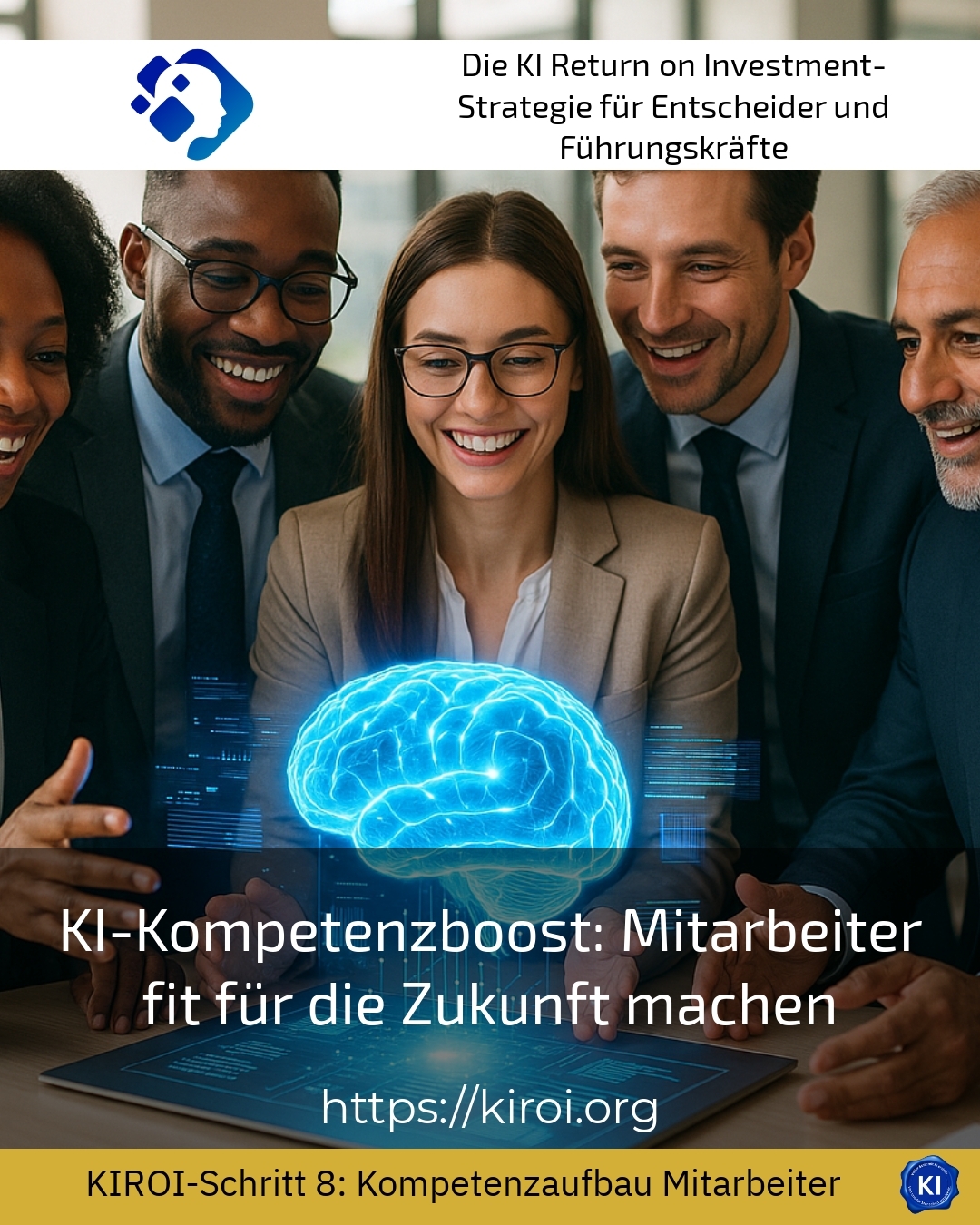
Imagine that your employees work every day with tools whose full potential they cannot exploit. This situation is akin to an orchestral musician who has only half-mastered their instrument. The AI skills boost: making employees fit for the future is therefore no longer an option, but an absolute necessity for any business that wants to remain competitive in the long term. Digital transformation is changing our working world at a pace that simply overwhelms many people. At the same time, enormous opportunities are arising for those organisations that systematically prepare their workforce for this new reality. In this article, you will discover how to empower your teams sustainably and which concrete steps make the biggest difference.
Why traditional training formats are no longer enough today
Traditional training concepts stem from an era when technological changes spanned years and decades. Today, however, new application possibilities emerge on a weekly basis. This acceleration makes continuous learning a prerequisite. One-off workshops are long no longer sufficient to ensure sustainable skills development. Instead, companies require integrated learning ecosystems that permeate everyday working life. Various factors play a decisive role in the success of such programmes.
First of all, leaders must understand that fear of new technologies often stems from ignorance. You can alleviate this uncertainty through transparent communication and practical experience. Furthermore, studies show that people learn best when they can apply what they have learned immediately [1]. Consequently, training sessions should be closely linked to real work projects. In addition, many managers report that after initial scepticism, their teams become enthusiastic advocates. However, this transformation does not happen by itself, but requires targeted guidance.
AI skills boost: preparing employees for the future through practical learning formats
Practical learning formats differ fundamentally from theoretical lectures. They place employees in real application situations. This creates valuable lightbulb moments that stick in the memory. A particularly effective approach is so-called learning by doing. Here, teams work on real problems under expert guidance. This method fosters not only technical understanding, but also critical thinking.
For example, sales teams can learn how intelligent systems assist with customer analysis. Marketing departments discover opportunities for automated content creation. And HR professionals learn how to make recruitment processes more efficient. All these use cases show that modern technologies do not pose a threat. Rather, they are tools that complement and enhance human capabilities.
Best practice with a AIROI customer
A medium-sized manufacturing enterprise faced the challenge of preparing its workforce for digital transformation. The executive board initially hired external trainers to impart theoretical knowledge. However, the results fell short of expectations because the employees were unable to apply what they had learned to their daily work routine. Consequently, the company decided to partner with transruptions coaching, which pursued a completely different approach. The consultants first analysed the actual work processes and identified concrete areas of application. They then developed tailor-made learning modules that focused directly on real projects. The employees worked in small groups on genuine tasks and received continuous feedback. After six months, remarkable changes were evident in the working methods and attitude of the teams. Acceptance of new technologies increased significantly and productivity improved measurably. Of particular note is that older employees also overcame their initial reluctance and became active shapers of change. This example illustrates just how important systematic support is in skills development.
The role of leaders in digital transformation
Leaders significantly shape whether change processes succeed or fail. Their attitude towards new technologies is directly transmitted to their teams. Therefore, successful skills development always begins at the management level. If managers themselves are uncertain, they cannot credibly motivate their employees. Conversely, convinced leaders act as strong role models and pathfinders.
Many leaders come to us with similar issues. They report feeling overwhelmed by the speed of technological development. Frequently, they also describe resistance within their teams that they are unable to overcome. Sometimes they even lack a fundamental understanding of the new possibilities themselves. In these situations, transruptions coaching offers valuable support for projects relating to digital advancement. The consultants provide impetus and create spaces for honest reflection. This is how sustainable changes emerge that grow from within.
Concrete measures for the AI skills boost: making employees fit for the future
The implementation of a successful competency programme requires a structured approach. First, you should determine the current level of knowledge of your workforce. Subsequently, you define clear learning objectives for different functional areas. After that, you select appropriate learning formats and content. Finally, you establish mechanisms for continuous improvement and adaptation.
A proven approach is the formation of internal competency groups. These consist of particularly interested and talented employees from all departments. They act as multipliers and first points of contact for their colleagues. In addition, regular lunch-and-learn sessions can promote informal learning. At these short events, employees share their experiences and discoveries. This creates a culture of shared learning and experimentation.
Best practice with a AIROI customer
A service company with several hundred employees wanted to modernise its customer support and make it more efficient. The management recognised that intelligent assistance systems could help process enquiries more quickly. However, this idea met with considerable concern and anxiety among the staff. Many feared that their jobs could be threatened by automation. In this situation, the company brought in external support from experienced consultants. These began by taking the employees' worries and concerns seriously and listening to them. They then developed a training programme that highlighted the benefits for each individual employee. The participants learned how the new tools could take over tedious routine tasks for them. As a result, they gained time for more complex and interesting activities that require human expertise. The employees understood that they were not to be replaced, but rather supported in their work. This realisation led to a turnaround in mood and a positive attitude towards the change. Today, the employees report higher job satisfaction and less stress in their day-to-day business.
Overcoming barriers and constructively using resistance
Change processes regularly encounter resistance, which can have various causes. Some employees fear for their professional future and relevance. Others have had bad experiences with previous transformation projects. Still others simply feel overwhelmed by the complexity of new systems. All these reactions are understandable and should be taken seriously.
However, resistance can also provide valuable insights into real problems and areas for improvement. Critical voices sometimes point out vulnerabilities that others miss. Therefore, it is advisable to actively seek out these perspectives and use them constructively. Open dialogue builds trust and encourages a willingness to help shape outcomes. Moreover, experience shows that former sceptics often become the most convinced advocates.
Individual learning paths for different types of employees
Not everyone learns in the same way and at the same pace. This realisation has far-reaching consequences for the design of competence programmes. While some employees grasp abstract concepts quickly, others need practical examples. Some prefer self-directed learning at their own pace and rhythm. Others benefit more from structured courses and personal guidance.
A successful programme takes these differences into account and offers various access routes. Video tutorials are suited for visual learners who want to follow complex processes. Interactive practice environments appeal to kinaesthetic learners who understand through trial and error. Written guides and documentation help those who like to read up on information and reflect. The combination of different formats maximises the reach and effectiveness of the entire programme.
Best practice with a AIROI customer
An internationally active trading company faced the task of training its employees at various locations simultaneously. The geographical distribution and different time zones made traditional face-to-face training practically impossible to organise. Furthermore, the employees spoke different languages and had diverse cultural backgrounds and learning traditions. With external support, the company therefore developed a hybrid learning platform that combined various formats. Short video modules conveyed the fundamental concepts in a clear and easily understandable way. Supplementary live sessions enabled direct exchange with experts and the asking of individual questions. Local study groups at the individual locations encouraged joint practice and the collegial exchange of experience. An internal certification system provided additional motivation for participants, making progress visible and measurable. After one year, over eighty percent of the workforce had successfully completed at least one foundational module. Feedback from participants was overwhelmingly positive, particularly emphasising the practical relevance of the content. This example demonstrates how flexible learning architectures can overcome even complex organisational challenges.
Long-term perspectives and sustainable embedding
One-off training measures quickly fizzle out if they are not systematically embedded. True success only becomes apparent in the long-term application of what has been learned. Therefore, companies must create structures that promote and enable continuous learning. This includes regular refreshers and deepening of the acquired knowledge. Equally important are opportunities to experiment without fear of making mistakes.
A learning organisation is characterised by its ability to adapt continuously. It encourages employees to ask questions and contribute new ideas. It also celebrates small successes and learns constructively from setbacks. This culture does not emerge overnight, but requires persistent development work. Leaders play a key role in this as role models and enablers.
The AI Skills Boost: Making Employees Fit for the Future as a Strategic Investment
Investments in skills development pay off multiple times over in the long run. Well-trained employees work more efficiently and make better decisions. They recognise opportunities more quickly and implement innovative ideas more successfully. Furthermore, their loyalty to the company increases when they feel valued and supported. These effects add up to significant competitive advantages over less agile competitors.
Research findings demonstrate the positive correlation between further training and corporate success [2]. Organisations that systematically invest in their employees achieve higher returns and grow more rapidly. They are also better positioned to attract and retain talented professionals. In times of skills shortages, this aspect is increasingly becoming the decisive success factor.
My AIROI Analysis
Equipping employees for the digital working world is not an isolated training task. Rather, it is a strategic challenge that affects and permeates the entire company. My analysis shows that successful organisations pursue a holistic approach that takes various dimensions into account. They combine formal training with informal learning in the workplace, thereby creating a diverse range of development opportunities.
The role of corporate culture in the acceptance of new technologies seems particularly important to me. Where openness and curiosity are fostered, transformation is achieved much more easily and sustainably. Where, on the other hand, fear and distrust dominate, even the best programmes encounter insurmountable obstacles. Therefore, I recommend that all those in charge first work on the cultural foundation and build trust.
Furthermore, experience from numerous projects shows that individual guidance makes all the difference. Standardised mass training sessions rarely achieve the desired depth and sustainability of change. Tailored programmes, on the other hand, which are customised to the specific needs of an organisation, have a significantly greater impact. In this regard, transruptions coaching acts as an experienced partner in the design and implementation of such initiatives.
In conclusion, I would like to emphasise that the time to act has now come. Technological development does not wait for hesitant decision-makers and their organisations. Those who invest in the skills development of their employees today are safeguarding their competitiveness and viability for tomorrow. The tools and methods are available, and experienced guides are ready to support you on this journey.
Further links from the text above:
[1] McKinsey: Building Workforce Skills at Scale
[2] World Economic Forum: The Future of Jobs Report
For more information and if you have any questions, please contact Contact us or read more blog posts on the topic Artificial intelligence here.








 Deutsch
  English (UK)