
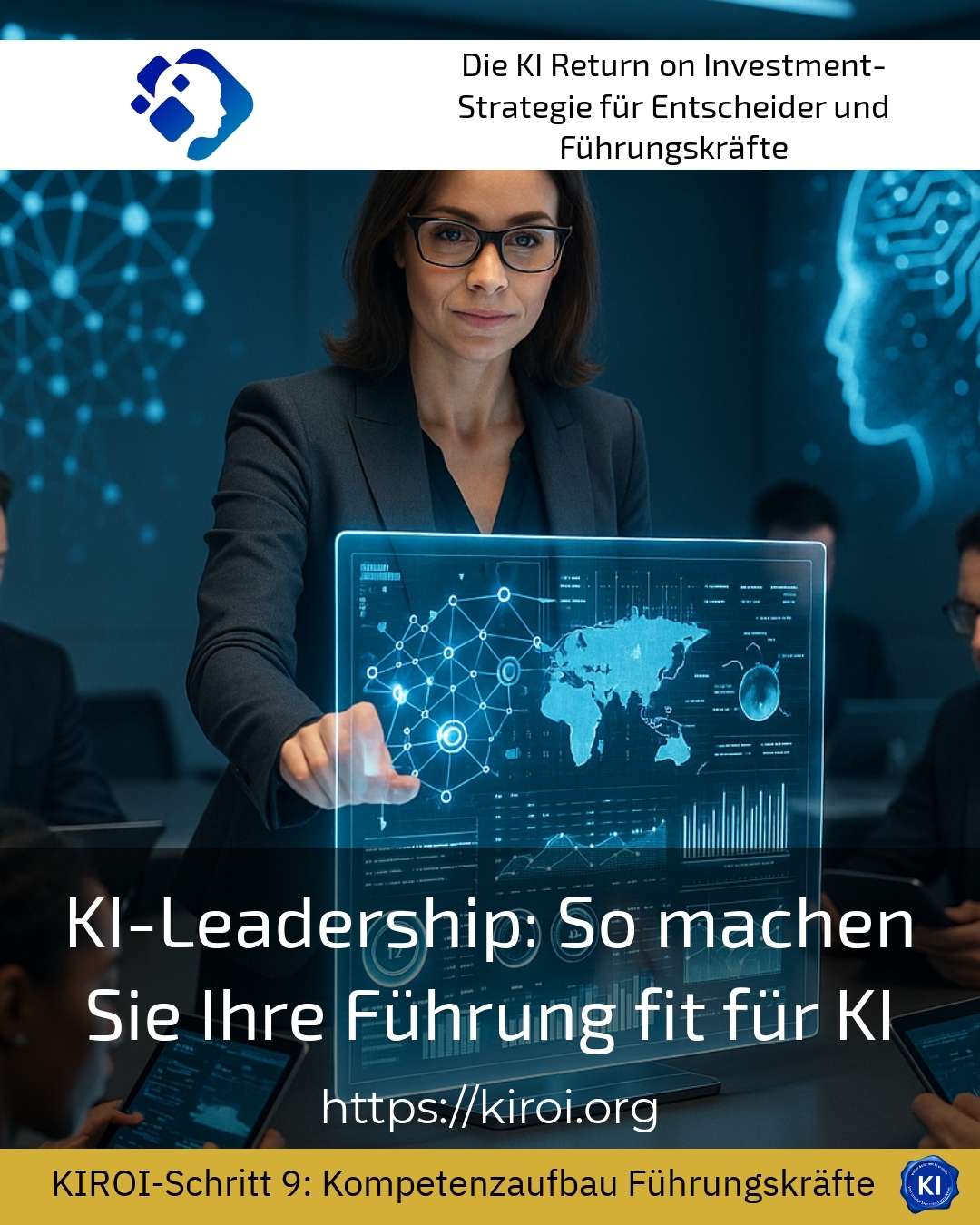
Have you ever wondered why some leaders navigate digital transformation effortlessly while others fail at seemingly simple technological changes? The answer lies not in technical expertise or extensive IT knowledge, but rather in a fundamentally altered attitude towards their own leadership role and the associated competencies. AI Leadership describes precisely this new form of corporate management that views intelligent systems not as a threat, but as a strategic partner. At a time when algorithmic decision-making tools have long since found their way into boardrooms and production plants, the ability to integrate these tools determines the success and failure of entire organisations. Leaders who are still hesitating today will find out tomorrow that their competitors have already built up decisive leads.
The fundamental transformation of management work by intelligent systems
The world of work is currently changing at a pace that is historically unprecedented. Leaders face the challenge of combining traditional management methods with modern technological capabilities. This combination initially requires a profound understanding of how intelligent systems function and what added value they can offer for daily work. In the field of human resources management, for example, algorithmic analysis tools are already supporting the identification of talent and the prediction of staff turnover. Leaders in the logistics industry use predictive systems to optimise supply chains and inventory [1]. In healthcare, too, intelligent diagnostic assistants accompany the work of chief physicians and clinic management in complex decision-making processes.
The real art lies in meaningfully integrating these technological possibilities into existing management structures. Many leaders report that they were initially unsure how to handle these new tools. This uncertainty is completely understandable and often marks the starting point of profound personal and professional development. In the financial sector, executive boards have recognised that algorithmic risk analyses do not replace their own expertise, but rather can extend it. Retail companies rely on intelligent forecasting systems to predict purchasing behaviour and adjust product ranges. Production managers in the automotive industry integrate predictive maintenance systems into their daily decision-making processes.
Best practice with a AIROI customer
A medium-sized mechanical engineering company faced the challenge of preparing its management level for the integration of intelligent systems. The executive board recognised early on that technical implementations alone would not be sufficient. Rather, a fundamental change in the leadership culture was required, which had to involve the entire management team. As part of transruption coaching, we accompanied the managers through this transformation process over a period of several months. First, we jointly analysed existing leadership competencies and identified areas for development. Subsequently, the participants developed individual learning pathways tailored to their specific needs. The exchange between the various hierarchy levels, which was systematically promoted during the coaching process, proved to be particularly valuable. The managers frequently reported a genuine shift in perspective that had a lasting impact on their view of technological change. Upon completion of the project, the company had achieved a significantly higher acceptance of intelligent systems throughout the organisation.
Developing AI Leadership as a Core Strategic Competence
The development of AI Leadership requires a systematic approach that goes far beyond one-off training measures. Managers must first understand the basic principles behind intelligent systems and how these can support their decision-making. This competence development ideally begins with an honest stocktake of their own strengths and areas for development. In the insurance sector, managers have recognised that claims forecasting can be made more precise through algorithmic support. Marketing directors in the consumer goods industry use intelligent customer segmentation for more targeted campaigns. HR managers in large corporations rely on automated initial analyses of application documents.
A key aspect of this is the ability to reflect on ethical issues when dealing with intelligent systems. Leaders bear the responsibility for ensuring that algorithmic decisions remain transparent and traceable. This responsibility requires a new understanding of leadership that takes technological and human aspects equally into account. Banks are implementing ethical guidelines for the use of creditworthiness assessments by intelligent systems. Hospitals are developing governance structures for handling diagnostic assistance systems. Retailers are establishing transparency standards for personalised pricing.
The role of emotional intelligence in the context of AI leadership
Interestingly, emotional intelligence is gaining importance in an increasingly technologised leadership environment. Leaders who possess pronounced empathetic skills are better able to guide their teams through change processes. These human qualities cannot be replaced by algorithms and therefore constitute a crucial competitive advantage. In the pharmaceutical industry, leaders guide their research teams in integrating intelligent molecule analyses. Headteachers support teaching staff in using adaptive learning systems for more individual lesson planning. Hotel managers lead their staff through the introduction of intelligent concierge systems.
The combination of technological affinity and human leadership skills often represents the greatest challenge. Many leaders tend to focus on either the technical or the human aspects. The true art, however, lies in integrating both dimensions into a cohesive leadership approach. Sales managers in the telecommunications industry combine intelligent customer analytics with the personal advisory skills of their teams. Production managers in the food industry link algorithmic quality control with the empirical knowledge of their employees. Editors-in-chief in media houses integrate intelligent trend analysis into editorial decision-making processes.
Best practice with a AIROI customer
An internationally active trading company was looking for ways to prepare its leadership culture for the requirements of an increasingly data-driven business world. The executive board had recognised that isolated technology projects were not bringing the desired success because the management level was not sufficiently involved. As part of our transruption coaching, we worked with the leadership team to develop a comprehensive strategy for skills development. The focus was not on technical training, but rather on developing a new leadership mindset. The participants learned how to guide their teams through change processes while simultaneously harnessing the opportunities offered by intelligent systems. Working on internal resistance and fears, which many managers experience in connection with technological change, was particularly important. Through regular reflection sessions and individual coaching sessions, these barriers were gradually broken down. By the end of the process, the managers had not only acquired new skills, but had also developed a changed attitude towards technological innovations.
Practical steps for strengthening your leadership skills
The development of AI Leadership does not follow a linear path, but requires continuous learning and adaptation. Leaders should begin by identifying their own touchpoints with intelligent systems. This inventory forms the basis for targeted development measures tailored to individual needs. Logistics companies rely on route optimisation through intelligent algorithms, which places new demands on fleet managers. Energy suppliers use predictive network analysis, which leaders must incorporate into their strategic planning. Architectural practices integrate generative design systems, which require new forms of team leadership.
An important step is to actively seek dialogue with other leaders who are managing similar challenges. This exchange of experience can provide valuable insights and help to identify one's own blind spots. Furthermore, it is advisable to regularly schedule time for the reflection of one's own leadership work. Advertising agencies are experimenting with intelligent creative assistants, which requires new leadership approaches in creative teams. Law firms use intelligent document analysis, which partners must integrate into their client advisory services. Construction companies rely on intelligent project planning, which presents site managers with new leadership challenges.
The importance of continuous further development for AI leadership
Technological development is progressing so rapidly that one-off training measures are no longer sufficient. Leaders must develop an attitude of lifelong learning that empowers them to keep pace with change. This willingness to learn should not be seen as a burden, but as an opportunity for personal development. In the field of management consultancy, partners use intelligent analytical tools for market and competitive analyses. Museums rely on intelligent visitor guidance, which demands new competencies from directors. Sports clubs analyse the performance data of their athletes using intelligent systems, which presents coaches with new challenges.
Integrating intelligent learning into everyday management requires conscious decisions regarding prioritisation. Many managers complain about a lack of time for professional development, even though this very investment promises the greatest long-term benefits. The solution often lies in embedding learning opportunities into daily work rather than viewing them as a separate activity. Tax advisory firms are automating routine tasks and need to upskill their staff for more complex advisory services. Real estate companies are using intelligent valuation models, which brokers must incorporate into their client consultations. Publishing houses are relying on intelligent editing systems, which commissioning editors must integrate into their publishing strategies.
My AIROI Analysis
The transformation into a leadership-competent personality in the context of intelligent systems is a multifaceted process that requires time, commitment and a willingness to self-reflect. My experience from numerous support projects shows that AI Leadership is not a matter of age or technical background, but rather a question of attitude. Leaders who are open to new ideas and willing to critically question their previous thought patterns often develop these competencies faster than expected. The AIROI approach helps to systematically identify the relevant development areas and derive targeted measures.
I consider the insight that technological competence alone is not enough to be particularly important. The true art lies in combining human leadership qualities with technological understanding to form an integrated competency. Leaders who succeed in achieving this integration become bridge-builders between traditional working methods and future-oriented approaches. Transruption coaching offers valuable support here, fostering individual strengths and addressing areas for development. Investing in one's own leadership competence pays off in the long term, not only for the organisation, but also for personal satisfaction and effectiveness as a leader.
Finally, I would like to emphasise that the path to modern leadership is not a sprint, but a marathon. Continuous further development should be seen as a natural part of leadership work. With the right support and a clear development plan, leaders can successfully master this transformation and guide their organisations into a promising future.
Further links from the text above:
[1] McKinsey: Supply Chain 4.0 and intelligent logistics optimisation
For more information and if you have any questions, please contact Contact us or read more blog posts on the topic Artificial intelligence here.








 Deutsch
  English (UK)