
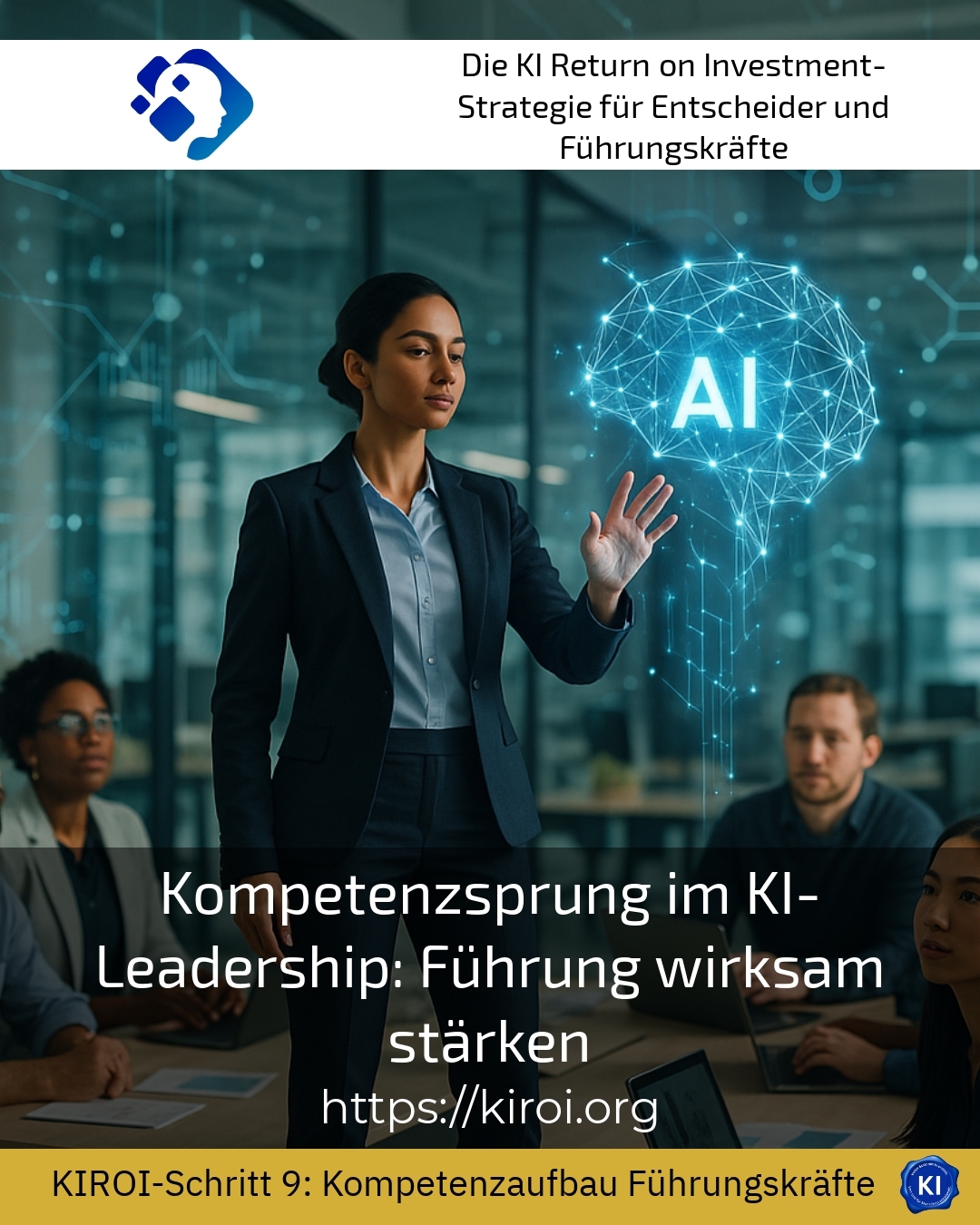
Digital transformation is fundamentally changing businesses. Leaders are facing entirely new challenges. They must understand intelligent systems and deploy them strategically. At the same time, employees expect clear guidance in uncertain times. The Quantum leap in AI leadership determines the success of modern organisations. Whoever fails to act today will fall behind tomorrow. But how does one achieve this crucial step in development? What skills do leaders truly need? And why do so many transformation projects fail despite the best of intentions? This article provides you with concrete insights for your personal leadership journey.
Understanding the new reality of leadership
Modern leadership differs fundamentally from traditional management approaches. Algorithms are increasingly taking over analytical tasks. Automated systems make operational decisions in fractions of a second. As a result, the role of leaders is changing fundamentally. They are becoming architects of human-technological collaboration. This development requires completely new competencies and mindsets. Many leaders report feeling uncertain in the face of these changes. They come to accompaniment processes with questions about the realignment of their leadership role. Often, there is a lingering concern about losing touch. Transruption coaching supports precisely these profound transformation projects. It accompanies leaders on their individual path of development.
An example from the financial sector illustrates this dynamic impressively. There, institutions are increasingly relying on algorithmic credit decisions. Previously, experienced advisors made these decisions after personal consultations. Today, systems analyse data in milliseconds and provide recommendations. The manager must now mediate between technological efficiency and customer relationship. A similar development can be seen in the healthcare sector. Diagnostic systems support doctors with image analysis. Clinic managers must understand how these tools work. At the same time, they must prepare their staff for these changes. We are also experiencing comparable upheavals in the manufacturing industry. Production lines are increasingly self-optimising. Plant managers need new competencies for this hybrid working environment.
Why the leap in competence in AI leadership is now necessary
The pace of technological development far outstrips traditional professional development cycles. Managers can no longer rely on tried-and-tested career paths. They must continuously learn and adapt. This constant change understandably creates pressure and uncertainty. Many clients report feeling as though they are constantly playing catch-up. They wonder which skills will still be relevant tomorrow. This uncertainty is entirely understandable and widespread. The AIROI model offers a structured framework for guidance here. It helps managers to plan their development systematically, taking into account individual strengths and areas for development.
We observe this urgency particularly clearly in retail. Personalised customer engagement is increasingly based on data-driven systems. Branch managers need to understand how recommendation algorithms work. This is the only way they can effectively lead their teams. In the logistics sector, intelligent systems are optimising routes and warehousing. Leaders there need a basic technical understanding to make sensible decisions. In the media industry, automated systems are already producing initial content. Editors-in-chief are faced with the question of human-machine collaboration. These examples demonstrate the cross-industry relevance of the topic.
Best practice with a AIROI customer
A medium-sized engineering company faced a complex challenge when the executive management wanted to introduce intelligent analysis systems, but the management team showed massive reservations. The divisional heads feared a loss of control and saw their expertise being devalued. As part of transruption coaching, we initially supported the management in developing a clear vision. Subsequently, we worked with the divisional heads on their individual competence profiles. This revealed that many fears were based on information deficits and could be dispelled through targeted clarification. Together, we developed a qualification programme that combined basic technical knowledge with leadership skills. The executives learned to view intelligent systems as tools rather than a threat. After six months, most participants reported increased self-confidence in dealing with new technologies. Consequently, the introduction of the analysis systems succeeded much more smoothly than originally expected. The company was able to sustainably improve its competitive position through faster decision-making processes.
Developing core competencies for sustainable leadership
A foundational understanding of technology forms the indispensable basis of modern leadership competence. Leaders do not need to be able to code themselves. However, they should understand how automated decision-making processes work [1]. This knowledge enables well-founded strategic decisions. It also creates credibility with technologically savvy employees. Equally important is the ability to engage in ethical reflection. Leaders must be able to define the limits of technology use. They bear responsibility for the impacts on people and society. This combination of technical understanding and ethical competence characterises future-proof leadership.
This requirement is particularly evident in human resources. There, systems already assist with the pre-selection of applications. HR directors must understand the criteria according to which these systems work. Only in this way can they recognise and prevent discrimination. In the insurance industry, algorithms calculate individual risk profiles. Leaders there must be able to assess the fairness of these calculations. In the education sector, systems are increasingly personalising learning content. Headteachers are faced with the question of how much automation makes pedagogical sense. These examples illustrate the ethical dimension of technological leadership decisions.
Systematically shaping the leap in competency in AI leadership
Sustainable skills development requires a structured approach. Sporadic further training is not enough. Leaders need continuous learning processes over longer periods of time. Transruption coaching provides precisely this accompanying support. It gives impetus for personal development. It creates spaces for reflection and exchange. The individual situation of the clients is always the focus. No leader is like another. Therefore, development paths must be designed individually. Standard programmes often fall short.
An example from the energy sector illustrates this approach. There, we accompanied a head of department over twelve months. He was facing the introduction of intelligent grid management. At the beginning, he completely lacked any technical understanding of the new systems. Through regular coaching sessions, he gradually built up competence. He learned to ask the right questions of his technical teams. He developed criteria for evaluating system recommendations. In the end, he was able to mediate confidently between human expertise and technological analyses. Similar development needs are apparent in the construction industry. There, systems are increasingly optimising project planning and resource allocation. Site managers must understand these tools and use them sensibly. In agriculture, precision systems assist with sowing and harvesting. Farm managers there also need new digital leadership skills.
Best practice with a AIROI customer
A healthcare executive came to coaching with a specific challenge because her hospital wanted to introduce diagnostic support systems and, as Director of Nursing, she was sceptical. She feared that the human element of care would be sidelined while simultaneously facing pressure from the executive board. In the coaching process, we first worked out her personal values and beliefs to create a solid foundation for further development steps. This revealed that her scepticism was based on a deep understanding of patient needs and could not simply be dismissed as technophobia. Together, we developed criteria under which the use of technology would be acceptable from her perspective and which she could present to the management board. She learned to contribute her perspective constructively rather than merely expressing concerns, which significantly strengthened her position within the leadership team. After several months, she had evolved into a competent mediator between technology and care quality and was ultimately appointed project manager for human-centred implementation. Her initial scepticism became a valuable resource for a balanced use of technology that took both efficiency and patient welfare into account.
Using resistance as an opportunity for development
Resistance to technological change is natural and understandable. It often signals legitimate concerns. Wise leaders do not ignore this resistance. They use it as a source of information for better decisions. This attitude requires a genuine willingness to engage in dialogue and empathy. It also requires the ability to self-reflect. Leaders must be able to acknowledge their own uncertainties. Only in this way do they create psychological safety for their teams. Transruption coaching supports the development of this mindset. It accompanies leaders in integrating diverse perspectives.
In the trades, we frequently experience this dynamic. There, traditional expertise and new technologies collide. Master craftspeople fear the devaluation of their years of experience. This concern is valid and deserves serious attention. At the same time, digital tools offer new possibilities for quality assurance. In gastronomy, systems are increasingly automating ordering processes. Restaurant managers are faced with the question of the right balance. In the tourism sector, systems personalise travel recommendations. Travel agency managers must redefine their role. These examples show how important the balance between tradition and innovation is.
Strengthening leadership skills through reflection and mentoring
Self-reflection is a core competence of future-proof leadership [2]. Leaders must be able to recognise their own thought patterns. They must understand how their beliefs influence their decisions. This self-awareness enables more conscious leadership decisions. It also protects against blind spots in complex situations. The AIROI model provides tools for this systematic self-reflection. It helps leaders identify their strengths and areas for development. In doing so, it takes various levels of competence into account. Technical knowledge, strategic thinking and emotional intelligence are all interlinked.
The value of this reflection is clearly evident in the banking sector. There, leaders must balance automation and customer service. Personal convictions strongly influence this trade-off. Those who are aware of their convictions make more balanced decisions. In the pharmaceutical industry, systems support drug development. Research leaders must understand where human intuition remains indispensable. In publishing, systems are already producing automated texts. Editors-in-chief must actively defend their journalistic values. These examples illustrate the importance of reflective leadership decisions.
Bringing teams along on the transformation journey
Managers bear responsibility for the development of their staff. The Quantum leap in AI leadership doesn't just concern them personally. He must include the entire team. This requires communication skills and pedagogical finesse. Managers become learning facilitators for their employees. They must take fears seriously and show perspectives. They must also ensure a tolerance for error in learning processes. This role is demanding and often unfamiliar. Transruptions coaching prepares managers for this expanded role.
In the automotive sector, we are experiencing this challenge intensely. There, electrification is transforming entire job profiles. Workshop managers must prepare their mechanics for new technologies. This is not just about technical knowledge; it is also about the motivation for lifelong learning. In the textile industry, systems are increasingly automating production. Production managers must show employees new paths for development. In the field of public administration, citizen services are becoming digital. Heads of office face the task of preparing their teams for digital processes.
Best practice with a AIROI customer
A sales director in the consumer goods industry faced the challenge of transitioning his fifteen-person team to data-driven sales support, with several long-standing employees showing massive reservations. In transruptions coaching, we first worked on his own attitude towards this change, because he himself was still wavering between enthusiasm and scepticism and was unconsciously transferring this ambivalence to his team. He recognised that his own uncertainty was intensifying the resistance within the team and worked on developing an authentic position that he could credibly represent. We developed a communication strategy that took the concerns of the experienced employees seriously while demonstrating development prospects, without making false promises. He introduced regular dialogue sessions in which worries could be openly discussed, thereby creating a safe space for honest exchange. The experienced employees were made mentors for the technical application of their specialist expertise, which elevated their role rather than devaluing it. After a year, the team reported increased motivation and better sales results, with the original sceptics in particular having become committed ambassadors for the new way of working. The sales director had learned how to design change processes in a human-centric way while making sensible use of technological opportunities.
My AIROI Analysis
Supporting leaders through technological transformation processes reveals clear patterns and recurring success factors [3]. The decisive difference between successful and failing transformations is rarely the technology itself. It lies in the quality of leadership and the willingness to undergo personal development. Leaders who engage in an honest process of reflection develop sustainable competency profiles. They become confident architects of change within their organisations.
The AIROI analysis reveals three key insights for future development. Firstly, managers need ongoing support rather than one-off training sessions. Transformation is a process, not a one-off event. Secondly, technical understanding and people management skills must be developed in tandem. Developing skills in isolation is not enough. Thirdly, involving teams from the very start is crucial. Managers cannot manage transformation on their own.
Frequently, clients report a changed self-image upon completing the accompaniment. They no longer see themselves as preservers of the status quo. They understand themselves as active shapers of a human-centred technological future. This change in mindset is the true core of the leap in competence in AI leadership. It makes it possible to navigate future changes with confidence, too. transruptions coaching accompanies executives on this demanding yet rewarding developmental path.
Further links from the text above:
[1] Harvard Business Review – AI and Machine Learning
[2] McKinsey – AI Insights
[3] AIROI Methodology – Strategic AI Integration
For more information and if you have any questions, please contact Contact us or read more blog posts on the topic Artificial intelligence here.








 Deutsch
  English (UK)