
Do you know why even the most successful companies suddenly have to pay massive fines, even though they thought they were complying with all the rules?
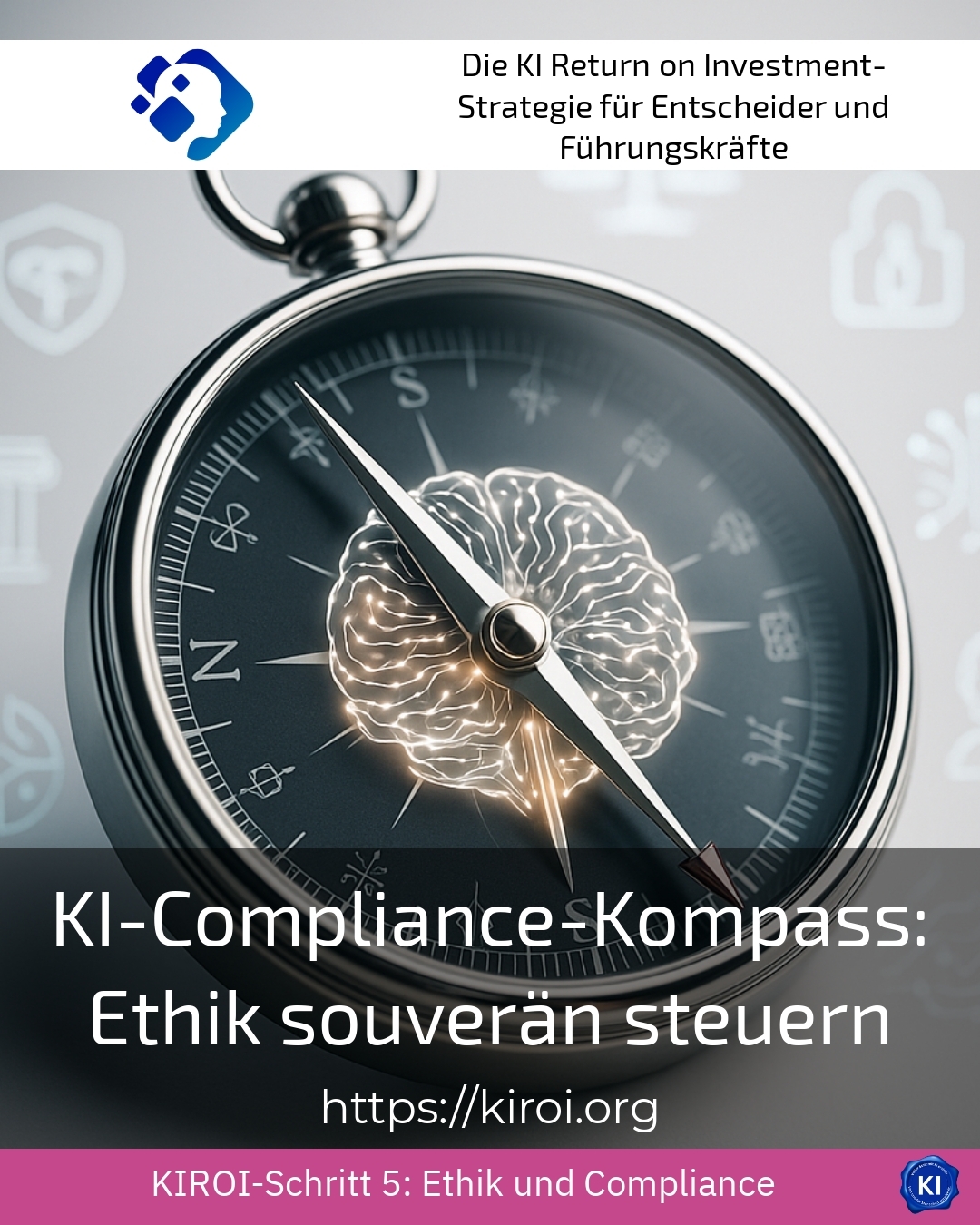
The answer lies in an area that many leaders still underestimate and which at the same time determines the long-term success or failure of entire business models. The AI Compliance Compass: Navigating ethics with confidence becomes an indispensable tool for organisations wanting to survive in an increasingly regulated world. For whilst technological innovation is advancing rapidly, many businesses are lagging significantly behind in the implementation of responsible practices. Clients frequently report that it was only after costly mistakes that they realised just how important a well-thought-out strategy in this area actually is. The good news is: with the right guidance and a structured approach, these challenges can not only be overcome, but even turned into genuine competitive advantages.
Understanding the new reality of regulatory requirements
Businesses are facing a fundamentally altered landscape. In recent years, European legislation has produced numerous new regulatory frameworks. These affect almost every sector and corporate division. Medium-sized businesses in particular often underestimate the scope of the necessary adjustments. For example, a mechanical engineering company from southern Germany had to realise that its automated quality control systems suddenly fell under new documentation requirements. A financial services provider only recognised after a regulatory audit that its algorithmic decision-making processes in lending had to be made more transparent. And a logistics company faced the challenge of documenting its predictive maintenance systems in a traceable manner.
These examples clearly show that the AI Compliance Compass: Navigating ethics with confidence does not represent an abstract exercise, but has a concrete business impact. The complexity arises from the interplay of various regulatory frameworks, some of which impose differing requirements. Because these frameworks are constantly evolving, companies need flexible and adaptable structures. This enables them to respond to changes without having to start from scratch every time.
Best practice with a AIROI customer
An internationally active automotive supplier came to us with an urgent concern that will likely sound familiar to many companies in a similar form. The management team had recognised that their automated production control systems were coming under increasing regulatory pressure and that a systematic review was urgently needed. Working together, we first developed a comprehensive understanding of all deployed systems and their respective risk profiles, paying special attention to the interfaces between different departments. The transruptions coaching accompanied the project team over several months in developing a tailored governance structure that met both the legal requirements and the specific needs of the company. The approach of identifying and training internal champions who could drive the topic forward in their respective areas proved particularly valuable. By the end of the project, the company had clear processes, defined responsibilities and a monitoring system that flags up potential issues early on, meaning that the managers can now look forward to upcoming audits with significantly greater peace of mind.
Leveraging ethical principles as a strategic advantage
Many executives initially view ethical requirements as a nuisance. However, this perspective falls far short. Companies that proactively take on responsibility often enjoy greater trust among customers and partners. An insurance group was able to measurably increase customer satisfaction through transparent communication of its assessment procedures. A recruitment consultancy successfully differentiated itself from the competition by making its selection processes transparent and fair. And an e-commerce company won the trust of privacy-conscious customers through consistently responsible practices.
The AI Compliance Compass: Navigating ethics with confidence supports organisations in systematically identifying and capitalising on these opportunities. But it is not just about external impact and marketing. Internal processes also benefit considerably from well-thought-out ethical guidelines. Employees receive clear orientation for difficult decision-making situations. This avoids protracted discussions and ensures faster agility. Because ethical principles also influence the culture of innovation, better and more sustainable solutions often emerge.
Practical implementation in daily business operations
The theory sounds convincing, but how does the practical implementation succeed? Clients regularly ask us this question. The answer begins with an honest stocktake of the current situation. For example, a manufacturing company started with a workshop in which all relevant systems were identified and categorised. A service company initially developed a simple traffic-light system for risk assessment. And a retail company began by training selected managers as multipliers.
The important thing here is not to try and do too much at once. Step-by-step improvements usually lead to more sustainable results than rushed, complete overhauls. Transruptions coaching provides impetus for realistic schedules and achievable milestones. This maintains the team's motivation and early successes quickly become visible.
Rethinking risk management with the AI Compliance Compass: navigating ethics with confidence
Traditional risk management approaches often reach their limits with new technologies. The dynamic nature of automated systems requires adapted methods and tools. For example, a pharmaceutical company developed a continuous monitoring system for its research data analysis. An energy supplier implemented regular audits of its grid control systems. And a telecommunications provider established an early warning system for potential biases in its customer segmentations.
These examples demonstrate that risk management must be an ongoing process. One-off audits are not enough to keep pace with technological development. Because systems change through learning and adaptation, their risk profiles can also vary. Businesses therefore require structures that can detect such changes and respond to them appropriately.
Best practice with a AIROI customer
A major health insurance fund approached us with the challenge of making its automated benefit decisions legally compliant and ethically defensible, which posed particularly high demands given the sensitive nature of the data processed. The organisation had already taken initial steps, but was unsure whether these fully met regulatory requirements and whether its internal processes were sufficiently robust. As part of the transruption coaching, we jointly analysed the existing systems and identified several areas with potential for optimisation, with particular need to improve the comprehensibility of decisions for insured parties affected. We developed a multi-stage procedure that combines automated proposals with human review, providing clear escalation paths for cases of doubt so that both efficiency and fairness can be guaranteed. Implementation took place gradually over six months, accompanied by intensive training for the staff involved and regular feedback loops for continuous improvement. Today, the system developed serves as a model within the organisation and has already been rolled out to further areas of application, which impressively demonstrates the lasting impact of our joint work.
Ensure documentation and traceability
A frequently underestimated aspect concerns documentation. Authorities and regulatory bodies increasingly expect detailed evidence of decision-making processes. For example, one industrial company subsequently had to produce extensive documentation for its quality assurance systems. A financial institution invested significant resources in reconstructing past decision bases. And a technology company realised that its agile development processes needed to be better documented.
These experiences show that early and systematic documentation can save a lot of effort. The AI Compliance Compass: Navigating ethics with confidence assists in the development of practical documentation standards. This creates records that both meet regulatory requirements and remain manageable in everyday business operations.
Culture change as the key to success
Technical solutions and processes alone are not enough. Sustainable change requires a genuine cultural shift within the organisation. For example, a media company started with regular ethics dialogues at the management level. A consumer goods manufacturer integrated principles of responsibility into its corporate values. And a consultancy developed an internal certification programme for responsible project work.
Such cultural changes take time and continuous attention. However, they create the basis for successful long-term action. Employees who understand the background can make good decisions independently. Because not every situation can be covered by rules, this personal responsibility is particularly valuable. Transruptions coaching accompanies organisations through this change and provides impulses for sustainable embedding.
My AIROI Analysis
The debate surrounding the responsible use of technology has evolved over recent years from a footnote into a key success factor, and this trend will continue and gain further importance. Companies that invest in well-thought-out structures and competent employees today will benefit from their foresight tomorrow and secure significant competitive advantages. The examples from various industries impressively demonstrate that there is no one-size-fits-all solution; rather, every organisation must find its own path that suits its specific situation, culture and risk landscape. In this regard, the combination of a systematic approach and cultural embedding proves to be particularly promising because it ensures short-term compliance while building long-term resilience. The regulatory landscape will remain complex, and businesses need partners who can expertly guide them along this path and support them in navigating this complexity. transruptions coaching positions itself as a reliable companion for projects surrounding these challenges by combining theoretical knowledge with practical experience and addressing the individual needs of every organisation. Ultimately, the decisive factor is the realisation that responsibility and economic success are not opposites, but can mutually reinforce one another when cleverly combined.
Further links from the text above:
[1] European Commission: European Approach to Artificial Intelligence
[2] Federal Office for Information Security: Artificial Intelligence
[3] Bitkom: Artificial Intelligence in the Economy
For more information and if you have any questions, please contact Contact us or read more blog posts on the topic Artificial intelligence here.









 Deutsch
  English (UK)