
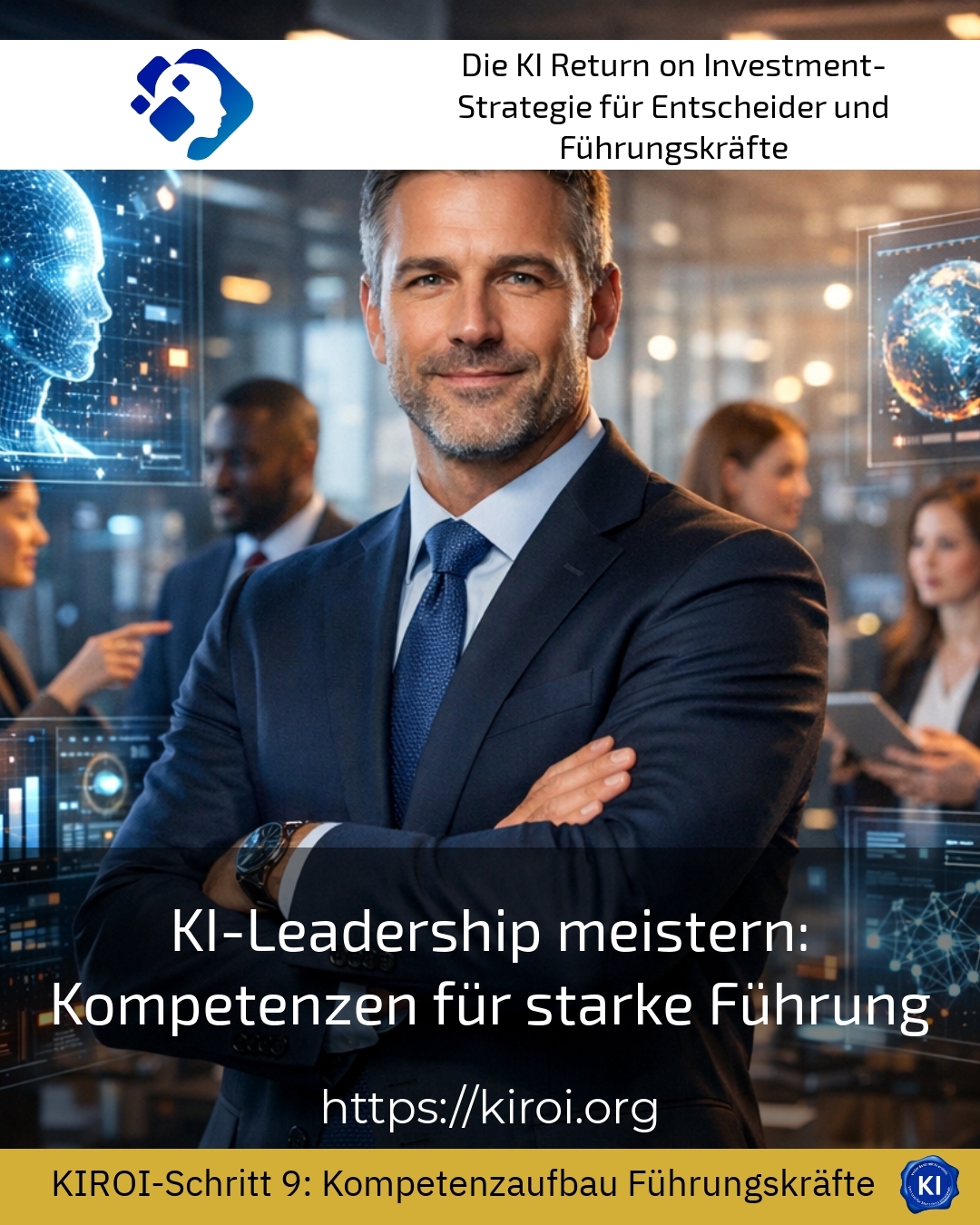
How are leaders today succeeding in navigating their teams through the digital transformation and, in the process, not only surviving but actually flourishing? This question concerns decision-makers in almost every organization, because the requirements for modern leadership have fundamentally changed in recent years. Mastering AI Leadership: Competencies for Strong Leadership It is at the heart of many strategic considerations because algorithmic systems are increasingly influencing business processes. Clients often report feeling overwhelmed by the speed of technological developments. They are seeking guidance and practical approaches for their day-to-day leadership work. The good news is that there are proven ways to overcome this challenge.
Understanding the new reality of leadership
The working world is undergoing profound changes. Automated systems are taking on routine tasks, changing entire professional roles. Managers face the challenge of accompanying their employees through these changes. This involves more than just technical understanding; it also requires emotional intelligence and communication skills.
For example, a medium-sized manufacturing company implemented autonomous quality control systems. The workforce initially reacted with skepticism and uncertainty regarding their jobs. The management decided on a transparent dialogue and organized workshops. This measure helped build trust and create acceptance.
A similar situation occurred at a logistics company that implemented predictive maintenance systems. The technicians initially feared that they would become redundant. However, through targeted training, they recognized the added value of the new tools. Their expertise was enhanced rather than replaced.
A third example comes from retail. A chain of stores uses algorithmic recommendation systems for assortment decisions. Initially, the area manager had concerns about the loss of control. Now they value the data-driven impulses as valuable decision-making tools.
Mastering AI Leadership: Developing Competencies for Strong Leadership
So what specific skills do leaders need in this changed landscape? First of all, they need a fundamental understanding of algorithmic functions. This does not mean that they have to program themselves. Rather, it is about being able to assess the potential and limitations of automated systems.
Furthermore, the ability to mediate between humans and machines is becoming increasingly important. Executives increasingly serve as translators between technical possibilities and human needs. They must be able to build bridges where gaps threaten to emerge.
An insurance company faced exactly this challenge when introducing automated claims assessment. The claims handlers initially felt disempowered by the algorithms. The team management then developed a hybrid model that combined human expertise with machine efficiency.
In a pharmaceutical company, a similar situation was observed in the area of research documentation. Intelligent analysis tools significantly accelerated the evaluation of clinical studies. The scientists learned to perceive this support as an enrichment of their work.
In the banking sector as well, these competencies play a crucial role. Today, customer advisors use algorithmic risk assessments. Their managers must understand how these systems work and where human judgment remains indispensable.
Communication as a Key Competence
The importance of clear communication cannot be overemphasized. Teams need guidance in times of change. They need leaders who can convey confidence without being patronizing. Honesty and transparency form the foundation for trust.
A media company recently underwent a comprehensive transformation of its editorial processes. Intelligent tools now support research and text optimization there. The editorial team openly communicated about the opportunities and risks of this development. This openness helped to reduce resistance and encourage constructive collaboration.
Best practice with a AIROI customer
A medium-sized manufacturing company with about three hundred employees was faced with the introduction of an intelligent planning system for production control. The management recognized early on that technological change could only be successful if the workforce was actively involved. Together with transruptive coaching, the company developed a comprehensive follow-up process that involved all levels of management over several months. The department heads received individual coaching sessions to reflect on and address their own uncertainties. Subsequently, they themselves moderated workshops with their teams to address fears and gather ideas. The result exceeded expectations significantly, because the employees experienced themselves as agents of change rather than passive victims. The implementation of the new system went more smoothly than in comparable projects in the industry. The turnover rate remained stable, while other companies with similar initiatives experienced waves of layoffs. Particularly noteworthy was the fact that employees themselves came up with improvement suggestions for the system, which led to significant optimization.
Ethical responsibility in leadership
With growing technological possibilities, the ethical responsibility of leaders also increases. They make decisions that can have far-reaching consequences for people. Algorithms can reinforce prejudices if they are not critically questioned. Leaders must therefore develop an awareness of this problem.
A staffing service had to experience this when its applicant screening system unintentionally discriminated. Fortunately, the senior management recognized the problem early on. They implemented control mechanisms and trained all involved accordingly.
In healthcare, similar questions are particularly pressing. Diagnostic support systems can save or endanger lives. Medical guidelines bear the responsibility for the appropriate use of such tools. They must balance efficiency gains with the necessary human care.
This dimension is also gaining importance in the education sector. Schools are experimenting with adaptive learning systems for individualized instruction. School administrators must take data protection issues into account just as they do pedagogical principles.
Mastering AI leadership: competencies for strong leadership in a team context
Leadership never takes place in an empty void. It always has an impact when combined with a team. Therefore, leaders must understand how technological change affects team dynamics. Roles are changing and require new forms of collaboration.
An architecture firm experienced this when introducing generative design tools. The creative employees initially saw their uniqueness threatened. The management of the firm initiated a structured reflection process. In the process, the team discovered new ways to combine human creativity with algorithmic suggestions.
In an advertising agency, the development proceeded similarly. There, intelligent text generators are now complementing the work of the copywriters. From the very beginning, the creative management emphasized the supportive nature of these tools. This attitude positively influenced the entire team culture.
An engineering firm uses predictive simulations for complex calculations. The experienced engineers bring their expertise to interpret and refine the results. Leaders created spaces for this valuable exchange between generations.
Professionally accompany change processes
Transformation rarely succeeds without professional support. transruptions coaching supports organizations in projects involving the deployment of intelligent systems. The human dimension is always at the center of the advice given. Technology alone cannot solve problems, but it can empower people.
Many clients come with the feeling of being torn between the demands of digitalization and the needs of their teams. They are looking for ways to connect the two sides. They want to receive inspiration for leadership that integrates people and technology.
For example, a trading company sought support in introducing automated warehouse management. The management initially needed to gain its own understanding of the process. After that, they were able to authentically guide their employees through the change.
Best practice with a AIROI customer
An internationally operating financial advisory services company turned to transruptive coaching because the introduction of algorithmic analysis tools had led to significant tensions within the company. The experienced consultants felt that their expertise was not valued, while younger colleagues enthusiastically used the new tools. This gap threatened to damage the collaboration in a lasting way and had already had a negative impact on customer satisfaction. As part of the coaching process, we worked with all levels of management on an integrative approach that valued and combined the strengths of both perspectives. The experienced consultants were positioned as mentors for critical reflection on algorithmic recommendations, while the younger colleagues shared their technical expertise. This reciprocal learning process significantly strengthened team cohesion and led to innovative consulting approaches that neither humans nor machines could have developed on their own. Customer satisfaction improved significantly within a few months, as the quality of the consulting services reached a new level thanks to this combination.
Practical steps for everyday leadership
What can leaders specifically do to adapt to this changed reality? First and foremost, continuous learning helps keep a current understanding of technological fundamentals. Workshops, specialized literature, and exchanges with experts offer numerous opportunities for this.
Equally important is the regular reflection on one’s own attitude towards technological change. Leaders should honestly ask themselves what fears or reservations they themselves have. Only those who know these can lead authentically and convincingly.
Dialogue with the team deserves special attention. Regular discussion rounds about experiences and concerns build trust. They enable early recognition of problems and the development of joint solutions.
My AIROI Analysis
Coaching numerous transformation projects has shown me that successful leadership in times of technological change rests on a few key pillars. The most important of these is undoubtedly the willingness to continuously develop oneself and to be vulnerable in the process. Leaders who pretend to know everything quickly lose credibility. Those, on the other hand, who openly admit to learning themselves gain the trust of their teams.
Another crucial factor is the ability to reduce complexity without simplifying it. Employees need guidance, but they also deserve honesty about uncertainties. Finding this balance is one of the most challenging aspects of modern leadership. Those who master it create a culture of confidence and action.
In my practice, the importance of creating meaning is particularly striking. Teams that understand why certain changes are necessary actively contribute to it. They develop initiative and bring valuable ideas. Leaders who can demonstrate this sense of meaning have a transformative effect. They not only drive technological change but also shape their organization’s culture in a lasting way. This is precisely the true potential of Mastering AI Leadership: Competencies for Strong Leadership as a guiding principle for future-oriented organizations [1].
Further links from the text above:
[1] AIROI-Method for sustainable leadership
For more information and if you have any questions, please contact Contact us or read more blog posts on the topic Artificial intelligence here.







 Deutsch
 English (UK)