
Will your employees soon be replaced by intelligent systems – or will they grow and thrive alongside these technologies?
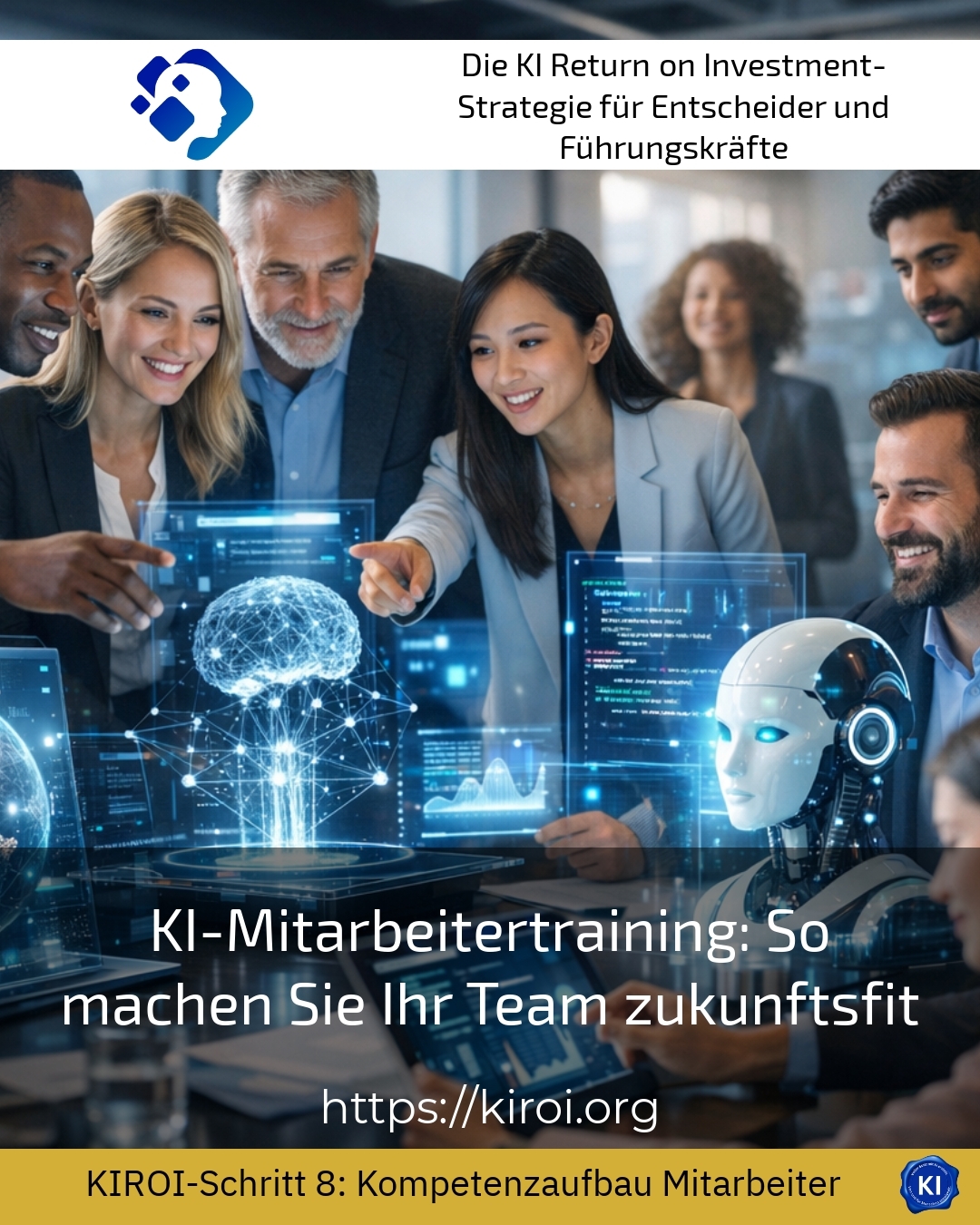
This question currently concerns executives in almost all sectors of the economy. The rapid development of learnable algorithms is fundamentally changing workplaces. Companies face the challenge of preparing their teams for this transformation. In doing so, AI staff training A crucial role in sustainable business success. Those who invest in the development of their employees’ competencies now create competitive advantages. At the same time, they strengthen the commitment of valuable professionals to the company. The guidance provided by experienced coaches can significantly support this transformation process. transruptions coaching offers valuable impulses for organizations of all sizes in this regard [1].
Why traditional training concepts are no longer sufficient
The working world has changed dramatically in recent years. Traditional forms of training are reaching their limits. One-time seminars are no longer sufficient. The speed of technological changes requires continuous learning. Employees often report being overwhelmed by new digital tools. They feel uncertain about using intelligent assistance systems. This uncertainty can significantly impair productivity.
For example, a medium-sized logistics company implemented automated route planning systems. The dispatchers initially reacted skeptically to the new technology. Many feared the loss of their expertise and their jobs. Only through targeted support was this skepticism reduced. The employees eventually recognized the advantages of the new tools. A retail company implemented intelligent inventory management solutions. Here too, initial resistance within the team was evident. However, through structured learning programs, this attitude changed fundamentally.
Best practice with a AIROI customer
An internationally operating manufacturing company faced massive challenges in implementing predictive maintenance systems. The maintenance technicians had decades of experience with the machines. They trusted their intuition more than the algorithms. The management decided on comprehensive support through transruptive coaching. In a first step, we jointly analyzed the existing competencies of the workforce. A heterogeneous picture of digital skills emerged. Older employees brought enormous expertise, but needed support with technical applications. Younger colleagues were technically skilled, but underestimated the importance of experience. We subsequently developed a mentoring program with cross-generational tandems. The experienced technicians learned about the digital tools from their younger colleagues. In return, they shared their practical knowledge of machine behavior and error analysis. This combination led to a significant increase in system acceptance. After six months, ninety percent of the technicians used the new tools regularly. The unplanned machine outages decreased by more than thirty percent.
Understanding AI employee training as a strategic investment
Many organizations still view training as a cost factor. However, this perspective is too narrow-minded. Well-trained employees are the most important success factor in the digital age. They can not only master new technologies, but also use them creatively. This leads to innovative solutions and process improvements. The return on such investments is often evident after a short time [2].
A financial services provider implemented intelligent analysis tools for customer advisory services. The advisors initially received only a brief technical introduction. The results fell far short of expectations. Only a comprehensive AI staff training This breakthrough brought about a breakthrough. The employees now understood the functioning of the algorithms better. They were able to categorize the recommendations critically and use them sensibly. In the insurance industry, similar patterns are evident. Claims adjusters are increasingly using automated evaluation systems. The successful integration of these tools requires intensive support. A telecommunications provider trained its customer service team on using chatbots. The employees learned to use the intelligent systems as support. They continue to handle complex inquiries personally.
Consider the psychological dimension of the change
Technical training alone is not enough for successful transformation. Employees bring fears and reservations that must be taken seriously. Often, clients report concerns about their professional future. They wonder if their skills are still needed. These emotional aspects require empathetic guidance. transruptions coaching provides important impulses for leaders and teams in this regard.
A media company introduced automated content creation tools. The female editors reacted with great uncertainty. Many saw their creative work being devalued. Through regular reflection rounds, this concern could be addressed. The female journalists recognized their new role as curators and quality controllers. An advertising agency integrated generative systems into their design processes. The female graphic designers had to fundamentally adapt their working style. Initially, frustration over perceived competition prevailed. However, with time, they developed a productive collaboration with the digital tools.
Practical approaches for sustainable AI employee training
Successful qualification programs follow certain basic principles. They are practical and oriented towards specific work tasks. Theoretical knowledge is immediately applied in daily work. The learning formats take into account different prior knowledge and learning styles. Regular feedback enables continuous improvement. The programs continue to evolve with technology [3].
A pharmaceutical company established so-called learning labs for its research department. Scientists there experiment with new analysis methods. They can make mistakes in a protected environment and learn from them. A automotive supplier established competence centers in various locations. Experienced employees serve as internal multipliers there. They pass on their knowledge to colleagues. An energy provider uses simulation environments for the training of its network engineers. The employees practice handling intelligent control systems without risk.
Best practice with a AIROI customer
A leading trading company approached us with a special challenge. The organization had already invested substantial sums in intelligent forecasting systems. However, the usage rates by the purchasing teams remained disappointingly low. The employees continued to prefer their established methods and Excel spreadsheets. Our analysis revealed a clear picture of the problem. The previous training sessions had focused exclusively on technical features. The strategic benefits and personal benefits remained unclear. Together, we developed a three-stage qualification concept. In the first phase, we worked intensively with selected pilot users. These early adopters tested the systems in their daily work. They documented successes and identified improvement potential. In the second phase, these pioneers became internal ambassadors. They reported authentically about their experiences and convinced skeptical colleagues. The third phase included structured peer learning formats for all team members. After one year, the usage rate had increased to over eighty percent. The forecast accuracy in purchasing improved significantly.
Leaders as role models and enablers
The attitude of the leadership level significantly influences the success of transformation processes. Supervisors must demonstrate a willingness to learn themselves. They should openly address their own uncertainties. At the same time, they create the framework conditions for continuous learning. Time for further training must be planned into the workday. A willingness to experiment and a constructive approach to mistakes deserve recognition [4].
A construction company initially trained its project managers on how to use BIM systems. They then passed on their knowledge to the project managers on the projects. The management of a machine engineering company itself participated in the basic training courses. This gesture signaled the importance of the topic for the entire organization. A healthcare provider established regular learning circles for department managers. There they exchanged experiences from their daily work. AI staff training from their teams.
The role of external support in transformation projects
Internal resources often encounter limits when undergoing profound changes. External support can bring valuable perspectives. Experienced coaches identify blind spots and entrenched patterns. They help constructively address resistance. transruptions coaching supports organizations in such projects related to digital transformation. The neutral position of external partners often facilitates difficult conversations.
A law firm introduced intelligent research tools. The partners were skeptical about the new technology. External support helped them address these concerns. An engineering firm used coaching to prepare for generative design systems. The employees developed strategies for integration together. A logistics service provider had its middle management externally coached. The leaders learned to address their teams’ fear of change.
My AIROI Analysis
The systematic qualification of employees for collaboration with intelligent systems determines the future viability of organizations. My analyses consistently show similar success patterns in successful transformations. Companies that invest in comprehensive development programs achieve better results. They benefit from higher technology adoption and lower turnover.
At the same time, I often observe avoidable mistakes. Many organizations underestimate the time required for sustainable competence development. They expect quick results and neglect the emotional dimension. The purely technical approach is too short-sighted. People need space for reflection and adaptation. They need to understand the meaning of the changes and be able to contribute to their implementation.
The AIROI-methodology offers a structured framework for successful transformation here. It combines strategic planning with practical implementation support. I find the integration of various learning formats particularly important. Formal training, informal exchange, and practical experimentation complement each other. Leaders play a key role as role models and facilitators. Their own willingness to learn inspires the entire organization. Investing in people remains the most important success factor in digital transformation.
Further links from the text above:
[1] transruptions-Coaching – Support for Digital Transformation
[2] McKinsey – Insights on AI and Workforce Development
[3] Bitkom – Practical guidelines for AI implementation
[4] Harvard Business Review – Leadership in the AI Era
For more information and if you have any questions, please contact Contact us or read more blog posts on the topic Artificial intelligence here.







 Deutsch
 English (UK)