
Will you and your team still be relevant in a few years, or has technological development just quietly overtaken your most valuable employees?
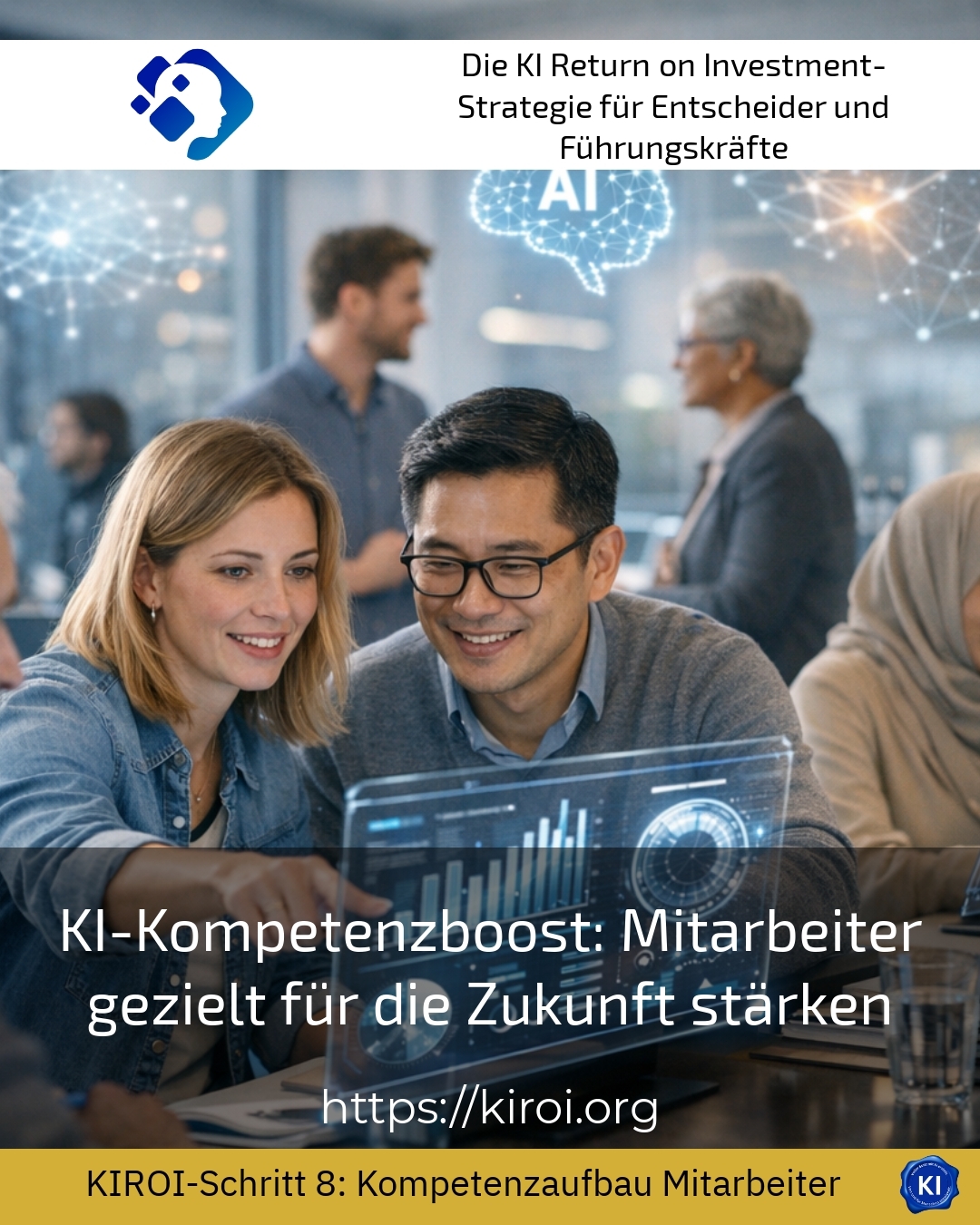
This question currently concerns countless executives and human resources managers in almost all business sectors. The AI Skills Boost This is at the heart of strategic personnel development. Many companies are increasingly recognizing that technological tools alone do not create a sustainable competitive advantage. Only the systematic empowerment of people within the company leads to real progress. This is not just about simply learning new software. Rather, it involves a profound transformation of thinking and working. Organizations that actively drive this change often report increased innovation capacity. At the same time, the turnover of qualified employees noticeably decreases.
Why AI skills have become indispensable today
The working world is currently changing faster than ever in history. Intelligent systems are taking on routine tasks and creating space for more complex activities. This fundamentally shifts the requirements profiles. Skills that were considered specialist knowledge yesterday will become basic skills tomorrow. Companies face the challenge of continuously developing their workforce. Traditional training formats often no longer suffice. New learning concepts are needed that tightly integrate theory and practice. The AI Skills Boost provides a structured framework for this.
In the manufacturing industry, machine operators already use intelligent assistance systems for process optimization. They analyze production data in real time and independently adjust parameters. Logistics companies rely on predictive analyses for route planning and inventory optimization. Diagnostic tools are also supporting medical professionals in decision-making in the healthcare sector. All of these developments require new competencies that go beyond pure technical expertise.
Three key pillars for sustainable competence development
The first pillar forms the technical basic understanding that all employees need. No one needs to become a programmer, but basic connections should be understood. The second pillar encompasses critical judgment in dealing with automated recommendations. People need to learn when they can trust the results and when skepticism is appropriate. The third pillar concerns creative application competence. Employees should be empowered to independently identify new use cases.
A trading company successfully integrated these three pillars into its qualification program. Sales consultants learn how automated product recommendations are created. At the same time, they train to deepen personal customer relationships through technical support. Similar approaches are also followed by banks when training their customer advisors. The combination of human and machine achieves measurably better results there.
Best practice with a AIROI customer
A medium-sized manufacturing company with about three hundred employees approached us with a specific challenge. The management had invested in modern analytical tools, but their use remained far behind expectations. Many employees perceived the new systems as a threat to their jobs. Others simply felt overwhelmed by the complexity of the applications. As part of a transruptive coaching process, we developed a step-by-step qualification plan together. First, we held discussions with employees at all levels of the hierarchy to understand fears and reservations. Based on this, we designed practical learning modules that took place directly in the workplace. Experienced professionals were trained to become internal multipliers and supported their colleagues in everyday life. Transparent communication about goals and expected changes was particularly important. After six months, significant improvements were observed in system acceptance and usage intensity. Production efficiency was demonstrably increased, while employee satisfaction simultaneously increased. Clients often report similar transformation experiences when the human component is sufficiently considered.
Implementing AI expertise boost in various business areas
Every department of a company benefits in different ways from targeted competence development. In marketing, data-driven approaches enable more precise targeting of target groups. Creative teams use generative tools to inspire and develop concepts. The final decision always remains with the human being. Procurement optimizes procurement processes through automated supplier evaluations and price analyses. This enables professionals to focus more on strategic negotiations.
In human resources, intelligent systems help in the pre-selection of applicants. Recruiters save time for personal conversations and cultural fit. However, this requires an understanding of potential biases in automated processes. The legal department uses analytical tools to review contracts and assess risks. Lawyers can engage more intensively with complex legal issues. Research and development also benefits from accelerated simulations and prototype development. Engineers experiment more frequently and achieve market-ready solutions faster.
Leaders as drivers of cultural change
The role of leaders is fundamentally changing in technologically-driven environments. They must not only be technically competent, but also act as cultural shapers. Their task is to foster openness to change and address uncertainties. Regular dialogue formats where concerns can be addressed help with this. Leaders should themselves actively work with new tools and demonstrate a willingness to learn.
A telecommunications provider established monthly innovation rounds for the entire management. There, executives experimented with new technologies together. By doing so, they themselves experienced the challenges that employees face in their daily work. Similar programs are also successfully implemented by insurance companies and energy providers. Direct experience significantly enhances the understanding and empathy of the management level [1].
Best practice with a AIROI customer
A large corporate advisory firm sought support in reorienting its talent development strategy. The partners recognized that traditional career paths were no longer relevant. Young talents expected continuous learning opportunities and meaningful tasks. Together, we developed a modular development program with various focus areas. Consultants could choose individual learning paths and deepen their skills specifically. The program combined online formats with hands-on project phases. Experienced partners took on mentoring roles and personally supported the development of competencies. The integration of real client projects into the learning process proved particularly effective. New knowledge was immediately applied by junior staff and they received direct feedback. The transruptive coaching support primarily supported the conceptual development and implementation. After implementation, employee engagement significantly increased. At the same time, customer ratings for consulting services improved noticeably. The program is now considered an internal benchmark for successful personnel development.
Practical steps to implement a sustainable AI competence boost
Successful implementation begins with an honest assessment of the existing competencies. What skills already exist, and where are there critical gaps? This analysis should include all levels and functional areas. External support can provide valuable insights and uncover blind spots. Based on this, a prioritized development roadmap with concrete milestones is created.
The pharmaceutical industry, for example, relies on specialized programs for regulatory requirements in the data field. Automotive suppliers specifically train their workforce for connected production environments. Retail companies train employees in handling personalized customer experiences. Each of these initiatives requires customized concepts that fit the respective corporate culture [2].
Success measurement and continuous further development
Qualification programs must deliver measurable results to justify long-term investments. This is not just about completion rates or participant numbers. Instead, the focus should be on behavioral changes and business results. Regular evaluations show which formats are particularly effective. This way, programs can be iteratively improved and adapted.
A mechanical engineering company measures the success of its training program based on concrete process metrics. Reduced lead times and less rework clearly demonstrate the practical effectiveness. Software companies are also using similar approaches to evaluate their internal academies. The connection between learning outcomes and business results significantly strengthens the acceptance among decision-makers [3].
My AIROI Analysis
The systematic strengthening of human competencies in the context of technological change represents one of the most important strategic challenges of our time. Companies that actively shape this process not only secure their competitiveness; they also create a working environment in which people feel valued and future-oriented. The experiences from numerous mentoring projects clearly show that success depends on several factors. First, there must be a clear commitment from the company leadership that goes beyond mere verbal declarations. Then programs must be developed that fit the specific corporate culture and the individual learning needs. The integration of practical application possibilities is indispensable for sustainable learning success. Supportive communication addresses fears and creates transparency about goals and expectations. Leaders play a key role as role models and supporters of change. After all, continuous performance measurement ensures quality and enables continuous improvement. Organizations that consistently implement these elements often report surprisingly positive developments. Employees independently develop new application ideas and drive innovation forward. Initial skepticism gives way to productive curiosity about future possibilities. This is precisely where the true potential of targeted competency development for the future lies.
Further links from the text above:
[1] McKinsey Insights on Organisational Development and Leadership
[2] World Economic Forum – Future of Jobs Report
[3] Harvard Business Review – Talent Management
For more information and if you have any questions, please contact Contact us or read more blog posts on the topic Artificial intelligence here.








 Deutsch
 English (UK)