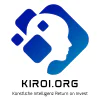
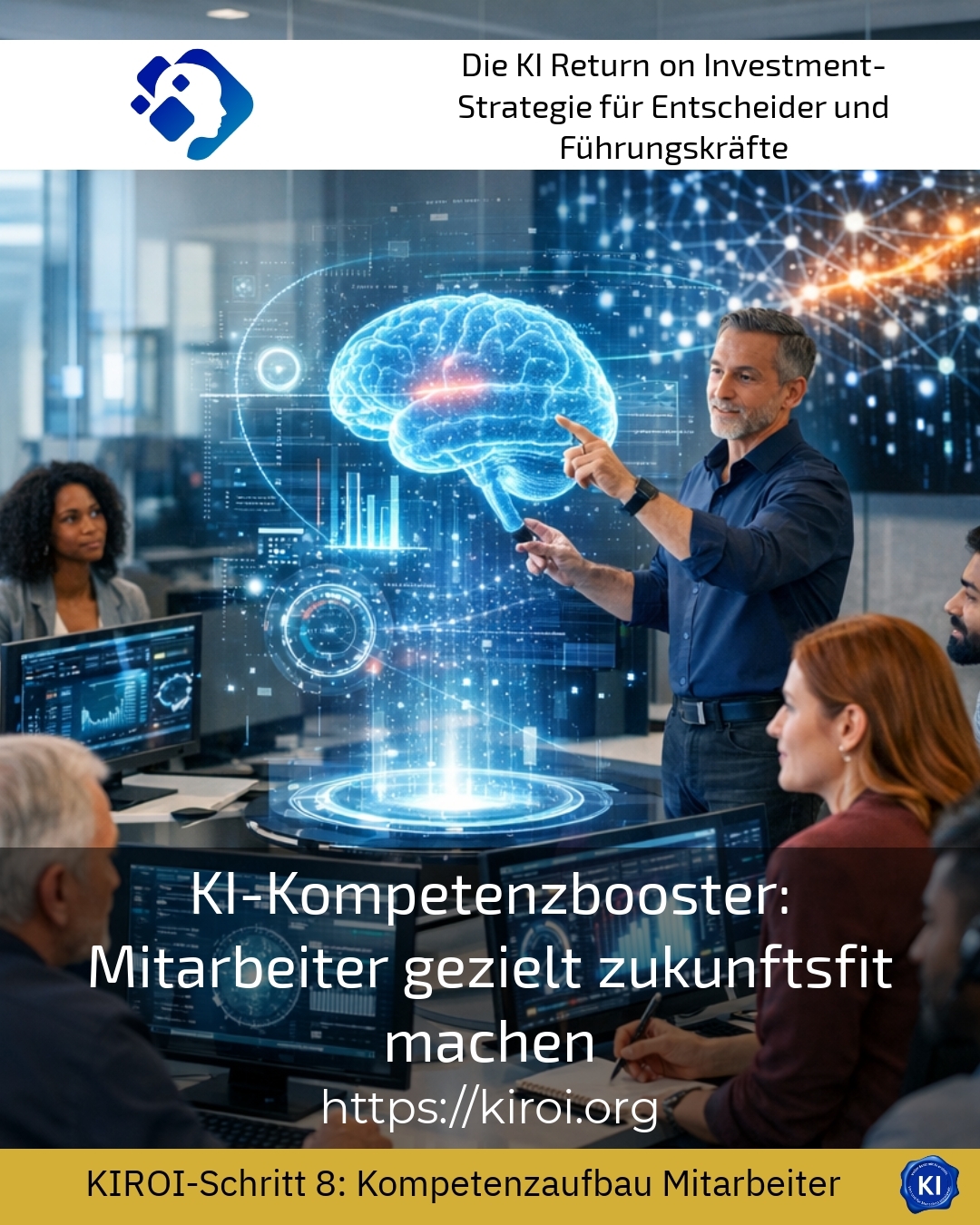
How do you ensure that your workforce is prepared for the technological changes of our time in the shortest possible time without jeopardizing ongoing operations or overwhelming employees? This question currently concerns executives and human resources managers in almost all industries, because the rapid progress in the field of machine learning and automated decision-making systems is fundamentally and irrevocably changing workplaces. AI Skills Booster It is establishing itself as a pioneering concept for specifically preparing employees to be future-ready and providing companies with a real competitive advantage. Many decision-makers report that they are reaching their limits with traditional training approaches and are looking for innovative methods that are both practical and sustainable.
The new reality of the working world and the need for targeted competence development
The transformation through intelligent technologies now covers all business areas at a speed that has simply surprised many organizations. Routine tasks are increasingly being automated. At the same time, entirely new fields of activity are emerging. This development requires employees to rethink and continuously learn. Clients often report feeling overwhelmed. They do not know where to begin. This uncertainty is understandable and widespread.
In the manufacturing sector, for example, companies already use predictive maintenance systems that can predict machine breakdowns and thereby minimize costly downtime. In the logistics industry, algorithm-based systems optimize supply chains and significantly reduce storage costs. Financial service providers use intelligent analytical tools to detect fraud patterns and more accurately assess credit risks. All of these use cases require employees who can safely handle these technologies and critically evaluate their results.
This is not just about technical understanding in the narrower sense; it is rather about fundamentally reorienting one’s own working methods and thought processes. Employees must learn to work with intelligent systems. They must harness their strengths and recognize weaknesses. This symbiosis of human expertise and machine capabilities forms the foundation of future-proof organizations.
The AI Competence Booster as a Strategic Tool for Personnel Development
A thoughtful AI Skills Booster It differs fundamentally from traditional continuing education programs because it takes a holistic approach and enables individual learning paths. Instead of forcing all employees through identical training programs, this approach takes into account the different backgrounds, job profiles, and learning speeds of individual employees. It provides both practical exercises and theoretical foundations to support this combination. This combination supports sustainable learning.
In healthcare, for example, caregivers can benefit from systems that take on administrative tasks and free up more time for actual patient care. Doctors use diagnostic tools that are based on extensive data sets and can support treatment recommendations. Hospital managers use predictive models for capacity planning and resource allocation. Each of these professional groups requires specific skills to use these tools responsibly and effectively.
In retail, on the other hand, intelligent analytics systems enable personalized customer interactions and optimized inventory management. Sales staff can learn how recommendation systems work through appropriate training. Store managers learn to make data-based decisions. Buyers use predictive tools for their order planning. These industry-specific applications illustrate that competence development must always be context-specific.
Best practice with a AIROI customer
A medium-sized company in the mechanical engineering sector faced the challenge of preparing its growing workforce for the introduction of intelligent production systems. Many long-standing employees initially held significant reservations about the new technologies and expressed concerns about their job security. As part of the transruptive coaching process, we developed a multi-stage qualification program together that initially conveyed the basic functions of automated systems and then addressed practical application scenarios from the immediate work environment of the participants. In particular, the approach of using experienced professionals as multipliers, who linked their process knowledge with the new technological possibilities, proved to be particularly valuable, as they served as a bridge between traditional craftsmanship and digital innovation. After about six months, the project managers reported a significantly increased acceptance within the workforce as well as concrete improvement suggestions that came directly from the teams themselves, accelerating the implementation of the new systems. Productivity in the pilot areas increased measurably, while at the same time employee satisfaction remained at a stable level, which the management considered an important success factor. This example vividly illustrates how targeted competence development can accompany change processes and transform resistance into constructive engagement.
Key competences for the technology-driven working world of tomorrow
Successful collaboration with intelligent systems requires a combination of different skills that go beyond purely technical knowledge. Critical thinking is becoming increasingly important. Employees must be able to question system processes. They should be able to identify and correct errors. This ability can be systematically trained and developed.
In the insurance industry, claims adjusters use algorithm-based systems for damage assessment and risk calculation, while at the same time being able to identify exceptional cases and employ human judgment when standardized procedures reach their limits. Bank advisors use intelligent analytical tools to recommend appropriate investment products; however, they must also understand and consider the individual life circumstances and wishes of their clients. Human resources managers in large companies use applicant management systems that perform preliminary screening, but they are responsible for avoiding discrimination and ensuring fair selection processes.
Data literacy is another key component. Employees should understand how data is collected. They should know what quality criteria apply. Interpreting analysis results requires basic knowledge. Visualizations must be correctly read. These skills support informed decisions in everyday work.
Emotional intelligence and communication skills as indispensable additions to the AI competence booster
Paradoxically, deeply human abilities are gaining importance precisely in an increasingly technological work environment, because empathy, creativity, and complex communication are among those domains in which humans remain indispensable. In the healthcare industry, for example, documentation systems can facilitate workflows. However, emotional support for patients remains the core task of caregivers. In customer service, chatbots handle standard inquiries. Complex complaints still require human empathy. In corporate consulting, analytical tools support data analysis. The development of strategies and their dissemination to stakeholders requires human creativity.
This insight also shapes the approach of modern competency programs, which consistently combine technical training with the promotion of soft skills to create a holistic qualification concept. Employees not only learn to operate systems; they also develop their ability to reflect. Teamwork and communication are encouraged. Readiness to change is actively cultivated. This combination makes employees truly future-proof [1].
Implementation strategies for sustainable competence development
The successful implementation of a AI Skills Booster-Programmes require careful planning and consistent implementation, with various factors determining success or failure. First, it is necessary to assess the current state of knowledge. Where are there gaps in knowledge? Which departments have particular needs? This inventory forms the basis for all further steps.
In the automotive sector, for example, engineers need to understand how autonomous driving systems work and what testing procedures ensure their safety. Sales representatives need knowledge about the new functionalities to be able to advise customers competently. Workshop staff need training on maintaining and repairing connected vehicles. Each target group requires tailored learning content and delivery methods.
In the media industry, meanwhile, newsrooms use intelligent tools for research and the identification of relevant topics, while graphic designers experiment with generative systems and advertising copywriters evaluate and revise text suggestions from algorithmic assistants. Publishers use recommendation systems to suggest relevant content to readers. Broadcasting stations use automated transcription and translation. These diverse applications each require specific training measures [2].
Best practice with a AIROI customer
A retail company with several hundred branches approached us because the implementation of an intelligent inventory management system encountered significant acceptance issues and failed to deliver the expected efficiency gains despite the technology functioning flawlessly and all technical requirements being met. Together with the project team, we analyzed the causes and identified communication gaps and a lack of involvement of branch employees in the implementation process as key problem areas that could be addressed through targeted measures. As part of the transruptive coaching process, we developed a concept that combined training workshops in the branches with digital learning modules, while deliberately creating space for questions, concerns, and suggestions for improvement so that the employees could experience themselves as active agents of change. The establishment of an internal network of digital channels, which acted as the first point of contact within their teams and offered both technical and emotional support when colleagues encountered difficulties with the new system, proved particularly helpful. After the intervention, system usage significantly increased, while the error rate for orders decreased, and employees increasingly brought their own ideas for process optimization, which the management considered a particularly valuable side effect. This project illustrates impressively that technological transformation without accompanying competence development and change management can rarely reach its full potential.
Learning formats and methods for different target groups
The variety of available learning formats allows qualification programs to be tailored precisely to the needs of different groups of employees, taking into account both individual preferences and organizational constraints. In-person workshops are particularly suitable for hands-on exercises. Online modules enable flexible learning. Blended learning concepts combine both approaches. Peer learning promotes collegial exchange. Mentoring programs offer individual support.
In the construction industry, for example, architects can benefit from training in generative design tools that open up new design possibilities and support the creative process. Project managers use digital project management tools with intelligent features. Tradespeople on the construction site use augmented reality applications. Facility managers rely on predictive building technology. Each professional group requires adapted learning formats and content.
In the education sector, teachers are experimenting with adaptive learning systems that can analyze the individual learning progress of students and generate personalized practice tasks. School administrations use predictive models for capacity planning. Universities are deploying intelligent tutoring systems. Continuing education providers are personalizing their course offerings. These developments require continuous training for educational staff [3].
Challenges and Success Factors in Implementation
The implementation of effective qualification programs often encounters various obstacles in practice, which must be recognized early and actively addressed in order to achieve sustainable learning outcomes. Time constraints are a typical barrier. Employees are tied to daily work. Spaces for further training are often lacking. Leaders must schedule learning time. Without this support, programs often fail.
In the hospitality industry, for example, businesses struggle with high staff turnover and strained working hours, which makes structured training measures difficult to implement. Although intelligent systems are also increasingly making an impact here, such as in the form of automated ordering systems, intelligent kitchen planning, or data-based menu optimization. In the trade sector, on the other hand, small businesses dominate that do not have their own personnel development departments and need external support. In agriculture, precision agriculture and autonomous machines are revolutionizing traditional work practices. These sectors benefit especially from low-threshold learning opportunities and hands-on formats.
Motivation promotion is another critical success factor. Employees must recognize the personal benefits. Leaders should act as role models. Rapid successes increase the willingness to learn. Recognition for acquired skills motivates. These aspects deserve special attention in program design.
The role of leaders in the AI competence booster process
Leaders bear a special responsibility for the success of qualification initiatives, because they not only have to learn themselves but also shape the learning culture in their teams and provide the necessary resources. They should communicate the strategic importance. They must create spaces for learning. They can inspire by their own example. Their support signals appreciation. Without their commitment, programs remain ineffective.
In the energy sector, for example, leaders need to understand how intelligent networks work and what impact the energy transition has on business models and jobs in order to guide their teams through the change. In the pharmaceutical industry, leaders are driving the use of analytics tools in research and development. In the public service, they are tackling digitalization projects and overcoming bureaucratic hurdles. This role of role model cannot be delegated [4].
My AIROI Analysis
The systematic development of skills in handling intelligent technologies proves to be one of the most pressing challenges for organizations of all industries and sizes. Success depends significantly on a well-thought-out approach that combines technical training with the promotion of human skills, while taking into account the specific conditions of each company. The experiences from numerous mentoring projects clearly show that purely technical training measures are insufficient and that sustainable competence development always requires change management elements, communication strategies, and the active involvement of all stakeholders to overcome resistance and achieve real behavioral changes.
In practice, the approach has proven particularly valuable: using experienced employees as multipliers to link their process knowledge with the new technological possibilities. This bridging function creates trust and accelerates the transfer of knowledge. At the same time, it promotes appreciation for long-standing expertise. Older employees feel competent and valued. Younger employees benefit from their experience. This cross-generational collaboration strengthens teams.
Transruptions coaching provides valuable support in the design and implementation of training programs by bringing strategic perspectives and offering practical assistance in overcoming implementation hurdles. Clients often report that it is precisely the combination of expertise and process coaching that makes the difference and that without this support they would have overlooked or underestimated important aspects. Ultimately, the quality of competence development decisively determines whether organizations will capitalize on technological change or be overwhelmed by it; therefore, investments in this area are among the most rewarding and can often pay off in the long term.
Further links from the text above:
[1] McKinsey – AI and the Future of Work
[2] World Economic Forum – AI Skills and Reskilling
[3] OECD – Future of Work
[4] Harvard Business Review – How to Build an AI-Ready Culture
For more information and if you have any questions, please contact Contact us or read more blog posts on the topic Artificial intelligence here.







 Deutsch
 English (UK)