
Why do over 70 percent of all digital transformation projects fail despite massive investments in cutting-edge technologies?
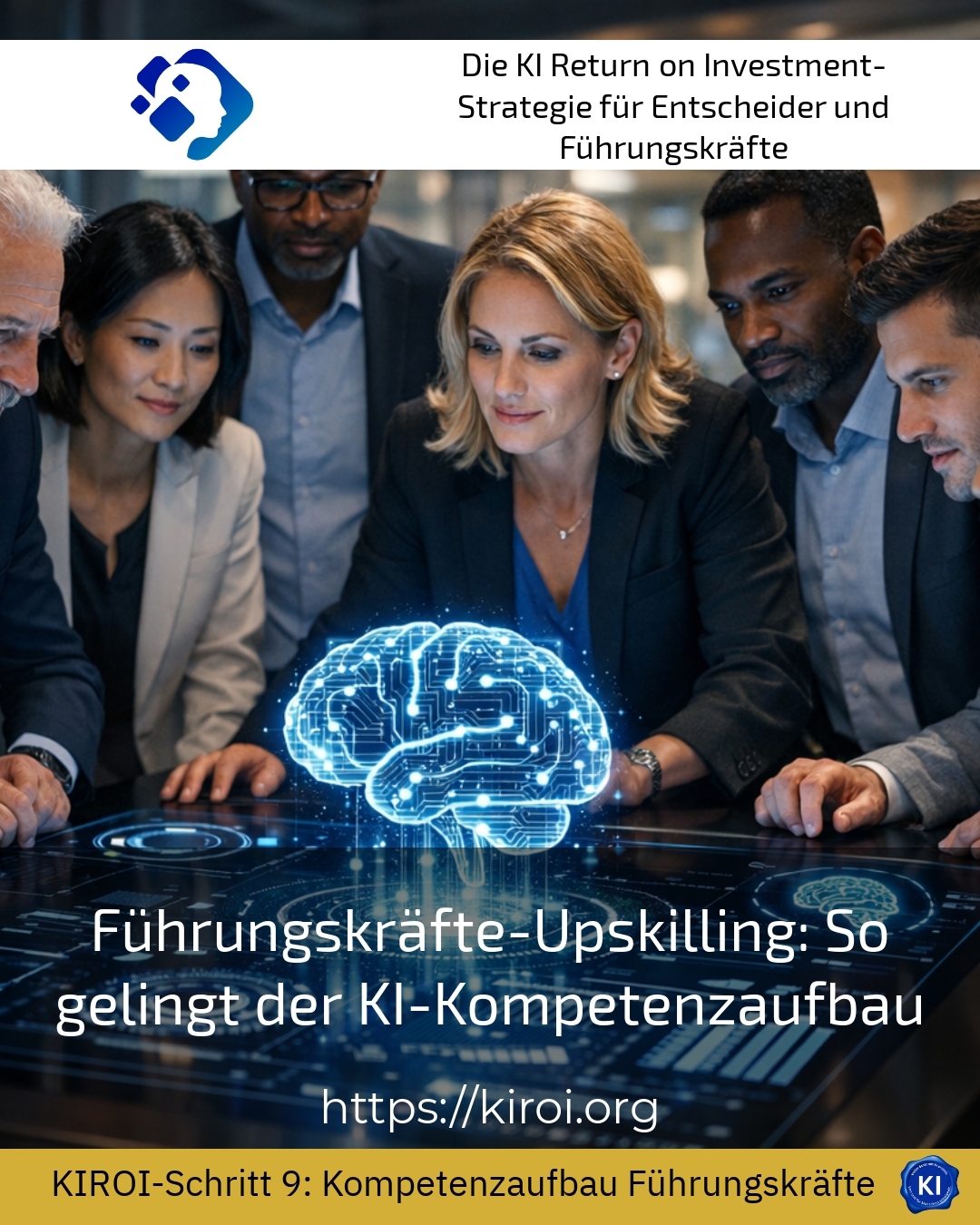
The answer rarely lies in the technology itself, but rather in the people who are to use and strategically exploit these technologies. Particularly in leadership positions, a remarkable discrepancy emerges between the desire for innovation and the actual ability to drive it forward. Leadership Upskilling Therefore, it is increasingly becoming a focus of attention for forward-thinking companies, because only through systematic competence building at the highest level can sustainable changes be achieved. This does not involve training executives to become programmers, but rather providing them with the necessary understanding and strategic foresight to integrate intelligent systems profitably into their business processes [1].
The strategic importance of leadership upskilling in the modern business world
In an economic world that is changing at an unprecedented pace, decision-makers face enormous challenges. The traditional leadership style, which was based on experience and proven methods, is no longer sufficient. Today, leaders must understand how automated systems work and what opportunities they offer. They must be able to assess where the use of intelligent technologies makes sense and where human expertise remains indispensable. For example, a manager in the manufacturing sector reported that he only understood through targeted training how predictive maintenance systems could revolutionize his production lines. A sales manager recognized the potential of automated customer analyses for his sales strategy through structured further training. A human resources manager discovered new ways to more efficiently identify talent through intelligent matching systems.
Transruptive coaching helps leaders systematically go through these learning processes and translate them into concrete action strategies. Often, clients report that it was only through this structured support that they realized which opportunities they had previously left untapped. The combination of professional knowledge dissemination and personal development support creates a framework in which real transformation can take place.
Best practice with a AIROI customer
A medium-sized company in the mechanical engineering sector faced the challenge of preparing its entire leadership team for the digital future. The management team had recognized that technological investments alone were not enough to remain competitive. As part of a structured AIROI program, the department managers first underwent an intensive training program that included both theoretical fundamentals and practical application scenarios. Particularly valuable was the work on concrete projects from within the company itself. The participants jointly developed concepts for automated quality control and intelligent warehouse management. Within six months, three pilot projects were created that achieved measurable efficiency improvements of an average of 23 percent. The executives reported that through the program they not only gained technical understanding but also redefined their role as an innovation driver. The company continues to benefit from the established structures and the changed leadership culture.
Typical challenges in AI competence building
The issues that executives encounter in consulting processes often resemble each other in surprising ways. Many report feeling overwhelmed by the abundance of options and buzzwords. They feel uncertain when it comes to making investment decisions or being competent in communicating with their teams. Some openly admit that they cannot assess the implications of certain technologies. One finance executive recounted that he often could only nod in incomprehension at presentations by his IT department. A marketing manager admitted that she avoided automated analysis tools because she lacked a basic understanding of them. A production manager admitted that he reflexively rejected suggestions for intelligent manufacturing systems because he could not understand their usefulness.
This uncertainty often leads to avoidance behavior or hasty decisions without a solid foundation. Transruptive coaching intervenes precisely at this point and offers a protected space where leaders can openly discuss their knowledge gaps. The coaching is never evaluative but always solution-oriented and focused on practical benefits.
The emotional dimension of leadership upskilling
What is often underestimated is the emotional component of the learning process. Leaders are accustomed to being experts in their field and providing guidance. Suddenly becoming a learner requires courage and humility. Some experience this as a threat to their authority and develop resistance. Others find it liberating to finally ask questions that they would not have dared to ask otherwise. A department manager described the process as a journey from a fear-monger to a risk-taker. A managing director spoke of how the training revived her curiosity, which she had almost forgotten. A branch manager emphasized that only understanding the technology allowed him to authentically lead his employees [2].
The insights provided by coaching often go far beyond the strictly professional aspects. Participants report an increased sense of self-confidence and a changed attitude towards change in general. This personal development is at least as valuable as the pure increase in knowledge.
Methodological approaches for sustainable competence development
An effective upskilling program takes into account different learning styles and prior knowledge. It combines theoretical foundations with practical exercises and real-life case studies from the specific company context. Forms that provide space for exchange and reflection have proven particularly effective. Peer-learning groups allow managers to learn from one another and share experiences. Practical projects create immediate application possibilities for the learned knowledge. Mentoring relationships between experienced and less experienced colleagues promote the transfer of knowledge on a personal level. For example, a logistics company implemented a tandem system in which one management team member worked alongside a technical expert. A trading company organized regular innovation workshops in which new technologies were explored together. A service company established an internal competence center that serves as a point of contact for all questions regarding intelligent systems.
Best practice with a AIROI customer
An internationally operating business decided on a comprehensive approach to upskilling its management. The special feature was the combination of different learning formats that integrated over a twelve-month period. First, all senior managers at the top three levels completed a basic seminar on the functions and applications of intelligent systems. Subsequently, thematic working groups were formed on topics such as customer analysis, supply chain optimization, and personnel planning. Each group developed a concrete pilot project for its own area of responsibility. Monthly reflection rounds enabled the exchange of insights and challenges. External experts were available for technical questions and provided inspiration from other industries. The program led to a noticeable cultural change throughout the entire company. Managers were more confident and initiated new projects independently. The innovation rate increased measurably, and employee satisfaction in the affected areas improved significantly.
Integration into management practice
Learning does not take place in isolation; it must be integrated into professional life. The best programs take into account the time constraints of executives and offer flexible formats. Microlearning units enable knowledge acquisition even in short timeframes. Application-oriented tasks ensure the transfer into practice. Regular check-ins keep the learned material fresh and motivate implementation. For example, a construction company introduced weekly short updates on technological developments. An insurance company established monthly innovation breakfasts where new use cases were presented. A media company used an internal learning platform with curated content that was individually accessible [3].
The role of leadership upskilling for corporate culture
When leaders learn to be visible, it sends a strong signal to the entire organization. It shows that continuous development is valued and not just expected from employees. This role model function cannot be overestimated. Employees are guided by their leaders and draw from that what really matters in the company. One energy sector company reported that the willingness to learn increased at all levels after the management publicly discussed their own learning processes. One pharmaceutical company noted that the acceptance of new systems was significantly higher when leadership could explain and demonstrate these competently. A technology company observed that the innovation culture improved noticeably after leaders began sharing their own experiments with new technologies.
Transruptional coaching supports leaders in consciously assuming this culturally defining role. It is about not only learning for oneself, but also creating learning spaces for others. This multiplier effect significantly enhances the benefits of each individual training initiative.
Measurable success and long-term impact
Investments in competence building must be worthwhile, and in fact the successes can often be quantified. Companies report shorter decision cycles in technology-related matters. They record higher success rates in digitalization projects. They observe an increased sense of innovation and willingness to experiment. One automotive supplier was able to reduce the project durations for new digital initiatives by an average of 30 percent. A retail company increased the usage rate of new analysis tools by training management from 20 to 78 percent. A healthcare provider improved patient satisfaction measurably through intelligently controlled appointment scheduling systems, whose implementation was driven by competent management.
However, not all of these achievements can be quantified. The increased security in handling new technologies, the improved understanding of our own employees from technical fields, and the ability to make well-informed strategic decisions – all these are valuable results that will pay off in the long run.
My AIROI Analysis
The experiences from numerous mentoring projects clearly show that leadership upskilling is no longer an optional add-on program but rather a strategic necessity. Companies that invest in the development of their leadership team gain a sustainable competitive advantage that goes far beyond mere technological use. The AIROI methodology has proven particularly effective in this regard because it combines technical understanding with strategic foresight and personal development. Leaders not only learn what is possible, but also how to assess and utilize opportunities for their specific environment.
What is particularly remarkable is the impact on the entire corporate culture. When leaders learn and experiment visibly, the climate in the entire organization changes. The barrier to personal learning processes decreases, and the openness to change increases. This cultural transformation is often the real game changer, because it creates the prerequisites for continuous innovation.
The future belongs to companies whose leaders not only manage but also shape it. The ability to understand and strategically utilize technological opportunities is becoming increasingly important. Transruptive coaching provides structured guidance that supports leaders on this journey. It provides impetus, creates orientation, and enables real development. The investment in this process pays off multiple times – for the leaders themselves, their teams, and the entire company.
Further links from the text above:
[1] Harvard Business Review – AI & Machine Learning
[2] McKinsey – People & Organisational Performance Insights
[3] Gartner – Future of Work Research
For more information and if you have any questions, please contact Contact us or read more blog posts on the topic Artificial intelligence here.








 Deutsch
 English (UK)