
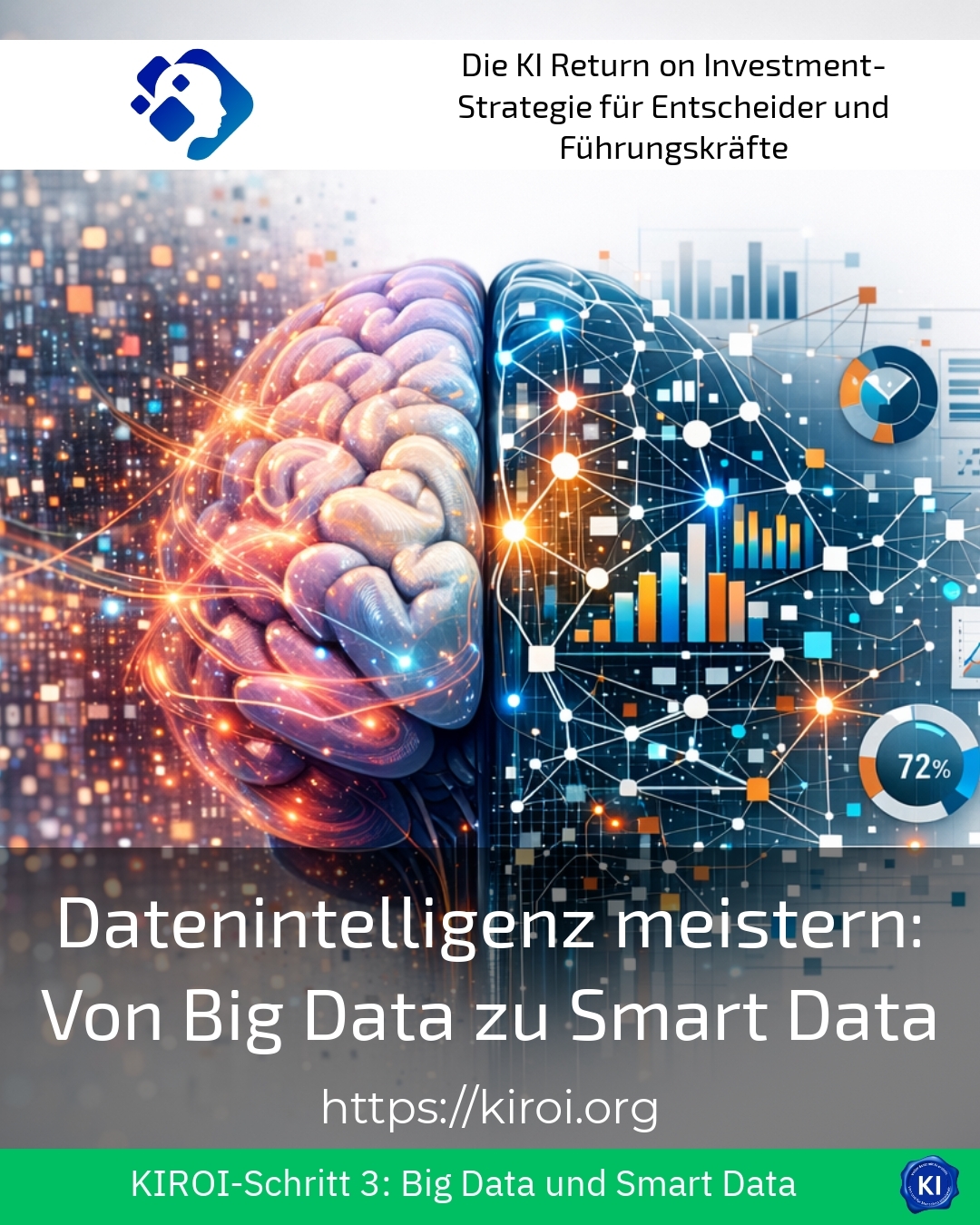
Have you ever wondered why some companies seemingly make the right decisions effortlessly, while others are completely overwhelmed by a sea of numbers and statistics? The answer lies not in the volume of collected information, but rather in the ability to extract actionable insights from this deluge and strategically apply them. Mastering Data Intelligence: From Big Data to Smart Data Today, it means much more than just collecting and storing information. It involves transforming raw data sets into actionable insights that can give companies a real competitive advantage. A thoughtful approach helps draw the right conclusions and make sustainable decisions.
The Evolution of Information Processing in Modern Organisations
The developments of recent years have shown that simply accumulating information does not create added value. Rather, unstructured data often creates new problems. Companies invest significant resources in storage capacities and analysis tools. Yet many executives report difficulties in decision-making. The challenge lies in distinguishing relevant information from irrelevant information. This is where the transformation towards intelligent data strategies begins.
In the manufacturing industry, for example, sensors continuously collect measurement data from production systems. These data streams can comprise several terabytes per day. However, without intelligent filtering and analysis, this information remains useless. A medium-sized machine manufacturer faced exactly this problem and sought solutions. In retail, on the other hand, cash register systems and online shops generate enormous transaction data. The trick is to predict customer behavior and optimize inventory levels. In healthcare, millions of patient data are generated daily that could be used to make better diagnoses.
Best practice with a AIROI customer A traditional family business in the field of industrial manufacturing came to us with a classic challenge that many medium-sized companies are familiar with. The company had invested in various software solutions over the years and had extensive data sets from production, sales, and customer service. However, this information existed in isolated silos, making a holistic view almost impossible. As part of our transruptive coaching process, we first analyzed the existing infrastructure and identified the critical interfaces. Together with the internal team, we developed a strategy for the gradual integration of the various data sources. Particularly important was involving the employees from the very beginning in the process and taking the fears of change seriously. After six months of intensive collaboration, the company was able for the first time to gain a unified view of all relevant business processes and make decisions based on solid information.
Mastering data intelligence through structured approaches
The journey from pure data collection to real value creation requires a clear methodology. First, companies must understand what questions they actually want to answer. Only then can they determine what information is needed to answer them. This opposite approach distinguishes successful projects from failed initiatives. The quality of the initial data also plays a crucial role. Faulty or incomplete datasets inevitably lead to false conclusions.
In the financial sector, this correlation is particularly evident. Banks and insurance companies handle highly sensitive customer data. The regulatory requirements for data quality and security are correspondingly high. A leading credit institution therefore implemented comprehensive data quality management. The results significantly exceeded expectations. In the logistics sector, on the other hand, precise location data and traffic information enable optimal route planning. This allows freight forwarders to reduce fuel costs and shorten delivery times. In the energy sector, too, intelligent analysis of consumption data has led to significant efficiency improvements [1].
The role of human expertise in digital transformation
Despite all technological advancements, humans remain the decisive factor. Algorithms can recognize patterns and uncover connections. However, interpreting these findings requires experience and context knowledge. That is why, in transruptions coaching, we not only accompany companies with the technical implementation. We place particular emphasis on developing the necessary competencies within the team. Clients often report initial uncertainties in using new tools. We take these concerns seriously and provide guidance for a more confident approach to data-based decision-making processes.
For example, a pharmaceutical company faced the challenge of efficiently evaluating clinical trial data. The existing analysis tools were technically advanced. However, there was a lack of internal expertise for optimal use. Through targeted training measures, this gap was bridged. In the automotive sector, the development of autonomous vehicles requires enormous amounts of data from test drives. Engineers must learn to interpret this information meaningfully. In marketing, it has also been shown that creativity and data analysis do not have to be opposites [2].
Practical strategies for the transformation process
The successful implementation of a smart data strategy begins with an honest assessment of the current situation. What data are currently being collected and how are they used? Where are the greatest potential for improvement? These questions should be at the forefront of every project. Subsequently, defining clearer goals and measurable success criteria is recommended. Only then can progress be objectively evaluated. Involving all relevant stakeholders from the outset significantly increases acceptance.
In the telecommunications industry, leading providers have begun analyzing network data in real time. This allows them to predict disruptions and proactively fix them. Customer satisfaction has thus increased measurably. In the e-commerce sector, personalized recommendations based on purchase histories enable significantly higher conversion rates. Online retailers are therefore increasingly investing in corresponding technologies. The tourism industry, in turn, uses booking and review data to better tailor offers to customer preferences [3].
Best practice with a AIROI customer An international trading company approached us with the desire to make its supply chain more transparent and resilient. The challenge was to bring together and analyze data from over twenty different countries and hundreds of suppliers. As part of our collaboration, we initially developed a unified data model that took cultural and technical differences into account. The intensive exchange with the local teams on the ground was particularly valuable, providing valuable insights into regional peculiarities. We supported the company over a twelve-month period, helping them to build an integrated platform step by step. Today, the company is able to detect supply bottlenecks early and activate alternative sources of supply before production disruptions occur. Employees report a significantly improved work efficiency and fewer stressful crisis situations.
From Big Data to Smart Data: The Crucial Difference
The distinction between the two concepts is fundamentally important. Big Data merely describes the presence of large amounts of data; smart data, on the other hand, refers to its intelligent use for specific business purposes. Mastering Data Intelligence: From Big Data to Smart Data This therefore requires a change in perspective. It is no longer about collecting as much information as possible. Instead, the focus shifts to the quality and relevance of the data. This paradigm shift has far-reaching consequences for organizational structures and working methods.
The media industry illustrates this change vividly. Streaming services analyze the usage behavior of their subscribers in detail. This allows them to produce content that precisely meets the tastes of the target audience. In the sports sector, clubs use performance data from their athletes to create individualized training plans. As a result, injury rates have often decreased. Data-based approaches have also gained traction in agriculture. Precision agriculture enables resource-efficient management of agricultural land [4].
Challenges and solutions in everyday business life
The transformation towards a data-driven organization is not a sprint, but a marathon. Many companies underestimate the necessary time investment and resources required. Resistance from the workforce is not uncommon and should be taken seriously. The fear of job losses due to automation is understandable. Transparent communication and employee involvement in the change process can help alleviate this fear. Training programs can reduce fears and open up new perspectives.
An example from the insurance industry illustrates this dynamic. A traditional insurer wanted to automate its claims processing. The claims officers feared becoming redundant. Through targeted communication and retraining measures, they managed to dispel these concerns. Today, the former claims officers serve as process experts in supporting the further development of the systems. In the construction industry, digital twins enable predictive maintenance of construction machinery. Technicians are now focusing on more complex tasks. In the education sector, learning analytics are also creating new opportunities for individualized support [5].
My AIROI Analysis
Looking at numerous projects across different industries has made one thing clear: Success in transforming data volumes into real business value depends on several factors that go far beyond mere technology. First and foremost, a clear strategic vision must be actively supported and communicated by the company’s leadership. Without this support, even the most ambitious initiatives will flounder in day-to-day operations. Furthermore, it is repeatedly shown that the human component is crucial for project success. Employees who feel valued and supported become ambassadors of change. Conversely, neglected concerns can lead to significant resistance that can lead projects to fail.
From my experience in supporting transformation projects, it can be concluded that a step-by-step approach is often more successful than attempting to change everything at once. Small successes build confidence and motivate for further steps. Continuous measurement of progress using predefined metrics enables an objective evaluation and timely countermeasures in the event of deviations. Finally, it has been shown that external support from experienced partners can significantly accelerate the process, as errors that others have already made are avoided. Mastering Data Intelligence: From Big Data to Smart Data Therefore, it is not a one-time task but a continuous development process that requires perseverance and commitment, but that promises significant competitive advantages in the long run.
Further links from the text above:
[1] Gartner Insights on Data Analytics
[2] McKinsey Digital Insights
[3] Forbes article about Big Data and AI
[4] Harvard Business Review on the topic of data
[5] Bitkom Big Data Resources
For more information and if you have any questions, please contact Contact us or read more blog posts on the topic Artificial intelligence here.








 Deutsch
 English (UK)