
What if the competitor that keeps you awake at night doesn't actually have any technological advantage at all?
This question may sound initially irritating, but it hits at the core of a fundamental misperception that is currently leading countless organizations astray. The conventional wisdom is that the company that triumphs is the one that possesses the most advanced technology. Man and machine-Technology does exist. But the reality paints a completely different picture that appears far more complex and at the same time more hopeful. In numerous industries, it is becoming increasingly clear that the true competitive advantage lies not in the superiority of the algorithms used, but in the way teams combine these tools with human expertise [1].
The widespread illusion of technological superiority
Everywhere where people work and create value, a strange paradox prevails. Executives invest considerable sums in ever more powerful data processing systems. They assume that these investments will automatically lead to better results. However, this assumption often turns out to be misleading. A medium-sized craft business that wants to optimize its order planning purchases, for example, the same software as its larger competitor. An engineering firm uses identical analysis tools as the renowned competition at the other end of town. A tax consulting firm relies on the same digital assistants that are also used by the market leaders.
The tools themselves are by no means the differentiating feature that many believe to be the case. The major vendors are increasingly democratizing their technologies and making them accessible to a wide range of users [2]. What is still considered an exclusive competitive advantage today is available to anyone who is willing to pay a monthly license fee tomorrow. Average organizations often respond to this development with a strategy that is downright reflexive: they chase the latest and supposedly best tool, switch systems as soon as something better comes to market, and hope that the technology will solve their problems on its own.
The best tool wins – a dangerous delusion
This mindset leads to a constant cycle of acquisition, onboarding, and repeated changes. An architecture firm purchases state-of-the-art planning software, but employees only use a fraction of its features. A medical practice implements an intelligent appointment management system, but the receptionists regularly fail to use it because they rely on the old processes. A logistics company invests in predictive route optimization, while the drivers continue to follow their gut instinct because no one has explained to them why the new suggestions are meaningful.
The truth is uncomfortable but liberating at the same time: The difference between successful and less successful organizations rarely lies in the quality of the technology itself. It manifests itself rather in the ability to, Man and machine To move towards a harmonious interaction. This insight changes the entire perspective on digital transformation and opens doors for everyone who previously believed they could not keep up with the technological race.
AIROI: A new paradigm for sustainable value creation
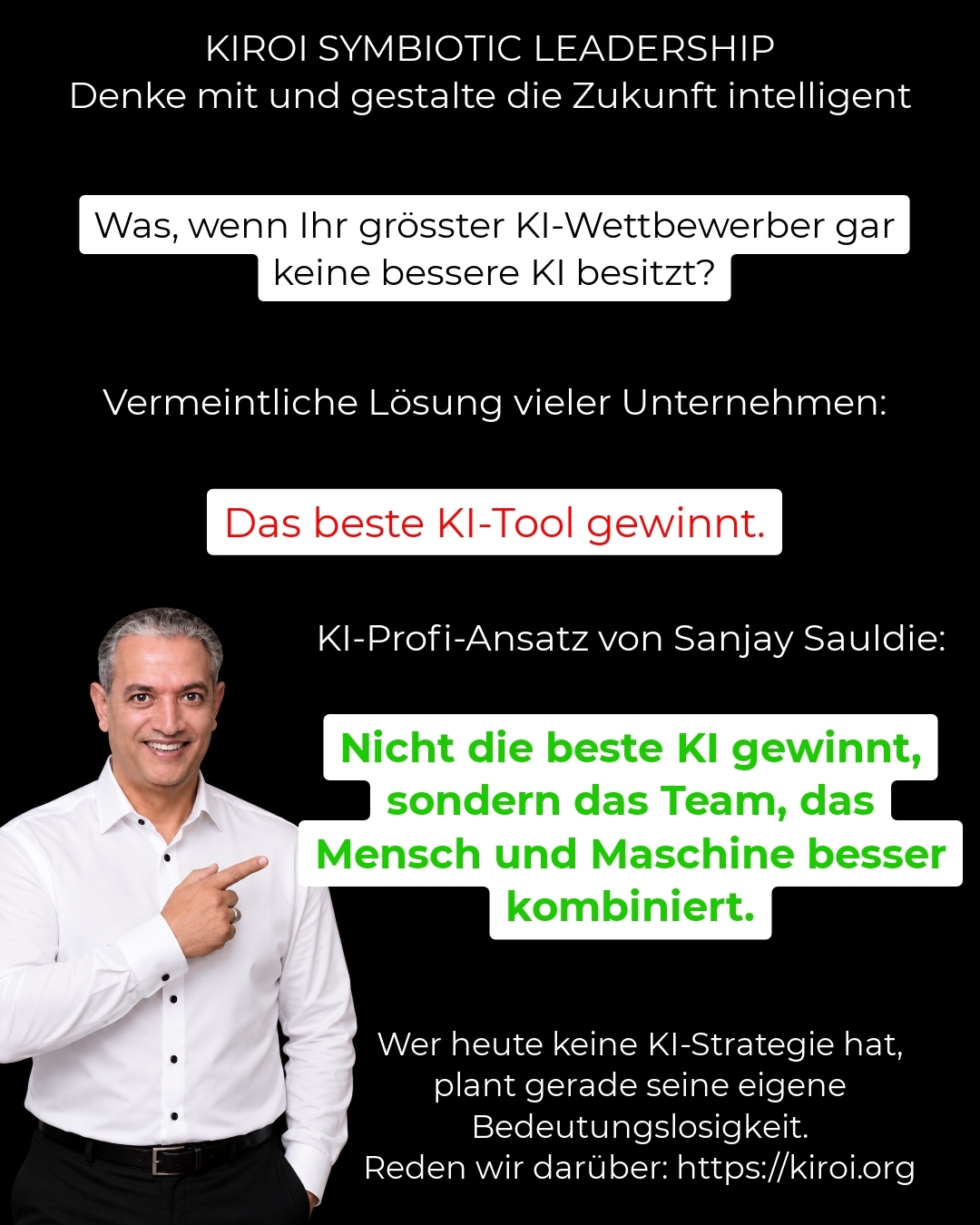
The AIROI-approach puts these conditions from head to foot and offers a systematic framework for a people-centered implementation of digital tools. The central thesis is: It is not the best tool that wins, but the team that Man and machine woven together in the smartest way [3]. This principle may sound simple, but it requires a fundamental rethinking of the way we design, execute, and evaluate technology projects.
Imagine a hair salon that introduces an intelligent booking system. The average approach is to install the software, conduct a short training, and then hope that everything works. The AIROI-approach, on the other hand, starts with the question of what tasks the team performs daily and where exactly technological support can actually bring relief. It takes into account the concerns of the employees, who might fear being replaced. It integrates the experience of long-time employees who know their regular customers better than any algorithm could ever be.
Best practice with a AIROI customer
A medium-sized company in the manufacturing sector faced the challenge of modernizing its quality control without sacrificing the expertise of its experienced professionals. The management initially considered purchasing an advanced system for automated error detection that would largely replace human control. However, it quickly became clear during the AIROI mentoring process that this approach would not only encounter resistance but also destroy valuable tacit knowledge that experienced inspectors had accumulated over decades. Instead, the team developed a hybrid model in which the digital system acts as a pre-filter, marking out notable defects, while the final assessment remains with the human experts. Their assessments, in turn, feed back into the system as training data, so that it continuously learns from human expertise. After six months, the error rate had decreased by thirty-three percent, while employee satisfaction with their work was demonstrably increased. The professionals did not feel replaced, but rather confirmed in their competence and supported by a helpful tool that reduces the monotonous aspects of their work.
Why humans and machines are stronger together
The strengths of humans and digital systems are complementary, not competitive. Algorithms excel at processing large amounts of data, recognizing patterns, and tirelessly repeating standardized tasks. Humans, on the other hand, possess intuition, empathy, creativity, and the ability to handle completely novel situations for which no historical data exist [4].
For example, a funeral home can use a system that supports organization and coordination. But the empathetic guidance of grieving relatives, the right words at the right time, the sense of unspoken needs—that remains deeply human. A fitness studio can have training plans algorithmically optimized, but the motivational presence of a good trainer who recognizes when someone is having a bad day is irreplaceable. A bakery can better plan its order quantities through predictive analysis, but the decision to prepare more ice cream cups spontaneously on particularly beautiful days stems from human observation and local experience.
Practical steps to better integrate humans and machines
The implementation of the AIROI-approach begins with an honest inventory. Which tasks are currently performed exclusively by people, even though they are well suited for technological support? Which processes have already been automated but do not function optimally because the human component is missing? Where are there resistance to new tools, and what are the underlying causes of this resistance?
For example, a wine shop might find that its recommendation system works technically flawlessly, but is hardly adopted by customers because they prefer the personal interaction with the knowledgeable sommelier. The solution lies not in abandoning the system or forcing customers to use it. Rather, the system can serve as a memory aid for the sommelier, showing him what a regular customer has purchased on previous visits. This way, human advice is enriched by technological support without losing its personal touch.
A dance school can use a course planning system that optimizes space utilization and participant numbers. At the same time, dance teachers should retain the freedom to react spontaneously to the dynamics of a group and extend a course if the mood is particularly good. The system suggests that the person makes the decision—this division of labor respects the respective strengths of both parties.
The role of the leader in shaping this symbiosis
Executives who are to accompany this change face a challenging task. On the one hand, they must ensure technological progress, but on the other hand, they must take their teams’ concerns and concerns seriously. They must justify investments, but at the same time, they must dampen unrealistic expectations. They must drive change without destroying the organization’s proven strengths.
An optician who purchases new surveying equipment is well advised to actively involve its experienced staff in the implementation process. They can provide valuable insights into where the technology reaches its limits and where human judgment remains indispensable. A gardening company that equips irrigation systems with sensor technology should continue to give gardeners the opportunity to intervene based on their experience when the plants behave differently than expected.
Transruptions coaching offers valuable guidance and support in these projects. It helps leaders find the right balance and navigate their teams through the change process. Clients often report that through this coaching, they not only achieve better results but also develop a deeper understanding of the dynamics that become effective when introducing new technologies [5].
My AIROI Analysis
The examination of numerous practical cases suggests a clear conclusion: The true competitive advantage in the digital age is not achieved through the mere acquisition of superior technology, but through the clever orchestration of Man and machine. Organizations that have internalized this principle achieve more sustainable results, create higher levels of employee satisfaction, and build competitive advantages that cannot be easily replicated.
The most important takeaway from AIROI this perspective is therefore: Stop chasing the latest technological trend. Instead, start by better connecting your existing tools with the skills of your people. When making every technology decision, ask not just what the system can do, but also how it will enrich and support the work of your employees. Invest at least as much in training, onboarding, and mentoring your teams as in the technology itself.
The future does not belong to the organizations with the most or most expensive digital tools. It belongs to those who have understood that technology is an amplifier of human abilities—not a substitute for them. In this realization lies a great opportunity for all those who have felt inferior in the race for the best technology so far. Because the ability to, Man and machine Connecting in a meaningful way is not a question of budget, but of attitude and the willingness to explore new ways of collaboration.
Further links from the text above:
[1] Harvard Business Review – AI and Machine Learning
[2] McKinsey – The State of AI
[3] AIROI Blog – Properly using artificial intelligence
[4] MIT Sloan – Artificial Intelligence Insights
[5] Transruptions Coaching – Contact and Support
Are you a leader and would you like to learn how you can genuinely introduce AI into your company in a valuable and sustainable way, away from the hype? Take part Contact us or read more blog posts on the topic Artificial intelligence here.








 Deutsch
 English (UK)