
Why do so many promising technology projects fail despite brilliant algorithms and enormous investments due to the lack of acceptance from the people they are actually intended to serve?
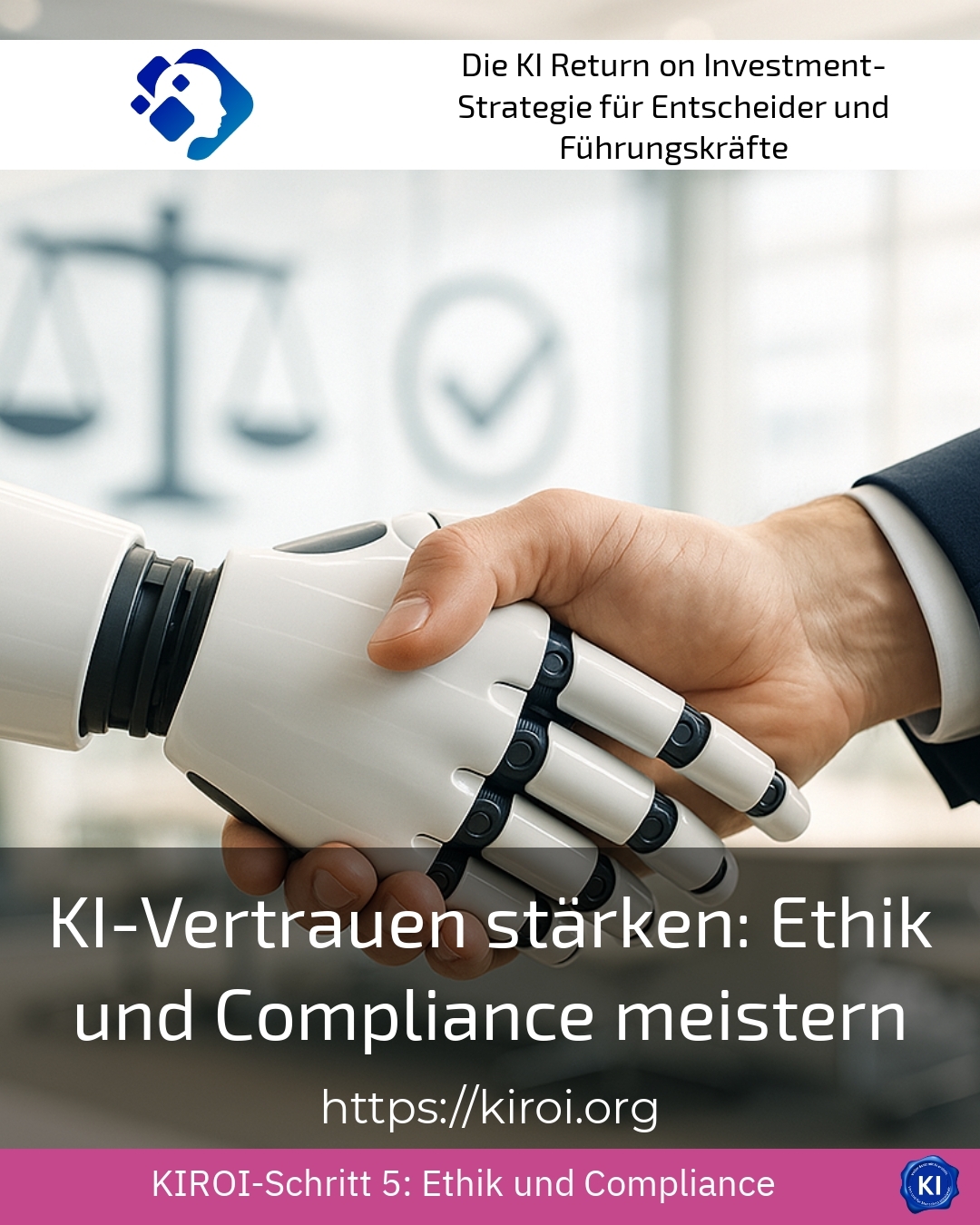
This question concerns decision-makers in almost all sectors of the economy. They face a fundamental challenge. Intelligent systems are being integrated into processes and workflows. At the same time, concerns are growing among employees and customers. This Strengthening AI trust This becomes a central task. Ethical principles and regulatory requirements merge into a complex field of topics. Companies must consider both aspects equally. Only in this way can sustainable solutions with broad acceptance be created. The following sections outline concrete ways to achieve this goal.
Why ethical foundations form the foundation
Technological innovations are fundamentally changing work methods and business models. But without ethical anchoring, resistance quickly arises. An insurance company introduced automated claims assessments. The claims handlers felt left out and double-checked the results. The hoped-for efficiency gain was not achieved. A trading conglomerate relied on intelligent personnel planning. Employees perceived the shift allocation as arbitrary and unfair. The turnover increased measurably. A financial services provider largely automated credit decisions. Customers complained about lack of transparency in rejection decisions.
These examples clearly illustrate a recurring pattern. Technical excellence alone is not enough. People want to understand how decisions are made. They expect fairness and accountability. Ethical guidelines provide this necessary orientation. They define limits for algorithmic decision-making. At the same time, they enable innovation within an accepted framework.
Companies benefit from clear ethical standards on multiple fronts. Employees gain confidence in handling new tools. Customers develop trust in automated processes. Regulatory audits run more smoothly. Public perception improves measurably.
Strengthen AI trust through transparent communication
Transparency forms an essential component for acceptance. A logistics company comprehensively informed its drivers about route optimizations. The explanation of the underlying factors created understanding. Initial skepticism turned into active collaboration. A hospital communicated openly about diagnostic support systems. Doctors and nurses were made partners instead of critics. An energy provider explained the functionality of intelligent meters to customers. Privacy concerns could thus be addressed early on.
Transparency does not mean full disclosure of all technical details. It means understandable explanations for relevant target groups. Employees require different information than end customers. Supervisory authorities, in turn, have their own requirements. A differentiated communication strategy takes these differences into account. It adjusts the depth and scope of the explanations.
Best practice with a AIROI customer
A medium-sized manufacturing company faced the introduction of predictive maintenance systems that were intended to continuously monitor the machine’s condition and predict failures. Initially, the factory management focused on technical implementation and neglected communication with the maintenance teams. The experienced technicians perceived the system as a challenge to their years of expertise and reacted with passive resistance by ignoring or delaying maintenance recommendations. As part of the onboarding AIROI process, the company developed a comprehensive transparency strategy that explained the system’s functionality to the technicians and explicitly valued their experience as an indispensable addition. Regular feedback rounds enabled employees to comment on system suggestions and make improvements, which gradually refined the algorithms. After six months, the technicians reported overwhelmingly positive feedback on their collaboration with the system and independently proposed optimization suggestions, while unplanned downtime decreased by more than thirty percent and the acceptance for further digitalization projects significantly increased.
Understanding compliance requirements as an opportunity
Regulatory requirements initially appear restrictive. In fact, they provide valuable guidance. They define minimum standards for responsible technology use. One pharmaceutical company used compliance requirements to optimize processes. The required documentation also improved internal workflows. A telecommunications provider structured customer analyses along regulatory guidelines. The result was a more transparent and efficient system. An automotive supplier implemented quality controls in accordance with industry standards. Compliance with regulations became a competitive advantage.
The European regulatory landscape continues to evolve dynamically. Companies must continuously monitor current developments [1]. Risk-based approaches are gaining in importance. High-risk applications are subject to stricter requirements. Transparency and documentation obligations are expanding. These developments require proactive action.
Proactive compliance strategies pay off multiple times over. Companies avoid costly follow-up repairs. They position themselves as trustworthy partners. Regulatory audits run more efficiently. Internal governance improves sustainably.
Practical implementation in daily business operations
Abstract principles must be translated into concrete actions. A retail company trained all executives on fundamental ethical issues. Awareness had an impact on project decisions. A media company established ethics boards for technology projects. Critical questions were systematically clarified before implementation. A healthcare provider developed checklists for algorithmic decision-making. Employees received practical guidance.
Integrating it into existing processes requires careful planning. Compliance audits should begin early in the project lifecycle. Ethical considerations should be included in requirements definitions. Regular reviews ensure ongoing compliance. Documentation standards facilitate accountability and auditing.
Strengthening AI trust through participation
Involving affected parties forms an effective approach. One industrial company employed production workers in system design. Their practical knowledge significantly improved the solutions. One service company had customers co-design automation options. The acceptance of the resulting services increased significantly. One public authority organized citizen participation in administrative digitalization. Concerns could be addressed early on.
Participatory approaches require additional effort. However, this effort pays off many times over. Systems become more practical and accepted. Resistance to implementation decreases. Identification with new solutions increases. Continuous improvements are enabled by feedback.
Best practice with a AIROI customer
A regional bank planned the implementation of intelligent advisory systems that were to support customer advisors in making investment recommendations. The original project planning provided for a classic top-down implementation, with the advisors only being trained after completion. AIROI The guidance recommended a fundamentally different approach, in which experienced advisors were included from the outset as co-developers and their expertise was incorporated into the system design. In weekly workshops, the advisors tested prototypes and provided detailed feedback on user guidance, recommendation quality, and integration into advisory sessions, which resulted in numerous features being adapted or removed based on practical considerations. The advisors increasingly developed a sense of ownership for the system and became internal ambassadors for its implementation, while at the same time regulatory requirements for documenting investment recommendations could be seamlessly integrated. The rollout phase proceeded much more smoothly than in comparable projects, usage rates exceeded expectations from the outset, and customer satisfaction with advisory sessions improved measurably because the system was perceived as a real support.
Establish long-term governance structures
One-time measures are not enough. Sustainable structures are required. A technology company established a permanent ethics committee. It continuously accompanies all relevant projects. A insurance association developed industry-wide standards. Member companies are guided by common guidelines [2]. A trade association created a central compliance function. This coordinates requirements across company boundaries.
Governance structures must keep pace with technological developments. Regular reviews and adjustments are necessary. External expertise can provide valuable insights. Exchange with other organizations promotes best practices.
Addressing challenges openly
Clients often report recurring problems. The balance between innovation and regulation appears difficult to achieve. Technical teams and compliance departments speak different languages. Employees feel overwhelmed by the speed of change. Customers express concerns about privacy when it comes to automated decisions.
These issues require individual solutions. Coaching can provide impetus and support processes. transruptions coaching positions itself clearly as a partner in such projects. It accompanies companies on their journey towards responsible technology use. Practical implementability and lasting impact are the main focus.
A mechanical engineering company struggled with conflicting requirements. Marketing wanted rapid automation. The legal department resisted for compliance reasons. Moderated strategy development brought both parties together. A logistics provider faced resistance from drivers. Targeted communication measures addressed their concerns. A financial services provider sought ways to explain its decisions. New documentation formats made decisions more understandable [3].
Strengthening AI trust as a continuous process
Building trust requires perseverance and consistency. One-time initiatives do not produce lasting effects. An energy company established regular dialogue formats. Employees were able to express questions and concerns continuously. A retail company introduced a trust barometer. Regular measurements showed progress and areas for action. A healthcare provider organized recurring informational events. Patients and employees were kept informed of developments.
Continuity signals seriousness and commitment. It enables the gradual building of trust. Setbacks can be constructively addressed. Successes become visible and motivate further efforts.
My AIROI Analysis
The discussion of ethical and regulatory aspects of intelligent systems shows clear patterns. Technical excellence alone does not create acceptance. People need understanding, participation, and transparency. Companies that take these needs seriously achieve better results in technology projects.
The AIROI-methodology addresses precisely these connections. It combines strategic perspectives with operational feasibility. Ethical principles are translated into concrete recommendations for action. Compliance requirements are understood as a design opportunity. Participatory approaches promote acceptance and quality alike.
Integrated approaches are particularly effective. They take technical, organizational, and human factors into account together. Isolated measures often remain ineffective. Only the interaction of various interventions generates lasting change. The support of experienced partners can significantly accelerate this process.
The regulatory framework will continue to evolve. Companies should act proactively rather than reactively to improve. Early investments in governance structures pay off. They create competitive advantages and reduce risks. The connection between ethics and compliance does not hinder innovation; on the contrary, it enables responsible and accepted solutions.
Further links from the text above:
[1] EU Artificial Intelligence Act – Regulatory framework
[2] Bitkom – Guidelines for Artificial Intelligence
[3] BSI – Recommendations for AI security
For more information and if you have any questions, please contact Contact us or read more blog posts on the topic Artificial intelligence here.








 Deutsch
 English (UK)