
Have you ever wondered why some decision-makers seem to effortlessly stay up to date, while others drown in the flood of information and miss valuable opportunities in the process?
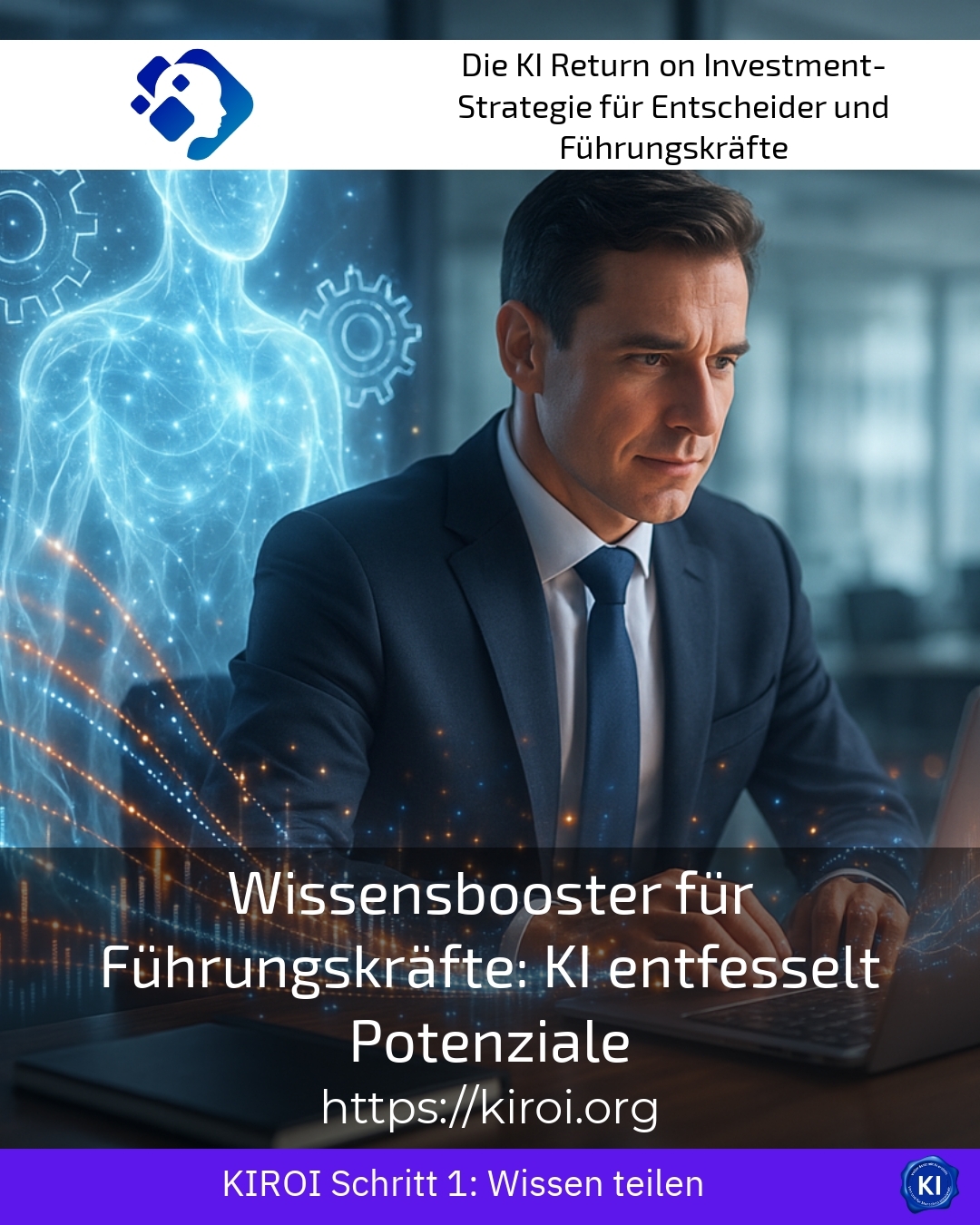
The answer is often hidden within a crucial factor. Modern technologies now act as Knowledge booster for managers. They enable a completely new approach to relevant information. Intelligent systems analyse large volumes of data in a matter of seconds. They filter out what is relevant and present insights in a structured way. This development is changing the way decision-makers learn and act. At the same time, new opportunities for strategic foresight are emerging. The technology unleashes potentials that previously remained untapped. This article shows you how this transformation can succeed.
Warum traditionelle Wissensvermittlung ihre Grenzen erreicht
Traditional professional development is facing fundamental challenges. Seminars take place at fixed times. Decision-makers are often unable to attend. Specialist books become outdated faster than ever before. Conferences offer networking, but little individual depth. The density of information in companies is growing exponentially. At the same time, the time available for reading and reflection is shrinking. This discrepancy creates stress and uncertainty. Many leaders report the feeling of missing out on important developments.
In the financial sector, for instance, regulatory requirements are constantly changing. A board member has to keep an eye on market trends, compliance regulations and technological innovations all at the same time. The pharmaceutical industry faces similar challenges. There, research results, approval processes and competitive developments must be continuously monitored. In the manufacturing sector, on the other hand, supply chains, sustainability requirements and automation trends play a central role. This complexity is increasingly overwhelming traditional learning methods.
The knowledge booster for leaders as a strategic advantage
Intelligent assistance systems are fundamentally changing this situation. They work round the clock and do not tire. They do not forget any details and recognise patterns in large amounts of data. These systems can create individual learning profiles. They adapt content to personal preferences. This creates a tailor-made Knowledge booster for managers. He provides precisely the information that is relevant in the respective context.
A retail example illustrates this. The managing director of a retail chain receives morning briefings on consumer trends. The system analyses sales data, social media sentiment and competitor activities. It distils the essential insights from this. In the energy sector, board members use similar solutions for market forecasting. They receive assessments on price developments and regulatory changes. Insurance companies rely on intelligent systems for risk analysis. These provide executives with condensed information on loss trends and portfolio developments.
Best practice with a AIROI customer
A medium-sized enterprise in the logistics sector was facing a distinct challenge. The executive board felt overwhelmed by the flood of information and struggled to distinguish between strategically relevant trends and short-lived fads. As part of a transruption coaching programme, we supported the leadership team in introducing intelligent analysis tools. First, we jointly identified the critical knowledge areas for the company. These included market developments, technological innovations and regulatory changes in European transport. Subsequently, we implemented a system that continuously monitors relevant sources. It aggregates information from specialist publications, industry associations and research institutes. The managers now receive weekly executive summaries with prioritised recommendations for action. After six months, the team reported a significantly improved quality of decision-making. The response time to market changes was considerably reduced. At the same time, the time spent searching for information fell by around forty percent. The ability to ask the system targeted questions and receive well-founded answers immediately proved to be particularly valuable.
Personalised learning pathways for individual development
Every leader brings different strengths and areas for development. A one-size-fits-all training approach does not do justice to this diversity. Intelligent systems identify individual knowledge gaps and interests. They suggest suitable content and adapt the level of difficulty. This creates a dynamic learning process that respects the limited time of decision-makers and maximises knowledge gain.
In the healthcare sector, hospital directors use such personalised systems for management knowledge. They gain insights into process optimisation, personnel management and quality management. The content takes into account the specific challenges of running a hospital. In the automotive industry, managers keep up to date with electromobility and autonomous driving. The system links technical fundamentals with strategic implications. Media companies, in turn, rely on the transfer of knowledge regarding digital business models. Their executives receive tailored information on streaming trends and user behaviour.
How the knowledge booster for managers improves decisions
Well-founded decisions are based on relevant information. Yet relevance is context-dependent and constantly evolving. Intelligent systems help to manage this dynamic. They recognise which information is important for a specific decision-making situation. They filter out the unimportant and create clarity. As a result, the quality of strategic decisions increases measurably.
In the real estate sector, executive boards analyse market data with the support of intelligent tools. They receive forecasts on location developments and rental price trends. The systems take demographic factors and infrastructure projects into account. Telecommunications companies use similar approaches for network expansion planning. Senior executives receive condensed information on usage developments and technology trends. In mechanical engineering, intelligent systems support investment decisions. They provide analyses on market potentials and technological developments.
Best practice with a AIROI customer
An executive from the chemical industry approached us with a specific request. She wanted to improve her strategic vision with regard to the sustainability transition. The subject is complex and evolving rapidly. Regulations, technological innovations and societal expectations are constantly changing. Through our ‘transruptions’ coaching programme, we worked together to develop a bespoke knowledge strategy. We identified the most relevant sources of information and prioritised them according to strategic importance. We then implemented an intelligent monitoring system. It tracks developments in green chemistry, circular economy models and CO₂ reduction. The executive now receives curated updates every day. These summarise the most important developments in a ten-minute read. In addition, she can ask the system specific questions. It then searches relevant specialist literature and provides well-founded answers. Following the roll-out, the executive reported a significant increase in confidence during strategic discussions. She feels better informed and is able to weigh up arguments more thoroughly. The company has since launched several sustainability initiatives. These are based on insights provided by the system.
Collaborative learning and knowledge transfer within the team
Leaders rarely work in isolation. They are part of teams and committees. Intelligent systems also support collaborative knowledge sharing. They identify knowledge holders within the company and connect relevant experts. They document insights and make them discoverable. This creates an organisational memory. It preserves critical knowledge and makes it accessible.
In consultancies, partners use intelligent systems for knowledge transfer. Project insights are recorded and made available for future engagements. Audit firms rely on similar solutions. They systematically document audit experiences and best practices. In the construction industry, intelligent systems help with the documentation of project experiences. Managers access condensed knowledge from past projects.
Ethical considerations and responsible deployment
The use of intelligent systems as Knowledge booster for managers also raises important questions. How do we deal with data protection? Which information sources are trustworthy? How do we avoid filter bubbles and one-sided perspectives? These questions deserve careful attention. Responsible use requires clear guidelines and critical reflection.
In public administration, managers pay particular attention to data protection. They use intelligent systems with appropriately configured access rights. Banks and financial service providers have strict compliance requirements. Their knowledge systems must meet regulatory requirements. In the education sector, ethical considerations regarding information selection are paramount. Managers critically reflect on which sources the system prioritises.
Practical implementation into everyday management
The introduction of intelligent knowledge systems requires a thoughtful approach. It is not enough simply to install a tool. Integration into existing workflows is crucial. Habits must be adapted. New routines do not emerge by themselves. Professional guidance can significantly accelerate the implementation process and minimise friction.
In the hotel industry, managers integrate intelligent briefings into their morning routine. They receive information on booking trends and guest reviews. The catering industry uses similar approaches for menu planning and purchasing. Managers receive trend analyses on dietary preferences and seasonal influences [1]. In sports management, intelligent systems support the analysis of fan interests. Club managers gain insights into engagement patterns and merchandising potentials.
Best practice with a AIROI customer
A managing director from the media sector came to us with a specific request. He wanted to boost his company's innovative capability while becoming a role model himself. His challenge was to stay in tune with industry developments despite his heavy operational workload. In transruptions coaching, we developed an individual knowledge plan. We defined the critical subject areas for his leadership role. These included digital business models, content strategies and technological innovations in the media sector. Together, we set up an intelligent information system. It curates relevant articles from international trade media and research institutes on a daily basis. The system learns continuously and refines its recommendations based on user behaviour. The managing director now receives a twenty-minute audio summary in the morning during his commute to the office. In addition, thematic deep dives are available to him for more in-depth research. Following implementation, he reported a noticeable increase in confidence in strategic discussions. He regularly brings new ideas to board meetings and is now regarded as a driving force for innovation. The corporate culture has changed measurably. Other managers are now also using similar knowledge tools.
The future of leadership learning
The development of intelligent knowledge systems is advancing rapidly. Future generations will be even more powerful. They will recognise more complex relationships and provide deeper analyses. At the same time, they will become more intuitive to use. Leaders who familiarise themselves with these tools today will secure a sustainable advantage. They are developing skills that will be indispensable tomorrow.
In the aviation industry, leaders are already experimenting with advanced analytics features [2]. They receive scenarios for various market developments and their impacts. The shipping industry uses intelligent systems for route optimisation and market forecasting. Leaders receive condensed information on trade flows and port utilisation. In the agricultural sector, knowledge systems assist with the analysis of weather data and harvest forecasts. Leaders make informed planning decisions on this basis.
My AIROI Analysis
Accompanying numerous executives during the introduction of intelligent knowledge systems has given me deep insights into the success factors of this transformation. The crucial point here does not lie in the technology itself. It is about the willingness to question established habits and embrace new forms of learning. Executives who are open to this change frequently report significant improvements. They feel better informed and more confident in their decisions.
At the same time, I observe that the Knowledge booster for managers its full effect is only unfolded when it is embedded in a holistic development approach. Technology alone is not enough. Reflection, exchange and continuous adaptation are needed. Transruptions coaching offers a valuable framework here. It supports leaders in developing and refining their individual knowledge strategy. Experience shows that professional guidance significantly accelerates the implementation process.
Of particular importance to me is the critical reflection of the information sources used. Intelligent systems are powerful tools. However, they also require discernment. Leaders should always examine which perspectives the system might be neglecting. They should consciously seek alternative viewpoints and question their own assumptions. This metacognitive competence distinguishes truly confident decision-makers from those who trust technology blindly. The future belongs to leaders who use intelligent tools wisely while preserving their human judgment.
Further links from the text above:
[1] McKinsey: The Economic Potential of Generative AI
[2] Harvard Business Review: Artificial Intelligence Research and Insights
For more information and if you have any questions, please contact Contact us or read more blog posts on the topic Artificial intelligence here.







 Deutsch
 English (UK)