
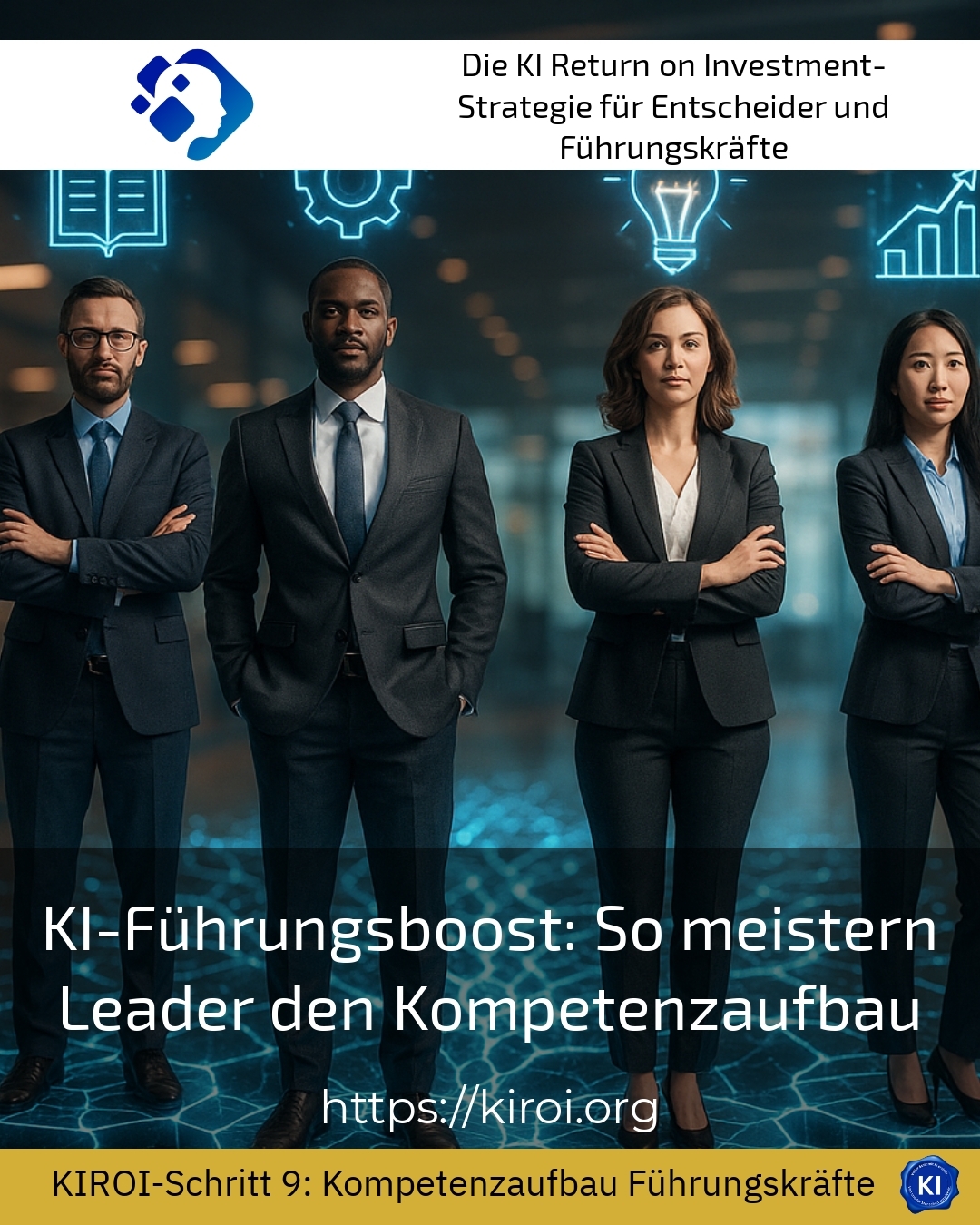
The digital revolution is not waiting for those who are lagging behind; those who are in leadership positions today are experiencing an unprecedented change. AI Leadership Boost: How leaders master capability building It is no longer just a theoretical vision of the future. It is already fundamentally shaping the everyday lives of modern companies. Leaders face the challenge of understanding technological developments while simultaneously navigating their teams through change. Many clients report feeling overwhelmed and uncertain in the face of rapid developments. Yet this is exactly where a tremendous opportunity lies for anyone willing to take new paths and actively develop themselves.
Why modern leadership requires new skills
The requirements for executives have changed dramatically in recent years, and this transformation is continuing to accelerate. Technological expertise is no longer an optional additional qualification; it forms the foundation for successful leadership. For example, a medium-sized machine engineering company in southern Germany recognized that traditional management methods were no longer sufficient to successfully manage the digital transformation. The management team therefore decided on a comprehensive development program that linked technological understanding with modern leadership approaches. In another case, a financial services provider sought external guidance because the management level had difficulty implementing data-driven decision-making processes. The retail company of a well-known fashion brand, on the other hand, faced the challenge of developing omnichannel strategies without neglecting the human component of leadership.
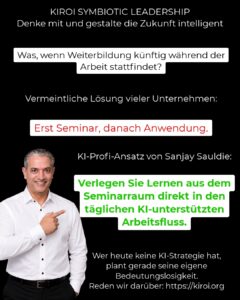
The AI Leadership Boost: How leaders master capability building It begins with the realization that knowledge alone is not enough. Leaders must learn to understand technology as a tool and at the same time practice empathetic leadership. This combination poses many special challenges because it must combine seemingly contradictory requirements. Transruptions coaching can provide valuable insights in this regard and accompany leaders through this complex development. Practice shows that sustainable competency building requires time, reflection, and professional support.
The role of continuous learning in the digital age
Lifelong learning has evolved from a buzzword to an existential necessity, and successful executives have long recognized this. They regularly invest in their personal development and at the same time create learning cultures in their organizations. For example, a logistics company with several thousand employees implemented an ecosystem of learning that enabled managers to continuously develop themselves. The results were impressive: the rate of innovation increased, and employee satisfaction improved measurably. A pharmaceutical company, on the other hand, established so-called learning circles in which managers from different departments regularly exchanged experiences and learned from each other. The media house of a large publishing group successfully experimented with reverse mentoring programs in which younger, digitally-savvy employees passed on their knowledge to experienced managers.
Best practice with a AIROI customer
An international industrial company approached the transruptive coaching team because the senior management was having major difficulties implementing technological changes and bringing the workforce along with them. The starting point was challenging, as many senior executives themselves harbored reservations about new technologies and passed on this uncertainty to their teams. Within the framework of a six-month follow-up process, individual assessments were first conducted to identify the specific development needs of each leader. Subsequently, the coaches developed tailored learning paths together with the participants that took into account both the technological and human aspects of leadership. The combination of individual coaching and group workshops proved particularly valuable, as it allowed for the integration of individual learning with collective exchange of experience. Upon completion of the program, the executives reported significantly increased confidence in dealing with technological issues and an improved ability to lead their teams through change processes. The company was subsequently able to successfully implement several digitalization projects that had previously failed due to internal resistance.
Strategies for sustainable AI leadership boost in the company
The systematic development of leadership competencies requires thoughtful strategies that take into account both individual and organizational levels. Successful companies rely on multi-level programs that combine different learning formats. For example, an energy provider developed a modular leadership program that combined traditional face-to-face workshops with digital learning modules and practical application projects. Participants could thus directly test theoretical knowledge in practice and receive continuous feedback. A health insurance company, in turn, established a peer learning network in which leaders from different hierarchical levels regularly discussed challenges and solutions [1]. A telecommunications company of a large corporation successfully experimented with gamified learning formats that used playful elements to make complex content more accessible.
Transruptions coaching helps leaders create and consistently implement individual development plans. Often, clients report that external support helps them identify blind spots and overcome ingrained patterns of thinking. The combination of structured knowledge dissemination and reflective coaching has proven particularly effective. It is not about presenting ready-made solutions, but rather about providing leadership with tools they can use independently.
How AI leadership boosts teams
The development of leadership skills has a direct impact on the entire organization, and this multiplier effect makes investments in leadership development particularly valuable. For example, an automotive supplier observed that teams whose leadership team members participated in development programs displayed significantly higher engagement scores [2]. The improved leadership quality translated into the team culture and increased both productivity and innovation readiness. A consumer goods manufacturer, meanwhile, found that leaders who underwent targeted development were better able to manage heterogeneous teams and utilize diverse perspectives productively. The construction company of a family group experienced how transformed leadership work fundamentally improved collaboration between different disciplines.
Practice shows that successful leadership development should include three key elements: first, the dissemination of relevant knowledge; second, the development of practical skills; and third, the promotion of a reflective attitude. Only when all three dimensions are taken into account does sustainable competence development emerge that is also resilient under pressure. Transruptions coaching assists leaders in achieving this integration and in systematically transferring their insights into their day-to-day work.
Overcoming obstacles and constructively using resistance
Every change process encounters resistance, and building competence in leadership positions is no exception. Often, leaders report that time constraints are the biggest obstacle to their personal development. A trading company addressed this problem by integrating learning time firmly into the workweek and explicitly encouraging leadership to utilize it [3]. The initial skepticism quickly gave way as the participants experienced the concrete benefits of the development measures in their daily work. A healthcare provider, on the other hand, struggled with the challenge that older leaders felt left behind by younger colleagues. By establishing intergenerational tandem groups, this barrier was successfully overcome. The IT company of an international group realized that perfectionist demands prevented many executives from experimenting with new skills, and deliberately created experimental spaces without expectations of success.
Best practice with a AIROI customer
A family business in the food industry faced the difficult task of managing a generational change at the management level while simultaneously advancing the digital transformation. The situation was particularly complex because the departing generation possessed valuable tacit knowledge, while the succeeding generation brought technological expertise. As part of the transruptive coaching process, a structured knowledge transfer process was developed that positioned both sides as equal learners and teachers. Regular dialogue sessions enabled the exchange of experience and technological know-how in both directions. The method of joint project work, in which mixed-generational teams tackled concrete challenges, proved particularly effective. The combination of structured processes and individual support enabled the early detection and constructive resolution of potential conflicts. Upon completion of the coaching process, the company had a leadership team that combined traditional strengths with modern competencies and worked together on the company’s future.
Achieve measurable successes in competence development
The effectiveness of leadership development can be measured quite effectively, even though many relevant factors are of a qualitative nature. Successful companies combine quantitative metrics with qualitative feedback processes to obtain a comprehensive picture. For example, a chemical company implemented a 360-degree feedback system that captured the development of leadership competencies from different perspectives. Regular surveys enabled visible progress and targeted follow-up. A technology company, in turn, used pulse surveys to gauge the immediate impact of development measures on team dynamics. A retail company of a well-known brand consistently linked leadership development to business metrics, thus demonstrating the return on investment of its programs.
Transruptions coaching places great emphasis on defining individual success criteria at the beginning of each session. Together with the clients, measurable goals are formulated that can encompass both behavioral changes and concrete work results. This goal-oriented approach creates clarity and enables a thorough evaluation of the joint work at the end of the coaching process.
My AIROI Analysis
The systematic analysis shows that building competencies for leaders in a technology-driven environment represents one of the most significant challenges of our time, while at the same time offering enormous opportunities. Leaders who actively embrace this development position themselves and their organizations for sustainable success in an increasingly complex business world. The experiences from numerous coaching processes show that successful competence development requires several prerequisites: an open attitude towards change, a willingness to critically self-reflect, and the courage to accept uncertainty as a natural component of growth processes.
Those leaders and organizations that understand development as a continuous process rather than a one-time project with a defined end are particularly successful. Integrating learning into everyday work, creating psychological safety for experimentation, and consistently linking individual and organizational learning prove to be critical success factors. Transruptional coaching can effectively accompany this process by providing structure, reflection, and external perspectives that often fall short in the hectic daily life of leadership. The coming months and years will show which leaders and companies have set the right course to capitalize on the opportunities of technological change while preserving the human dimension of leadership.
Further links from the text above:
[1] Harvard Business Review – Leadership Insights
[2] McKinsey – People and Organisational Performance
For more information and if you have any questions, please contact Contact us or read more blog posts on the topic Artificial intelligence here.






 Deutsch
 English (UK)