
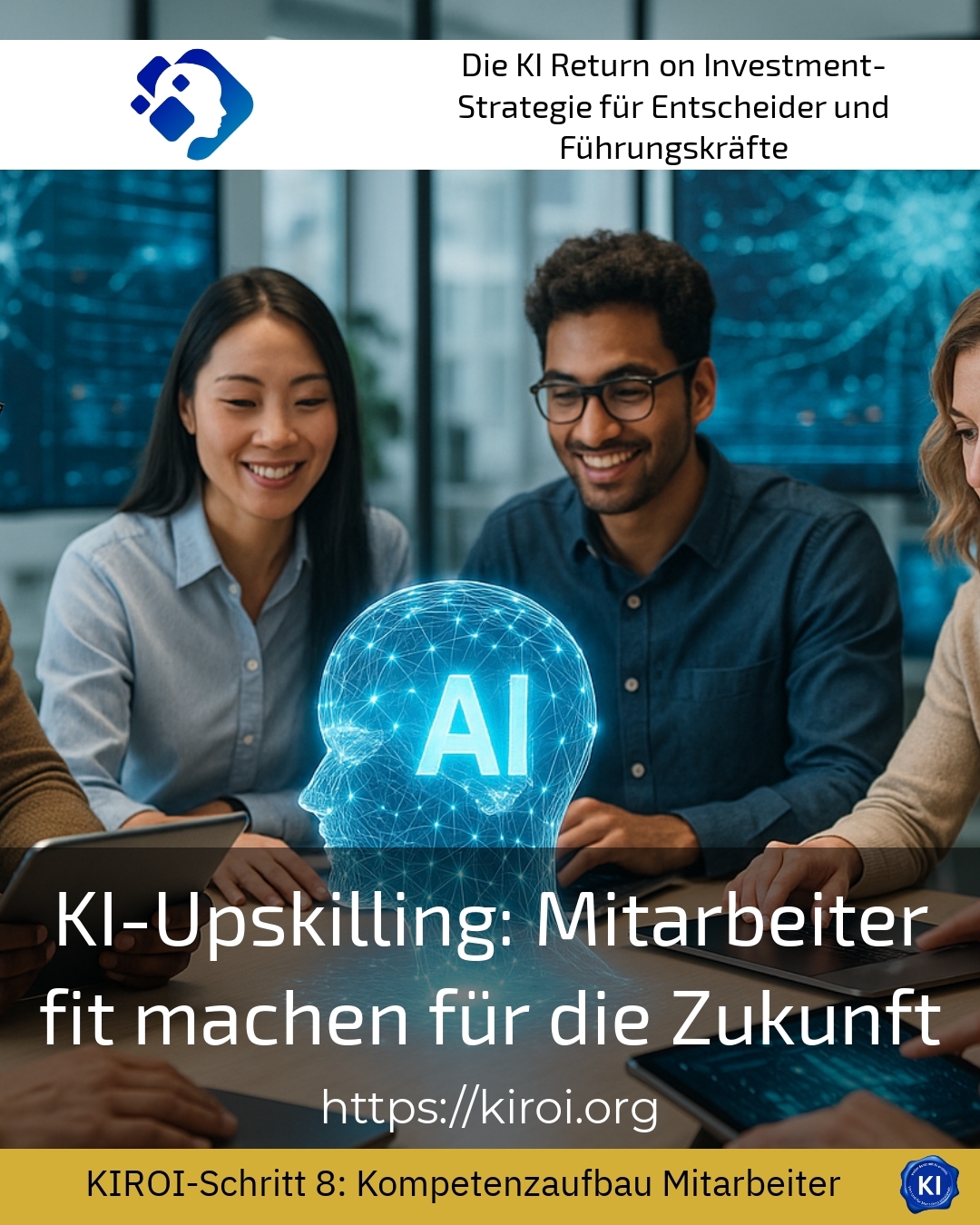
The world of work is changing rapidly. Technologies are developing faster than ever before. Companies are faced with the challenge of positioning their teams for the future. AI Upskilling: Making Employees Fit for the Future becomes the decisive factor for success. Those who don't act now risk falling behind. But how can this transformation truly succeed? What skills will teams need in the coming years? And why do so many training initiatives fail before they even start? This article provides concrete answers and practical insights.
Why skills development is more important today than ever before
Digital transformation has affected almost every industry. Automation is fundamentally changing workflows. Intelligent systems are increasingly taking over repetitive tasks. At the same time, entirely new fields of activity and job profiles are emerging. Companies must actively prepare their workforce for these changes. Passive training strategies are no longer sufficient.
This change is particularly evident in the logistics sector. Warehouse workers now use intelligent voice-controlled picking systems. Dispatchers work with predictive analysis tools for route planning. Fleet managers rely on networked telematics systems for fleet monitoring. These developments require completely new skills from all involved. Traditional on-the-job training is no longer sufficient.
Studies emphatically demonstrate the urgency of this development [1]. Managers frequently report growing competency gaps in their teams. The required qualifications are changing more rapidly than further training offers. This deficiency puts the long-term competitiveness of entire companies at risk. Proactive action is therefore becoming a strategic necessity.
Upskilling with AI: Preparing employees for new fields of work
The term describes more than mere training measures. It's about systematic competence development at all levels. Employees should not just be able to operate new tools. They need to understand and apply the underlying principles. Only then can they meaningfully integrate the technology into their work.
A medium-sized logistics company from the Ruhr region provides a vivid illustration of this. The company introduced an intelligent dispatch system. Initial scepticism among the employees was high. Many feared the loss of their jobs. This attitude fundamentally changed through accompanying training measures. The dispatchers recognised their new role as strategic decision-makers.
Companies in the contract logistics sector regularly face similar challenges. The introduction of warehouse management systems typically presents a number of challenges. Warehouse staff suddenly have to learn how to use tablets and scanners. Shift supervisors need the analytical skills to interpret digital dashboards. Site managers should be able to make data-driven decisions. These skills don’t just appear out of thin air.
Best practice with a KIROI customer
A leading e-commerce fulfilment logistics provider faced a significant transformation. The company planned to implement a fully automated sorting system in its main distribution centre. The existing workforce of over three hundred employees was to be actively involved in this process. Together with transruptions-Coaching, we developed a comprehensive multi-month qualification programme. The support covered both technical and emotional aspects of the change. We initially identified the individual strengths and development potential of each team member. Based on this, personalised learning paths were created with different focuses and paces. Shift supervisors received intensive coaching on leadership during change processes. Operational staff underwent practical training on simulation systems. The exchange between experienced and younger colleagues proved particularly valuable. The long-serving employees contributed their process knowledge and learned new digital skills. The younger colleagues shared their affinity for technology and benefited from the accumulated experience. After the project's completion, the company was able to significantly reduce employee turnover. Employee satisfaction increased measurably, and productivity exceeded the original expectations.
The correct strategy for sustainable skills development
Successful training programmes follow certain principles. They begin with an honest assessment of existing skills. This is followed by a realistic evaluation of future requirements. The gap between the two defines the individual’s development needs. This approach sounds simple, yet it is often overlooked.
A three-tier model has proven effective in the transport sector [2]. The first tier covers basic digital skills for everyone. The second tier provides role-specific expertise for various functions. The third tier develops specialist skills for selected staff. This structure enables resources to be allocated efficiently.
A CEP service provider applied this model as part of its digital transformation. All delivery staff first received basic training on the new app. Team leaders undertook additional training in data analysis. Individual employees were trained as internal digital experts. These ‘ambassadors’ then supported their colleagues in their day-to-day work.
Typical hurdles and how businesses can overcome them
Many training initiatives fail due to avoidable mistakes. Often, there is a lack of employee involvement. Decisions are made without consulting those affected. This generates resistance rather than enthusiasm for change. Communication plays a crucial role.
Another problem lies in unrealistic expectations regarding the time required. Companies often expect immediate results following brief training sessions. However, genuine skills development takes time and practice. Transferring these skills into everyday working life does not happen automatically. Supporting measures and refresher courses are essential.
In warehouse logistics, we encounter these challenges on a regular basis. One company introduced a new inventory management system. The initial training lasted just two days. After that, staff were expected to use the system independently. The error rate rose significantly at first. It was only after additional practical workshops that the situation improved.
Freight forwarding companies report similar experiences with system changes. The introduction of transport management systems requires intensive support. Dispatchers have to fundamentally change their usual working methods. This is particularly difficult for many experienced employees. Patient support and positive reinforcement aid the change process.
Viewing AI upskilling as an ongoing process
The qualification for new technologies never truly ends. Systems evolve and gain new functionalities. Employees must therefore be able to learn continuously. Companies should create corresponding structures for this. Regular learning time should be integrated into the daily work routine.
Modern learning formats effectively support this approach. Micro-learning modules enable learning in small doses [3]. Video tutorials can be accessed individually and repeatedly. Peer learning encourages the exchange of knowledge among colleagues. Mentoring programmes combine experience with fresh perspectives.
A contract logistics provider opted for a combination of different formats. For basic system training, they used e-learning modules. For more complex topics, they organised face-to-face workshops in small groups. For day-to-day operations, they introduced daily briefings on system-related issues. This mix proved to be particularly effective.
Best practice with a KIROI customer
An international logistics group specialising in cold chain management approached us with a specific concern. The company was planning to introduce a sensor-based temperature monitoring system across its entire fleet. The technical implementation was already well advanced and the systems were ready to go. However, the human aspect of the transformation was causing those in charge considerable concern. Many drivers had been with the company for decades and were sceptical about new technology. transruptions coaching provided intensive support for this project over a period of eight months. We began with one-to-one interviews to identify the employees’ specific concerns. This revealed a mix of fears of being overwhelmed and concerns about increased monitoring. These findings were directly incorporated into the design of the training programme. We developed age-appropriate training formats with different learning paces. Tandem training sessions between younger and older colleagues proved particularly effective. The experienced drivers were given a valued role as experts on practical issues. The younger colleagues took charge of the technical introduction in a collaborative atmosphere. By the end of the project, acceptance of the new system stood at over ninety per cent of the workforce. The drivers recognised the added value for their own work and actively used the system.
The role of leaders in the transformation process
Managers play a decisive role in the success of training initiatives. They must lead by example. Anyone who expects their staff to be willing to learn should demonstrate this themselves. This also means admitting one’s own uncertainties and asking questions.
In the freight forwarding industry, we see a variety of management styles. Some branch managers delegate the matter entirely to the HR department. Others get personally involved and take part in training sessions. The latter group consistently achieves better results in transformation projects. Employees sense a genuine interest and respond positively to it.
A regional manager for a parcel delivery service demonstrated exemplary behaviour. When introducing a new planning system, he sat down at the system himself. He underwent the same training as his employees. He openly shared his questions and difficulties with the team. This created an environment where mistakes were allowed.
Warehouse managers face similar challenges when introducing automation technology. Those who understand the technology themselves are better placed to provide support. Those who show reluctance tend to pass this on to the team. Investing in management training pays off in many ways.
Measuring success and continuous improvement in AI upskilling
Training programmes must be assessed for their effectiveness. Attendance figures alone say little about actual learning outcomes. Companies need meaningful metrics to measure success. These should reflect the transfer of knowledge into practice.
In logistics, there are various metrics that can be used [4]. The error rate in system usage indicates problems with understanding. The processing time for standard processes shows the gains in efficiency. The number of support requests reflects the need for assistance. This data enables targeted adjustments.
A fulfilment service provider established comprehensive monitoring of its qualification measures. It linked training participation with employees' operational key performance indicators. This enabled it to distinguish between effective and less effective formats. The findings were incorporated into the further development of the programmes.
My KIROI Analysis
An analysis of numerous transformation projects in the logistics sector reveals recurring patterns and key success factors. AI Upskilling: Making Employees Fit for the Future proves to be significantly more complex than simply teaching technical skills. The human dimension of change deserves at least as much attention as the technical implementation. Companies that treat both aspects equally achieve more sustainable results.
The importance of honest and timely communication with all those involved is particularly striking. Employees who understand why changes are necessary are more willing to learn. Involving them in decision-making processes further reinforces this effect. Participation fosters acceptance and encourages intrinsic motivation for further development.
The KIROI methodology emphasises a personalised approach to skills development. Not every employee learns in the same way or at the same pace. Successful programmes take these differences into account and offer flexible learning pathways. Combining different formats reaches more people than rigid, one-size-fits-all training courses.
Based on my experience as a consultant, I recommend that companies take a holistic view of their skills development strategy. Technical training merely lays the groundwork for successful transformation. Accompanying coaching to address emotional and cultural aspects is just as important. The ‘transruption’ approach combines both elements into an effective overall strategy. Companies that take this approach often report surprisingly positive developments within their teams. Investing in people always pays off in the long run.
Further links from the text above:
[1] McKinsey: The Skills Revolution and the Future of Learning
[2] World Economic Forum: Future of Jobs Report
[3] ATD: Microlearning – An Evolving eLearning Trend
[4] SHRM: How to Measure Training Effectiveness
For more information and if you have any questions, please contact Contact us or read more blog posts on the topic Artificial intelligence here.









 Deutsch
  English (UK)