
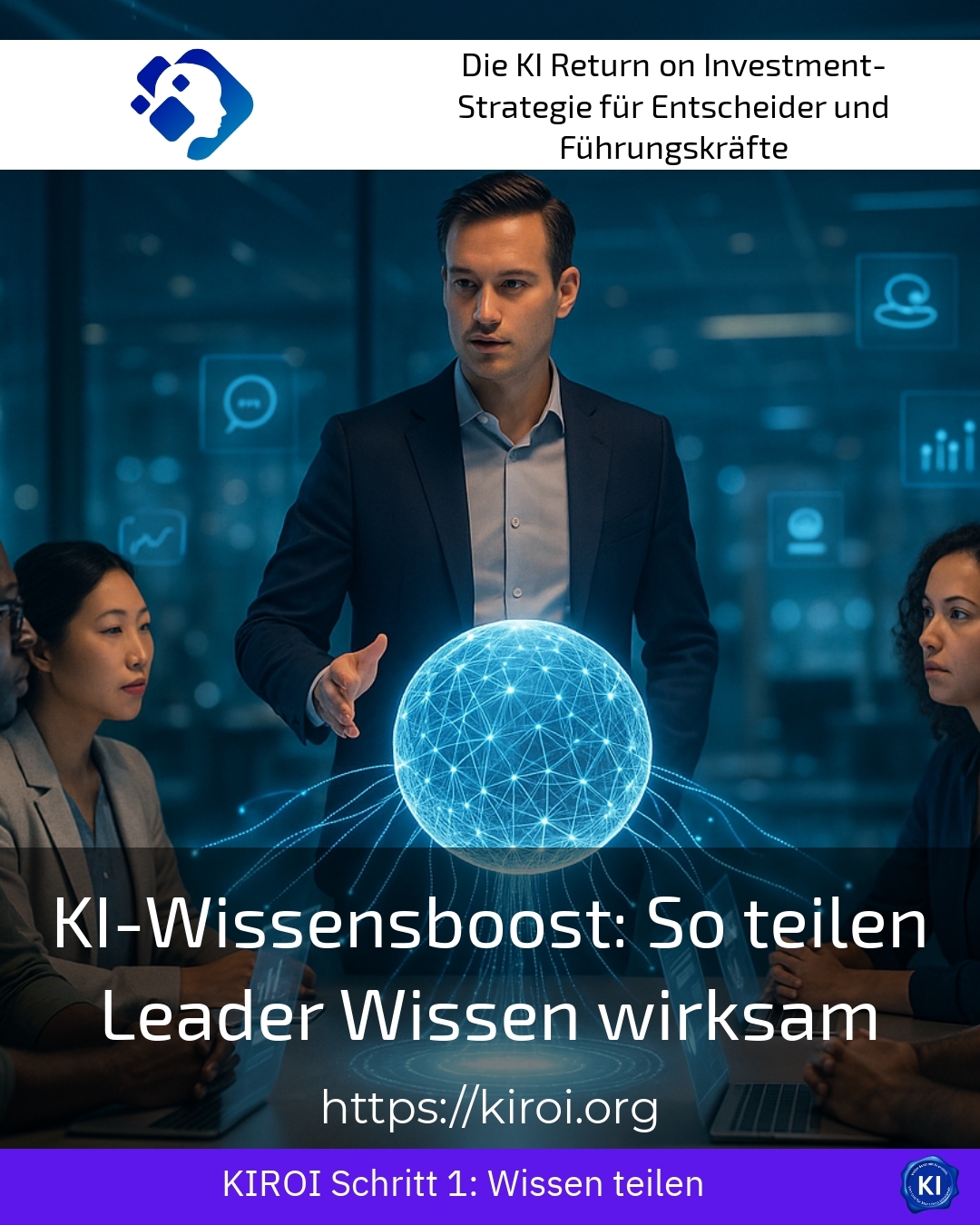
In a world rapidly changing due to technological innovations, leaders face a fundamental challenge that goes far beyond the mere management of resources. The AI Knowledge Boost becomes a crucial success factor, as knowledge becomes obsolete faster today than ever before in the history of business management. So how can modern leaders effectively pass on their valuable experience and strategic insights to their teams without getting bogged down in outdated structures? This question currently occupies decision-makers across all industries, and the answers could sustainably transform your entire perspective on leadership.
The Transformation of Knowledge Culture through Intelligent Systems
Leaders are increasingly recognising that traditional methods of knowledge transfer are reaching their limits. Workshops and seminars are no longer sufficient. Instead, new forms of collaborative intelligence are emerging. These combine human expertise with machine support. Clients often report a noticeable improvement in team communication after implementing intelligent knowledge systems. For example, a medium-sized engineering company implemented an adaptive learning system that identifies individual knowledge gaps and automatically suggests suitable content. Transruption coaching supports leaders in developing a sustainable knowledge culture that intelligently integrates technological possibilities.
Another example comes from the logistics sector. There, a company implemented a system that systematically captures the experiential knowledge of older employees. This knowledge is then processed for new team members. This creates a living knowledge network that continuously grows. Furthermore, pharmaceutical companies use comparable approaches to make regulatory expertise centrally available. The results speak for themselves, as onboarding times can be significantly shortened.
Best practice with a KIROI customer
An internationally active company in the automotive supplier industry faced the challenge that valuable expert knowledge remained isolated within individual departments and was not systematically shared. Management recognised that this situation hindered innovation and complicated collaboration between different locations. As part of a transruption coaching project, we jointly developed a strategy that combined technological tools with a new leadership culture. The implementation initially involved identifying knowledge holders in all relevant areas. We then established digital platforms where these experts could share their insights in short, concise formats. The involvement of leaders as role models, who themselves regularly documented and shared knowledge, was particularly important. After six months, over eighty percent of the employees surveyed reported improved accessibility of relevant information for their daily work. The project duration for new product developments was measurably reduced, and team satisfaction increased significantly.
AI Knowledge Boost: Strategies for Sustainable Knowledge Transfer
Modern leaders understand that knowledge is only valuable when it flows. Static documentation quickly loses relevance. Dynamic systems, on the other hand, continuously adapt to new findings. In healthcare, for example, clinic managements use intelligent assistance systems to update and disseminate medical guidelines in real time [1]. This approach supports doctors and nurses in staying up to date. At the same time, it significantly reduces administrative effort.
The financial industry is also showing remarkable developments in knowledge transfer. Banks and insurance companies are implementing systems that automatically capture regulatory changes and process them in a context-specific manner. This ensures that advisors receive precisely the information they need for their specific client conversations. A large financial institution recently reported that the quality of client advice has significantly improved with this approach. Transruption coaching supports such transformation processes by helping leaders to align technological possibilities with human needs.
In the retail sector, meanwhile, managers are focusing on mobile learning formats that reach employees directly at the point of sale. Short bursts of knowledge about new products or sales techniques are delivered in real time. This method proves particularly effective because it integrates learning into everyday work. The barrier to knowledge acquisition is significantly lowered as a result.
Practical implementation of the AI knowledge boost in everyday management
Leaders who want to share knowledge effectively often start with an honest stocktake. What knowledge actually exists within the organisation? Where are the critical knowledge gaps? And what barriers are preventing the free flow of knowledge? These questions form the starting point for sustainable change. In the energy sector, a utility company carried out such an analysis and discovered that technical expertise on renewable energies remained siloed in individual departments. This bottleneck was resolved by introducing interdepartmental knowledge formats.
The construction industry presents another interesting area of application. Project managers there use digital twins to virtually document construction projects and preserve experiences for future endeavours. Errors made in one project thus become valuable learning opportunities for the entire company. One construction company reported that the rework rate on new projects had decreased by approximately twenty percent through this systematic knowledge transfer [2].
Innovative approaches to knowledge sharing are also emerging in the field of software development. Developers are no longer just documenting their code in static comments. Instead, they are using intelligent assistants that analyse code and automatically generate explanations. This allows new team members to understand complex systems more quickly and become productive.
Best practice with a KIROI customer
A medium-sized company in the food industry approached us because the transfer of production knowledge between different sites was not working. Each site developed its own solutions for similar problems, leading to inefficiencies and quality fluctuations. Management recognised that this problem could not be solved by technical solutions alone, but required a cultural change. Together, within the framework of transruption coaching, we developed a multi-stage programme that initially involved the managers of all sites. They learned to recognise knowledge sharing not as a threat to their expertise, but as an opportunity for further development. We then implemented a digital platform where production experiences could be shared in standardised formats. The introduction of monthly virtual meetings, where employees from different sites exchanged their experiences, proved to be particularly effective. After one year, we observed a significant improvement in product quality at all sites, and employees expressed positive feedback about the new culture of collaboration.
The role of the leader as a knowledge multiplier
Successful leaders today no longer see themselves merely as decision-makers, but as active shapers of learning environments. They create spaces where knowledge can circulate freely. It is crucial that leaders themselves act as role models and generously share their own knowledge. This change is particularly evident in the field of management consulting. Partners at large consulting firms systematically document their project experiences and make them accessible to younger colleagues [3].
The media industry also offers insightful examples. Editorial management is establishing digital newsrooms where journalists can share their research knowledge and learn from one another. This creates collaborative structures that improve the quality of reporting. One publishing house reported that the introduction of such systems had noticeably increased the editorial team's productivity.
In the education sector, schools and universities are experimenting with adaptive learning systems that generate individual learning paths for students. Educators are taking on a new role, becoming facilitators for individual learning journeys. This development shows that the AI Knowledge Boost does not remain limited to the economy, but rather encompasses all social spheres.
Challenges and Solutions for AI Knowledge Boost
The implementation of new knowledge formats inevitably brings challenges. Employees often express concerns about data security or control over their expert knowledge. Management must take these concerns seriously and communicate transparently. In the healthcare sector, data protection concerns are particularly pronounced. Clinics that have successfully implemented intelligent knowledge systems report that intensive training and clear guidelines significantly increase acceptance.
The insurance industry faces the challenge that regulatory requirements can make the use of new technologies difficult. Successful companies address this problem by involving compliance departments early on and jointly developing viable solutions. A large insurer reported that this collaborative approach significantly shortened implementation time.
In the manufacturing sector, integrating new systems into existing production environments presents a technical challenge. Companies that succeed here focus on gradual implementations and intensive pilot phases. This allows problems to be identified and resolved early on.
My KIROI Analysis
The comprehensive consideration of current developments in the field of knowledge transfer clearly shows that we are at a turning point, which presents leaders with fundamental decisions. The AI Knowledge Boost is more than a technological trend. It represents a fundamental shift in how organisations learn and grow. From my experience supporting numerous transformation projects, I know that the success of such initiatives depends heavily on the mindset of the leadership. Technology alone does not create a learning organisation. It requires leaders who are willing to redefine their own roles and view knowledge as a common good rather than a personal power tool.
The analysis of the various industries reveals interesting patterns. Companies that invest early in systematic knowledge transfer develop distinct competitive advantages. They react more quickly to market changes and retain talent more successfully. At the same time, I observe that many organisations are still hesitant. The reasons for this are multifaceted, ranging from budget restrictions to cultural resistance. Transruptive coaching addresses precisely this and supports leaders in overcoming these hurdles. It is crucial that changes are not imposed from above, but are shaped together with those affected. Only in this way do sustainable structures emerge that endure beyond individual projects. The future belongs to organisations that understand and actively cultivate knowledge as a resource.
Further links from the text above:
[1] McKinsey Insights on Digital Knowledge Management
[2] BCG Report on Knowledge Management in the Construction Industry
[3] Harvard Business Review on Knowledge Work and New Technologies
For more information and if you have any questions, please contact Contact us or read more blog posts on the topic Artificial intelligence here.







 Deutsch
  English (UK)