
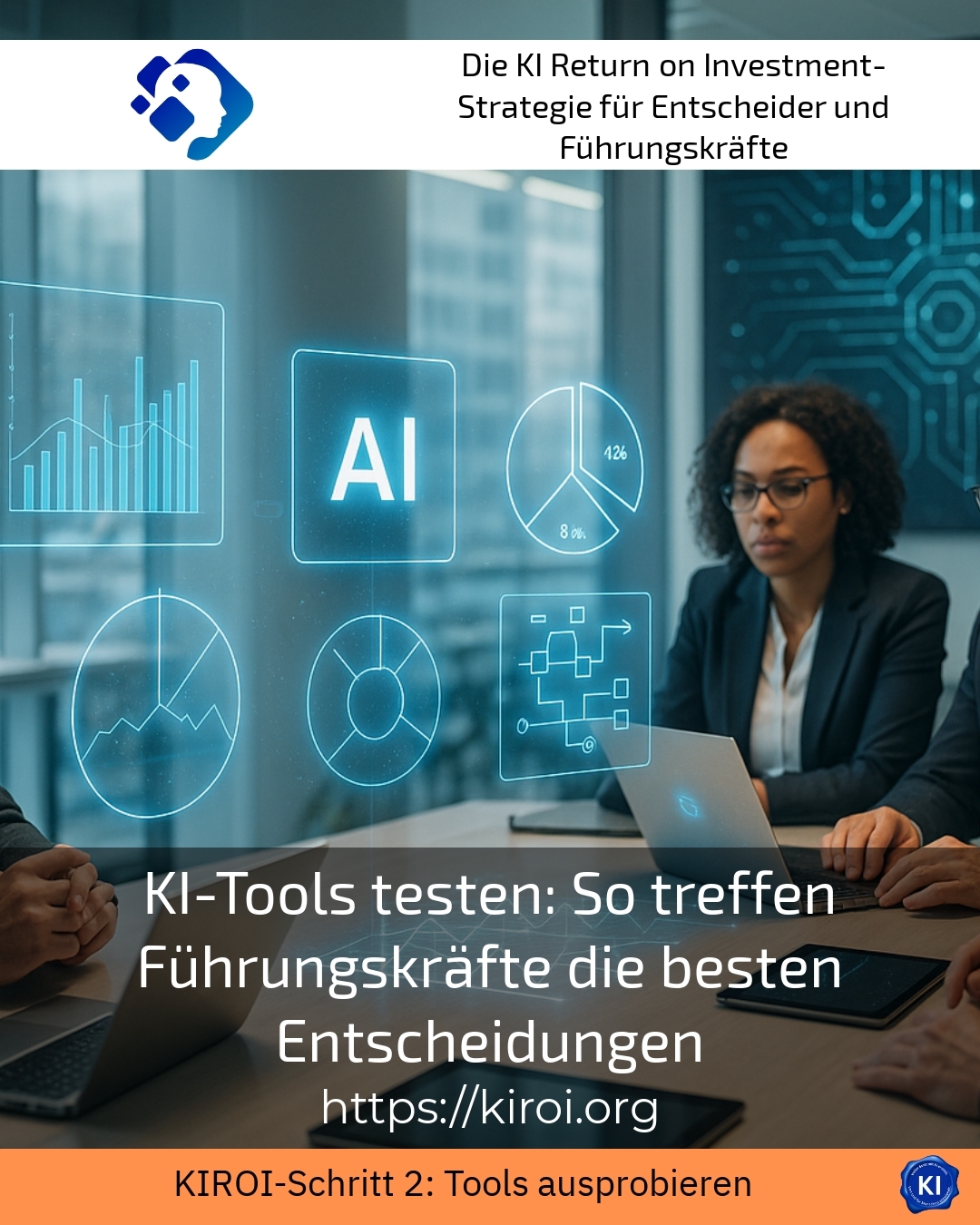
Imagine you are facing a groundbreaking decision that could transform the entire company, yet the sheer number of available solutions overwhelms even experienced leaders. The ability to, Testing AI tools To be able to do so.
Why systematic testing of AI tools has become indispensable
Digital transformation has opened up a wealth of new possibilities. Leaders are faced daily with offers that promise efficiency gains. At the same time, the pressure to make quick decisions is growing. However, haste can lead to costly wrong decisions. A structured approach helps to minimise risks and assess potential realistically.
For instance, in the financial sector, institutions use intelligent algorithms for fraud detection. Insurance companies rely on automated claims assessment and risk analysis. Banks are implementing digital assistants for customer inquiries and consultations. These examples illustrate how diverse the areas of application already are. However, diversity also means complexity in selection.
Another example can be found in retail. Here, intelligent systems optimise inventory management and reordering. Personalised product recommendations measurably increase sales. Pricing is also becoming increasingly dynamic and data-driven. However, all these applications require careful scrutiny before implementation.
Best practice with a KIROI customer
A medium-sized logistics company faced the challenge of optimising its route planning. The management had received promising presentations from various providers. Instead of investing hastily, they decided on a structured trial phase with transruption coaching support. First, those responsible jointly defined clear success criteria. These included fuel savings, delivery time reliability, and driver satisfaction. Subsequently, selected teams tested three different solutions in parallel under real operating conditions. The results were documented and analysed weekly. After twelve weeks, it became apparent that only one solution met all requirements. This decision saved the company significant investment costs. Furthermore, employee acceptance increased considerably. They had actively shaped the process and understood the reasons for the decision. The management described the support as a decisive factor for success.
Developing Strategic Criteria for Testing AI Tools
Before executives evaluate concrete solutions, they need a solid catalogue of criteria. This should consider both technical and organisational aspects. Integration into existing systems plays a central role here. Data protection and regulatory requirements also deserve special attention. A clear evaluation framework prevents emotional or hasty decisions.
In healthcare, the importance of careful evaluation is particularly evident. Diagnostic support systems must meet the highest quality standards. Hospitals rigorously test patient management algorithms. Care facilities also rely on digital documentation and assistance. External input can help to identify blind spots.
The manufacturing industry offers further instructive examples. Predictive maintenance prevents costly production downtimes. Quality control is increasingly carried out by image-based analysis systems. Production planning also uses intelligent forecasting models. All these applications require thorough testing under real-world conditions.
The human dimension in technology decisions
Decision-makers often neglect the cultural aspect of technological changes. Employees react differently to new digital tools. Some see them as support, others as a threat. Transparent communication reduces fears and promotes acceptance. Transruption coaching supports teams in this important transformation work.
A media company experienced precisely this dynamic when introducing automated text generation. Initially, journalists feared being replaced. However, through open dialogues, they recognised new creative possibilities. The system took over routine tasks such as sports reports and stock market updates. The editors thereafter focused on investigative and analytical work.
In the education sector, we observe similar developments. Teachers are using adaptive learning systems for individual support. Administrative tasks can be simplified by intelligent assistants. Communication with parents also benefits from digital solutions. However, the pedagogical competence of individuals remains crucial.
Best practice with a KIROI customer
A management consultancy wished to accelerate its analysis processes using intelligent tools. The partners had differing preferences and experiences with digital solutions. Some favoured comprehensive automation, while others preferred traditional methods. In collaboration with transruptions-coaching, the firm developed a participatory selection process. All consultants were able to contribute and prioritise requirements. Subsequently, mixed teams assessed various providers according to uniform criteria. The testing phase included realistic project scenarios with real datasets. This revealed that supposedly advanced solutions had practical weaknesses. A seemingly simpler alternative proved to be significantly more suitable for everyday use. The joint decision-making process greatly strengthened team cohesion. Furthermore, all participants felt co-responsible for the success. This positive experience has since shaped further technology projects within the company.
Practical methods for meaningful testing phases
An effective testing process begins with the definition of concrete use cases. These should reflect typical everyday situations, not just ideal scenarios. Pilot groups from different areas of the company provide diverse perspectives. Regular feedback rounds allow for continuous adjustments during the testing phase. Documenting all experiences creates a solid basis for decision-making.
Multi-stage evaluation procedures have proven effective in the energy sector. Network operators initially test forecast models with historical data. This is followed by a simulation under various load scenarios. Only then does deployment in actual operation begin. This approach minimises risks to security of supply.
Tourism is also increasingly using intelligent solutions. Hotels dynamically optimise room occupancy and pricing. Tour operators personalise offers based on customer behaviour. Airlines rely on intelligent customer service systems. Choosing the right solution requires industry-specific understanding.
Typical pitfalls and how to avoid them
Many companies focus too heavily on technical specifications, often at the expense of the actual user experience. Another common mistake is underestimating integration efforts. Hidden follow-on costs are also regularly overlooked. Professional guidance helps to identify these pitfalls early on.
Pharmaceutical companies face unique regulatory challenges. Every new technology must undergo extensive validation processes. The documentation requirements are exceedingly high. At the same time, research promises enormous efficiency gains. This is where transruptions-coaching supports the balance between innovation and compliance.
The public sector faces its own unique challenges. Procurement law dictates restrict flexibility when selecting providers. Data protection requirements are particularly stringent. At the same time, citizens expect modern digital services. Authorities can benefit from external expertise in navigating these complex considerations [1].
Best practice with a KIROI customer
A retail group planned to introduce intelligent personnel planning. The initial pilot phase yielded promising results at headquarters. However, unexpected problems emerged when expanding to branches. The local specificities of different locations overwhelmed the algorithm. Working together with the transruption coaching team, those responsible analysed the causes. It turned out that the training data was not representative. The solution required additional adjustments and expanded data sets. This process took several months longer than originally planned. However, the company used the time for intensive training of branch managers. In the end, employees accepted the system significantly better. Planning quality improved measurably in all regions. Without professional guidance, the project might have failed.
The role of leaders in the evaluation process
Successful technology decisions require active involvement from senior management. Delegating to purely technical teams often leads to suboptimal results. Managers must clearly communicate strategic priorities. They should also set aside time to gain first-hand experience with trial solutions. Only then can they make informed decisions.
In the automotive industry, we observe exemplary practices. Board members are extensively testing autonomous vehicle functions themselves. Production managers spend time on intelligent manufacturing lines. This direct experience sharpens understanding of possibilities and limitations. It also fosters credibility with employees.
The real estate sector is showing similar developments. Property managers are increasingly using intelligent building control. Estate agents are relying on automated exposé creation and matching. Investors are analysing market trends with data-based tools. Managers in this industry are benefiting from practical technology expertise [2].
My KIROI Analysis
The systematic evaluation of digital solutions is no longer an optional task. It is among the core competencies of modern business management. Those who develop this capability provide their organisation with significant competitive advantages. Testing AI tools requires more than technical understanding. It needs strategic thinking, empathy, and perseverance.
From my experience, successful companies share three common traits. Firstly, they invest time in careful preparation and definition of criteria. Secondly, they involve employees early and comprehensively. Thirdly, they seek external expertise for blind spots. This combination significantly increases the probability of success.
Transruption coaching specifically supports leaders with these challenges. It provides impetus for structured decision-making processes. It supports communication with various stakeholders. And it helps to draw constructive learning effects from setbacks. The future belongs to companies that combine technological innovation with human wisdom.
My analysis clearly shows that the difference between successful and failed projects rarely lies with the technology. Instead, processes, people, and leadership determine the outcome. Those who understand this can also confidently master complex technology decisions. Investing in professional support regularly pays off.
Further links from the text above:
[1] Bitkom: Digital Transformation in the Public Sector
[2] PwC: PropTech and digital transformation in the real estate industry
For more information and if you have any questions, please contact Contact us or read more blog posts on the topic Artificial intelligence here.









 Deutsch
  English (UK)