
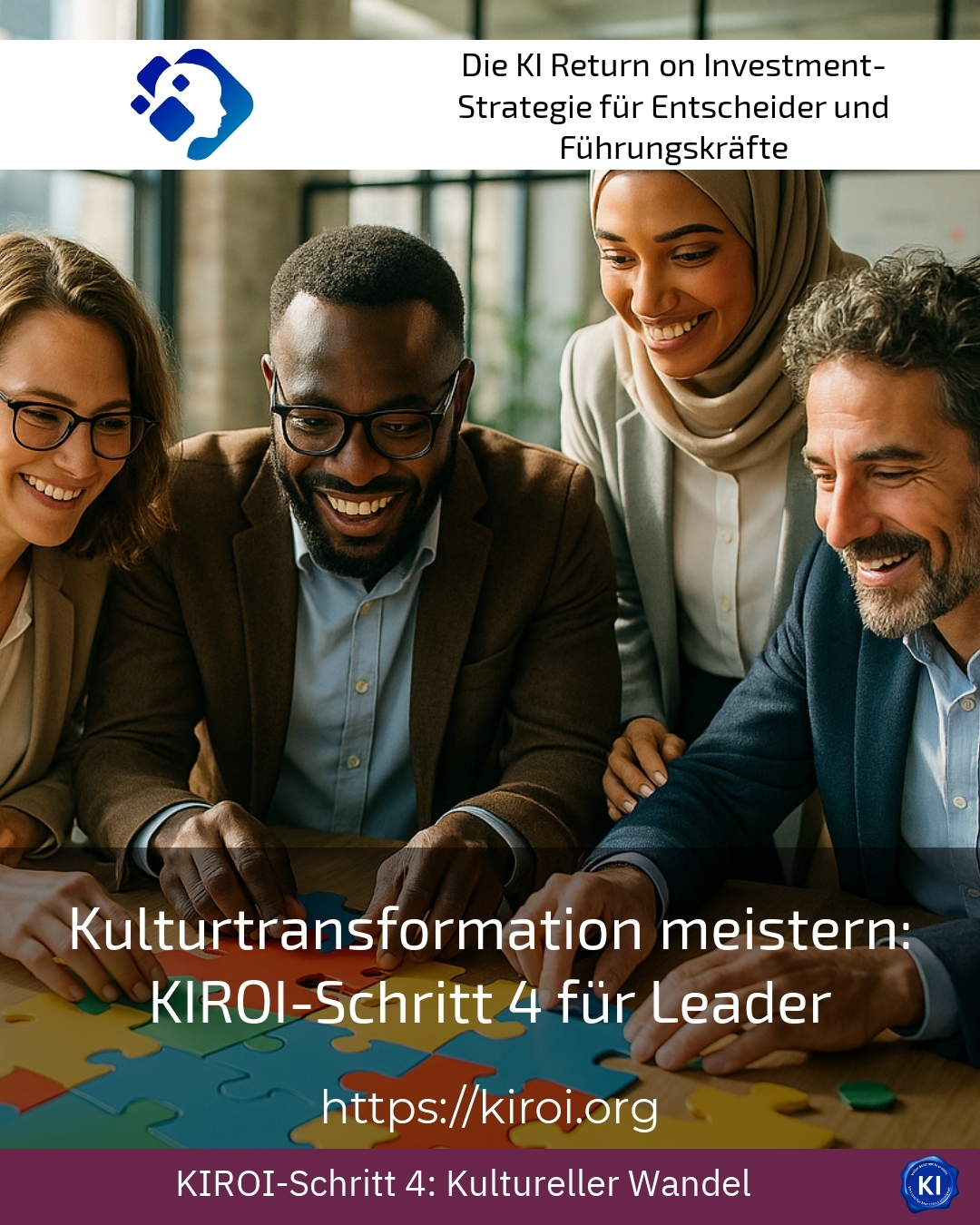
Cultural transformation within companies is gaining increasing importance, particularly for leaders who actively shape this change. KIROI Step 4, a proven model for this transformation, focuses on how leaders can sustainably anchor the new corporate culture. It's about not only communicating values, beliefs, and behaviours, but also visibly embodying them in leadership conduct. Successful cultural transformation supports innovation, motivation, and collaboration across the entire organisation.
Cultural transformation as a challenge and opportunity for leaders
Leaders often find themselves at the interface between strategic objectives and operational implementation. As part of cultural transformation, they must not only initiate change but also act as living role models. Company culture is not an abstract concept; instead, it is reflected in daily interactions – from appreciation to transparency.
For example, IT industry executives report that regular feedback sessions and open discussion of mistakes support cultural change. In the automotive industry, short, daily team meetings have helped to make the new values tangible. Similarly, service providers are using targeted workshops to strengthen their role as culture drivers.
The role model function of leaders is central to this. By consciously aligning their communication style and decision-making behaviour with the cultural goals, leaders create a binding orientation for all employees. This builds trust and fosters a culture that focuses on learning and personal accountability.
KIROI Step 4: Embedding Cultural Transformation Through Lived Leadership
The fourth step of the KIROI model highlights that cultural transformation only succeeds if it becomes tangible in everyday life. Leaders are urged to make cultural guiding principles visible and to include them in all decisions. This goes beyond mere communication: behavioural changes must be systematically supported and flanked by structures.
A medium-sized service provider used coaching and workshops to empower executives to take on their role as culture drivers. The result was a noticeably improved working atmosphere and higher employee engagement. Likewise, department heads in the automotive industry have established cultural rituals such as appreciation rounds to keep the change alive.
In the financial industry, leadership teams are adopting agile practices to respond flexibly to challenges and continuously evolve their culture. Promoting emotional intelligence in leaders is therefore a key success factor for sensitively addressing the needs of employees and creating an atmosphere of trust.
Practical tips for leaders on cultural transformation
Develop a clear understanding of the values you want to promote together with your team. Workshops are particularly well-suited for creating a common ground.
2. Communicate the culture vision authentically and repeatedly. Above all, consistently embody the values yourself to build credibility.
3. Use agile methods to shape culture transformation as an ongoing process. This allows you to respond flexibly to feedback and make adjustments.
4. Strengthen your leadership skills in emotional intelligence. The ability to lead with empathy improves collaboration and increases acceptance of change.
BEST PRACTICE with one customer (name hidden due to NDA contract)
Within an international IT company, transruptions-Coaching supported executives through individual and team coaching. The result was a significantly improved communication culture, which accelerated cultural change and noticeably increased employee engagement. Executives learned to make cultural guidelines visible and implement them in their daily work.
The importance of cultural transformation for sustainable business success
Cultural transformation is an integral part of modern organisational development. It strengthens resilience to market changes through an innovation-promoting and agile corporate culture. Leaders are the key players in this, as they shape and mould the culture.
In practice, it becomes apparent that successful cultural transformation does not arise from new processes or guiding principles alone. Instead, it requires a holistic change that encompasses beliefs, values, and daily behaviours. Leaders who facilitate this change thus create an environment in which employees are motivated and engaged.
Many companies from the automotive, IT, and service sectors have reported that a conscious culture transformation leads to greater innovation capability and improved collaboration. Leaders who consistently implement the fourth KIROI step provide their teams with direction and momentum for sustainable change.
My analysis
The fourth step of cultural transformation is essential for permanently embedding change. Leaders, in particular, bear the responsibility not only to initiate cultural change but also to live it actively and visibly. This is achieved through continuous momentum, agile adaptability, and authentic role-modelling. Companies that embark on this path can create a future-proof culture that promotes innovation and collaboration.
Further links from the text above:
[1] Culture transformation – 4 steps and 4 interconnections
[2] Cultural Transformation – KIROI Step 4 for Leaders
[3] Successful culture transformation for businesses
[5] Corporate Transformation: Culture, Processes & AI
[6] Culture and Leadership Development
[15] Mastering Culture Transformation: KIROI Step 4 for Leaders
For more information and if you have any questions, please contact Contact us or read more blog posts on the topic Artificial intelligence here.











 Deutsch
  English (UK)