
The concept of knowledge sharing is gaining increasing importance in modern organisations. Leaders and decision-makers in particular face the challenge of rethinking and purposefully shaping this process. Knowledge sharing is more than just the simple transfer of information – it is a strategic factor that promotes collaboration, strengthens innovation, and supports competitiveness. In this article, you will learn how KIROI can provide leaders with initial impulses to effectively support knowledge sharing within the company.
Targeted knowledge exchange – an introduction for decision-makers
Decision-makers in companies experience daily how complex knowledge management has become. The business environment is changing rapidly, and with it the knowledge that companies need for their success. KIROI supports the systematic consideration of knowledge exchange and its anchoring in projects. The aim is to optimally utilise both explicit knowledge – such as documentation and processes – and tacit knowledge, which resides in the minds of employees.
For example, a medium-sized industrial company reported that KIROI significantly improved communication between its development departments. The engineering teams proactively shared their experience and expertise, thus developing more efficient product solutions.
In one bank, conscious knowledge sharing led to faster implementation of regulatory requirements – because information was not just distributed, but discussed within the team and aligned with different perspectives. This helped to avoid errors and strengthen compliance.
Another example comes from the healthcare sector: Here, targeted knowledge exchange between nurses and doctors helped to improve patient management processes. This led to higher patient satisfaction and more efficient internal processes.
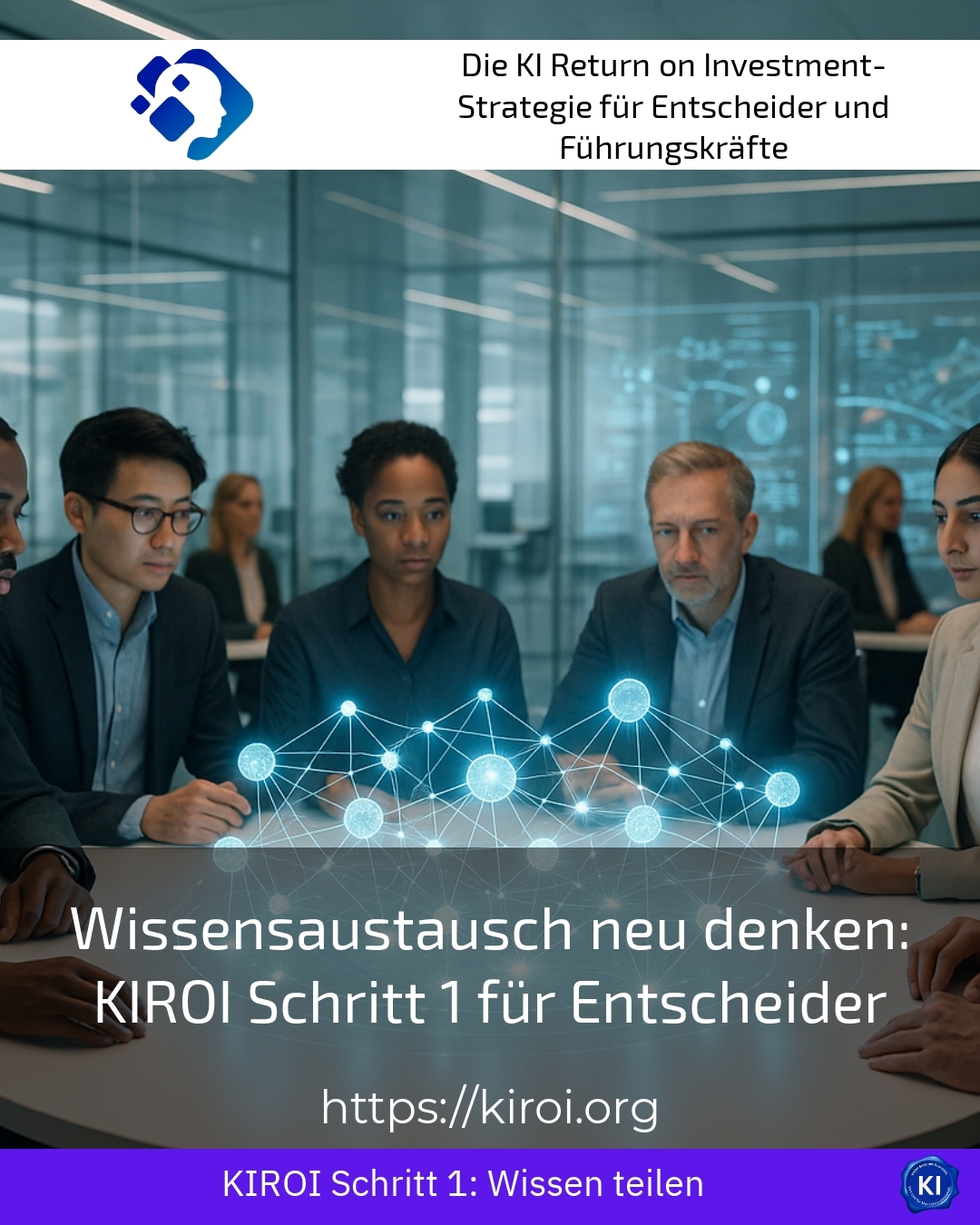
KIROI Step 1: Understand and promote knowledge sharing as a process
For decision-makers, it is essential to understand knowledge sharing as a continuous process. KIROI recommends consciously shaping this process and embedding it as part of the corporate culture. This is how barriers that many organisations experience when sharing knowledge can be broken down.
For example, it has become apparent that in large companies, departmental boundaries often hinder knowledge sharing. KIROI assists decision-makers in establishing cross-divisional formats where experts can easily share their knowledge.
An international trading company introduced weekly knowledge-sharing sessions, which are moderated by executives. Employees from sales, logistics, and finance departments report on challenges and solutions there. The insight: The openly designed meetings increased mutual understanding and led to faster joint decisions.
At the same time, KIROI supports the use of digital tools. An energy provider used special platforms to centrally collect and make accessible technical instructions and expertise. This enabled new colleagues to be onboarded more quickly and reduced errors in plant maintenance.
Practical tips for sustainable knowledge sharing
To effectively support knowledge transfer, decision-makers should consider the following approaches:
- Create trusting environments where employees are happy to share their knowledge. Trust is one of the most important pillars for open knowledge sharing.
- Opt for varied communication formats: workshops, break-time chats, digital platforms and moderated meetings complement each other perfectly.
- Identify and encourage employees who act as „knowledge brokers“ – those individuals who connect and share information.
- Use technology-supported solutions specifically to make knowledge documentable and discoverable, without neglecting personal interaction.
BEST PRACTICE at a client (name redacted due to NDA) shows that after the introduction of special exchange formats, employee satisfaction significantly increased. The teams felt better informed and more involved, which also boosted innovation in various projects.
Best practice with a client (name concealed due to NDA) from the mechanical engineering sector shows that technical documentation, jointly developed and continuously updated by expert teams, has been able to reduce production downtime by almost 20 percent.
Following best practice at a client (name withheld due to NDA), in the public administration sector, a targeted exchange of knowledge between various departments has led to greater harmonisation of approval processes, which has noticeably improved the quality of service for citizens.
Understanding knowledge sharing as a competitive advantage
KIROI helps decision-makers understand knowledge sharing not merely as a by-product of collaboration, but as a strategic tool with which organisations can position themselves for the future. Those who foster the exchange of information, experience, and expertise not only successfully manage projects but also strengthen the entire company.
Ultimately, it's evident in many sectors: innovations often arise precisely where people from different backgrounds creatively pool their knowledge and forge new connections. Conscious engagement with knowledge sharing is therefore a crucial building block for fostering the ability to change and a culture of learning.
My analysis
The modern approach to knowledge sharing demands targeted, conscious action from decision-makers. KIROI offers a clear guide for getting started, helping to make existing knowledge within the company visible and to use it effectively. Through practical measures and digital support, knowledge sharing can become a vibrant culture that accompanies projects and strengthens company success. Clear communication, trust, and appropriate tools are the cornerstones of sustainable success.
Further links from the text above:
Knowledge Exchange – The Office Expert
Definition Knowledge Exchange | Business Processes Glossary
Knowledge Exchange in Knowledge Management: Tools & Methods
Knowledge Sharing: The Ultimate Guide
3 ways to use knowledge sharing
For more information and if you have any questions, please contact Contact us or read more blog posts on the topic Artificial intelligence here.











 Deutsch
  English (UK)