
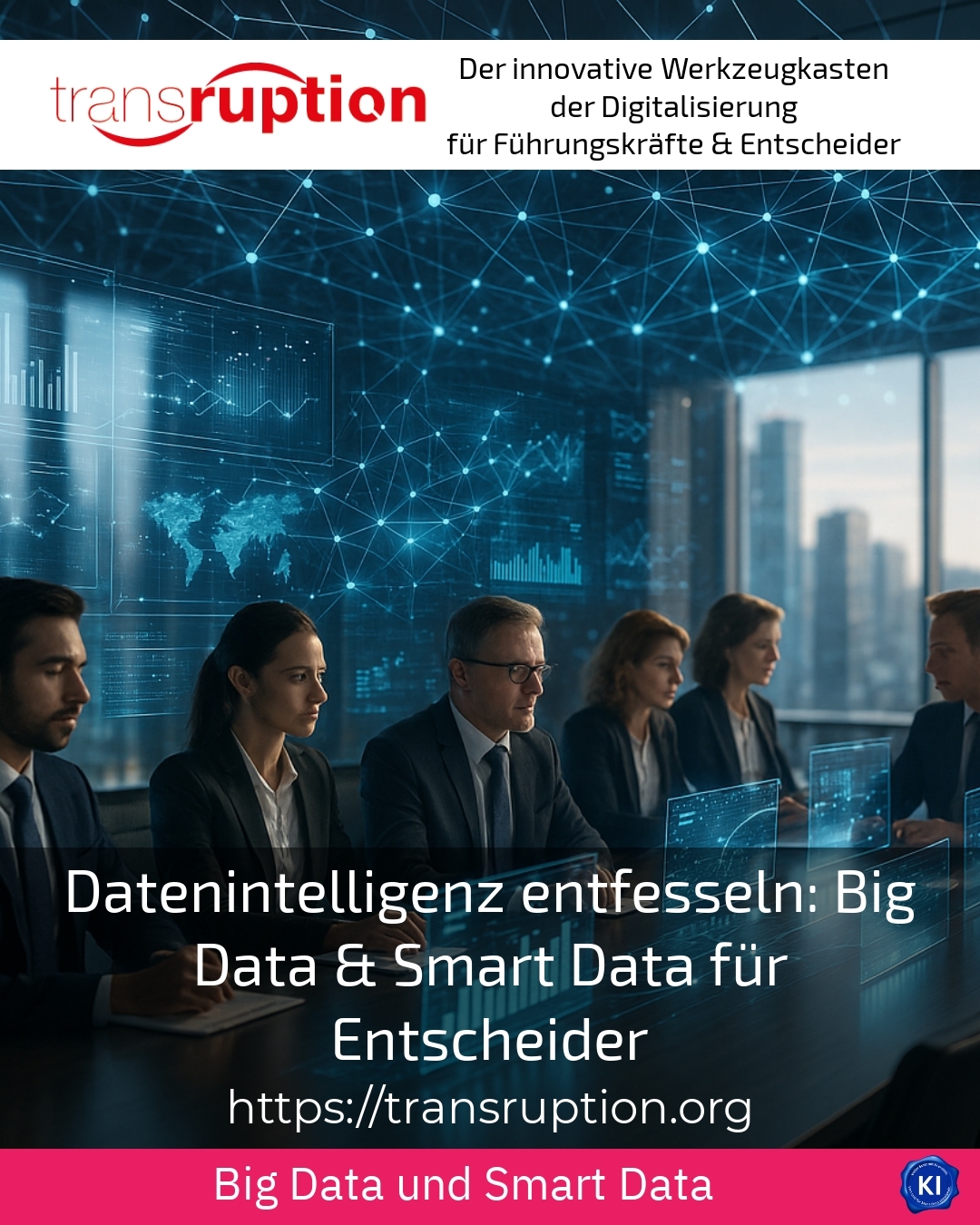
The ability to extract precise, relevant insights from large amounts of data is referred to as Data intelligence. Especially in today's world, where companies are surrounded by ever-larger data streams, this competence is gaining significant importance. In contrast to sheer volume, so-called Big Data, data intelligence is about specifically processing data and transforming it into smart, targeted information.
Data Intelligence: From Data Flood to Targeted Information
Every day, many organisations are faced with an unmanageable mountain of structured and unstructured data, referred to as Big Data. These vast amounts of data range from customer information to sensor data and social media feedback. The challenge is that Big Data is often heterogeneous, unstructured, and difficult to utilise. This frequently results in data silos and decision-makers becoming overwhelmed, losing sight of the bigger picture in the data deluge. This is where data intelligence comes in: it filters and processes raw data, extracts the essential information, and forms Smart Data – intelligent data that provides targeted and context-specific insights.
This enables companies to better optimise operational processes, minimise risks and develop sustainable strategies. An example from practice is the retail sector, where smart data from analysing purchasing behaviour and inventories provides targeted recommendations for assortment management and marketing. In the financial sector, too, smart data helps to precisely anticipate market trends and systematically assess default risks. In the manufacturing industry, data-intelligent evaluation of machine sensors enables predictable maintenance cycles and minimises unplanned downtimes.
Application areas and benefits of data intelligence at a glance
For example, in the field of logistics, the combination of real-time data and historical information provides decision support to make supply chains more efficient and flexible. Precise control prevents bottlenecks and optimises inventory levels. By simulating different scenarios, potential risks can be identified early and strategic measures planned based on smart data.
Marketing also benefits enormously from data intelligence. Instead of just collecting large amounts of data, Smart Data focuses on targeted customer segmentation. This allows campaigns to be better aligned with individual needs, which promotes customer satisfaction and loyalty. Another example can be seen in healthcare: here, intelligent data supports personalised therapy planning based on patient data and clinical studies. This improves the quality of treatment and the efficiency of resource utilisation.
BEST PRACTICE at the customer (name hidden due to NDA contract) An international manufacturer of industrial equipment was able to reduce machine downtime by 15 % through the use of data intelligence. By intelligently analysing sensor data, the team identified potential faults early and reacted preventatively, leading to significant savings and higher production quality.
Key Features of Data Intelligence
Central characteristics distinguish data intelligence from mere data volume:
- Data Quality: Smart Data is clean, accurate and structured.
- Targetedness: Information is specifically tailored to the context of a company.
- Real-time capability: Insights are immediately actionable, enabling agile decision-making.
- Increased efficiency: Data preparation reduces noise and irrelevant information.
- Unterstützung für KI & Machine Learning: Intelligente Daten erhöhen die Trainingsqualität von Algorithmen.
Smart data therefore not only helps with strategic decisions, but also with the automation of intelligent processes, which is becoming increasingly important in industries such as telecommunications, manufacturing and financial services.
Data intelligence as a companion for decision-makers
Decision-makers require reliable and well-prepared information. The high availability of Big Data alone is often not enough. Coaching and support surrounding data intelligence assist leaders in successfully steering data-driven projects. Clients frequently report receiving significant impetus for their innovation processes when integrating smart data. Transparent and understandable presentation facilitates acceptance within the company and helps communicate the added value of data-driven measures.
BEST PRACTICE at the customer (name hidden due to NDA contract) A large logistics company was able to significantly improve its transport planning through targeted coaching on data intelligence. The data-based insights enabled more flexible routing decisions and strengthened competitiveness through faster reaction times to market changes.
Even service providers who embrace data-driven systems in marketing or customer management report optimised customer engagement and measurably better results in campaign control. The key to success here is the close integration of technical expertise, process understanding, and clear goals.
My analysis
Implementing data intelligence is a key lever for deriving tangible and reliable decisions from the unmanageable flood of data. Companies that use smart data often achieve more sustainable success, as they can target the right areas more precisely. Practice shows that data intelligence means much more than data volume – it's about clarity, context, and accessibility. With the right support during the project, data projects can be implemented more effectively and achieve better long-term results.
Further links from the text above:
Difference Between Big Data and Smart Data - Esa Automation
Big Data vs. Smart Data: Is more always better? – Netconomy
Smart Data Definition, Challenges, and Difference from Big Data – Appvizer
From Big Data to Smart Data: AI in Data Automation – iPaaS Blog
Big Data vs. Smart Data – DATAVERSITY
From Big Data to Smart Data: Data Intelligence as the Key – Xpert Digital
For more information and if you have any questions, please contact Contact us or read more blog posts on the topic TRANSRUPTION here.











 Deutsch
  English (UK)