
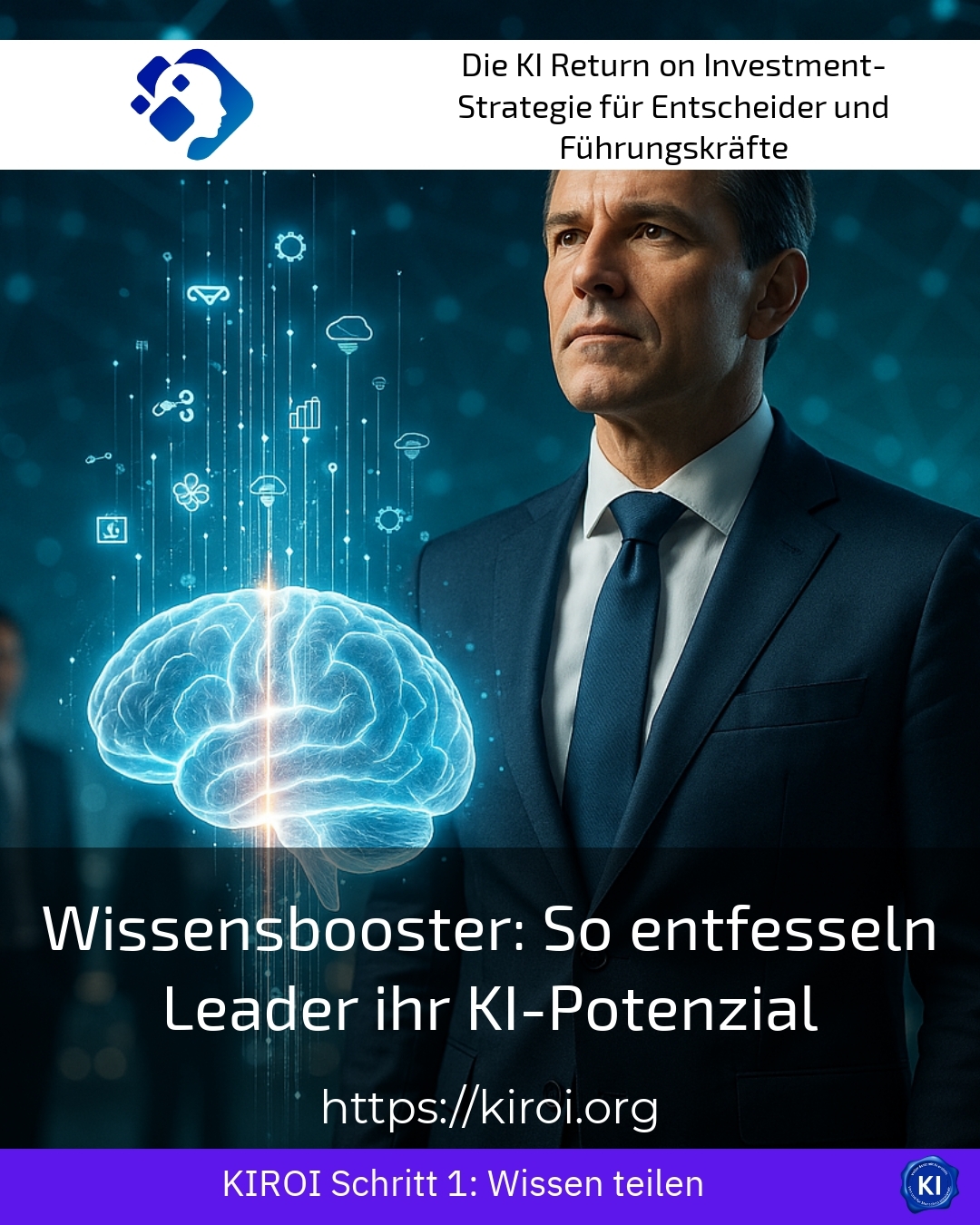
Digital transformation is fundamentally and sustainably changing leadership levels. While many companies are still acting hesitantly, progressive leaders are already gaining a crucial advantage. They are relying on a Knowledge booster, helping them to make strategic decisions faster and with greater insight. The question is no longer whether intelligent systems will make their way into leadership teams. The question is rather how decision-makers can unlock their full potential. This is precisely where a well-thought-out approach comes in, supporting leaders on their journey. This article shows how leaders can expand their competencies and use modern technologies effectively.
The new reality for leaders in the age of intelligent systems
Leaders face an unprecedented challenge in their professional careers. The amount of available information is growing exponentially, exceeding human processing capacities. At the same time, stakeholders expect faster decisions with higher accuracy. This discrepancy between demand and feasibility creates significant pressure. Clients often report feeling overwhelmed by the sheer volume of data.
For example, a medium-sized mechanical engineering firm realised that its sales management had to analyse hundreds of customer inquiries daily. Manual evaluation wasted valuable time and led to delayed responses. A logistics company struggled with optimising its route planning. The complex calculations regularly overwhelmed existing planning processes. A financial service provider, meanwhile, tried in vain to detect fraud patterns in real time. These examples show that similar challenges exist across industries.
The crucial Knowledge booster lies not solely in the technology itself. It arises from the clever combination of human expertise and machine support. Leaders who understand this symbiosis gain sustainable competitive advantages. They make decisions on a broader basis of information while simultaneously reducing their personal burden.
Understanding knowledge boosters as a strategic leadership instrument
The integration of intelligent assistance systems requires a fundamental rethink of leadership culture. It is not about delegating decisions or relinquishing responsibility. Rather, leaders expand their scope of action through additional sources of insight. This perspective distinguishes successful implementations from failed projects. Those who perceive modern systems as a threat will never be able to unlock their potential.
Let's consider the healthcare industry as an illustrative example of this development. Clinic directors use data-driven analyses for capacity planning and resource allocation. One hospital optimised its staffing by using predictive models for patient influx. This enabled the nursing management to anticipate bottlenecks and proactively address them. A pharmaceutical company significantly accelerated its research processes through automated literature analyses. A medical technology manufacturer improved its product development through the systematic evaluation of user feedback.
Best practice with a AIROI customer
An internationally active trading company faced the challenge of modernising its leadership development. The existing training formats were no longer achieving the desired impact on participants. Management recognised that traditional seminars were too generic and too infrequent. As part of a disruption coaching support, the company developed a completely new concept for leadership development. First, we jointly analysed the specific competence gaps at different leadership levels. This revealed a significant need for development, particularly in data-driven decision-making. We implemented a hybrid learning format combining in-person coaching sessions with digital learning modules. Leaders received personalised learning paths based on their individual development goals. An intelligent system supported the selection of relevant content and automatically adjusted difficulty levels. After six months, over eighty percent of participants reported noticeable improvements in their decision-making quality. Employee satisfaction in the affected departments increased measurably and staff turnover significantly decreased.
Competence building as a knowledge booster for sustainable leadership
The development of new competencies forms the foundation for successful transformation in leadership positions. Leaders need a fundamental understanding of how intelligent systems work. They don't need to become programmers, but they must be able to understand the logic behind the recommendations. Only then can they critically assess results and make responsible decisions.
In the manufacturing industry, this need is particularly evident and pressing. Production managers must understand predictive maintenance systems and be able to evaluate their recommendations. An automotive supplier trained its executives in interpreting quality forecasts. The plant management learned to recognise deviation patterns and initiate preventive measures. A textile company enabled its management to use automated demand forecasts. A food manufacturer systematically invested in the data literacy of its entire management team.
These investments in skills building pay off multiple times over and create long-term competitive advantages. Leaders gain confidence in using new technologies and overcome their hesitation. They can discuss more knowledgeably with specialist departments and set strategic priorities. At the same time, they act as role models for their teams and promote a learning-oriented culture.
Practical Implementation: The Knowledge Booster in Everyday Management
Theoretical conviction alone is not enough for sustainable change. Leaders need concrete starting points for integration into their daily work. Implementation should be carried out step by step and begin with manageable projects. Quick wins build trust and motivate further steps.
Let's consider retail as a field of application with high transformative potential for managers. Store managers are increasingly using intelligent systems to optimise their product assortment. A sporting goods retailer analyses purchasing patterns and regionally adapts its offering. Department management receives automated reports on sales trends and stock movements. A furniture store significantly optimised its advertising campaigns through more precise target group address. An electronics store noticeably improved its customer service through intelligent query distribution.
transruptions-Coaching professionally and individually accompanies leaders through such implementation projects. The support covers both strategic and operational aspects of the transformation. Clients receive inspiration for shaping their personal learning journey. They develop an individual roadmap for integrating new tools.
Cultural Transformation as the Basis of the Knowledge Booster Approach
Technology alone does not transform organisations without accompanying cultural changes. The introduction of intelligent systems requires a shift in mindsets and behavioural patterns. Leaders significantly shape this culture through their own behaviour. They must embody openness to new ideas and foster a spirit of experimentation.
The insurance industry provides vivid examples of cultural transformation processes in this context. One insurance group established so-called Innovation Labs for its executives. There, managers experimented with new technologies in a protected environment without pressure to succeed. A reinsurer actively promoted interdepartmental exchange through regular technology "stammtische" (informal get-togethers). A brokerage firm established mentoring programmes between digitally adept and experienced executives. These measures sustainably created a culture of openness and shared learning.
Best practice with a AIROI customer
A medium-sized service company from the consulting sector approached us with a specific concern. The management felt that their competitiveness was being jeopardised by a lack of technological expertise. Many managers were hesitant about technology and actively avoided engaging with new systems. As part of the transruption coaching process, we first developed an understanding of the individual resistances. We identified that the primary blockers were fear of losing control and concern about their own relevance. Consequently, we designed a careful onboarding process with low-threshold entry points for everyone involved. Managers began by experimenting with simple applications in their personal work routines. As a first step, they used intelligent assistants for scheduling and document research. Gradually, they expanded their skill set and independently discovered new application possibilities. The accompanying reflection sessions helped to consolidate successes and constructively process setbacks. After nine months, the entire management team's attitude had fundamentally changed for the better. The company gained several new clients who explicitly cited technological expertise as a selection criterion.
Ethical Dimensions and Responsible Leadership
The use of intelligent systems raises important ethical questions that leaders must answer. Which decisions can be automated and which require human judgement? How do we responsibly deal with biases in data and algorithms? These questions require thoughtful answers and clear guidelines for all stakeholders.
These ethical dimensions are particularly evident and significant in human resources. A corporation used automated pre-selection for applications and had to ensure fairness. The HR management carefully developed testing mechanisms for non-discriminatory selection processes. A technology company made ethical guidelines for the use of analysis tools binding. An industrial company comprehensively trained its managers in responsible data usage. These examples show that ethical competence is becoming an indispensable leadership tool.
Leaders are responsible for the impact of their technology decisions on people. They must create transparency and involve those affected in decision-making processes. transruptions-Coaching supports the development of ethical frameworks for technology use. The guidance helps to identify blind spots and establish responsible practices.
My AIROI Analysis
The intensive examination of the topic of leadership development in the context of intelligent technologies reveals several key insights for practice. First, it becomes clear that the actual Knowledge booster lies not in the technology itself, but in its clever combination with human expertise. Leaders who understand and actively shape this connection gain sustainable competitive advantages over hesitant competitors.
The AIROI methodology emphasises the importance of a holistic view of transformation processes within organisations. It is not enough to implement individual technologies and hope for positive effects. Rather, leaders must continuously expand their own competencies and act as role models [1]. The cultural dimension of transformation deserves particular attention and careful design.
My analysis also shows that fear and resistance are normal side effects of change processes. They should not be ignored or devalued, but rather serve as a starting point for development. Support from experienced coaches can provide essential impetus and accelerate development here [2]. Managers benefit from reflection spaces where they can process their experiences.
The ethical dimension of technological transformation seems particularly important to me for leaders. The responsibility for decisions remains with humans, even if systems provide support [3]. This responsibility requires new competencies and a deep understanding of how intelligent systems work. Leaders should treat this competency as a strategic priority and invest accordingly.
Further links from the text above:
[1] Harvard Business Review – Leadership and Management
[2] McKinsey – Insights on People and Organisational Performance
[3] World Economic Forum – Artificial Intelligence and Robotics
For more information and if you have any questions, please contact Contact us or read more blog posts on the topic Artificial intelligence here.








 Deutsch
  English (UK)