
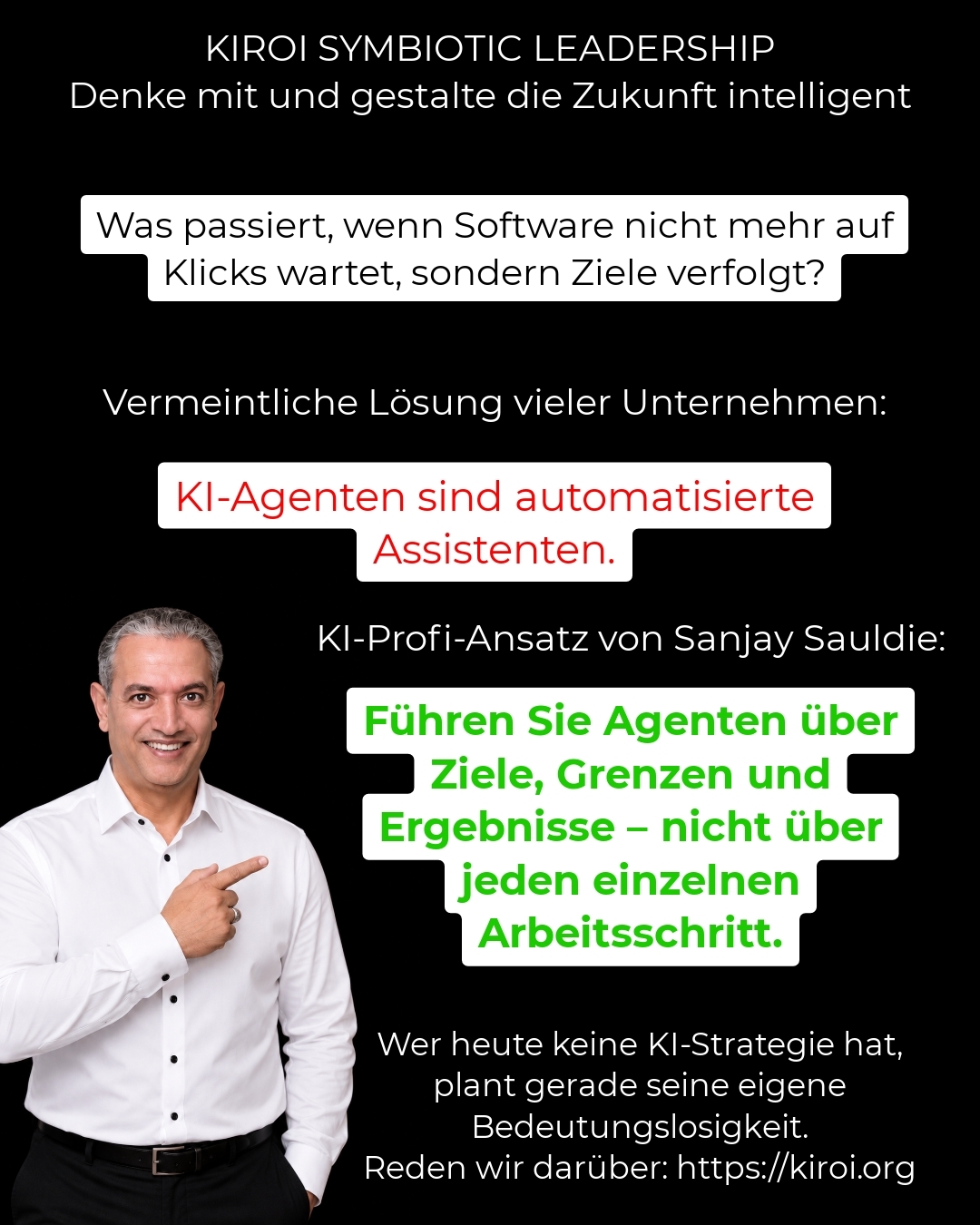
Have you ever wondered why your digital tools are still waiting for you to tell them what to do next, even though we are already living in the age of intelligent systems? This question is currently on the minds of decision-makers in almost all industries, because the way we interact with digital systems is facing a fundamental change that will have far-reaching consequences for workflows, productivity, and strategic direction. AI agents are automated assistants, This paradigm shift fundamentally changes how organizations structure their processes and how people collaborate with technological systems.
The fundamental difference between reactive and proactive technology
Traditional software systems operate according to a simple principle that has remained unchanged for decades. The user enters a command and the system executes it. After that, it waits again for the next instruction. This model has its merits, but it reaches its limits. Especially in complex environments, this approach can be inefficient.
In manufacturing, for example, production managers have to make hundreds of decisions every day. They coordinate machine utilization, material flows, and personnel planning. A reactive system can only answer individual queries here. It might show the current inventory level. But it does not automatically recognize that a bottleneck is imminent. It does not suggest alternative production sequences. It simply waits for the next click.
In retail, we encounter a similar phenomenon when planning inventory levels. Buyers use various systems for sales forecasts and order suggestions. But these systems operate independently of each other. They do not automatically account for seasonal fluctuations in the context of local events. They do not react independently to changing delivery times. Here too, waiting for human input dominates.
In healthcare, the problem is particularly evident in scheduling and resource allocation. Clinics operate with numerous systems that each wait for input. The patient management system responds to requests. The X-ray system waits for requests. Bed planning is done manually. No one proactively connects this information to an optimized overall picture.
How average companies are working with AI agents today
Most organizations have recognized that AI agents automated assistants They represent great potential. However, their implementation strategies often follow known patterns. They treat these new systems like their predecessors. They define every single step in detail. They program rigid if-then rules. This creates a contradiction.
For example, a logistics company is implementing an automated route planning assistant. The responsible parties define precise instructions for each situation. When there is traffic congestion on route A, choose route B. In the event of a delivery delay, inform the customer with text C. In the event of a vehicle breakdown, activate replacement vehicle D. This micro-control system leads to enormous maintenance effort. Every new situation requires new rules. The system becomes inflexible and labor-intensive to maintain.
In banks and financial institutions, we observe similar patterns in customer support. Chatbots have been programmed with thousands of dialogue paths. Every possible customer query should have a predefined response path. The result was frustrating. Customers did not feel understood. The systems could only process pre-programmed paths. Creative problem-solving was impossible.
In the insurance sector, automated assistants for claims processing were introduced. These were supposed to categorize claims reports and forward them. However, the single-step control method prevailed here as well. Check field A, compare with database B, forward the case to department C. The system was able to handle routine cases. However, more complex situations led to system crashes or incorrect classifications. The hoped-for efficiency increase remained absent.
The limits of micro-control of AI agents
This approach fundamentally misses the true potential of autonomous systems. When we predefine every step, we do not utilize the ability to independently solve problems. Instead of intelligent assistants, we create complex rules. We multiply our own cognitive limitations into code.
In the pharmaceutical industry, this problem manifests itself in quality control. Companies have implemented systems that monitor production batches. These were programmed with precise limits and reaction patterns. If deviation X occurs, process Y stops. The problem is obvious. New production conditions require constant adjustments. The system cannot recognize new patterns. It cannot learn from experience and develop better strategies.
In the energy sector, automated systems for grid control were introduced. These were intended to compensate for peak loads and optimally integrate renewable energy sources. However, micro-control led to rigid response patterns. The system was unable to react flexibly to unforeseen weather events. It lacked the ability to independently pursue overarching goals.
Best practice with a AIROI customer
A medium-sized company in the mechanical engineering sector faced the challenge of making its service department more efficient. The previous approach was based on a ticketing system with numerous manual steps and escalation levels. The introduction of an automated assistant followed the classic pattern with detailed process descriptions for every conceivable case. The result was disappointing, because although the system worked, it did not bring any noticeable improvement and the employees still had to make many decisions manually. As part of the transruptive coaching, the approach was fundamentally changed and the system was instead given overarching goals such as maximizing customer satisfaction, minimizing response time, and reducing escalations. In addition, clear boundaries were defined, for example which decisions always require human approval and which budget limits apply for automatic credit offers. The system was now able to autonomously find the best path to the goal and continuously learned from the results. After six months, a significant improvement in customer satisfaction levels was observed, while at the same time the processing time significantly decreased.
The strategy: goal AIROI-oriented leadership of autonomous systems
The AIROI-methodology takes a fundamentally different approach to the implementation of intelligent systems. Instead of assuming every single step of the process, we define goals, limits, and desired outcomes. The system thus receives a framework of action within which it can operate independently. This approach is more akin to leading employees than programming machines.
Imagine an experienced sales manager onboarding a new team member. He doesn’t explain every single step. Instead, he conveys goals, values, and boundaries. For example, he says: Our goal is long-term customer retention. We don’t make unrealistic promises. For discounts above ten percent, you can get my approval. The team member can then act independently and learn.
We transfer exactly this principle to AI agents as automated assistants. In the automotive industry, for example, this means for a procurement assistant: The goal is supply security at optimal costs. The boundaries are quality standards, sustainability criteria, and budget limits. The desired results are timely deliveries, cost savings, and supplier diversification. Within this framework, the system can negotiate and decide independently.
In the hotel industry, this approach can be applied to revenue management. The goal would be to optimize occupancy while maintaining maximum profitability. The limits include minimum prices, loyalty program conditions, and booking policies. The desired results include consistent occupancy, increased revenue, and customer satisfaction. The system can now independently adjust prices and control quotas.
The three pillars of goal-oriented agent leadership
The AIROI-approach is based on three fundamental elements that together form a robust framework for autonomous systems. The first element is the definition of the goal. This is not about operational instructions, but about strategic direction. What do we ultimately want to achieve? What values should guide the actions? These questions must be answered clearly.
The second element are the boundaries. Every autonomous system needs a defined framework for action. What decisions can it make independently? Where are human approvals required? What resources are available? These boundaries create security and trust in the system.
The third element are the expected results. How do we measure success? What metrics are relevant? What does a good result look like in concrete terms? This results-oriented approach enables continuous learning and improvement.
In the food industry, this could look like the following for a production planning assistant: The goal is maximum freshness with minimal waste. The limits are hygiene regulations, capacity limits, and delivery contracts. The results are measured by yield rate, delivery reliability, and freshness index. The system now autonomously plans the production.
Best practice with a AIROI customer
An international trading company wanted to optimize its personnel planning in its branches and had initially tried to implement a system with detailed shift planning rules. This took into account opening hours, minimum staffing requirements, break arrangements, and many other factors in a complex set of rules. The system functioned technically flawlessly, but the employees were dissatisfied because it offered no flexibility and ignored personal preferences. As part of the transruptions coaching approach, the approach was redesigned and the system was instead given goals such as employee satisfaction, customer service quality, and cost efficiency. The boundaries included labor law requirements, qualification requirements, and budget constraints. The system could now independently create shift schedules that took both operational requirements and employee wishes into account, and it continuously learned which combinations led to good results. Employee turnover decreased significantly, while customer satisfaction levels rose simultaneously because more motivated employees offered better service.
Practical implementation in various application areas
Implementing the goal-oriented approach requires a change in thinking at multiple levels. First, leaders must learn to think in terms of goals rather than processes. This is often challenging because many organizations have been focusing on process optimization for decades. Processes are concrete and measurable. Goals often appear more abstract. But this change of perspective is crucial.
In the telecommunications industry, the difference is clear. A process-oriented approach to customer service would define hundreds of dialogue paths. A goal-oriented approach instead defines: The goal is problem resolution at the first contact. The boundaries are data protection policies, a framework of leniency, and technical capabilities. The desired result is a satisfied customer with a resolved problem.
In the chemical industry, this approach can be applied to process control. Instead of regulating each parameter individually, the system receives overarching goals. Maximize yield while maintaining quality levels. Maintain safety standards. Minimize energy consumption. The system can now autonomously optimize parameters and learn from experience.
In the media sector, this approach fundamentally changes content distribution. A system aims to maximize reach while maintaining brand consistency. The boundaries include editorial guidelines, copyright, and platform requirements. The system independently decides on publication times, format adjustments, and channel selection.
The role of humans in goal-oriented agent-based management
A common misconception is that autonomous systems would make humans superfluous. The opposite is the case when implemented correctly. The human role changes; it does not disappear. People are relieved of routine operational tasks. They can focus on strategic decisions. They define goals and boundaries. They monitor results and adjust the framework.
In the aviation industry, this development is easily observed. Pilots were not replaced by autopilot systems. Their role has changed. They monitor systems, make complex decisions, and intervene in emergency situations. This development is now continuing in other areas.
In the construction industry, automated project management assistants could take on routine tasks. They coordinate deliveries, monitor schedules, and identify risks. The human project manager focuses on stakeholder management, complex problem solving, and strategic decision-making. The interplay between humans and machines becomes a factor of success.
In the education sector, adaptive learning systems are already supporting teachers today. These systems adapt learning content individually. They identify knowledge gaps and offer appropriate exercises. The teacher retains overall pedagogical responsibility. They define learning objectives and promote social skills that machines cannot provide.
My AIROI Analysis
The transformation from reactive to goal-oriented systems marks a turning point in the way organizations interact with technology. AI agents are automated assistants With a fundamental difference from their predecessors: they do not wait for instructions, but actively pursue defined goals. This development requires a fundamental change in mindset among leaders and technology decision-makers alike.
The AIROI-methodology provides a structured framework for this transformation. By focusing on goals, boundaries, and results instead of individual steps, flexible and learnable systems emerge. These can adapt to changing conditions and continuously improve. Maintenance costs decrease while performance increases.
However, the key to success is the right support during implementation. Technological solutions alone do not guarantee improvement. A holistic approach is needed that takes people, processes, and technology into account equally. Transruptive coaching supports organizations in this transformation. It helps define the right goals, set appropriate boundaries, and develop meaningful metrics of achievement.
Experience shows that organizations that consistently adopt this approach can achieve significant improvements. They report higher efficiency, better employee satisfaction, and increased innovation capability. The key lies not in the technology itself, but in the way we lead and deploy it. The question is no longer whether autonomous systems will come; the question is how we design them so that they truly create value.
Further links from the text above:
[1] Gartner – What Is an AI Agent
[2] McKinsey – Why Agents Are the Next Frontier of Generative AI
[3] Forrester – AI Agents and Autonomous Systems
Are you a leader and would you like to learn how you can genuinely introduce AI into your company in a valuable and sustainable way, away from the hype? Take part Contact us or read more blog posts on the topic Artificial intelligence here.








 Deutsch
 English (UK)