
Do you know why right now is the perfect time to equip your workforce for the digital future before your competitors do?
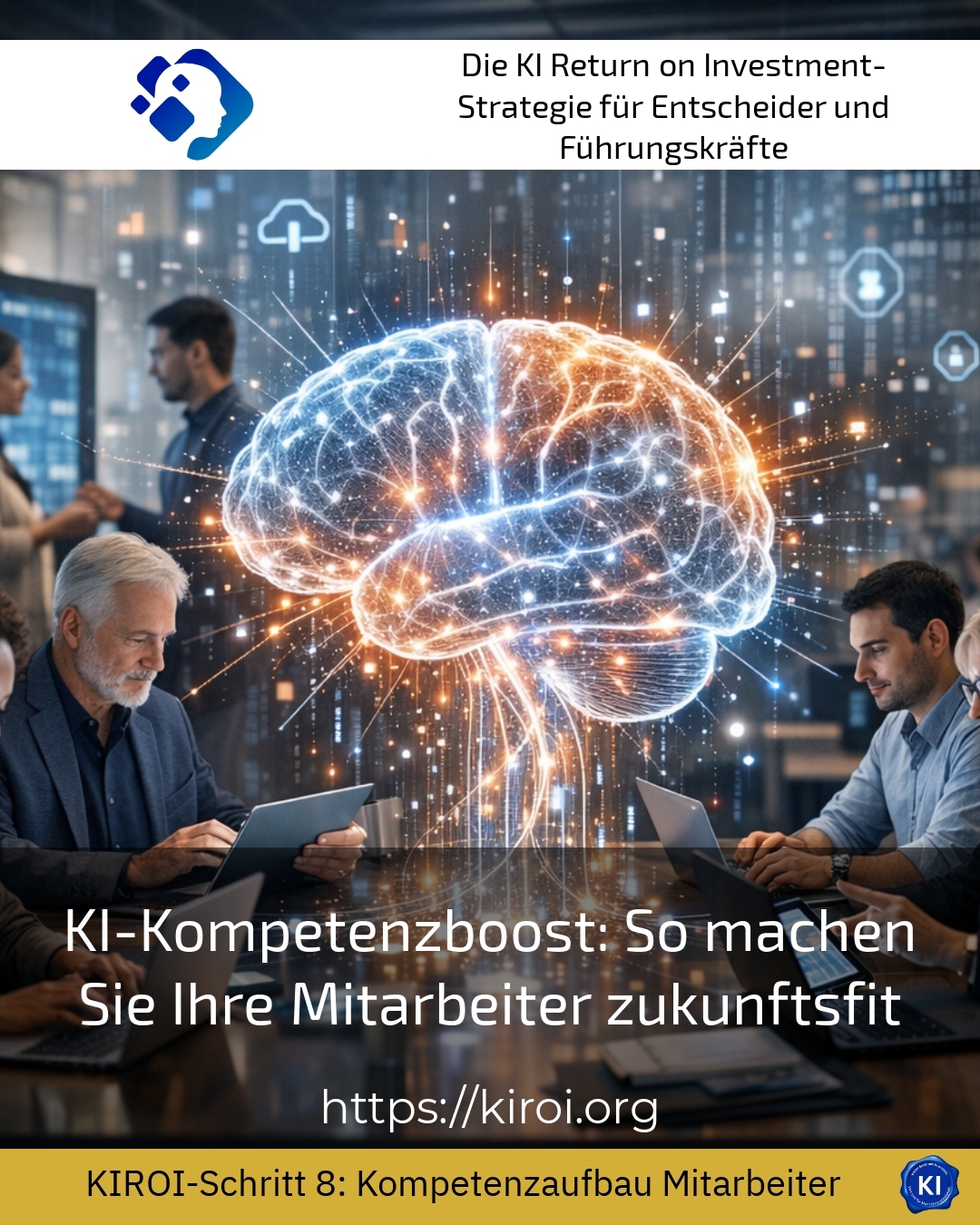
The rapid development of intelligent technologies is fundamentally changing the workplace. Companies face a crucial question: how can they achieve AI Skills Boost, Which really makes teams future-ready? Many leaders report uncertainties in handling new tools. At the same time, the pressure to make processes more efficient is growing. However, the good news is that with the right guidance and strategic impetus, organizations can successfully master this transformation and sustainably empower their employees.
Why traditional further education is no longer sufficient
Traditional training formats are reaching their limits. One-time seminars may provide basic knowledge, but practical application often remains lacking. Employees return to their workplaces and fall back into old patterns. The learning curve quickly flattens out. Sustainable competence building therefore requires a completely different approach.
Clients often report frustrating experiences with standardized training. The content provided does not align with everyday reality. This results in islands of knowledge without any connection to practice. Companies invest significant budgets, but see little measurable results. This cycle can be broken through by understanding learning as a continuous process.
A medium-sized logistics company recognized this problem early on. The management decided on accompanying coaching instead of isolated workshops. Employees were supported directly at the workplace. A machine manufacturer integrated learning modules into the production routine. An insurance company relied on peer learning between experienced and new colleagues. These examples show that context-based learning is more sustainable than theoretical instruction.
The AI Skills Boost as a strategic investment
Future-oriented companies view competence development as a strategic asset. They invest not only in technology, but above all in people. Because the best software remains ineffective without qualified users. This change of perspective fundamentally transforms the entire transformation approach.
Transruptions Coaching positions itself clearly as a support for such projects. It is about providing impulses and supporting development processes. The focus is on individual needs. Each team brings different requirements with it. A uniform approach would not be able to accommodate this diversity.
An automotive supplier started by assessing the existing competencies. This led to the development of a customized development program. A bank identified key individuals as internal multipliers. A trading company linked competence building with concrete projects. These approaches combine learning with immediate benefits for day-to-day operations.
Best practice with a AIROI customer
A traditional family business in the manufacturing industry approached us with a pressing challenge. The workforce showed significant reservations towards new digital tools. Older employees felt overwhelmed by the technological development and expressed concerns about their jobs. Younger colleagues, however, lacked modern work methods and threatened to leave the company. This situation created tensions between the generations. The management recognized the need for a holistic approach. Together, we developed a mentoring program that brought both groups together. Experienced professionals shared their process knowledge with younger colleagues. In return, these younger colleagues mentored their older mentors on new technologies. This mutual exchange created understanding and eliminated fear of confrontation. After six months, executives reported a significantly improved work environment. Fluctuation decreased significantly, and the acceptance of new systems increased noticeably. The company is now using this model as a blueprint for other locations.
Practical steps for sustainable competence development
The path to a learning organization begins with an honest assessment of the current situation. Where are your teams currently positioned? What skills are lacking to meet future requirements? These questions form the starting point for any development strategy.
An energy provider systematically analyzed the competence gaps in its departments [1]. From this, a prioritized action plan was derived. A pharmaceutical company implemented regular skill assessments. A municipal administration established quarterly development discussions with all employees. These structured procedures create transparency and enable targeted investments.
Clients often come with the desire for quick solutions. They expect immediate results after short training sessions. However, real competence development takes time and consistency. Therefore, we accompany organizations over extended periods of time. We continuously adapt our measures to changing conditions.
The role of leaders in AI Skills Boost
Transformation is only possible with active support from above. Leaders must be role models. They should show curiosity and learn on their own. Employees are guided by the behavior of their superiors. If these changes are blocked, every initiative fails.
A media company initially trained the entire management. Only then did training for teams begin. A construction company established weekly learning hours that were also used by executives on a mandatory basis. A technology company introduced reverse mentoring, in which young employees mentored executives. These measures signal appreciation for continuous learning.
The issues that executives come to us with are diverse. Many report resistance in their teams. Others struggle with their own sense of uncertainty in the face of new technologies. Some seek guidance in prioritizing development initiatives. Transruptions coaching supports all of these challenges through individual support.
Establish learning culture as a competitive advantage
Companies with a strong learning culture attract talent. They retain employees for the long term. And they react faster to market changes. Such a culture does not arise by chance; it requires deliberate design.
A consulting company reserves ten percent of its working time for further training. A hotel chain rewards employees for acquired certificates. A software house organizes monthly innovation days for experimentation. These approaches embed learning in the daily work of the company and make it a matter of course.
Best practice with a AIROI customer
An international freight forwarding company faced massive challenges due to digital platforms and automated processes. The management realized that technological investments alone were not enough. They needed qualified people who could use new systems effectively. The company approached us with the request for strategic guidance. Together we developed a three-stage program for competence development. In the first phase, we identified pioneers within the workforce. These tech-savvy employees were trained to become internal trainers. The second phase involved the gradual qualification of all teams by these multipliers. We focused on practical training directly in the workplace. The third phase established continuous learning formats such as lunch-and-learn sessions and digital knowledge platforms. The result significantly exceeded the expectations of all involved parties. The lead times for order processing decreased significantly. At the same time, employee satisfaction in internal surveys increased noticeably. Management reports an increased willingness to innovate in all departments. This project illustrates how AI Skills Boost it works as a holistic approach.
Typical challenges and how to deal with them
Every transformation brings obstacles with it. Time constraints are among the most common objections. Employees feel overwhelmed and see no capacity for further training. This argument deserves to be taken seriously.
One retail company solved the problem through micro-learning units of ten minutes each [2]. One health insurance company integrated learning modules into existing team meetings. One industrial company used shift changes to provide short bursts of knowledge. These creative solutions show that building competence is possible even with limited resources.
Resistance to change presents another challenge. Some employees fear loss of control or status loss. Others doubt the usefulness of new methods. Such concerns cannot be dispelled by ignoring them. They require open communication and the involvement of those affected.
A financial services provider set up feedback channels through which employees could express concerns. A city administration organized information sessions before the project began. A machine manufacturer had skeptical employees help design pilot projects. These forms of participation turn potential opponents into supporters.
Measurable success through a systematic approach
Competency development must be measurable to gain acceptance. Define clear metrics before the project begins. Track progress continuously. Celebrate milestones achieved together with your teams.
A telecommunications provider measures the adoption rate of new tools on a monthly basis. An insurance company regularly assesses the level of competence through standardized tests. A manufacturing company links training achievements to target agreements. These systematic approaches provide data for evidence-based decisions.
My AIROI Analysis
Empowering employees for the digital future is proving to be a key management challenge of our time. Technological possibilities are evolving rapidly. At the same time, the complexity of the working world is growing steadily. Companies that do not systematically develop their workforce today risk losing their competitiveness tomorrow. This is not about short-term training measures, but about a fundamental transformation of the learning culture.
Our experience shows that successful organizations share several common characteristics. They view competence development as a strategic priority at the board level. They invest in long-term follow-up programs instead of in ad-hoc interventions. They actively involve leaders as role models and multipliers. And they create frameworks that enable continuous learning and reward it.
The AI Skills Boost It is best achieved through a combination of strategic planning and flexible implementation. Rigid programs fail due to the reality of dynamic work environments. On the other hand, too much flexibility leads to arbitrariness without measurable results. The art lies in finding the balance between structure and adaptability. Transruptive coaching supports companies in finding and maintaining this balance. We provide inspiration, accompany change processes, and help overcome typical obstacles. In this way, employees become future-ready step by step – sustainably and with measurable success.
Further links from the text above:
[1] McKinsey – Skill Shift: Automation and the Future of the Workforce
[2] Harvard Business Review – Learning and Development
For more information and if you have any questions, please contact Contact us or read more blog posts on the topic Artificial intelligence here.






 Deutsch
 English (UK)