
Why do so many transformation projects fail despite the latest technology and brilliant strategies due to the human component, and how can leaders finally get their hands on this crucial factor?
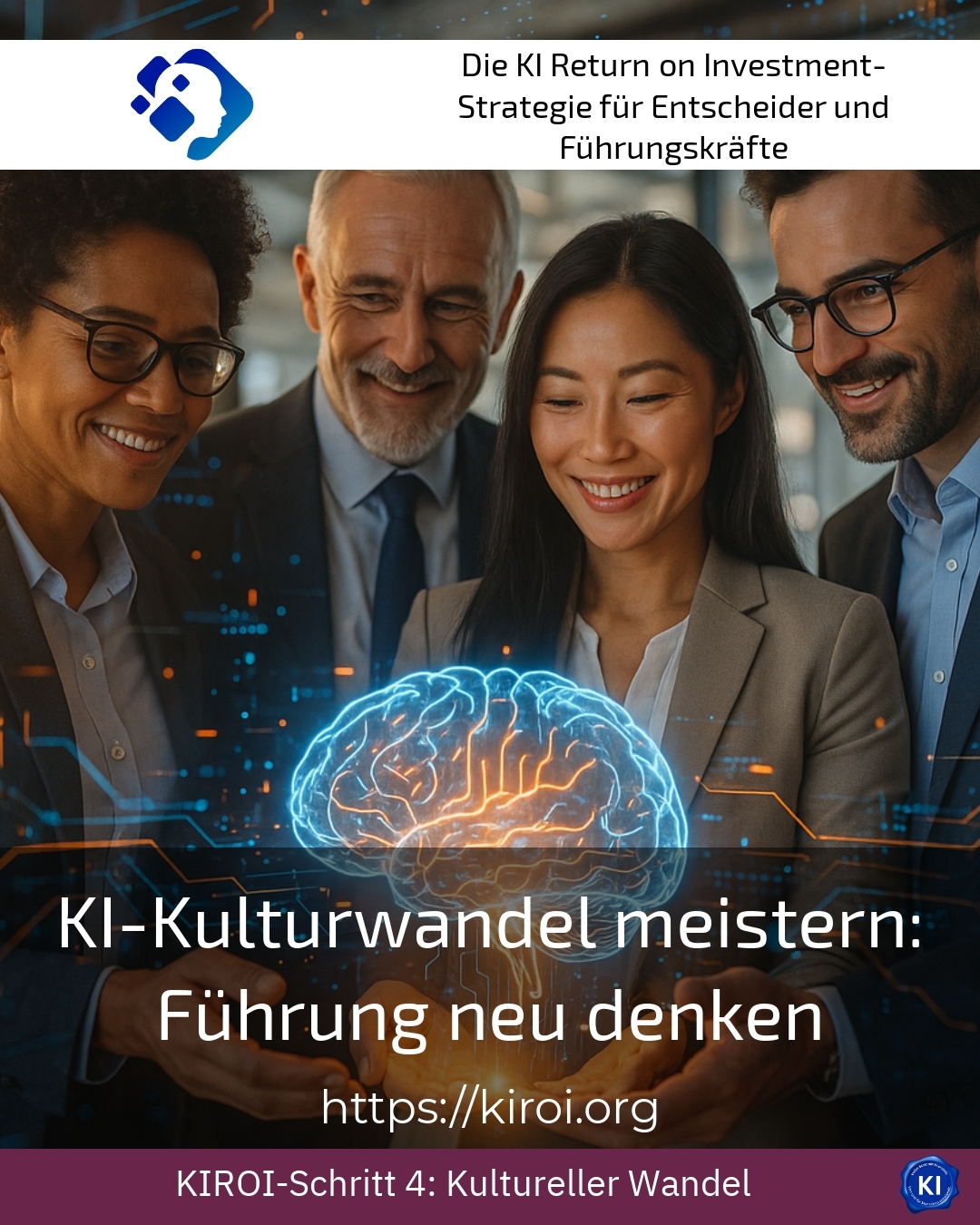
The answer lies deeper than many decision-makers suspect. In a time of rapid technological developments, organizations face the enormous challenge of not only modernizing their systems but also of engaging people along the way. Mastering AI cultural change: Rethinking leadership This is no longer an abstract concept. It has become an essential skill for survival. Clients often report situations in which technical implementations went perfectly smoothly. Yet the hoped-for success remained elusive. The cause is regularly found in neglected cultural aspects. This article highlights tried-and-tested approaches and shows concrete ways forward.
The invisible barrier: Why technology alone is not enough
Many organizations invest significant sums in digital tools. They train employees on how to use new systems. Despite this, projects stagnate after promising beginnings. The reason is often a fundamental misjudgment. Technical changes always require an adjustment to the corporate culture as well. Executives regularly underestimate this dimension. They focus on measurable metrics and overlook subtle resistance. This resistance manifests itself in various forms. Some employees tacitly refuse to use new tools. Others unknowingly sabotage processes by clinging to old habits.
One production company, for example, introduced automated quality controls. The technology worked flawlessly. Nevertheless, the error rates initially rose. The analysis revealed surprising findings. Employees feared being monitored and adjusted their behavior accordingly. They reported problems less frequently because they feared consequences. A logistics service provider experienced similar phenomena during the implementation of intelligent route planning. Drivers ignored the system’s suggestions out of principle. They did not feel valued for their expertise. A retail company struggled with similar challenges in inventory optimization. Buyers distrusted algorithmic recommendations and continued to order based on gut instinct.
Mastering AI cultural change: Rethinking leadership begins with self-reflection
Leaders face a paradoxical situation. They are supposed to drive change, which they themselves often do not fully understand. This uncertainty manifests itself in various behavioral patterns. Some leaders completely delegate technical issues to specialized departments. Others overcompensate through excessive activism. Both rarely lead to the desired result. Instead, a reflective approach to one’s own limitations is needed. Leaders must learn to admit ignorance. They must simultaneously provide guidance without knowing all the answers.
A medium-sized mechanical engineering company demonstrated exemplary how to achieve this balance. The management initiated regular learning sessions. During these sessions, executives openly shared their questions and uncertainties. This transparency had a liberating effect on the entire workforce. A financial services provider established so-called reverse mentoring programs. Younger, technically-savvy employees mentored experienced executives. The mutual respect grew measurably. An energy provider went one step further. There, management members themselves experimented with new technologies. They transparently documented their learning curve for all to see.
Best practice with a AIROI customer
An internationally operating industrial company faced massive challenges in implementing intelligent manufacturing control. The technical implementation was complete, but employee acceptance was close to zero. Shift leaders boycotted the system through creative strategies to circumvent it, and production workers fundamentally distrusted automated instructions. As part of the transruptive coaching process, we jointly developed a multi-stage approach that placed the cultural dimensions at the center. First, we conducted intensive discussions with all involved to systematically capture fears and concerns. It became clear that many employees feared the devaluation of their long-standing experience. Subsequently, we developed a concept that explicitly recognized human expertise and integrated it into the process. Experienced employees were given the role of system mentors who could evaluate and improve algorithmic suggestions. This transformation fundamentally changed perceptions, as technology suddenly became a tool rather than a threat. The adoption rate rose from under twenty percent to over eighty percent within three months, and the productivity gains ultimately exceeded the original projections significantly.
Communication as a key competence for transformation
The way changes are communicated determines success or failure. Many organizations make fundamental mistakes in this process. They communicate too late or too abstractly. They use technical jargon that excludes employees. They promise results that they cannot deliver. All of this undermines trust in a lasting way. Instead, communication needs to be honest, continuous, and understandable. Leaders need to learn to explain complex relationships simply.
A telecommunications provider developed an exemplary communication concept. Every week there were brief updates on the project progress. These updates included both successes and setbacks. The honesty was explicitly praised by employees. A pharmaceutical company relied on visual communication. Complex processes were presented in simple graphics. This significantly increased understanding of necessary changes. An automotive supplier established regular question-and-answer rounds. Employees were able to anonymously express concerns. The management responded personally and in a comprehensible manner.
Understanding and constructively using resistance
Resistance to change is not a pathology. It is a natural human reaction. Wise leaders view resistance as a valuable source of information. Behind rejection often lie legitimate concerns. Addressing these concerns can significantly improve projects. Employees on the ground often recognize practical problems earlier. Their objections can prevent fatal missteps. The Mastering AI cultural change: Rethinking leadership Therefore, it also means that criticism is welcome.
A healthcare provider experienced massive resistance when introducing digital patient records. Nurses complained of increased documentation requirements. Instead of dismissing the criticism, management thoroughly analyzed the objections. In fact, the system had significant weaknesses in user guidance. The subsequent improvements led to significantly better acceptance. An insurance company used resistance productively for process improvements. Claims adjusters criticized algorithmic damage assessments. Their experience ultimately fed into improved models. A construction company transformed skeptical project managers into ambassadors of change. They were involved early in decision-making processes.
New competence profiles for a changing working world
The requirements for employees are fundamentally changing. Technical expertise alone is no longer sufficient. Increasingly, comprehensive skills such as critical thinking and adaptability are in demand. Leaders must prepare their teams for these new requirements. This requires long-term human resources development strategies. Short-term training measures often fall short of the mark. Instead, continuous learning cultures are needed.
A media company invested heavily in the further education of its employees. Each employee received a personal learning budget. The selection of topics was largely left to their discretion. This autonomy significantly increased the motivation to learn. A retailer developed internal academy programs. Experienced employees passed on their knowledge in a structured manner. The knowledge transfer between generations improved significantly as a result. A chemical company cooperated with universities to develop practical training formats. Employees acquired relevant qualifications while working. The commitment to the company increased in parallel with measurable results.
Best practice with a AIROI customer
A traditional family business in the metalworking sector approached us with a complex set of questions. The company had made significant investments in automation technologies, but the expected efficiency gains remained elusive, and the mood among the workforce was steadily deteriorating. As part of our transruptive coaching process, we identified fundamental communication deficiencies as the core problem. The management had ordered changes from top down, without involving employees in decision-making processes. Together we developed a participatory transformation model that involved all levels of the hierarchy actively. Plant employees were given the opportunity to contribute suggestions for improvement and to co-design their implementation. Leaders learned to delegate control and to trust in coaching sessions. The cultural transformation was not without setbacks, as old patterns persisted. However, with patience and consistent support, it was possible to establish a learning organization. After eighteen months, employees reported increased job satisfaction, while at the same time productivity metrics significantly improved. The leaders had learned to view transformation as an ongoing process rather than a one-time project.
Mastering AI cultural change: Rethinking leadership requires the courage to be vulnerable
Traditional leadership images emphasize strength and infallibility. In times of radical change, however, these images become a burden. Leaders who do not admit mistakes lose credibility. Employees recognize uncertainty despite all efforts to conceal it. Authentic leadership means showing vulnerability. This creates connection and encourages others to be open as well.
A software company introduced so-called failure Fridays. During these events, executives shared stories about their own misjudgments. The initiative positively changed the error culture throughout the company. A consulting firm practiced radical transparency in project evaluations. Even failed projects were openly analyzed. This made learning from failures a normal practice. A technology company encouraged executives to document personal learning journeys. These reports inspired others and created role models for lifelong learning.
Creating structures that enable change
Cultural change requires supportive structures. Without adapted processes and incentive systems, good intentions quickly fade away. Leadership therefore also needs to critically question organizational frameworks. Sometimes established structures hinder necessary changes more than employees do. Hierarchies can stifle innovation. Silos prevent cross-departmental collaboration.
A consumer goods company largely eliminated traditional departmental boundaries. Instead, flexible project teams with varying composition were created. This significantly improved collaboration. A financial institution fundamentally revised its compensation systems. In addition to individual goals, team performance was now also factored into evaluation. This led to a measurable increase in collaborative behavior. A logistics company established agile work methods across all departments. Flexibility increased, and adjustments to changing requirements were made more quickly.
My AIROI Analysis
The experience of guiding numerous transformation projects has repeatedly confirmed a central insight. Technological changes rarely fail due to the technology itself. They fail due to a lack of consideration for cultural dimensions. Executives regularly underestimate the emotional complexity of change processes. They plan too little time for adjustments. They expect too quick results. This impatience leads to frustration on all sides. Successful transformations require patience and continuous attention.
The Mastering AI cultural change: Rethinking leadership-Perspective shows that leadership itself needs to be transformed. Traditional leadership tools are too limited in dynamic environments. Control must be complemented by trust. Instructions must be replaced by dialogue. Hierarchy must be expanded through networks. These adjustments are difficult for many leaders. They require a learning process that involves the abandonment of deeply ingrained patterns. This is where transruptive coaching comes in. It accompanies leaders and organizations on this challenging journey. It provides impulses without delivering ready-made solutions. It creates spaces for reflection and development. Experience shows that organizations that embrace this support become more resilient. They manage change more successfully. They create work environments where people and technology can work productively [1][2].
Further links from the text above:
[1] AIROI-Blog: Current articles on digital transformation
[2] Contact for transformation support
For more information and if you have any questions, please contact Contact us or read more blog posts on the topic Artificial intelligence here.







 Deutsch
 English (UK)