
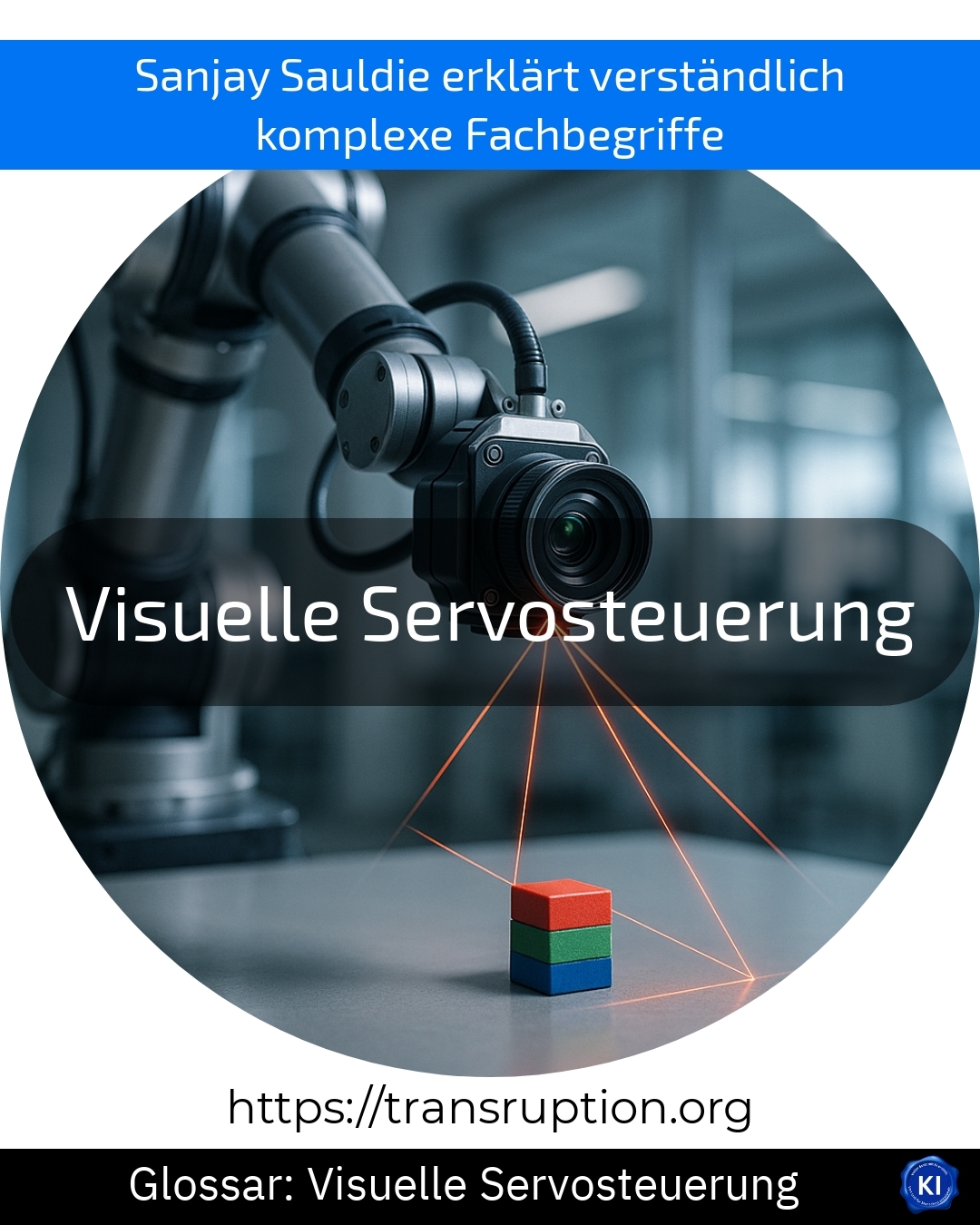
The term „visual servoing“ is primarily found in the fields of artificial intelligence, automation, and robotics. It describes a technology that uses cameras or other sensors to control machines – such as robotic arms – with the help of images. The special feature of this is that the machine "sees" where an object is located and can adjust its movements in real-time.
A vivid example: In a modern car factory, a robotic arm picks up a windscreen and is meant to fit it precisely into the body. With visual servo control, a camera monitors the position of the windscreen and the body. This allows the robot to detect if anything has slipped slightly and to correct it immediately. This way, errors are avoided and production runs more efficiently.
Visual servo control saves time and costs in automation, as machines can work more flexibly and precisely. At the same time, this technology also makes it easier to use robots in complex or changing environments. It is therefore an important building block for the future of industry and intelligent factories.











 Deutsch
  English (UK)