
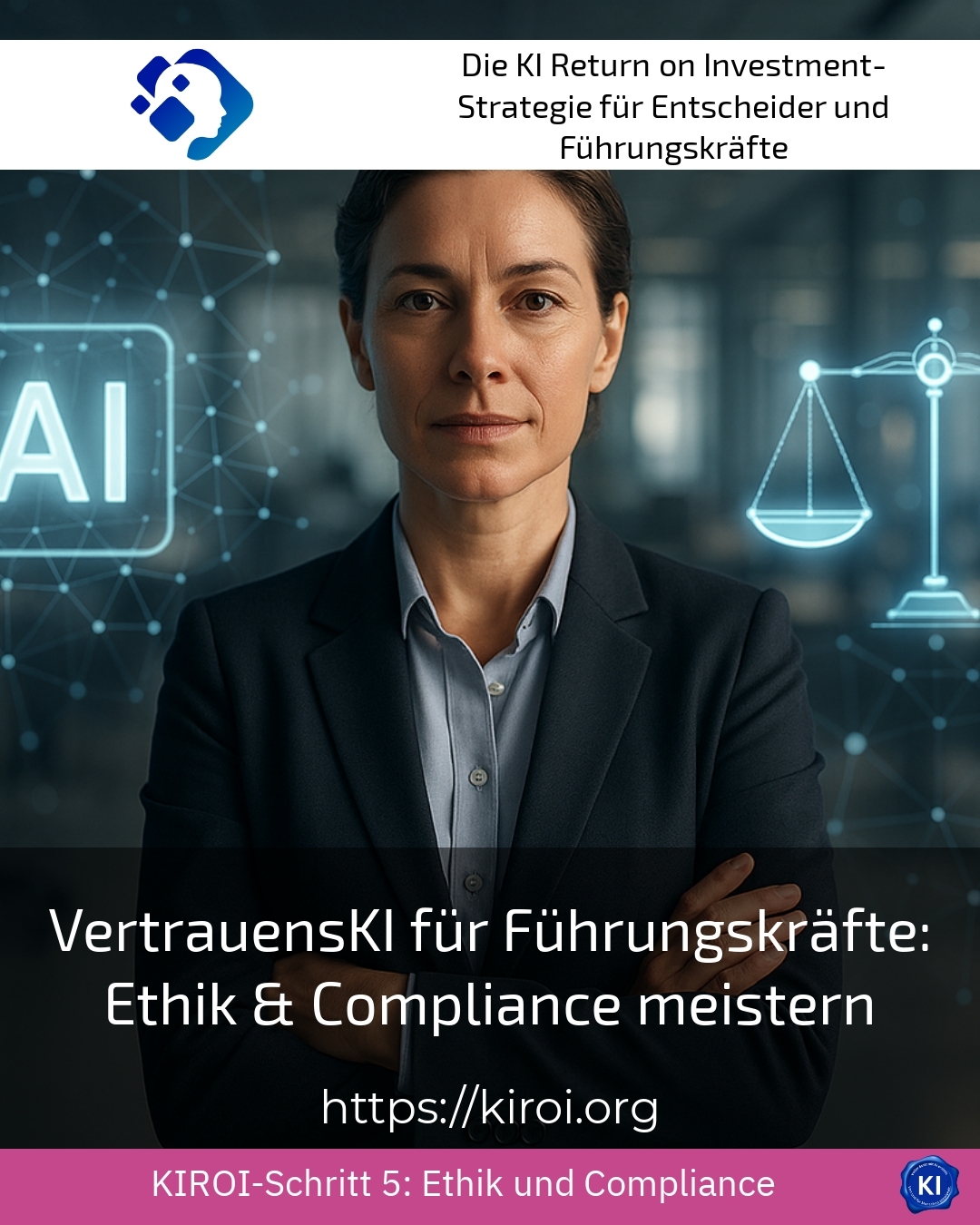
How do decision-makers manage to reconcile technological innovation with moral responsibility and regulatory requirements without losing valuable competitive advantages? This question currently concerns countless people in leadership positions because they recognize that the deployment of intelligent systems brings with it fundamental challenges that go far beyond purely technical aspects. The concept of Trust AI for executives It provides a structured framework that connects ethical principles with entrepreneurial action, while ensuring compliance with legal requirements. In an era where algorithmic decisions increasingly shape day-to-day business operations, leaders must learn to not only implement technology but also question it and manage it responsibly.
Understanding the ethical dimension of intelligent systems
Modern organizations face the fundamental challenge of connecting technological possibilities with social responsibility. It is increasingly clear that purely technical expertise is not enough to develop sustainable and accepted solutions. Clients often report feeling uncertain when it comes to evaluating moral implications, because traditional training paths rarely adequately address these aspects. For this reason, transruptive coaching is gaining importance, as it helps leadership teams develop a holistic view of technological transformation.
For example, a financial institution faced the challenge of introducing automated credit decisions without systematically disadvantaging certain population groups. The decision-makers quickly realized that historical data could contain discriminatory patterns that were replicated by learning algorithms. Through a structured reflection process, the team developed criteria that made fairness measurable while at the same time not compromising the business goals. Another example can be found in the insurance industry, where companies want to optimize risk assessments through intelligent systems without compromising ethical practices. Trading companies are also increasingly relying on personalized pricing and must weigh where the line between smart business strategy and exploiting customer information [1].
Trust AI for executives as a strategic competitive advantage
Organizations that rely early on trustworthy technological solutions position themselves more successfully in the market in the long term because customers and business partners increasingly value transparent and comprehensible processes. This development is particularly evident in healthcare, where patients want to know on what basis diagnostic support or treatment recommendations are made. At the same time, regulatory authorities expect comprehensible documentation that can reveal the entire decision-making process of a system. The establishment of corresponding structures requires strategic planning and continuous adaptation to changing conditions.
Best practice with a AIROI customer
A medium-sized company in the manufacturing sector approached us because it wanted to introduce intelligent systems for quality control, but had concerns regarding the traceability of decisions that led to the disposal of products. The management had recognized that customers increasingly expected transparency about production processes and that regulatory requirements made thorough documentation necessary. In the course of our support, we developed a comprehensive concept that combined technical implementation with ethical reflection and defined clear responsibilities within the organization. We placed particular emphasis on involving all affected employees, because their acceptance was crucial for the long-term success. The transruptions coaching helped the executives clarify their own position on ethical issues and communicate it convincingly to various stakeholders. After six months of intensive collaboration, the company had a robust governance framework that met both internal and external requirements while allowing for innovation. The management reported that they could now present themselves more confidently in discussions with customers, auditors, and government officials because they understood and could explain the functioning and limitations of their systems.
Proactively design regulatory requirements
The legal framework for the deployment of intelligent technologies is undergoing dynamic change, posing significant challenges for companies but also offering opportunities for pioneers. European legislators have introduced comprehensive regulations that impose strict requirements on transparency, accountability, and human oversight [2]. Executives must not only understand these requirements but also understand how they can be implemented practically without unnecessarily burdening operational business. The complexity of the matter requires interdisciplinary collaboration between technical, legal, and strategic departments.
In the telecommunications sector, for example, providers use intelligent systems for network optimization and customer support while simultaneously meeting strict data protection requirements. Energy providers rely on algorithmic load management forecasts and must ensure that these systems function reliably and transparently even in critical situations. Logistics companies optimize their supply chains through data-driven decisions, facing the challenge of balancing the interests of various stakeholders fairly. These examples illustrate that Trust AI for executives it does not present an abstract theory, but generates concrete needs for action in almost all economic sectors [3].
Building and maintaining governance structures
Building robust internal control mechanisms requires first an honest assessment of the existing systems and processes, which often reveal complex structures that were not designed for the requirements of intelligent technologies. Leaders should not make the mistake of delegating this task solely to technical departments, because the strategic and ethical dimensions require their immediate attention. Our transruptions coaching supports decision-makers in defining their role in this process and building the necessary competencies to make informed judgments.
For example, a pharmaceutical company implemented a committee that ethically evaluates all new applications of intelligent systems before their implementation and issues recommendations for adjustments. A regional bank appointed a Chief Ethics Officer who reports directly to the board and has veto power in critical technological decisions. A media conglomerate developed detailed guidelines for the use of automated content generation and created transparent processes for handling algorithmically amplified information. These examples show that there is no one right way, but that each organization must find its own approach that suits its corporate culture and specific risk profiles.
Building trust through transparent communication
The best internal governance is of little use if companies are unable to communicate their practices convincingly to the outside world and gain the trust of relevant stakeholders. Trust AI for executives Therefore, it also means developing communication strategies that present complex technical issues in a clear and honest way, without falling into superficial simplifications or misleading promises. Investors, customers, regulatory authorities, and the general public have different information needs that must be addressed individually.
For example, a car manufacturer published detailed transparency reports on the functioning of its driver assistance systems and openly explained the limitations of the technology, leading to increased acceptance among critical consumer groups. An e-commerce company proactively communicated which data is used for product recommendations and which data is deliberately excluded to enable informed decision-making for customers. A healthcare insurer explained in understandable language how intelligent systems support billing and which control mechanisms ensure that people make the final decisions [4].
Best practice with a AIROI customer
An internationally operating consulting firm approached us because it wanted to offer intelligent analytical tools to its clients, but had not developed a uniform position on ethical core issues internally, which led to uncertainties in client communication and occasionally to contradictory statements from various employees. The partners recognized that this deficiency not only posed reputational risks but also compromised the quality of the consulting services because fundamental questions had not been sufficiently considered. Through our transruptive coaching, we supported an intensive strategy process involving executives from various practice groups and regions, which led to a binding value framework that all involved parties endorsed. This framework was then translated into training programs, enabling all advisors to speak competently and consistently about ethical issues. Particularly valuable was the realization that these internal clarification processes not only served external communication but also improved internal collaboration and created a shared understanding that had previously been lacking. Upon completion of the project, the management reported that they could now present themselves more confidently in tenders because they had clear answers to the increasingly frequent questions about ethical standards.
Accompany and shape cultural change
Technological transformation is only sustainable when it is accompanied by corresponding cultural change that involves all levels of the organization and promotes new ways of thinking and behaviors. Leaders play a crucial role as role models because their own attitude and approach to ethical issues significantly shape how employees perceive and address these issues. Transruptive coaching offers the impetus to consciously shape this role of role models and live authentically, without falling into exaggerated activism or losing sight of important business realities.
For example, a technology company introduced regular ethics dialogues where employees from all levels of the organization could discuss difficult decision-making situations and learn from one another. A university integrated modules on responsible technology development into all technical degree programs, thereby creating a foundation for future professionals who will naturally incorporate this perspective into their work. A startup established a feedback system from the very beginning that allowed all stakeholders to express ethical concerns in a low-key manner and ensure that these suggestions were taken seriously and addressed [5].
My AIROI Analysis
The confrontation with Trust AI for executives It reveals a multifaceted field of action that requires strategic foresight, ethical reflexivity, and practical implementation competence alike. Decision-makers who face this complexity and are willing to admit even uncomfortable questions will be better able to lead their organizations through the challenges of technological transformation than those who rely solely on technical brilliance and neglect the societal dimensions. The examples from various industries vividly demonstrate that there are no universal solutions; each organization must find its own path that suits its specific situation, culture, and strategy.
It becomes clear that successful implementation is not achieved through hasty action or hesitant waiting, but through systematic action that builds on solid foundations and is continuously adapted. Regulatory requirements will continue to increase in the coming years, which is why early action offers strategic advantages and avoids costly subsequent corrections. At the same time, societal expectations are continuously evolving, so decisions made today must be regularly reviewed and, if necessary, adjusted. Transruptive coaching can provide valuable support in this process by helping leadership clarify their own position, build effective structures, and communicate persuasively. Anyone who accepts this challenge and sees it as an opportunity will not only meet regulatory requirements but also gain the trust of all stakeholders, thereby becoming more successful in the long term.
Further links from the text above:
[1] European Parliament – Fundamentals and Applications of Intelligent Systems
[2] European Commission – Regulatory framework for intelligent technologies
[3] OECD – Political framework conditions for trustworthy technologies
[4] ISO – International standards for the governance of intelligent systems
[5] Stanford HAI – Research on human-centered technology development
For more information and if you have any questions, please contact Contact us or read more blog posts on the topic Artificial intelligence here.








 Deutsch
 English (UK)