
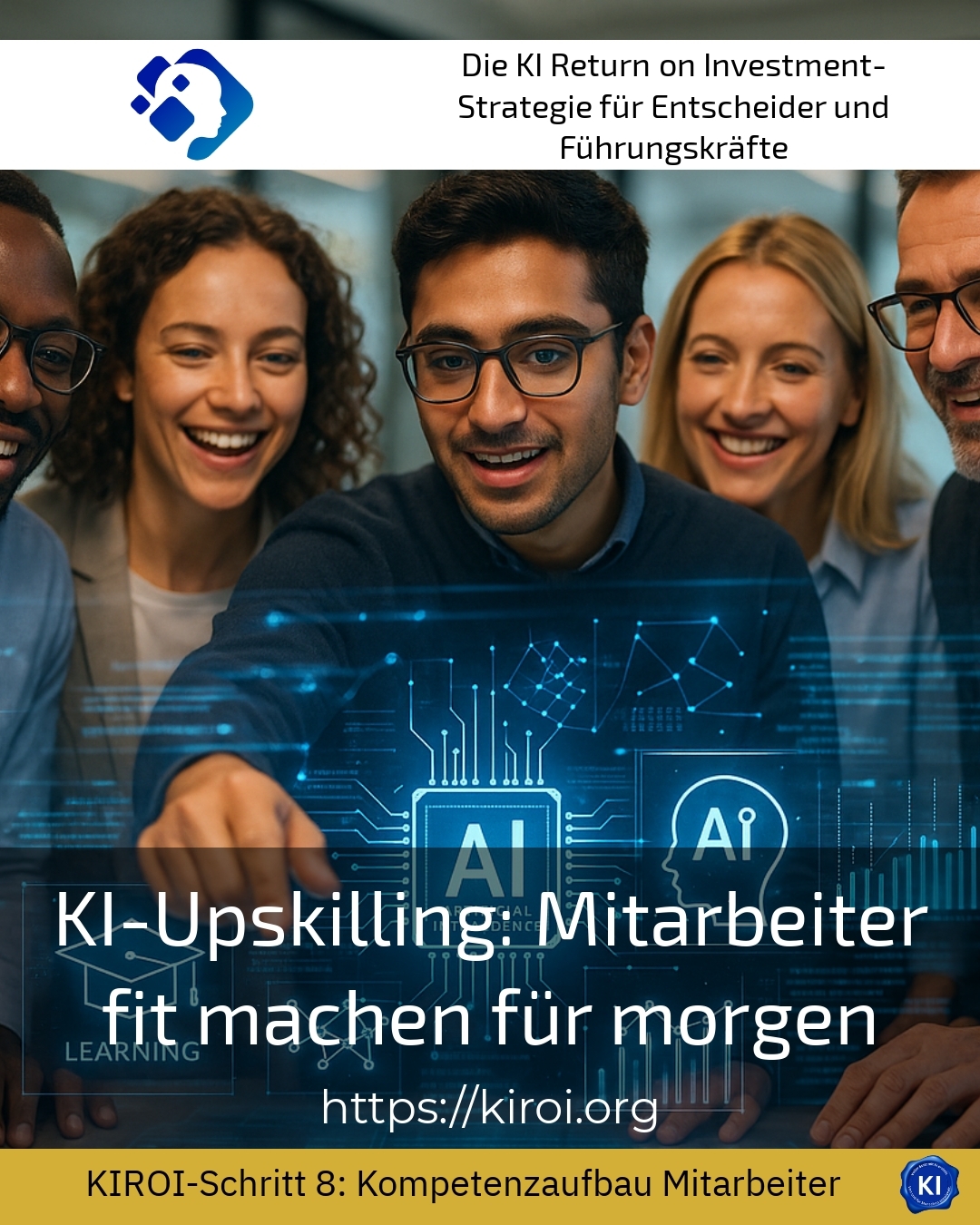
The digital revolution is fundamentally changing every workplace. Companies face a crucial question: How do we prepare our teams for the new world of work? AI Upskilling: Making Employees Fit for Tomorrow is no longer an optional add-on. It determines the competitiveness of entire organisations. Those who invest in the skills development of their workforce today secure the company's success tomorrow. This is not just about technical knowledge. Rather, a comprehensive cultural change is at the heart of every successful transformation.
Why skills development is becoming indispensable now
The world of work is undergoing profound change. Automation and intelligent systems are increasingly taking over repetitive tasks. At the same time, completely new job profiles and fields of activity are emerging. For companies, this presents a dual challenge. They must develop existing employees further and, at the same time, attract new talent. The speed of technological change often outstrips the adaptability of traditional education systems. Therefore, organisations are increasingly taking responsibility for lifelong learning themselves.
Many leaders report similar challenges during this transformation process. They experience uncertainty within their teams regarding new technologies. Some employees fear for their positions or feel overwhelmed. Others, however, show great curiosity and a willingness to learn. These different starting positions require individual learning paths. A one-size-fits-all training programme is rarely sufficient. Instead, tailored approaches are needed for various target groups within the company.
AI Upskilling: Equipping Employees for Tomorrow through Strategic Planning
Successful skills development begins with a careful assessment. What skills already exist within the company? Where are the biggest gaps between current and future needs? These questions require a systematic analysis of the entire organisation. Structured skills models and regular employee discussions can help with this. The insights gained form the basis for targeted development measures.
Organisations often report surprising insights during this analysis phase. Hidden talents come to light and untapped potential becomes visible. At the same time, structural deficits that have previously remained hidden emerge. This transparency enables well-founded decisions about investment in further training. It also aids in prioritising scarce resources for maximum impact.
Best practice with a AIROI customer
A medium-sized company with around three hundred employees faced the challenge of preparing its entire workforce for new working methods. Management had recognised that traditional training formats were no longer sufficient. As part of transruption coaching, we jointly developed a multi-stage qualification strategy. This took into account the different learning types, experience levels, and workloads of the employees. First, we conducted a comprehensive skills analysis that uncovered hidden strengths and development potentials. Subsequently, we defined individual learning paths for different employee groups within the company. Managers were given a special role as learning facilitators and multipliers. They were prepared for their new role in special workshops and received ongoing support. After six months, initial evaluations showed a significant increase in digital skills. Employee satisfaction also rose because people felt valued and supported. [1]
Designing learning formats for diverse needs
Modern professional development no longer takes place solely in seminar rooms. Blended learning concepts combine face-to-face events with digital self-study phases. Microlearning units enable learning in small chunks during the workday. Peer learning groups foster exchange between colleagues. Mentoring programs connect experienced employees with learners for individual knowledge transfer.
The choice of suitable formats depends on various factors. What time resources are available? How tech-savvy is the respective target group? What learning culture already shapes the company? These questions significantly influence the success of any training measure. Therefore, an iterative approach with regular adjustments is recommended.
The role of leaders in the transformation process
Without committed leaders, every further training initiative fails. Managers shape the learning culture of their teams through their own behaviour. If they themselves show curiosity and continuously learn, it motivates their employees. Conversely, sceptical or disinterested superiors can block any impetus for development. Therefore, successful competence development always begins at the top of the organisation.
Managers themselves require support in their changed role. They transition from being directive to becoming learning facilitators and coaches. This transformation demands new skills and altered attitudes. Many managers initially report feeling uncertain in this new capacity. However, with targeted guidance, they quickly develop competence and self-confidence.
AI Upskilling: Getting employees ready for tomorrow through cultural change
Technical training alone is not enough for sustainable change. A learning-friendly corporate culture forms the foundation of any successful transformation. This includes accepting mistakes as an unavoidable part of the learning process. Psychological safety enables employees to ask questions without fearing loss of face. These cultural prerequisites do not arise overnight, but through continuous work.
Organisations frequently report positive side effects of a strong learning culture. Collaboration between departments noticeably improves. Innovation arises more easily, as people become more open to new ideas. Employee retention increases, as people feel valued and supported. These effects further justify the investment in cultural transformation, in addition to the direct learning outcomes.
Best practice with a AIROI customer
A corporate group with locations in multiple countries wanted to fundamentally transform its learning culture. Previous further training measures were considered ineffective and often perceived by employees as a waste of time. As part of the transruption coaching, we first developed a vision for the future learning culture. This vision emerged from a participatory process involving all hierarchical levels. Employees from different departments contributed their perspectives and needs. We then identified concrete levers for cultural change in daily work. Managers were trained as learning role models and received regular feedback on their behaviour. We established so-called learning circles, where small groups met regularly for exchange. These informal structures complemented the formal further training offer in a valuable way. After one year, an employee survey showed significantly improved scores in learning-related indicators. Fluctuations decreased, and employer attractiveness increased measurably. [2]
Ensuring measurability and continuous improvement
Investments in further education require proof of effectiveness. Modern learning platforms provide detailed data on learning progress and engagement. This information enables data-driven decisions about programme improvements. At the same time, it helps to demonstrate the return on investment of training measures. The measurability of learning success is therefore becoming increasingly important.
Alongside quantitative metrics, qualitative feedback plays a crucial role. Regular feedback discussions with participants provide valuable insights for improvements. Observations by managers add a practical dimension regarding the application of what has been learned. This multi-perspective evaluation allows for a comprehensive understanding of the programme's effectiveness.
Identifying and overcoming obstacles
Every transformation encounters resistance and obstacles along the way. Lack of time in daily work is the most common barrier to further training. Employees often feel torn between day-to-day business and learning activities. Clear prioritisation by management and protected learning times help here. Integrating learning into the workflow also significantly reduces this conflict.
Some employees show fundamental scepticism towards change and new learning. This attitude is often rooted in previous negative experiences or fears. An empathetic approach to these concerns is more important than pressure or coercion. Often, initially sceptical employees later report positive surprises and newfound self-confidence.
AI Upskilling: Making Employees Fit for Tomorrow as a Strategic Success Factor
The systematic development of staff competencies is not a short-term project. Instead, it is a permanent strategic task for every organisation. The ability to continuously learn and adapt becomes a crucial competitive advantage. Companies that invest here today secure their future viability for the coming years.
This is not just about technical skills in the narrow sense. Critical thinking, creativity, and emotional intelligence are gaining importance. These so-called future skills complement technical knowledge and enable its meaningful application. Holistic competence development takes both dimensions into account equally in its programmes.
Best practice with a AIROI customer
A family business with a rich tradition recognised the need for a comprehensive digital transformation of its workforce. The employees had largely been with the company for many years and possessed valuable experience and knowledge. At the same time, however, they lacked fundamental skills for the digital working world. transruptions-coaching guided this sensitive transformation process over a period of eighteen months. We began by acknowledging the existing expert knowledge and its importance to the company. We then jointly developed learning paths with the employees, taking their strengths as a starting point. Older employees became mentors for professional knowledge, while younger colleagues contributed technical know-how. This mutual enrichment strengthened cohesion between the generations within the company. Management was positively surprised by the result and reported increased innovative strength. New ideas now arose from the combination of experience and digital competence. [3]
My AIROI Analysis
The support of numerous organisations in their transformation has provided important insights. Successful skills development requires a holistic approach that goes far beyond individual training sessions. Technical knowledge must be combined with cultural transformation and leadership development. Only in this way can sustainable changes be created that are equipped to meet the challenges of the future.
The AIROI methodology has proven to be a valuable framework in this regard. It combines strategic planning with practical implementation support at all organisational levels. The involvement of all relevant stakeholders from the outset is particularly important. Employees who participate in shaping their learning paths show higher engagement and better learning outcomes.
For the coming years, I expect a further acceleration of technological change. The importance of continuous learning will therefore continue to grow and become a fundamental prerequisite for professional success. Organisations that set the right course today will gain a significant competitive advantage. Investing in people remains the most valuable investment of all for sustainable corporate development.
AI Upskilling: Making employees fit for the future is not a one-off project, but a permanent leadership task. Support from experienced partners can significantly aid and accelerate this process. Transruptional coaching offers a proven framework for successful transformation projects in companies of various sizes and industries.
Further links from the text above:
[1] AIROI Methodology for Strategic Competence Development
[2] McKinsey Insights on Organisational Transformation
[3] World Economic Forum Future of Jobs Report
For more information and if you have any questions, please contact Contact us or read more blog posts on the topic Artificial intelligence here.







 Deutsch
  English (UK)