
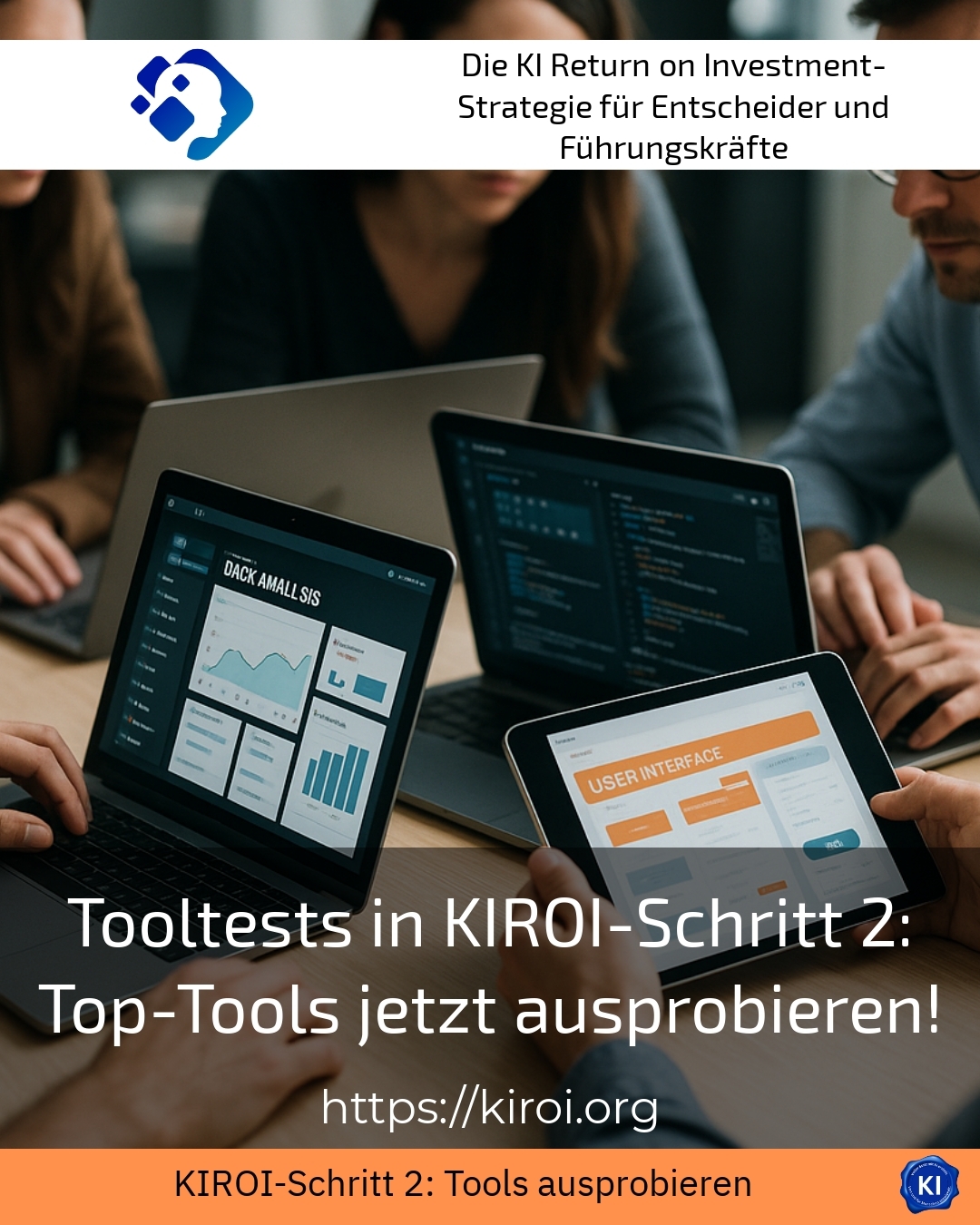
Tool tests are a crucial component of companies' digital transformation. They make it possible to find and implement the right digital tools for the specific needs of a company. In the context of the AIROI system, which offers a structured approach to implementing AI tools, the tool test plays a central role. Decision-makers use tool tests to evaluate the strengths and weaknesses of various software solutions and to make the optimal tool choice.
The importance of tool testing
The benefit of tool testing lies in its ability to offer decision-makers a clear and structured approach to selecting the right tools for their business. These processes begin with defining clear criteria, based on the project's objectives. Questions such as „What are our organisation's main requirements?“ or „How can we increase efficiency?“ help to identify the right tools[1][3].
Practical application of tool tests
A common example from logistics shows how tool tests can lead to the identification of AI-powered solutions for demand forecasting and route optimisation. Companies report improved utilisation of their resources through more precise planning[1]. In marketing, tool tests can increase reach and lead to more targeted customer engagement when automating personalised campaigns. The testing phase provides valuable insights into which software solutions can flexibly respond to different requirements[1].
Tool tests in AIROI Step 2
In the AIROI Step 2, tool tests play a crucial role in the evaluation and selection of AI tools. This process is supported by targeted coaching to help decision-makers define suitable criteria. During the testing phase, it is important to systematically gather feedback and transparently document the results to make the integration effort and costs comprehensible[1][3].
Coaching support
Coaching for tool testing helps businesses understand the strengths and weaknesses of various tools and make the right decisions. By involving specialist departments and end-users, the acceptance of new tools within the team can be increased [1].
BEST PRACTICE with one customer (name hidden due to NDA contract): A logistics company used Tooltests to select an AI-powered route optimisation system. Through structured evaluations, the company was able to increase the efficiency of its supply chains by 151%. This example demonstrates how Tooltests can contribute to the sustainable optimisation of business processes.
Conclusion of the tool tests
Overall, tool testing is an indispensable part of a company's digital strategy. It allows for the selection of the right tools and increased efficiency by identifying the strengths and weaknesses of various solutions. By integrating tool testing into AIROI step 2, companies can optimise their investments and improve the effectiveness of their digital transformation.
My analysis
Tool tests are not only a necessary step in evaluating software solutions, but also a crucial factor for the success of companies in digital transformation. Through their systematic approach, they support decision-makers in selecting the right tools and promote the acceptance of these tools within the team. Integration into AIROI step 2 enables companies to better assess investments and increase efficiency through optimised processes.
Further links from the text above:
– Tool Tests for Decision Makers: How to Succeed with AIROI Step 2
– Tool Test in the AIROI Step 2: How Decision-Makers Find Top AI Solutions
– AIROI Step 2: How to succeed with the decision-maker tool test
For more information and if you have any questions, please contact Contact us or read more blog posts on the topic Artificial intelligence here.











 Deutsch
  English (UK)