
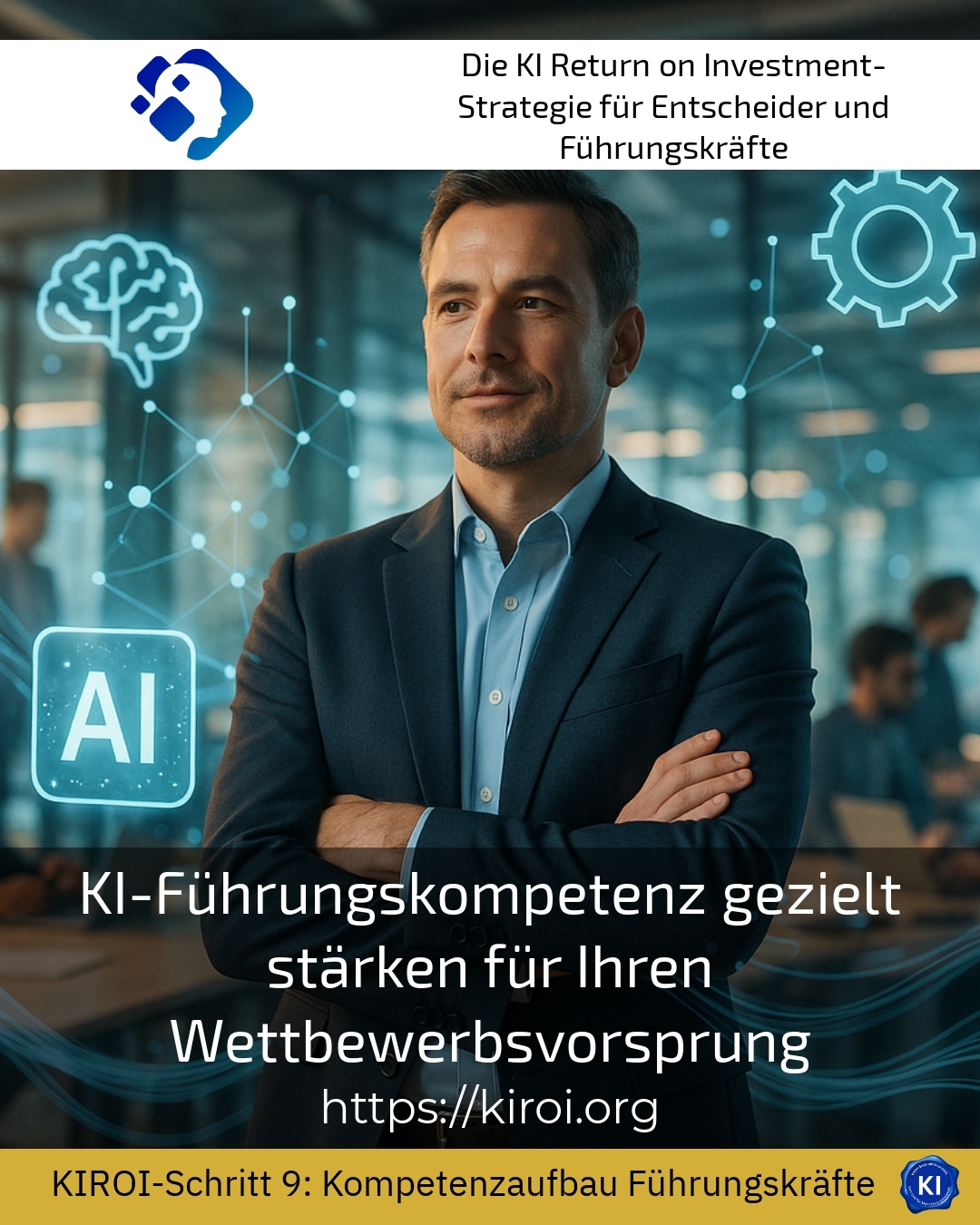
The digital transformation is fundamentally changing the rules of the game. Companies that want to be successful today must Strengthening AI leadership skills deliberately, in order not to be overtaken by the competition tomorrow. But how do leaders manage this new dimension of corporate governance? Clients often report enormous uncertainty when it comes to strategically deploying intelligent technologies and simultaneously bringing their teams along on this journey. The good news is: there are proven ways to master this challenge and build a sustainable advantage that goes far beyond technical implementations.
Why modern leaders need to develop new competencies
The demands on leaders have changed dramatically in recent years. Whereas previously the focus was primarily on business management know-how and people management, entirely new dimensions have now been added. Leaders must understand how algorithmic systems work and what strategic opportunities arise from them. At the same time, they face the task of guiding their employees through this transformation. The complexity of this challenge overwhelms many decision-makers because it cannot be overcome with traditional management methods.
This development is particularly evident in the financial sector. Banks and insurance companies are increasingly relying on automated risk assessment systems to support credit decisions. Here, executives must understand how these systems arrive at their results and what ethical implications are associated with them. Another example can be found in customer service, where intelligent chatbots handle initial inquiries and relieve human advisors. The challenge lies in finding the balance between efficiency and personal service. Furthermore, self-learning algorithms are playing an increasingly important role in fraud detection, meaning that executives should at least have a basic understanding of how these systems function.
Strengthening the importance of AI leadership skills in competition
Companies that invest early in the development of their leaders gain a decisive advantage. They can react more quickly to market changes and develop innovative business models. Particularly in competitive industries, the speed of adaptation determines success or failure. The ability to make data-driven decisions while not neglecting human intuition becomes a critical success factor [1].
In the healthcare sector, we are experiencing this dynamic to a particular extent. Clinics and doctor's practices are increasingly using diagnostic support systems that analyse findings and provide treatment recommendations. Medical leaders must understand how these systems work and what their limitations are. A concrete example is radiology, where imaging procedures are supplemented by intelligent analysis software. Predictive systems are also used in hospital personnel planning to forecast patient volumes. The pharmaceutical industry, in turn, uses algorithmic methods to identify active ingredients more quickly and shorten development times.
Best practice with a KIROI customer
A medium-sized logistics company from Southern Germany faced the challenge of qualifying its management staff for the use of intelligent route planning systems. The management recognised early on that technical implementation alone would not be enough to achieve the desired efficiency gains. Together with transruptions-coaching, we developed a comprehensive support programme that imparted both technical understanding and change management skills. The managers not only learned how the systems work, but also how to win over their teams for these changes. A particular focus was placed on communication with sceptical employees who feared being replaced by the new technologies. After six months of intensive support, confidence in the new systems had significantly improved. The managers felt competent enough to independently identify optimisation potential and support their teams in doing so. The efficiency increases ultimately even exceeded the original expectations because human expertise was optimally combined with algorithmic recommendations.
Strategic approaches to competence development
Developing leadership skills in intelligent technologies requires a holistic approach. It is not enough to familiarise leaders with technical fundamentals in workshops. Instead, they must learn to think strategically and recognise the potential for their specific business area. Both analytical and emotional competencies play a crucial role in this. The ability to understand complex interdependencies while simultaneously empathising with fears of change distinguishes successful leaders [2].
These requirements are particularly evident in the manufacturing industry. Plant managers must understand how predictive maintenance systems work and what benefits they offer. At the same time, they face the challenge of convincing maintenance teams of the value of this new way of working. Another example is quality assurance, where optical inspection systems complement or partially replace human checks. Self-learning systems are also increasingly being used in production planning to optimise supply chains and identify bottlenecks early on. Here, managers must find a balance between automation and human expertise.
How coaching support can specifically strengthen your AI leadership skills
Professional guidance from experienced coaches can significantly accelerate the development process. Within transruption coaching, we work with leaders on their individual challenges and development areas. The approach is always practice-oriented and related to specific use cases. We provide impetus on how to make strategic decisions under uncertainty. At the same time, we support the development of communication strategies for staff leadership in transformation projects.
The retail sector offers numerous application examples for this development. Branch managers of large retail chains must understand how personalised recommendation systems work and can increase sales. At the same time, they face the task of enthusing sales teams to collaborate with these digital assistants. A concrete example is dynamic pricing, which is based on real-time market data and allows for continuous adjustments. Intelligent forecasting systems also play an increasingly important role in warehousing and inventory optimisation. The challenge for managers is to critically question the recommendations of these systems and reconcile them with their own experience.
Best practice with a KIROI customer
An internationally active consulting firm wanted to prepare its partners for the integration of intelligent analytical tools, seeking support that went beyond mere training measures. The challenge was that the experienced consultants feared their expert knowledge might be devalued by automated systems. As part of our coaching support, we worked intensely on this fundamental attitude and showed ways in which human expertise and algorithmic support can optimally complement each other. Together, we developed scenarios in which the partners realised that their experience and expertise remained indispensable, particularly in the interpretation and contextualisation of the analytical results. The exchange between participants was particularly valuable, opening up new perspectives and enabling mutual learning. After the program concluded, the partners had not only developed a deeper understanding of the technological possibilities but had also gained new confidence in using these tools. Acceptance of the new systems increased significantly, and the quality of consulting services improved through the combination of human intuition and data-driven analysis.
The human dimension of technological transformation
Even with all the enthusiasm for technological possibilities, the human dimension must not be neglected. Successful leadership in the age of intelligent systems means, above all, taking people along and taking their fears seriously. Many employees fear becoming redundant due to automation, and these concerns are not unfounded [3]. Leaders must communicate honestly while simultaneously outlining prospects for how job profiles will change. The ability for empathetic communication thus becomes a core competency of modern leadership.
This tension is particularly evident in the media industry. Editors-in-chief must decide how automated text generation can be used effectively without compromising journalistic quality. At the same time, they face the task of convincing experienced journalists that their creative work will be complemented, not replaced, by these tools. A specific example is the automatic creation of stock market reports or sports news, which takes over routine tasks. Intelligent systems also support research by analysing large amounts of data and identifying connections. The challenge lies in finding the right balance between efficiency and journalistic diligence.
Strengthening the sustainable development of AI leadership skills
Competency development is not a one-off event but a continuous process. Technological development is progressing so rapidly that leaders must constantly learn. This is not about understanding every technical detail, but about recognising strategic contexts. Regular exchange with experts and peers helps to stay up to date. Reflecting on one's own experiences and learning from mistakes are also important components of this development process.
The energy sector provides clear examples of this. Leaders in energy supply companies must understand how smart grids work and what optimisation potential they offer. The control of renewable energy sources requires predictive systems that analyse weather data and consumption patterns. Another example is the predictive maintenance of power plant facilities, which minimises downtime and reduces costs. Energy suppliers are also increasingly relying on automated systems in customer service that answer consumption queries and provide tariff recommendations. The challenge for leaders lies in strategically orchestrating these various fields of application.
My KIROI Analysis
The analysis of numerous transformation projects clearly shows that technological change is only successful when leaders actively and competently shape this process. Companies that invest solely in technology without concurrently developing their leadership structures often experience disappointment. Investing in human competencies is therefore at least as important as investing in systems and infrastructure. It is repeatedly shown that external support from experienced coaches can be the difference between superficial adaptation and profound transformation.
The KIROI methodology offers a structured framework for systematically approaching this development. It combines technological understanding with a strategic perspective, always taking the human dimension into account. Of particular value is the focus on concrete application cases which facilitate the transfer into daily management practice. Leaders who follow this approach frequently report significantly increased confidence in dealing with technological challenges. They feel better prepared to make strategic decisions and guide their teams through change processes.
The competitive advantage that can be achieved through consistent development of expertise is considerable and sustainable. Companies that invest in their leaders today will be the market leaders tomorrow. The time to act is now, because technological change does not wait. Those who hesitate for too long risk falling behind and being overtaken by more agile competitors. Investing in leadership skills is therefore not an optional measure, but a strategic necessity for any company that wants to be successful in the long term.
Further links from the text above:
[1] Harvard Business Review – Artificial Intelligence
[2] McKinsey – AI Insights and Research
[3] World Economic Forum – Future of Work and AI
For more information and if you have any questions, please contact Contact us or read more blog posts on the topic Artificial intelligence here.






 Deutsch
  English (UK)