
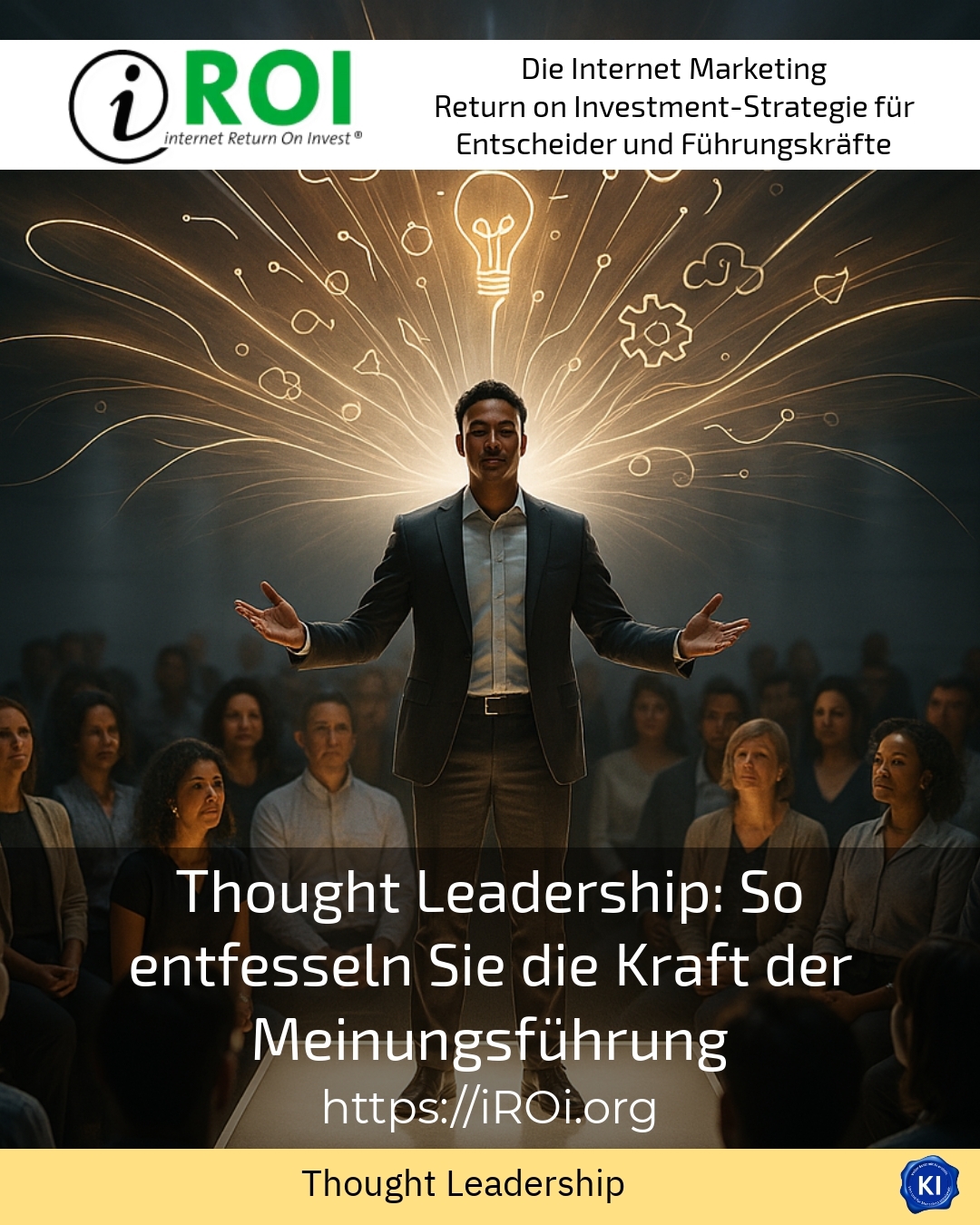
Thought leadership is a strategy that helps position oneself as a recognised authority in a particular field. Through this form of opinion leadership, companies and individuals can not only convey expertise but also showcase innovative strength and vision. By means of well-founded specialist knowledge and clear communication, new impulses can be set that sustainably shape one's own market and industry.
What does thought leadership mean in practice?
Thought leadership emerges when you establish yourself as a frontrunner in your field and make a difference. It’s not just about knowledge, but also about showing new paths and demonstrating the courage to change. Companies in the technology sector, such as Apple, have built strong thought leadership through a combination of innovation and clear communication. Here, it’s not just a product being sold, but an idea – a forward-thinking approach that has a lasting impact on the market.
In the financial industry, banks such as Deutsche Bank demonstrate how thought leadership is achieved by developing future-oriented financial products. This also includes proactively addressing socially relevant topics like sustainability or digitalisation, and supporting clients with expertise through content and seminars.
In the healthcare sector, for example, Philips demonstrates thought leadership by combining innovative technologies with research findings, thereby promoting new standards in patient care. Through elaborately designed webinars and expert forums, the company builds trust and inspires at the same time.
The role of authenticity and trust in the process
Thought leadership thrives on the trust of the target audience. Therefore, it's important to remain authentic and not just pretend to be an expert. Particularly in the SME sector, many clients report that sustainable success in building opinion leadership often goes hand-in-hand with honest communication and consistent positioning. This is how one succeeds in building a loyal community and retaining it in the long term.
Application areas are diverse: Consulting firms, for example, use their customer base to effectively convey their expertise through high-quality publications such as white papers and specialist articles. Automotive firms, in turn, rely on practical demonstrations of innovative technologies that not only inform but also resonate emotionally.
One of the biggest challenges is not only reacting to familiar issues but also identifying and helping to shape trends. iROI Coaching particularly supports companies that want to build thought leadership strategically and systematically. With targeted guidance, it is possible to implement opinion leadership projects efficiently and thus create sustainable added value.
BEST PRACTICE with one customer (name hidden due to NDA contract) The collaboration helped a medium-sized technology provider to make its expertise in artificial intelligence visible. Through regular webinars and a strategically placed content series, decision-makers from various industries could be specifically targeted, and significantly higher lead generation could be achieved. Special emphasis was placed on clear, understandable communication and practical relevance.
Thought Leadership as a dynamic process
Thought leadership is not a one-off project, but an ongoing development process. In the creative economy, for instance, agencies rely on constantly occupying new topics and identifying trends early on. The regular publication of blog posts, podcasts, or interviews with industry experts is a proven method for this.
In mechanical engineering, along with technical innovation, sustainability is increasingly coming into the spotlight. Thought leaders in this industry are therefore focusing on a combination of technical depth and societal relevance to clearly differentiate themselves.
Even in the food industry, companies are demonstrating thought leadership through topics such as health trends and sustainable production. This not only informs customers but also creates an emotional connection to the brand, which is a significant advantage, particularly in competitive markets.
Recommendations for your thought leadership
– First, carefully analyse the needs and challenges of your target audience.
– Develop content that answers these questions with sound technical expertise and practical applicability.
- Use different formats such as articles, videos or live events to cater for different preferences.
– Remain consistent and communicate regularly to build and strengthen trust.
– Utilise the support of experienced mentors, for example through iROI coaching, to implement your projects professionally.
My analysis
Thought leadership is a powerful tool for establishing yourself as a persistent opinion leader. It combines expertise with an innovative spirit and requires you to continuously shape the dialogue with your target audience. Success is demonstrated by how well you open up new perspectives and set the pace. Through authentic and consistent communication, both companies and individuals can build trust and shape the industry. iROI-Coaching effectively supports this journey, turning ideas into genuine market leadership.
Further links from the text above:
Thought Leadership for Companies | Randstad
Thought Leadership Strategy: A Step-by-Step Guide for Growth
Thought Leadership: How to be a thought leader – suxeedo
5 Excellent Thought Leadership Examples To Learn From – Brafton
How to become a thought leader | Haufe Media
Thought Leadership and Thought Leader Content | artundweise
Thought Leadership: Definition and Examples | University of Phoenix
How to Be a Thought Leader – Thought Leadership Strategy
Is „Thought Leadership“ Just a Buzzword? – HubSpot Blog
Thought Leadership: Definition and Examples | University of Phoenix
For more information and if you have any questions, please contact Contact us or read more blog posts on the topic internet Return on Investment - Marketing here.









 Deutsch
  English (UK)