
Knowledge as a strategic resource in digital transformation
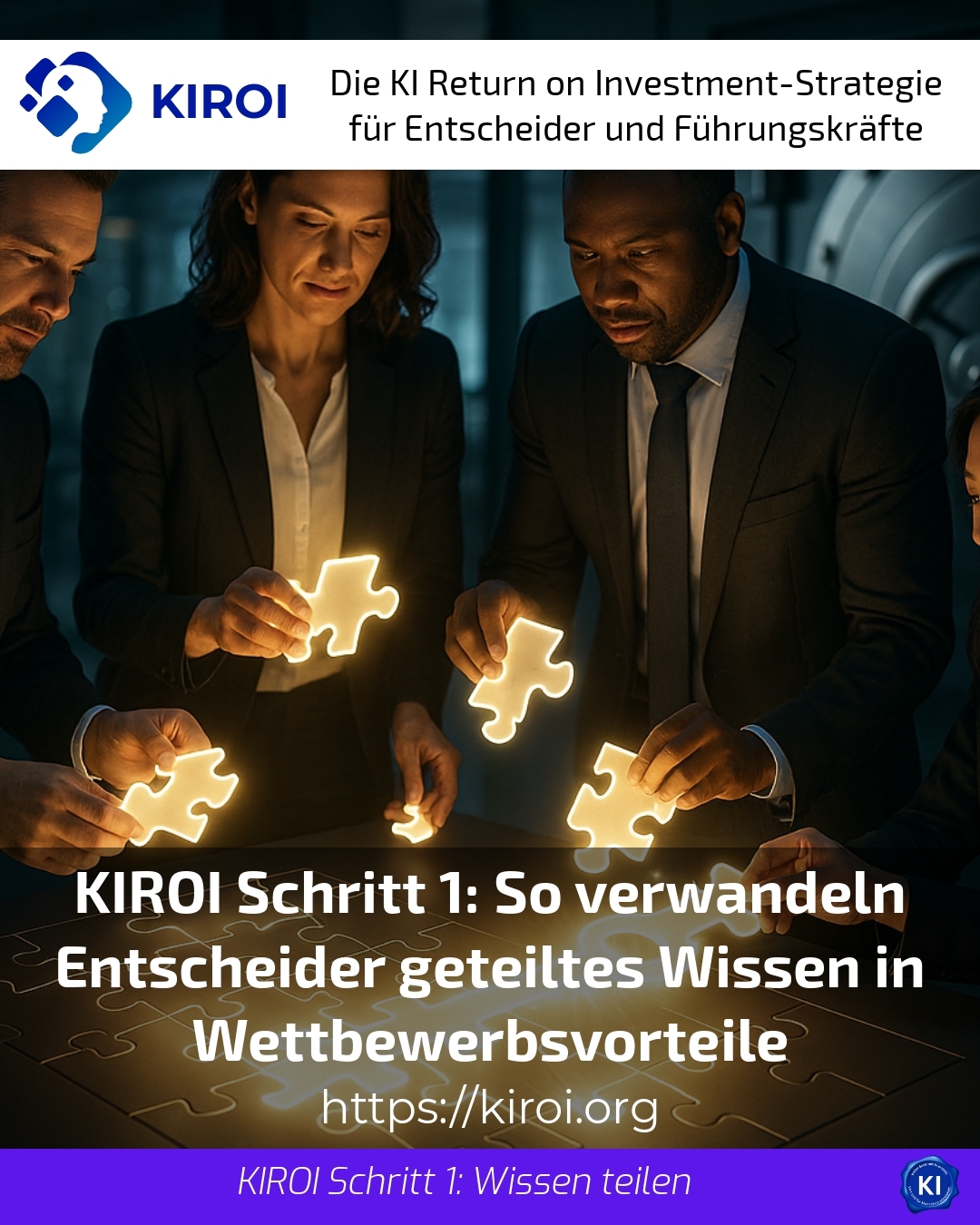
In a time of constantly changing technologies and market demands, knowledge sharing is proving to be a key factor for success in businesses. More than ever, companies that not only collect internal knowledge but actively share and utilise it gain decisive competitive advantages. It helps leaders make sound, situation-appropriate decisions when they can draw on the collective know-how within the company.
The challenge lies not only in making information accessible but also in incorporating relevant competencies and perspectives into decisions. This transforms isolated knowledge into a vibrant resource that enables rapid responses to market changes and innovative approaches to solutions.
Creating structures for successful knowledge exchange
For knowledge to be shared and effectively applied, an open organisational culture and technical systems that promote exchange are required. Learning cultures that value mutual support are just as important here as clear processes for knowledge transfer.
Particularly in dynamic industries, clients often report that the availability of documented knowledge significantly shortens response times to challenges. When employees gain access to specialist expertise that was previously only reserved for individuals, this increases productivity and also facilitates the onboarding of new team members.
This is supported by open dialogue, which not only shares information but also leaves responsibilities and decision-making powers where the knowledge originates. Instead of central control, local teams benefit from contributing their expertise directly and remaining capable of action.
Examples from the industry show versatility
In mechanical engineering, the exchange between development and manufacturing teams promotes practical implementation of technical innovations even in the early stages of a project. The combination of shared knowledge and situational decision-making here helps to avoid errors and shorten development times.
In healthcare, the structured sharing of process knowledge and the latest treatment methods enables teams to respond quickly to new patient needs. This is supported when expert knowledge is clearly documented and made available across departmental boundaries.
In the financial sector, shared insights from risk assessments and market observation help decision-making bodies identify opportunities and minimise losses. Through transparent knowledge sharing, a coordinated strategy emerges that responds flexibly to changing conditions.
AIROI BEST PRACTICE at company XYZ (name changed due to NDA contract) The company supports its project teams with moderated knowledge-sharing formats, where collective expertise is not only gathered but also directly translated into practical recommendations for action. Coaching is used to provide teams with impulses for new ways of thinking and methods of collaboration, enabling them to address challenges independently. This is particularly helpful when different specialist areas pool their expertise and collaborate in agile projects.
AIROI BEST PRACTICE at ABC (name changed due to NDA contract) As part of the digital transformation, emphasis was placed on systematically capturing the expertise of experienced employees and making it accessible to younger colleagues. The coaching helped to professionalise the knowledge documentation process, thereby supporting the generational handover and ensuring competence continuity. This led to faster integration of new technologies while minimising knowledge loss.
AIROI BEST PRACTICE at DEF (name changed due to NDA contract) The introduction of a digital platform, designed to facilitate knowledge sharing across language and cultural barriers, was accompanied for an internationally operating team. The coaching promoted the development of shared competencies and a culture of open sharing. This enabled synergies between locations to be leveraged and joint innovation projects to be accelerated.
Impulses for support from AIROI Coaching
Our coaching will support you in sustainably improving the processes and structures for knowledge sharing within your company. Clients often report that external input provides them with new perspectives to align internal collaboration and knowledge management with company objectives.
The focus is less on rigid promises of effectiveness and more on support for individual project development. This allows each team to develop independent solutions that fit their own culture and organisation. This also opens up space for innovation and adaptability in times of rapid change.
My analysis
Sharing knowledge is more than just providing data: it means consciously shaping communication, responsibilities, and learning. Companies that facilitate this process open themselves up to new opportunities and create sustainable competitive advantages. Support from experienced coaching can provide impulses that go beyond mere method transfer and lead to genuine change. It is important to consider individual needs and challenges in order to make optimal use of the potential of collective knowledge.
Further links from the text above:
[1] The 7 Secrets of Successful Leadership in the Digital Age
[2] Applied Knowledge Management – Linz – JKU ePUB
[3] Knowledge is power – shared knowledge is speed
[4] Knowledge Management and Generational Change: An Important Topic for SMEs
[6] Knowledge Sharing – Shared Knowledge is Everything
[7] How companies create competitive advantages with open innovation








 Deutsch
  English (UK)