
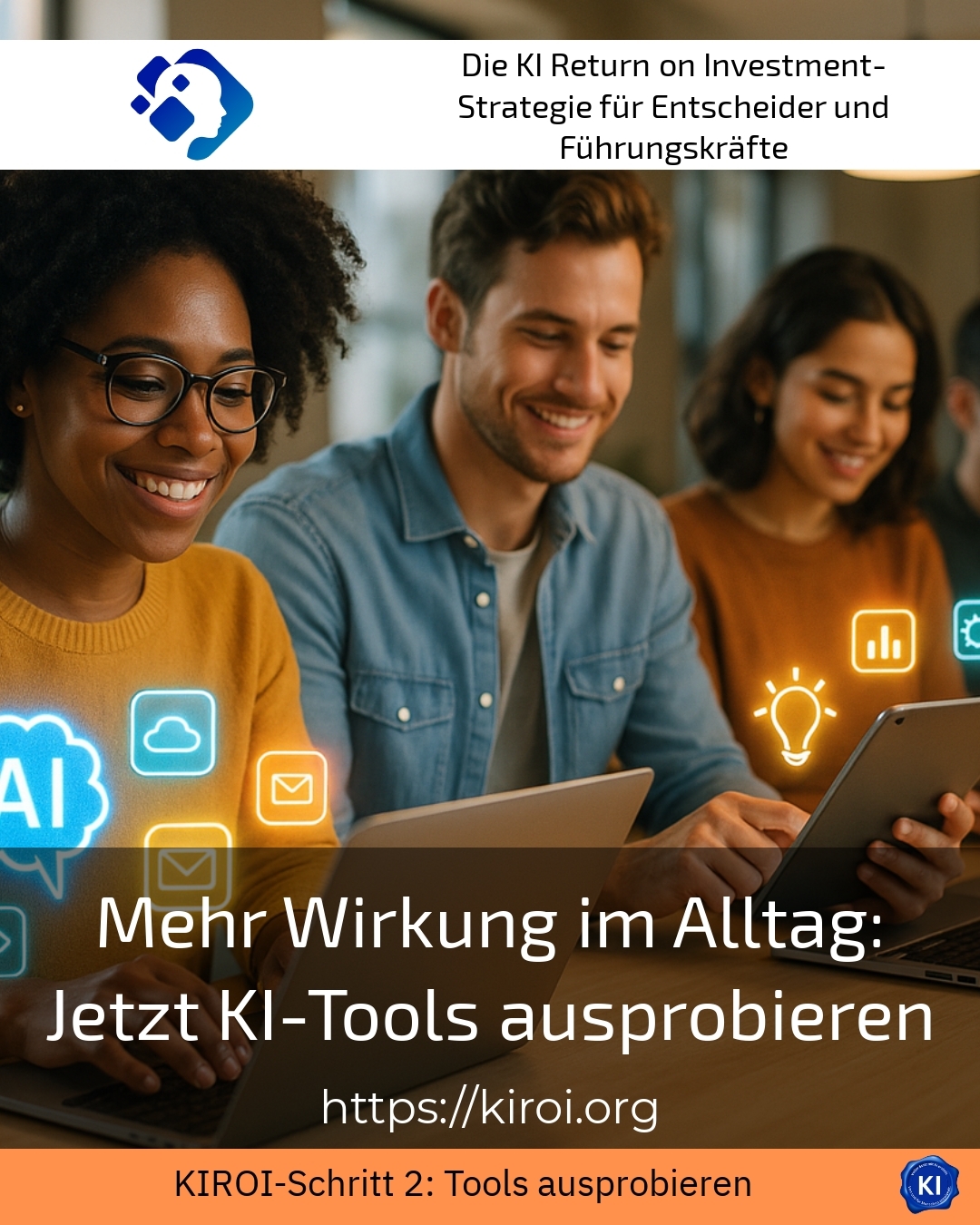
Imagine being able to work several extra hours productively every day, without expending more energy. Modern digital assistance systems offer precisely this possibility, and they are now so sophisticated that they can provide real support in professional and private life. Those who want to try out AI tools now are faced with a fascinating selection of possibilities that would have been unthinkable just a few years ago. The technology has reached a level of maturity that enables practical applications in almost every area of life. At the same time, many people wonder how to get started and which tools actually offer added value. This article shows you concrete ways to integrate digital intelligence meaningfully into your everyday life.
Why now is the right time to try out AI tools
Technological development has made enormous leaps in recent months. Language models understand contexts better than ever before. Image generators produce photorealistic results in seconds. Automation tools connect different applications. These advances mean that the barriers to entry have dropped drastically. At the same time, many tools are available for free or at low cost. The timing for getting started has never been better.
Many people still hesitate for various reasons. They fear they won't understand the technology. They worry about data protection and privacy. They are afraid of becoming dependent on machines. These concerns are understandable and deserve attention. However, approaching it with information can overcome these challenges. The benefits often far outweigh the initial uncertainties.
In healthcare, doctors are already using intelligent diagnostic systems for support. In education, adaptive learning systems help with individualised promotion. In the financial sector, algorithms analyse market data in real-time. These examples demonstrate the breadth of possible applications.
Best practice with a AIROI customer
A medium-sized company in the technical services sector approached us with a clear challenge. The employees were spending several hours a day creating documentation and reports. These tasks were time-consuming and tied up valuable resources. As part of our transruptions coaching support, we first thoroughly analysed the existing work processes. We discovered that around 40 per cent of the documentation work could be automated. We gradually introduced various assistance systems that generated text suggestions and provided standardised formulations. The employees were trained in workshops and learnt how to use the tools effectively. After three months, the teams reported an average time saving of one and a half hours a day. They invested this time in more creative and strategic tasks. Team satisfaction increased measurably and the quality of the documentation also improved. This example shows how structured support can make a difference.
Practical Fields of Application for Professional Everyday Life
The professional day-to-day offers numerous starting points for intelligent support. Email communication takes up considerable time for many professionals. Here, assistance systems can help with drafting and prioritising. They suggest suitable replies and summarise long message threads. This helps you keep track despite full inboxes.
Project management also benefits from digital support. Intelligent systems recognise patterns in project progress and provide early warnings. They suggest optimal resource allocation and identify bottlenecks. This allows teams to act more proactively rather than just reactively. The success rate of projects can thus increase.
In the field of data analysis, particularly impressive possibilities are emerging. Previously, complex analyses required specialised expertise and expensive software. Today, modern tools enable non-experts to conduct meaningful analyses. They explain results in understandable language and visualise relationships, thereby democratising access to data-driven decisions [1].
Optimise communication and text creation
The creation of texts is one of the most common use cases. Whether business letters, marketing copy or internal communications – formulations are needed everywhere. Intelligent writing assistants support with spelling and grammar. However, they go far beyond that. They can adjust tonality and make style suggestions. They help with structuring arguments.
In journalism, newsrooms are experimenting with automated reporting for standard articles. In the legal sector, law firms are using assistance systems for contract review. In marketing, teams are creating variations of advertising copy for different target audiences. These applications demonstrate the broad spectrum of possibilities.
What's always important here is human control and review. The systems are tools, not autonomous decision-makers. They provide suggestions and drafts that people must evaluate. This collaboration between humans and machines often works best.
Enriching creative processes through intelligent assistance
Creativity would at first glance appear to be a profoundly human domain. Nevertheless, digital tools can enrich and stimulate creative processes. Image-generating systems quickly visualise concepts in the early stages of a project. Music composition software suggests melodies and harmonies. Brainstorming tools structure ideas and reveal connections.
In design agencies, teams use visualisation tools for initial drafts and mood boards. In architecture, programmes generate spatial variations based on specifications. In game development, worlds and characters are created with digital assistance. These tools do not replace human creativity. Rather, they expand the scope of possibilities and accelerate iterations.
Clients often report a surprising effect. Engaging with machine suggestions sparks their own ideas. Sometimes it's precisely an unexpected suggestion that triggers inspiration. This creates a productive dialogue between human intuition and algorithmic variation [2].
Try out AI tools now: First steps to integration
The best way to get started is with a clear strategy and realistic expectations. Begin with a specific problem or a recurring task. Identify activities that are time-consuming and require little creativity. These are particularly well-suited for initial experiments.
First, choose a manageable tool with good documentation. Many providers offer free trials or basic functions. Take advantage of these opportunities to gain experience without financial risk. Invest time in learning the basic functions.
In Human Resources, departments are experimenting with automated screening of applications. In Customer Service, companies are testing chatbots for common queries. In Sales, teams are using analytics tools to identify promising leads. Each of these areas offers entry-level opportunities.
Best practice with a AIROI customer
A consultancy firm in the field of organisational development was looking for ways to increase efficiency. The consultants regularly produced extensive presentations and strategy papers for their clients. These documents required intensive research and careful preparation of information. As part of our transruptions coaching support, we jointly developed a structured approach to integrating digital assistance. We first identified the most time-consuming work steps in the documentation process. We then selected suitable tools for research, summarisation and visualisation. The consultants learnt how to use these tools as a starting point for their own analyses. They carefully reviewed and refined all machine-generated content. The result was an increase in quality and a time saving of around 30 per cent. Clients commented positively on the improved depth of the analyses. The consultants reported more time for strategic thinking and client meetings. This case illustrates how well thought-out implementation can create sustainable benefits.
Typical challenges and how to overcome them
Introducing new technologies regularly presents certain difficulties. Employees sometimes show reservations towards unfamiliar tools. They fear being overwhelmed or even losing their jobs. These concerns deserve serious attention and open communication.
Technical problems can also occur and be frustrating. Not every tool works smoothly straight away. Sometimes interfaces don't fit existing systems. Patient trial and error, and a willingness to adapt, help here.
Data protection issues require special attention and careful consideration. Not all providers meet European standards. The processing of sensitive information must be critically examined. Choose tools with transparent data policies and local processing options [3].
Long-term strategies for sustainable impact
One-off experiments rarely bring lasting improvements. Sustainable impact arises from systematic integration into workflows. Define clear processes for when and how assistance systems are used. Document successes and failures for continuous optimisation.
Continuous professional development is part of a successful strategy. Technology is developing rapidly and constantly offers new opportunities. Stay informed about current developments and new tools. Share insights within the team and learn from each other.
In banking, institutions are developing comprehensive digital transformation strategies. In retail, chains are optimising their logistics with intelligent forecasting systems. In manufacturing, companies are improving quality control through automated image recognition. These strategic approaches pave the way for sustainable benefits.
The human component remains indispensable and centrally important. Technology is a tool, not a substitute for judgment. The best results arise when humans and machines contribute their respective strengths. Shaping this partnership is a central leadership task of our time.
Try out AI tools with professional guidance
The path to effectively using digital assistance systems doesn't have to be a lonely one. Professional support can accelerate the process and help you avoid pitfalls. In transruption coaching, we work together on your specific challenges. We analyse your starting situation and develop tailor-made solutions.
Many clients come to us with similar issues. They feel overwhelmed by the variety of options. They don't know where to start. They have already made attempts that did not yield the hoped-for results.
We provide impetus and guide you on your individual path. We support you in selecting suitable tools. We help with integration into existing processes. We train teams in the effective use of new technologies.
Best practice with a AIROI customer
A service provider in the field of further education was facing a fundamental challenge. Creating customised learning materials for different target groups was extremely time-consuming. At the same time, participants increasingly expected personalised content and flexible formats. The team came to us with this problem and was looking for innovative solutions. In our transruptions coaching support, we first developed a deep understanding of the existing processes. We identified areas in which digital assistance could offer the greatest added value. Together, we implemented tools for the automated creation of learning materials and quizzes. The lecturers learnt how to use these materials as a basis and adapt them individually. They checked all generated content for technical correctness and pedagogical suitability. The result clearly exceeded the expectations of everyone involved. The time required to create the materials was reduced by around 50 per cent. The quality and variety of the programmes increased measurably. Participant satisfaction improved noticeably in the evaluations.
My AIROI Analysis
The integration of digital assistance systems into everyday life is no longer a question of whether. It's a question of how and when. The tools have become mature and accessible. The barriers to entry have never been lower than they are today.
From my consulting practice, I know that success depends on several factors. First, a realistic assessment of one's own starting position is needed. What problems are to be solved? What resources are available? What skills are already present?
The phased introduction proves itself in practice over the big bang. Small successes motivate and build confidence in the new possibilities. Failures on a limited scale are easier to analyse and correct. This creates an organic learning process.
Human development must keep pace with technological development. Training and further education are not one-off events, but continuous processes. Dealing with digital assistants requires new competencies such as critical questioning and creative prompting. These skills will become key qualifications of the future.
Ethical considerations always deserve attention and room for discussion. Not everything that is technically possible is also sensible or right. The responsibility for decisions always remains with humans. Digital systems provide support, but they do not absolve us of the duty to reflect.
Those who start familiarising themselves with these tools now are investing in their own future viability. Development will continue and open up new opportunities. Those who understand the basics can better assess and utilise new developments. The best time to start is now.
Further links from the text above:
[1] Bitkom – Digital Transformation in Companies
[2] Federal Ministry of Education and Research – Artificial Intelligence
[3] Datenschutz.org – Artificial Intelligence and Data Protection
For more information and if you have any questions, please contact Contact us or read more blog posts on the topic Artificial intelligence here.









 Deutsch
  English (UK)