
In today's digital world, targeted advertising plays a crucial role in the success of marketing strategies. Companies are increasingly relying on targeted approaches to deliver their messages directly to the right audience. Addressable TV is gaining importance, particularly in the field of television. Here, advertising messages are no longer broadcast uniformly, but are individually tailored to specific viewer groups. Targeted advertising makes it possible to minimise wastage and increase the relevance of advertising. Many companies report that they achieve better results through targeted approaches and reach their marketing objectives more efficiently.
How does targeted advertising work on television?
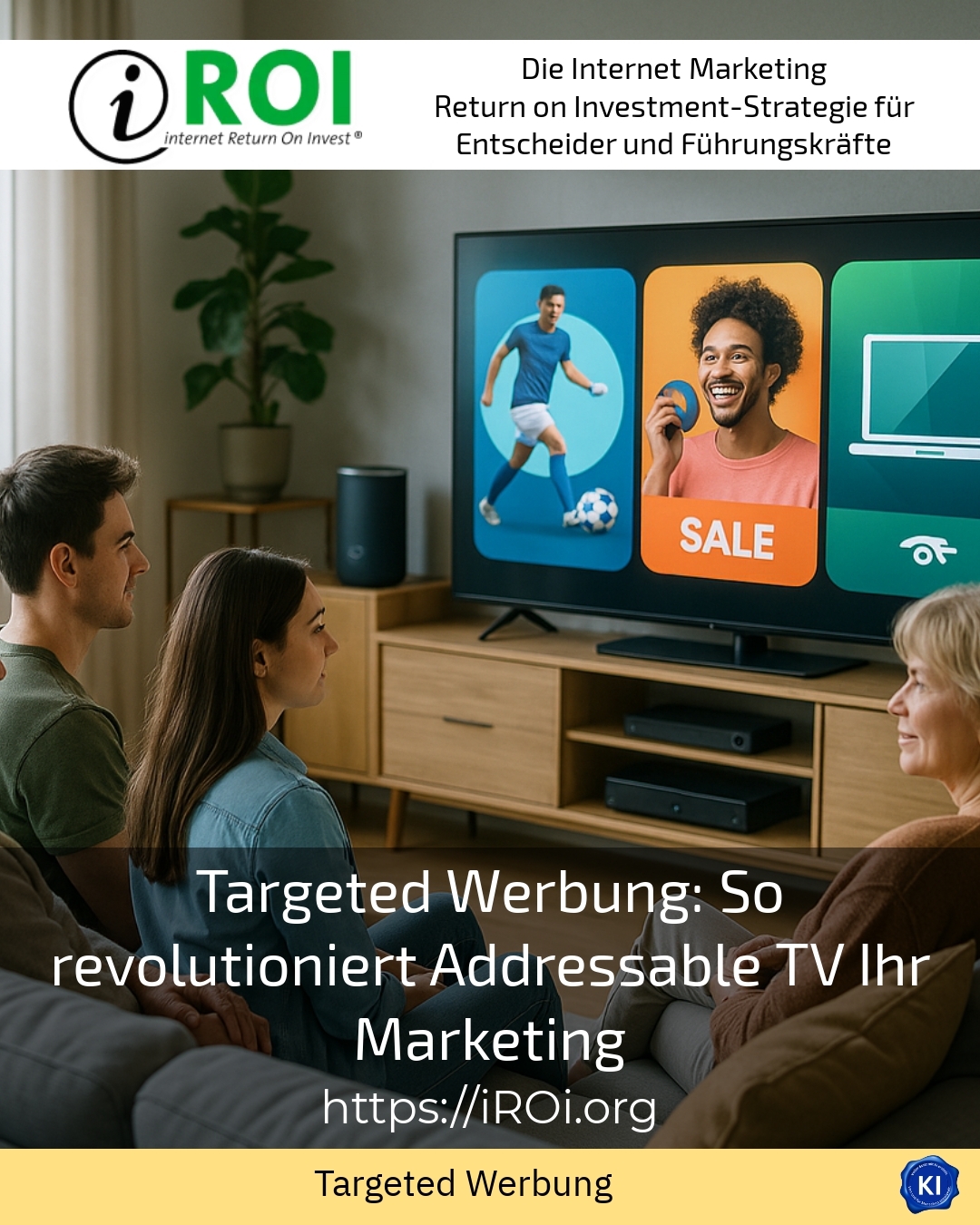
Addressable TV uses data such as demographics, geography, interests and purchasing behaviour to specifically deliver advertising to certain households. In contrast to classic television advertising, where all viewers see the same commercials, addressable TV displays individual advertising content. This is done via smart TVs or streaming platforms, for example. The technology makes it possible to personalise advertising based on user profiles. For instance, a household with children can see different advertising messages than a household without children.
A practical example: a manufacturer of children's products can target its advertising towards families who are interested in baby items. Another example is a gym that directs its advertising to individuals who are regularly interested in sports and health. An automobile manufacturer can also aim its advertising at households with a particular income or in a specific residential area.
Benefits of targeted advertising on television
The advantages of targeted advertising on television are manifold. Companies can precisely tailor their advertising messages to the needs and desires of their target audience. This increases the likelihood of a positive reaction. The efficiency of advertising expenditure is maximised because wastage is minimised. Modern platforms such as Google Ads, Facebook and Instagram already use advanced algorithms to deliver advertisements specifically to users. This technology is also being used more and more frequently on television.
Another advantage is the measurability of campaigns. Companies can analyse the success of their advertising campaigns in detail and optimise them specifically. This allows them to quickly identify which advertising content is particularly well-received and which needs to be adapted. The personalisation of advertising leads to greater relevance for the viewer and increases advertising effectiveness.
Practical use cases of targeted advertising
A manufacturer of household appliances can target its advertising to households interested in new kitchen appliances. Another example is a tour operator that directs its advertising to individuals who are regularly interested in holiday destinations. An online shop can also target its advertising to customers who have already purchased similar products.
Another example is a streaming service that plays its adverts to users who are interested in specific genres. This allows a series provider to target its adverts specifically at fans of crime dramas or comedies. A fitness app provider can also direct its adverts at people who are regularly interested in sports and health.
Targeted advertising and iROI coaching
iROI-Coaching supports companies in the planning and implementation of targeted advertising. Many clients come with the question of how to deliver their advertising messages specifically to the right target group. iROI-Coaching provides inspiration and supports projects related to targeted advertising. Clients often report that they achieve better results through targeted communication and reach their marketing goals more efficiently.
Another example is a company that targets its advertising at customers who have already purchased similar products. Another example is a gym that directs its advertising at people who are regularly interested in sport and health. A car manufacturer can also target its advertising at households with a specific income or in a specific residential area.
BEST PRACTICE with one customer (name hidden due to NDA contract) and then the example with at least 50 words.
My analysis
Targeted advertising is revolutionising television marketing. Companies can precisely tailor their advertising messages to the needs and wishes of their target audience. This increases the likelihood of a positive response. The efficiency of advertising spend is maximised because wastage is minimised. Modern platforms already use advanced algorithms to deliver advertising specifically to users. This technology is also being used more and more in television. The measurability of campaigns allows for detailed analysis of success and targeted optimisation. The personalisation of advertising leads to higher relevance for the viewer and increases the advertising effect.
Further links from the text above:
Targeted Advertising – Wikipedia
Targeted Advertising – Bureau Klein & Größer
ATV – Addressable TV Explained Simply & Quickly
What does targeting mean? – mso digital Wiki
Targeting for Films and Television Shows – X Business
Targeted Advertising: Examples of Targeted Advertising – HubSpot Blog
Targeting – Definition – Online Marketing Praxis
Targeting – Definition and Tips – Complac Lexikon
Intelligent Targeting in Combining TV with Digital Advertising – Adzine
Targeting Online Advertising: Fundamentals, Forms and… – University of Flensburg
For more information and if you have any questions, please contact Contact us or read more blog posts on the topic internet Return on Investment - Marketing here.











 Deutsch
  English (UK)