
Swarm intelligence is particularly at home in the categories of artificial intelligence, automation, and digital transformation. The term describes how many individual, often simple units – such as humans, animals, or even robots – collectively solve a complex problem without the need for central control. Each member orientates itself according to the behavioural rules of those in its vicinity.
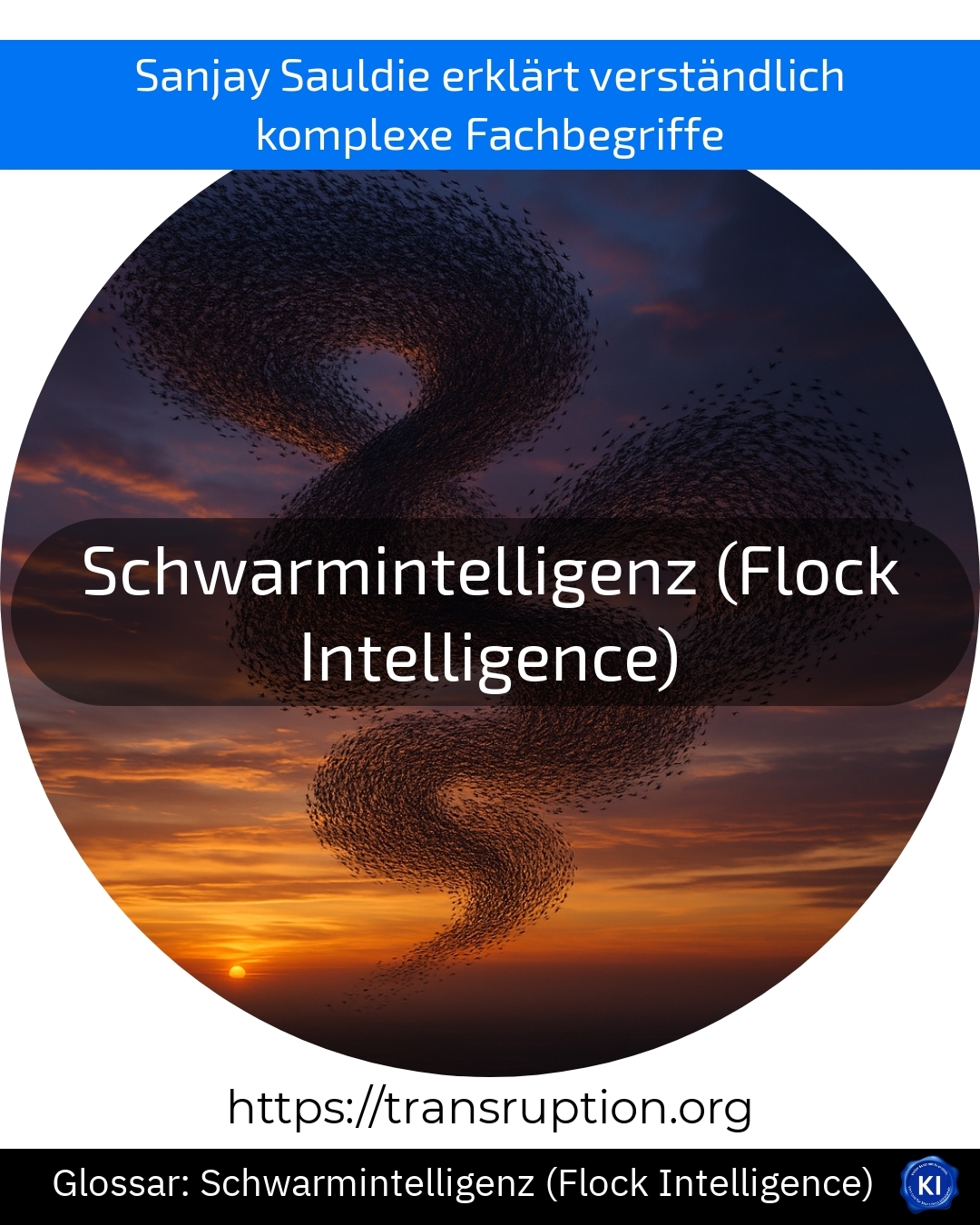
A good example from nature is a flock of birds: each bird only pays attention to what its neighbours are doing, yet the entire flock moves as a single intelligent entity. In technology and automation, companies today use swarm intelligence, for example, to let robots in factories cooperate autonomously or to avoid traffic jams on roads through the cooperation of many navigation systems.
For decision-makers, swarm intelligence often offers more efficient and robust solutions than classic, centrally controlled systems – for example, in supply chain optimisation or in the flexible control of machinery. Swarm intelligence thus demonstrates that many small „thinking partners“ often make better decisions together than a single individual.











 Deutsch
  English (UK)