
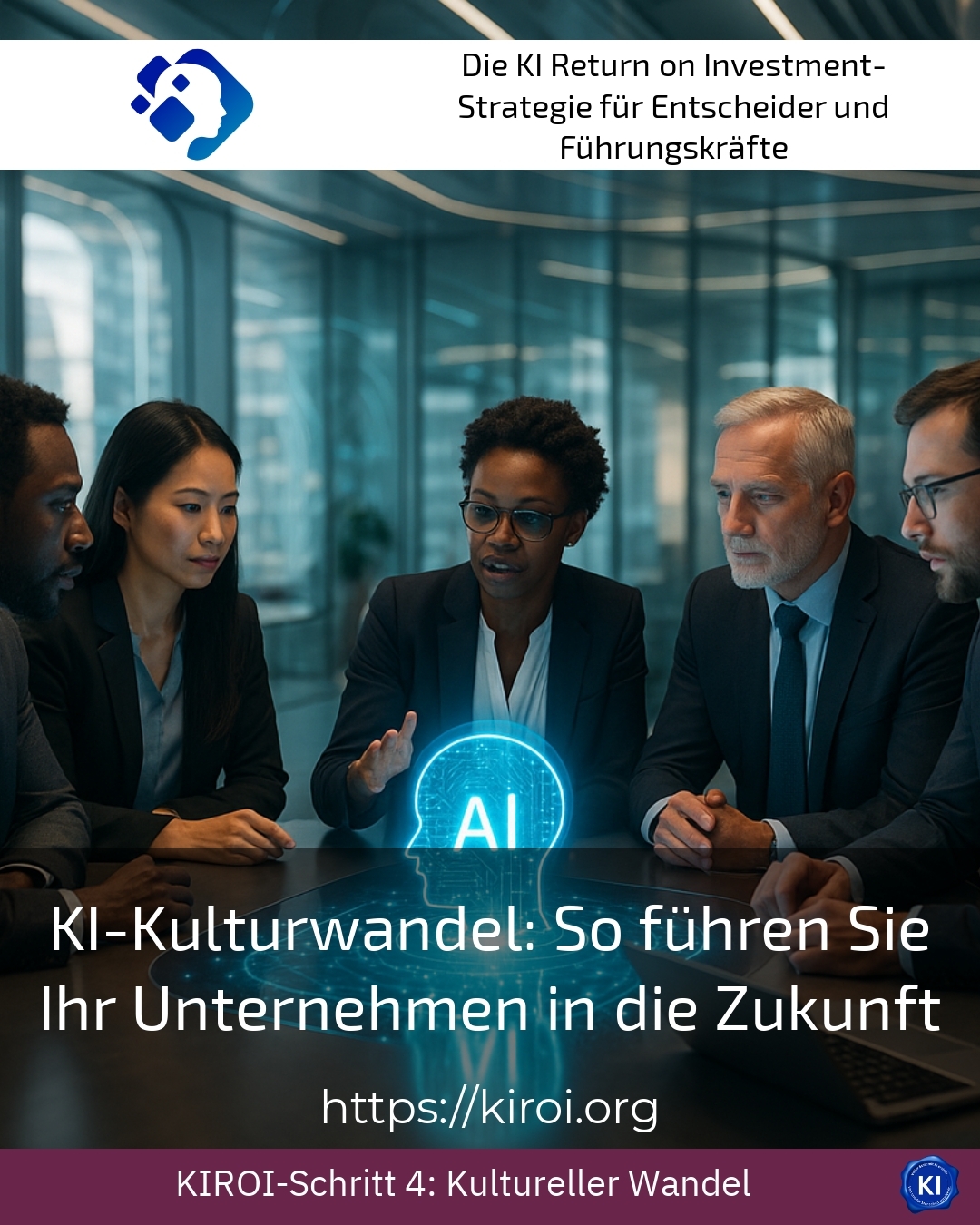
Imagine your employees greet a new digital colleague every morning. This colleague works faster, takes no breaks, and learns more every day. But instead of feeling excitement, many people feel uncertainty. This is precisely where the crucial AI cultural change, which presents companies with entirely new challenges. Technological transformation alone is no longer enough. Instead, it is about bringing people along and creating a corporate culture that enables innovation. Leaders face the task of building bridges between tradition and the future. In doing so, they must demonstrate both technical understanding and emotional intelligence. In the following sections, you will learn how this transformation can succeed.
Understanding the human dimension of technological change
Every technological revolution initially brings with it uncertainty. People wonder if their skills are still needed. They worry about their professional future and their position within the company. These fears are completely justified and deserve serious consideration. Leaders often make the mistake of underestimating these emotional aspects. They focus on efficiency gains and cost savings. In doing so, they forget that people are not machines. The success of a transformation depends significantly on the workforce's acceptance. Without this acceptance, even the best technological solutions remain ineffective [1].
Companies frequently report resistance to the introduction of new systems. Employees sometimes unconsciously sabotage new processes. They cling to tried-and-tested ways of working and avoid new tools. This behaviour is not maliciousness, but a natural defence mechanism. The human mind prefers the familiar and what is known. Changes require additional cognitive effort. Therefore, it is crucial to manage change carefully. Leaders should show understanding and create space for questions.
Another important aspect concerns the generational differences within the workforce. Younger employees often bring a natural affinity for digital tools. Older colleagues, on the other hand, possess valuable experience and knowledge. Both groups can learn from and enrich each other. Companies should establish mentoring programmes that promote this exchange. This creates a culture of shared learning. This culture forms the foundation for sustainable change.
Best practice with a AIROI customer
A medium-sized company was faced with the challenge of introducing new smart systems. The management quickly realised that technical training alone was not enough. Many employees were clearly reluctant to adopt the new tools. As part of the transruptions coaching programme, the company developed a completely new approach. First, the team held in-depth discussions with all the departments involved. These discussions revealed deep-seated fears and uncertainties. Many employees feared losing their jobs. Others worried that they would not be able to cope with the new demands. The coaching supported the company in developing a comprehensive communication strategy. Managers learnt to speak openly about change. They clearly explained which tasks the technology would take over. At the same time, they emphasised which human skills would remain indispensable. This transparency built trust and significantly reduced resistance. After six months, employees reported a significantly more positive attitude. Acceptance of the new systems rose by more than sixty per cent. This example impressively demonstrates how important the human element is in the face of technological change.
The AI culture shift begins with leadership
Leaders significantly shape company culture through their own behaviour. If they themselves show reservations about new technologies, this rubs off. Employees look to their superiors for guidance. Therefore, leaders must lead by example. They should actively demonstrate curiosity and a willingness to learn. At the same time, they must not hide their own insecurities. Authenticity builds trust and encourages others to be open as well [2].
Many managers come to consultancy with exactly these issues. They feel torn between the demands of senior management and the concerns of their teams. On the one hand, they have to achieve transformation goals. On the other hand, they don't want to overload their employees. This tension can be stressful. Transruption coaching offers valuable impulses here. It supports managers in finding this balance. Clients often report significant relief.
A key aspect concerns communicating changes. Leaders should inform regularly and transparently. They should explain why certain decisions are being made. In doing so, it is important to address both opportunities and risks. Sugarcoating leads to a loss of trust in the long term. Employees appreciate honesty, even if the news is uncomfortable. This open communication forms the basis for real change.
Developing new competencies for a new era
The AI cultural change requires entirely new skills at all levels. Technical knowledge alone is no longer sufficient. Instead, so-called meta-competencies are gaining importance. These include critical thinking, creativity, and emotional intelligence. Machines cannot replicate these skills. People must learn to use their unique strengths. Companies should develop appropriate further training offers.
The ability to collaborate between humans and machines will become central. Employees must understand when technological support is useful, and at the same time, recognise when human judgment is required. This distinction requires practice and experience. Companies should create safe spaces for experimentation, and mistakes should be viewed as learning opportunities. This is how a positive learning culture is created [3].
Another important area concerns ethical judgement. Technological systems make decisions based on data and algorithms. However, not every technically possible decision is ethically justifiable. Humans must take responsibility for these considerations. They must understand which values their organisation represents. This ethical competence can be developed and promoted.
Rethinking structures and processes
Outdated organisational structures often hinder cultural change. Hierarchical silos prevent necessary knowledge sharing. Rigid processes leave no room for experimentation. Companies must critically question their structures. Agile ways of working can help with this. They promote flexibility and rapid adaptability. Nevertheless, agility is not a panacea.
Introducing new ways of working is best achieved gradually. Companies should start with pilot projects. These allow experience to be gained. Successful approaches can then be transferred to other areas. This evolutionary approach reduces resistance. It gives employees time to adapt. At the same time, it allows for continuous improvement.
Cooperation between departments must also change. Technology projects require interdisciplinary teams. Subject matter experts must work alongside technology specialists. This collaboration can be challenging at first. Different technical languages and perspectives come into contact. Yet it is precisely this diversity that holds enormous potential. It enables innovative solutions that would not otherwise come about.
Best practice with a AIROI customer
A company in the service sector wanted to redesign its customer support. Management had already invested in automated systems, but the hoped-for improvements failed to materialise. Customer satisfaction even declined slightly. As part of the collaboration, transruptions-coaching analysed the causes. It turned out that the technology had been introduced in isolation. The customer service employees felt bypassed and had not had the opportunity to contribute their experience. Consequently, they unconsciously sabotaged the new processes. The coaching supported the company in a restart. First, extensive workshops were held with all stakeholders. Employees were able to voice their concerns and make suggestions for improvement. Many of these suggestions were actually implemented, and employees now felt part of the solution. Their expertise was recognised and valued. Customer satisfaction subsequently improved significantly. This example illustrates the importance of participation in change processes. The best technology is of little use without the people behind it.
Anchor the AI culture change sustainably
One-off measures are not enough for sustainable change. Companies must continuously work on their culture. The AI cultural change It's not a project with a defined end. Rather, it's an ongoing development process. Leaders should regularly review the status of the transformation. They should celebrate successes and learn from failures. This creates a learning organisation.
Measuring cultural changes presents many companies with challenges. Culture cannot simply be expressed in numbers. Nevertheless, there are indicators that can provide insight. Employee surveys can reveal changes in mood. The adoption rates of new systems show practical acceptance. The number of self-initiated suggestions for improvement is also informative [4].
Companies should establish a feedback culture. Employees should be encouraged to express their opinions openly. This requires psychological safety. People must be able to trust that honest feedback will have no negative consequences. Creating this safety is a leadership task. It requires time and consistent behaviour.
Recognise opportunities and act boldly
Despite all the challenges, change offers enormous opportunities. Companies can sustainably strengthen their competitiveness. They can become more attractive employers. They can develop innovative products and services. However, all of this requires courage and determination. Waiting passively is not a promising strategy. Companies that act now will gain advantages.
Working with experienced companions can accelerate transformation. External perspectives help to identify blind spots. They bring proven methods from other contexts. Transruption coaching positions itself as a competent partner in this regard. It accompanies companies on their individual journey. No one-size-fits-all solutions are offered. Instead, tailor-made solutions are developed together.
Every company starts from a different point. Some have already gained extensive experience. Others are still at the very beginning. Both situations offer specific opportunities. Experienced companies can build on past learning. Beginners can learn from the mistakes of others. The most important thing is to take the first step [5].
My AIROI Analysis
Observations from numerous consultancy projects paint a clear picture. Technological change can only succeed if people are at the heart of it. Companies that rely solely on technology often fail. They underestimate the complexity of human change processes. Successful organisations, on the other hand, make a conscious effort to invest in their culture. They make time for their employees. They create spaces for dialogue and exchange.
The AIROI methodology offers a structured framework for this transition. It combines technological expertise with human understanding. The five dimensions of the methodology address all relevant aspects. From strategic alignment to operational implementation. From leadership behaviour to employee development. This holistic approach differentiates AIROI from purely technical consultancies.
The emphasis on sustainability seems particularly important to me. Many transformation projects start with great enthusiasm. However, after a few months, old patterns creep back in. The original goals are forgotten. AIROI counteracts this danger through continuous support. Regular reflection loops ensure progress. Successes are documented and celebrated. Setbacks are analysed and processed.
The future belongs to companies that see change as an opportunity. They will redefine the rules of their industries. They will attract and retain talented employees. They will drive innovations that are unimaginable today. The path to this future lies in a genuine cultural transformation. This transformation is challenging, but achievable. It requires patience, perseverance, and the right partners by your side.
Further links from the text above:
[1] McKinsey: Culture Change That Sticks
[2] Harvard Business Review: Insights on Leadership
[3] World Economic Forum: Future of Work
[4] Gallup: Employee Engagement
[5] MIT Sloan: Digital Transformation
For more information and if you have any questions, please contact Contact us or read more blog posts on the topic Artificial intelligence here.










 Deutsch
  English (UK)