
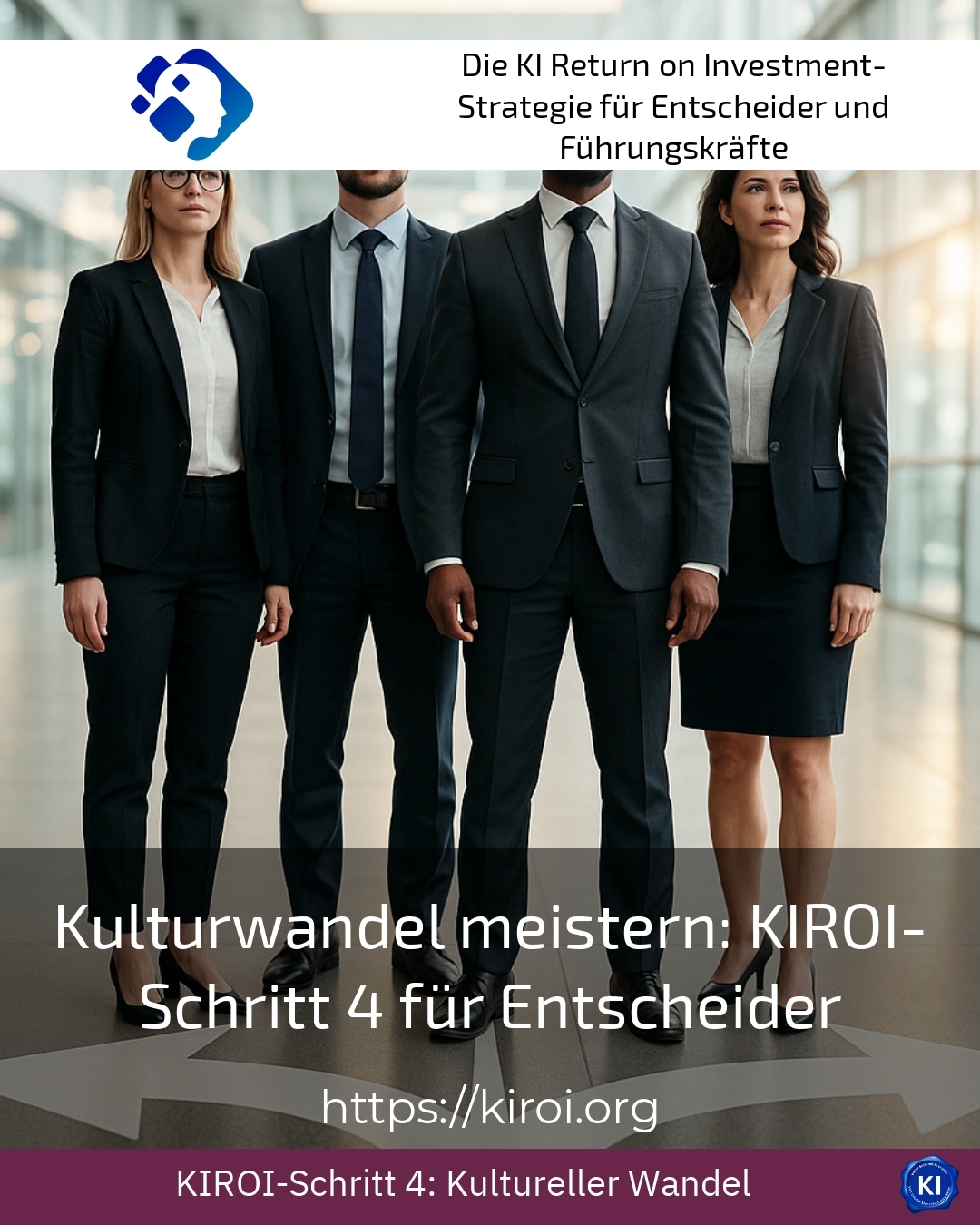
The concept of cultural change is ubiquitous in today's organisations, as companies face the challenge of continuously realigning themselves to remain competitive. The conscious management of cultural change plays a central role in this. It is particularly essential for leaders to actively shape and support cultural change in order to foster sustainable development and innovation.
Shaping cultural change – the key to sustainable development
Company culture encompasses the lived values, norms, and behaviours that shape everyday life. A culture change therefore means a consciously managed transformation of these structures and habits. For decision-makers, it is important to understand that culture change takes time and a systematic approach. The existing culture is not changed overnight, but must be developed further through targeted steps.
An example from industry shows how companies have achieved great innovative advances through a culture of open dialogue and participative leadership. Similarly, in service companies, fostering personal responsibility has proven to be a lever for sustainable cultural change. In technology companies, the establishment of agile working methods supports the adaptation of corporate culture to dynamic market demands.
Implementing cultural change effectively – step by step
For the practical implementation of cultural change, it is advisable to develop a clear strategy derived from an analysis of the current culture. Together with leadership, define a desired culture that is strategically and operationally aligned with business objectives. A structured plan with measurable goals will help to track progress and make adjustments if necessary.
For example, in a trading company, reducing communication barriers between departments can be formulated as a goal. In a manufacturing company, the introduction of training for an appreciative feedback culture ensures that desired behavioural changes are internalised step by step. For a start-up, promoting team creativity and a culture that accepts mistakes can actively drive cultural change.
BEST PRACTICE with one customer (name hidden due to NDA contract) In a medium-sized company, transruption coaching supported decision-makers in implementing a new leadership understanding based on trust and transparency. Through targeted workshops and team coaching, the willingness to collaborate at all levels was increased, thus accompanying a sustainable cultural change.
Proactively addressing challenges on the path to cultural change
Cultural change is rarely without resistance. Familiar patterns of thought and ingrained structures can make the process of change more difficult. Leaders should therefore actively open communication channels and create formats that encourage participation. This allows fears and reservations to be addressed and increases acceptance of change.
In a logistics company, regular feedback rounds have been introduced to encourage continuous learning and open dialogue. In healthcare, the establishment of interdisciplinary project groups supports breaking down silos and fostering a shared culture. In the financial sector, mentoring programmes can accelerate the adoption of new values.
Accompanying cultural change and anchoring it long-term
Cultural change doesn't end with the implementation of a single project. Further support is needed to consolidate the new culture. Individual coaching, targeted training, and the establishment of rituals support the sustainable embedding of desired behaviours in daily interactions. Decision-makers benefit from active monitoring and transparent communication to make successes visible and keep the change alive.
In the creative industries, for example, regular retrospectives encourage reflection on collective progress. In manufacturing companies, visualisations and commitment formats help to strengthen new values. In IT firms, digital platforms ensure timely exchange and networking among employees during cultural change.
BEST PRACTICE with one customer (name hidden due to NDA contract) An international corporation utilised a cross-functional support programme with coaching and workshop sessions to culturally embed the introduction of agile methods. This integrated approach proved effective in connecting diverse business units and making the cultural change visible and tangible.
My analysis
In the context of modern corporate management, cultural change is gaining outstanding importance. Only those who actively consider the cultural dimension can successfully shape change processes and achieve sustainable success. Decision-makers would be well advised not to see cultural change as an isolated task, but to understand it as an integral part of strategic development. Methodical support, such as that offered by transruption coaching, helps to provide smart impulses and effectively implement projects related to cultural change.
Further links from the text above:
[1] Kulturwandel – tixxt – Social Intranet
[2] Cultural change: 6 effective steps to transform company culture
[3] Company Culture – Definition and Steps for Cultural Change
[4] What is Cultural Change? – Dr Andrea Maria Bokler
[5] Achieving culture change in your organisation
For more information and if you have any questions, please contact Contact us or read more blog posts on the topic Artificial intelligence here.









 Deutsch
  English (UK)