
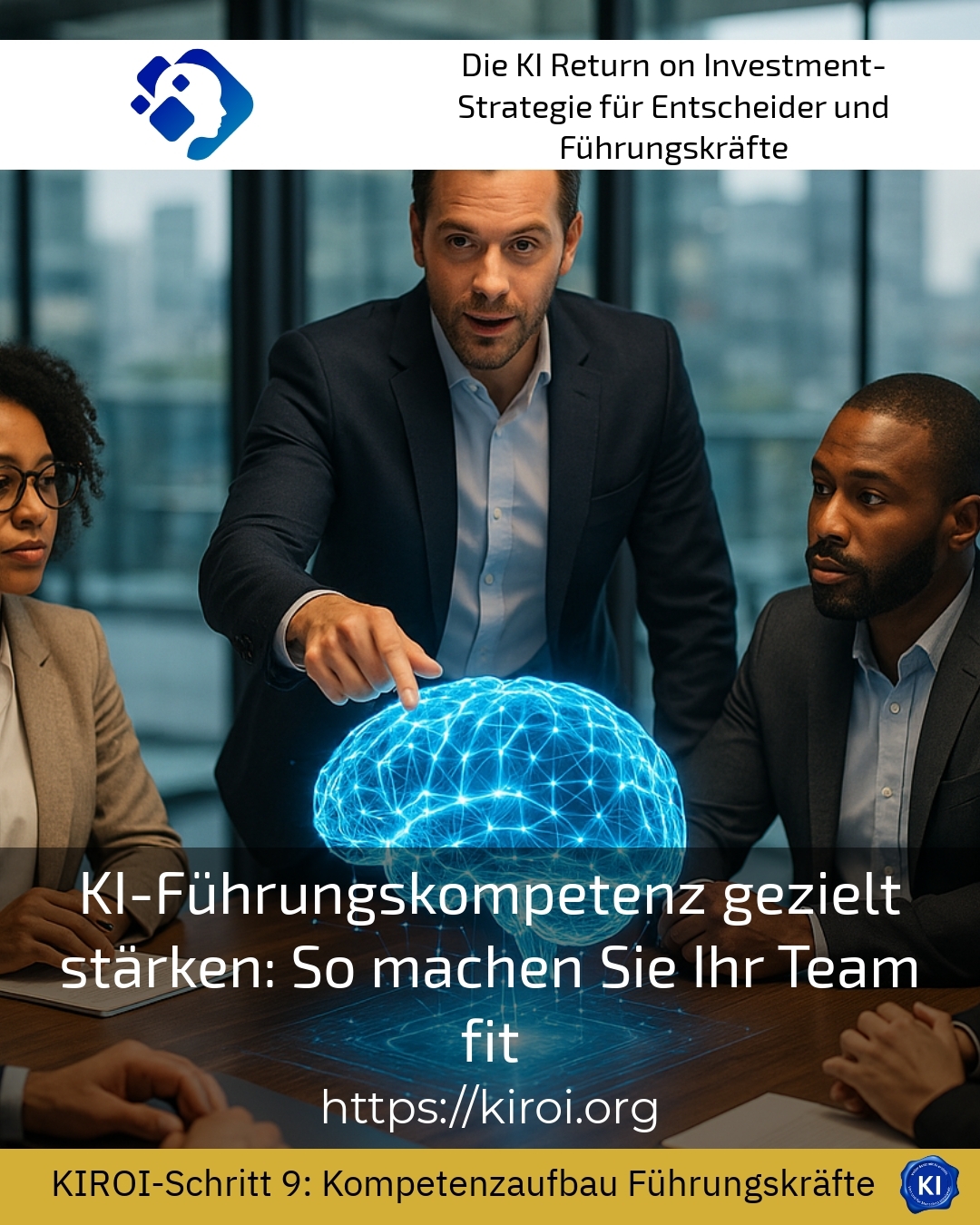
The working world is changing at a breathtaking pace. Companies face the challenge of preparing their workforce for entirely new demands. Those who today Strengthening AI leadership skills deliberately wants to, often enters unknown territory. Many leaders report uncertainty when dealing with intelligent systems. At the same time, the pressure to deliver quick results is growing. This is exactly where professional guidance comes in. It supports those in charge to navigate the change confidently. This article shows practical ways for sustainable competency development.
Why modern leadership requires new skills
The demands on leaders have fundamentally changed. Previously, technical expertise and classic management methods were sufficient. Today, those in charge must also understand and interpret technological developments. They make decisions about the use of automated processes in their departments. At the same time, they guide their employees through profound changes. This dual role requires an expanded competency profile. Clients often report feeling overwhelmed by the diverse expectations.
For example, a medium-sized manufacturing company introduced intelligent quality control systems. Department heads initially felt bypassed and unsettled. Only through targeted guidance did they develop an understanding of the technology. A similar situation occurred at an insurance company during the implementation of automated claims processing. Team leaders required support to define their new roles. A logistics company also went through comparable processes when introducing predictive route planning.
Best practice with a AIROI customer
A financial services company with a long tradition faced the challenge of preparing its entire leadership team for new technologies. Management recognised early on that technical training alone would not be sufficient. Instead, they opted for comprehensive support through transruption coaching. The process began with a thorough analysis of the existing leadership culture and competence profiles. This revealed that many leaders had fundamental reservations about digital innovation. In intensive workshops, participants first developed a shared understanding of the impending changes. Subsequently, each leader developed an individual development plan for their personal further training. The regular exchange in moderated peer groups proved particularly valuable. The leaders supported each other and openly shared their experiences. After six months, the attitude throughout the entire company had noticeably changed. The leadership level now confidently dealt with new technologies and served as role models.
Targeted strengthening of AI leadership skills through systematic development
Sustainable competence development follows a structured approach. Initially, the current level of knowledge must be honestly assessed. Building on this, a tailor-made development plan is created for each manager. This takes into account both individual strengths and organisational requirements. Implementation is carried out step-by-step and in a practical manner. Regular reflection loops ensure the transfer of learning into everyday practice.
A trading company used this approach when introducing personalised customer engagement. The sales managers first learned the basics of the underlying technology. They then tested various application scenarios in a protected environment. A healthcare provider took a similar approach when implementing diagnostic support systems. The senior doctors needed time to develop trust in the technology. A media company also opted for a gradual introduction of its editorial managers to automated text generation [1].
The role of emotional intelligence in strengthening AI leadership skills
A technical understanding alone doesn't make a good leader. Emotional intelligence is becoming even more important in times of change. Employees need leaders who take their concerns seriously and offer guidance. They want authentic communication about upcoming changes. At the same time, they expect to be involved in shaping new work processes. Striking this balance requires strong social skills.
A telecommunications company experienced massive resistance to automating its call centres. The team leaders had underestimated the emotional dimension of the change. Only intensive coaching support helped them to address anxieties empathetically. A public authority went through something similar during the digitalisation of its case processing. The managers learned to allow for and constructively manage change grief. A pharmaceutical company also invested specifically in the emotional competence of its research directors [2].
Best practice with a AIROI customer
An international hotel chain wanted to introduce intelligent systems for staff planning and guest services. Initially, the hotel managers were sceptical about the technology. They feared a loss of personal service quality and human warmth in customer interactions. The transruption coaching addressed these concerns directly and took them seriously. In individual discussions, the managers explored their personal attitudes towards technology. It became clear that many reservations were based on a lack of knowledge and negative media portrayals. Through practical demonstrations and pilot projects, perceptions gradually changed. The managers realised that technology could relieve them of routine tasks, freeing up more time for personal guest services and staff management. Particularly helpful was the development of a shared vision for the future of the establishment. The managers themselves defined which tasks they wanted to delegate to technology. This self-determination significantly strengthened their commitment and identification with the change project.
Practical strategies for team development
The development of individual leaders is not enough for sustainable change. Successful transformation requires the involvement of entire teams and departments. Leaders must learn to act as multipliers and bring others along. For this, they need tools and methods from adult education. Regular team formats create space for common learning. The leader acts as a learning facilitator rather than an all-knowing expert in this process.
A mechanical engineering company introduced weekly learning circles across all departments. Department heads facilitated these sessions and shared their own experiences. An energy provider opted for tandem learning between experienced and tech-savvy employees. The managers identified suitable partnerships and actively supported the exchange. A retail group also experimented with new learning formats for its store managers [3].
To constructively use resistance for the transformation process
Resistance to change is normal and even valuable. It points to unresolved issues and legitimate concerns. Savvy leaders use resistance as a source of information for better decision-making. They create safe spaces where criticism can be voiced openly. Through active listening, they gain important insights for shaping change. This turns resistance into constructive participation.
An automotive supplier experienced massive resistance when introducing predictive maintenance systems. Production managers feared their experience would be devalued. Structured dialogues eventually led to a hybrid model with clear responsibilities. A bank went through something similar when automating its credit assessment process. The processing staff contributed valuable suggestions for improvement. A food manufacturer specifically integrated employee concerns into its implementation concept [4].
The Significance of Continuous Support through Transruption Coaching
Transformation is not a one-off project with a defined end. It requires continuous attention and regular adjustments to strategy. External support offers valuable assistance and new perspectives in this regard. An experienced coach recognizes patterns that remain hidden from those involved. They ask uncomfortable questions and hold up a mirror. At the same time, they provide impetus for innovative solutions.
A textile company utilised regular coaching sessions for its leadership over two years. The investment paid off through a significantly smoother transformation. A software company established monthly reflection rounds with external moderation for its project managers. This continuity fostered trust and enabled deep developmental processes. A construction company also opted for long-term support for its site managers during digitalisation.
Best practice with a AIROI customer
A medium-sized special machinery manufacturer wanted to introduce intelligent assistance systems for its service technicians. The service managers were supposed to prepare and support their teams for the new tools. However, they lacked both the technical understanding and the didactic skills for this. The transruption coaching started with a joint clarification of goals and expectations. In several workshops, the managers developed a communication concept for their teams. They learned to explain and visualise complex technical relationships in an understandable way. Particularly valuable were the exercises in moderating difficult conversations with sceptical employees. The managers practised various communication techniques in role-playing games and received direct feedback. After three months of intensive support, they felt confident in their new role. The introduction of the assistance systems was significantly more successful than in comparable companies in the industry. Employees reported high acceptance and quick familiarisation with the new tools.
Measurable success through systematically strengthening AI leadership competence.
Investments in leadership development must be worthwhile and demonstrable. That's why clear success measurement is integral to every professional development programme. This includes both hard metrics and soft factors such as employee satisfaction. Regular surveys and feedback rounds provide valuable insights into progress. The results are then incorporated into the further design of the development process, creating a continuous improvement cycle.
A chemical company reported significantly increased innovation speed following intensive leadership development. Project durations for technology implementations were measurably reduced. A logistics provider observed declining fluctuation rates in technology-intensive departments after targeted leadership coaching. Employees felt more understood and involved than before. A hospital network also documented positive changes in the job satisfaction of its ward managers [5].
My AIROI Analysis
The systematic development of leadership skills for the digital age is no longer an option. It has become a strategic necessity for any forward-looking company. My experience from numerous consulting projects shows clear patterns of successful transformation. The combination of a fundamental technical understanding and strong social skills in leaders is crucial. Neither pure technical training nor isolated leadership development training will lead to the desired success on their own.
The significance of self-efficacy experiences in the learning process of managers appears particularly noteworthy to me. When individuals in positions of responsibility experience that they can understand and co-create technology, their attitude changes. This positive experience radiates out to their teams and creates a constructive atmosphere. Equally important is the realisation that transformation takes time and requires patience. Quick fixes do not exist for profound change processes in organisations and teams.
The role of external support is often underestimated or considered too late. An experienced coach brings both distance and expertise to the process. They help to identify blind spots and break through ingrained patterns in everyday life. Investing in professional support regularly pays off through faster and more sustainable changes. Companies that try to save money here often pay a higher price later through resistance and delays.
Further links from the text above:
[1] McKinsey – AI and the New Leadership Imperative
[2] Harvard Business Review – AI and Human Leadership
[3] World Economic Forum – AI Leadership Skills
[4] MIT Sloan Management Review – Leading with AI
[5] BCG – How CEOs Can Lead AI Transformation
For more information and if you have any questions, please contact Contact us or read more blog posts on the topic Artificial intelligence here.








 Deutsch
  English (UK)