
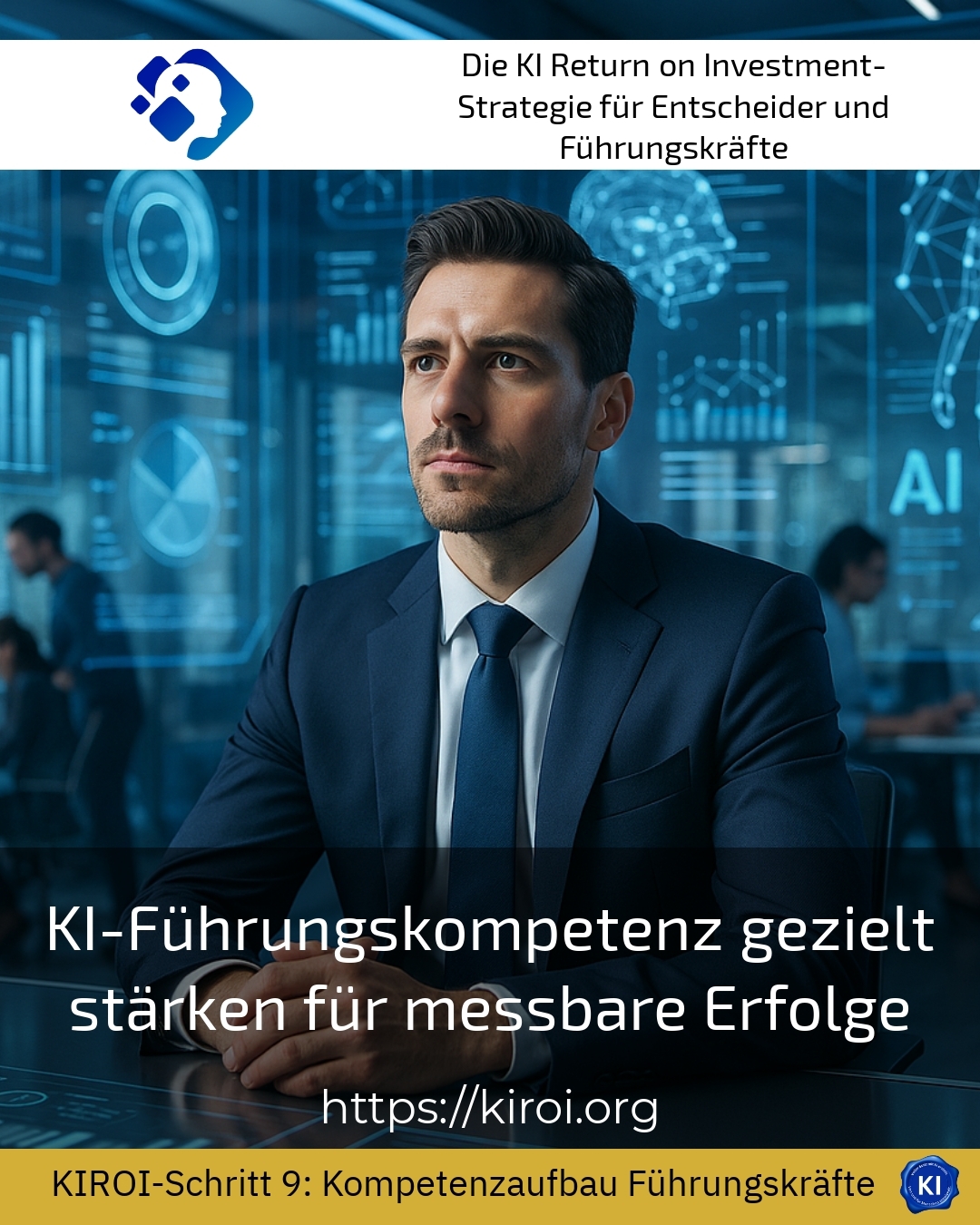
Digital transformation is fundamentally changing company structures. Leaders are facing entirely new challenges. Anyone leading teams today must be able to understand and use algorithmic systems. Strengthening AI leadership skills deliberately It means much more than simply acquiring basic technical knowledge. It's about shaping a new way of collaboration between humans and machines. Many decision-makers come to me asking how they can make their organisation future-proof. They feel the pressure but don't want to make mistakes. This is precisely where professional support comes in, providing impetus and enabling sustainable change.
Why modern leadership requires a new competency profile
The world of work is changing at a rapid pace. Traditional leadership models are increasingly reaching their limits. Decisions need to be made faster today. At the same time, the complexity of available information is increasing significantly. Leaders often report feeling overwhelmed by the technological possibilities available to them. They wonder which tools really add value. Furthermore, they are concerned about whether their teams will support the change.
In the automotive industry, for example, the entire business model is fundamentally changing. Manufacturers are focusing on predictive maintenance systems that prevent breakdowns. Production processes are being optimised by intelligent algorithms. Executives therefore need to understand how these systems work and where their limitations lie. In retail, in turn, personalised recommendation systems enable entirely new ways of addressing customers. Logistics companies are using automated route planning to reduce costs and shorten delivery times. These examples clearly show that similar skill requirements are emerging across industries.
Many clients come to me with the fear that they might fall behind. They’ve already attended various training courses, but they struggle to apply what they’ve learned in their day-to-day work. Transruption coaching addresses this very issue and supports the concrete implementation within their own company. This leads to measurable success instead of theoretical knowledge that remains unused.
Strategically developing KI leadership skills and strengthening them in a targeted manner
The development of future-oriented leadership skills requires a systematic approach. Random training rarely produces sustainable results. Instead, a clear roadmap is needed that takes individual strengths and development areas into account. In the financial sector, for example, leaders must understand how algorithmic trading systems make decisions. They should know what ethical questions arise and how to deal with them. In the healthcare sector, diagnostic assistance systems are already supporting medical staff today with complex findings.
The pharmaceutical industry is focusing on accelerated drug development through computer-aided analyses. Leaders in this sector must balance regulatory requirements with technological possibilities. In the energy sector, smart grids help to optimally coordinate consumption and generation. These examples highlight the diverse areas of application and why generic training often falls short. Each industry has its specific requirements that must be taken into account.
Best practice with a AIROI customer
A medium-sized engineering company approached us with a clear challenge. The management felt overwhelmed by technological developments. At the same time, younger employees were pushing for more modern ways of working and digital tools. The disruption coaching supported the management team over several months in developing their own strategy. First, we jointly analysed which processes within the company were suitable for intelligent support. Then, the managers themselves developed criteria for evaluating new technologies. Employee involvement from the outset was particularly important. The team developed pilot projects in three areas: quality control, customer service, and internal documentation. After six months, the first measurable improvements in order processing times became apparent. The managers reported increased confidence in dealing with new technologies. Furthermore, communication between generations within the company improved significantly. This holistic approach considerably differentiates professional support from pure technology training.
Practical steps for building competence in everyday leadership
The path to new leadership skills begins with honest self-assessment. Where are the biggest knowledge gaps and where are the biggest fears currently? Clients often report concerns about appearing uninformed in front of their teams. This fear is understandable, but it can be resolved constructively. In the insurance sector, for example, managers need to understand how automated claims processing works and what its limitations are [1]. They should know when human intervention remains necessary and how they can prepare their teams for it.
The media industry is undergoing fundamental change through automated content creation and personalised delivery. Leaders in this sector must be able to develop and enforce ethical guidelines. In education, adaptive learning systems already support individualised knowledge transfer. Here, leadership is needed that can position technology as a supplement rather than a replacement for human interaction. The construction industry is increasingly relying on digital twins and predictive project planning. All these developments require leaders who can act with both technical and human competence.
Measurable success through systematic AI leadership competence
Successful change requires clear key figures and regular review of progress. This involves not only technical metrics but also soft factors. How has employee trust in leadership developed? How well are new tools being integrated into existing workflows? In tourism, for example, intelligent booking systems can better predict demand fluctuations [2]. Leaders there must learn to interpret such forecasts and derive personnel decisions from them.
Agriculture is increasingly using precise analysis tools for soil quality and harvest timings. Farm managers face the challenge of integrating traditional expert knowledge with data-driven recommendations. In the textile industry, automated pattern recognition enables faster trend analyses and shorter production cycles. The food industry relies on quality control through image processing systems that detect faults earlier than human inspectors.
Many leaders come to me with the question of how they can prepare their teams for such changes. They want to reduce resistance and generate enthusiasm. Transruption coaching supports the development and implementation of communication strategies. We guide the entire process from the initial analysis to sustainable integration into everyday life.
How to specifically strengthen AI leadership skills and embed them within the team
Anchoring new competencies within a team requires continuous work and a clear demonstration of leadership. Managers must embody what they expect from others. In the banking sector, for example, successful managers are open to new tools and experiment with their teams collaboratively [3]. They admit when they don't know something and visibly demonstrate their learning. In the chemical industry, intelligent systems already support laboratory processes and safety monitoring. Managers there have learned to perceive technology as a partner rather than a threat.
Best practice with a AIROI customer
A retail company with multiple branches faced the challenge of preparing its managers for the digital future. The branch managers had varying levels of prior knowledge and, in some cases, considerable reservations about new technologies. Together, we developed a modular development programme that addressed the different starting levels. Each manager defined personal learning goals, which were regularly reviewed. The exchange of experiences between the branches, moderated as part of the coaching, was particularly valuable. One branch manager, for example, developed an innovative method for inventory optimisation that could then be transferred to other locations. After one year, measurable improvements were evident in several areas, particularly in customer satisfaction and employee retention. The managers reported increased motivation and reduced apprehension about new systems. The company has now established a continuous development process that promptly integrates new findings. This sustainable approach is typical of professional support from transruption coaching.
The telecommunications industry already uses comprehensive network analyses to optimise capacities and service quality. In the transport sector, intelligent systems enable more efficient fleet management and more precise arrival forecasts. The metal industry relies on predictive maintenance to avoid unplanned downtime. All these developments demand leaders who are familiar with technical possibilities and can lead with a human touch.
My AIROI Analysis
The development of AI leadership skills is not a one-off task, but a continuous process. Technology is developing rapidly, and leaders must be prepared for lifelong learning. My work with numerous companies from various industries has shown that success depends crucially on the attitude of management. Those who remain open to new ideas while also critically reflecting create the best conditions for sustainable change.
It is particularly important to combine technical understanding with human leadership qualities. Algorithms can assist, but they cannot take responsibility for decisions. Leaders must therefore learn to evaluate technical recommendations and combine them with their own judgement. The ability to lead teams through uncertain times is becoming increasingly important.
Transruptions-Coaching supports precisely this development and provides impulses for individual growth paths. We see ourselves as partners on an equal footing, not as know-it-alls with ready-made solutions. Every company and every leader brings their own strengths and challenges. Respecting this individuality while simultaneously incorporating proven methods is what constitutes professional support. The measurable successes of our clients repeatedly confirm this approach.
Further links from the text above:
[1] McKinsey Insights on the Future of the Insurance Industry
[2] World Travel and Tourism Council Research
[3] Bank for International Settlements on Technology in the Financial Sector
For more information and if you have any questions, please contact Contact us or read more blog posts on the topic Artificial intelligence here.








 Deutsch
  English (UK)