
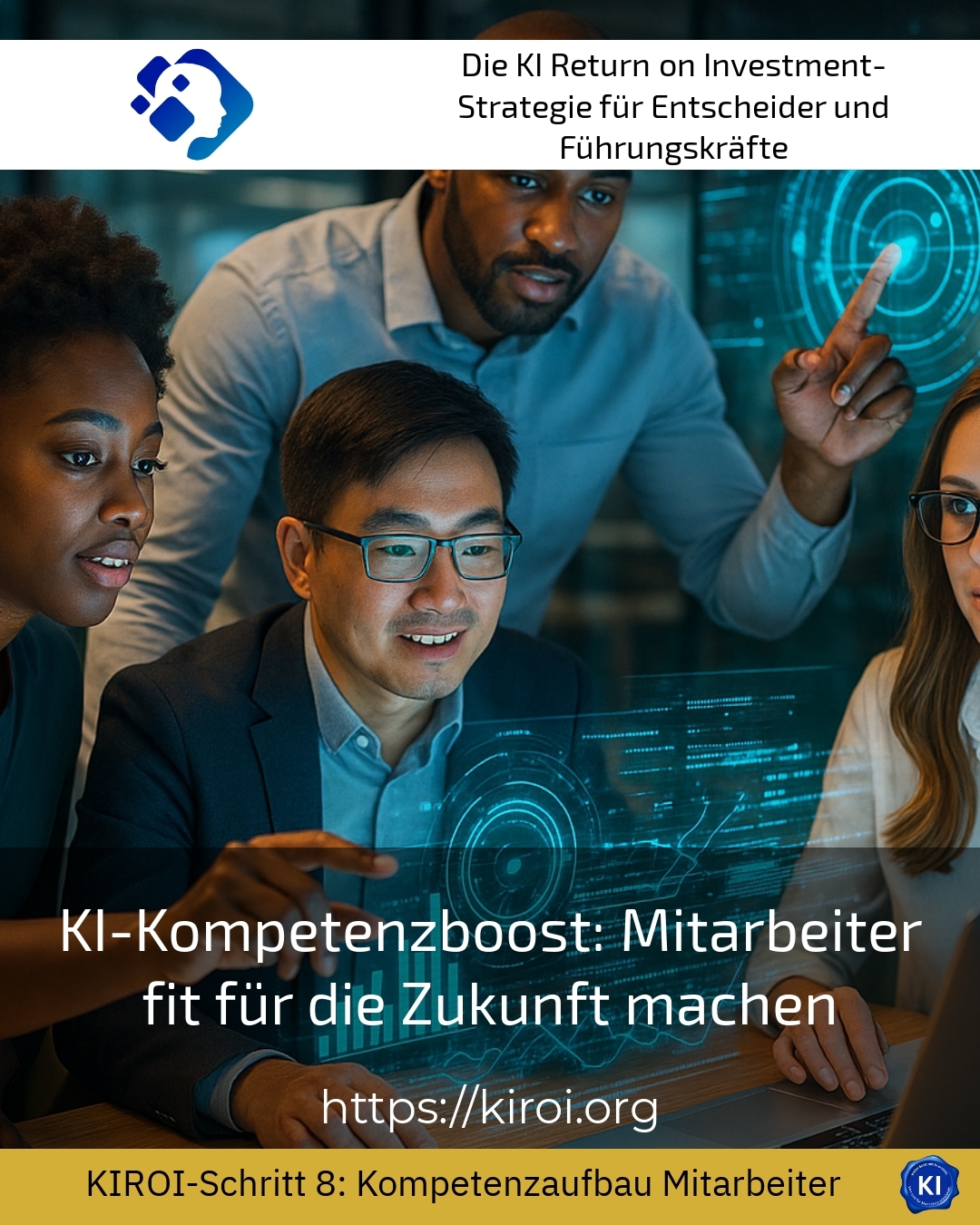
The digital transformation is changing workplaces at a rapid pace. Companies are facing a crucial question. How do they prepare their workforce for collaboration with intelligent systems? AI Skills Boost: Getting Employees Ready for the Future is developing into the central success factor. Those who do not act today risk falling behind tomorrow. At the same time, enormous opportunities are opening up for organisations that act proactively. These opportunities must be seized and strategically exploited.
Why the AI skills boost: making employees fit for the future becomes a strategic priority
The world of work is undergoing a fundamental shift. Intelligent algorithms are increasingly taking over repetitive tasks. They analyse vast amounts of data in fractions of a second. At the same time, entirely new job profiles and fields of activity are emerging. This development affects almost all industries and company sizes. Employees must therefore acquire new skills. They need a basic understanding of digital technologies. Furthermore, they require the competence to collaborate with artificial intelligence [1].
Studies clearly show that many employees feel insecure. They wonder if their qualifications will still be in demand. These concerns are understandable and deserve serious attention. However, clients often report positive experiences. The targeted development of new skills gives them back their confidence. They once again feel capable and future-oriented. A well-thought-out qualification program can accompany and support this transformation.
Concrete areas of application in modern businesses
In production environments, employees are increasingly working with predictive maintenance systems. These systems detect machine failures before they occur. The workforce is learning to correctly interpret warning messages. In customer service, chatbots support human colleagues with routine enquiries. This allows employees to concentrate on more complex customer issues. In logistics, intelligent algorithms optimise supply chains and warehousing. Dispatchers use this information to make informed decisions.
The finance sector benefits from automated analysis tools for risk assessments. Case workers receive precise recommendations for their decisions. In HR, intelligent systems assist with the initial screening of applications. This allows HR professionals to dedicate more time to personal interviews. Marketing teams use data-driven insights for targeted campaigns. All these examples highlight the need for new skills [2].
Best practice with a AIROI customer
A medium-sized manufacturing company faced the challenge of modernising its production processes. Management recognised early on that technological investments alone would not suffice. They opted for a comprehensive skills development initiative. Transruption coaching accompanied the project from the outset. Initially, we held discussions with all department heads. We identified specific competency gaps and individual learning needs. Subsequently, we developed bespoke training modules. The machine operators learned to work with predictive maintenance systems. They understood the fundamental logic of the underlying algorithms. The quality inspectors acquired the skills to use image recognition systems. They took on a supervisory role in relation to the technology. After six months, a significant shift in the company culture was evident. Employees reported increased self-confidence. They perceived the new tools as support rather than a threat. Productivity increased measurably, while the error rate decreased. Particularly pleasing was the positive feedback in the appraisal interviews. Many employees expressed gratitude for the investment in their development.
The psychological dimension of the digital transformation
Change initially triggers resistance in many people. This phenomenon is completely normal and well-researched. Employees fear for their job security. They worry whether they are capable of meeting the new requirements. Managers should take these concerns seriously and address them. Open dialogue builds trust and promotes acceptance.
Clients often report initial skepticism towards new technologies. However, this skepticism mostly turns into curiosity. The transition is particularly successful through practical experience. When employees experience the benefits for themselves, their attitude changes. They realise that intelligent systems can make their work easier. Transruption coaching provides valuable impulses for this change in attitude [3].
The AI Competence Boost: Making Employees Fit for the Future Through Individual Learning Paths
Every person learns differently and has different prerequisites. A standardised training program therefore often falls short. Instead, individualised learning paths are needed. These take prior knowledge, learning styles, and personal goals into account. Microlearning units enable flexible learning in everyday work. Peer learning formats promote collegial exchange and knowledge transfer.
In sales, employees benefit from practical application scenarios. They practice using intelligent CRM systems with real customer examples. In accounting, automated document processing simplifies daily work. Employees learn to identify and handle exceptional cases. In research and development, intelligent research tools accelerate the innovation process. Engineers use generative systems for initial design ideas.
Practical applications are also evident in building management. Intelligent building control systems automatically optimise energy consumption. Janitors learn to communicate with these systems. They understand which parameters they can adjust. In the catering industry, forecasting systems support demand planning. This enables chefs and restaurant managers to significantly reduce food waste.
Best practice with a AIROI customer
An insurance company wanted to modernise its claims processing. Claims handlers were to work with intelligent assistance systems in the future. The project initially met with considerable resistance from the workforce. Many long-serving employees felt their expertise was not valued. The transruption coaching precisely addressed this issue. We initially organised discussion rounds for an exchange of experiences. Employees were able to articulate their concerns openly. Subsequently, we jointly defined the new role allocation between humans and machines. From then on, the claims handlers saw themselves as quality assurers and decision-makers. The system took over the time-consuming data preparation and preliminary analysis. In workshops, we developed concrete workflows for everyday use. Employees practised with realistic case examples. They learned to critically question the system's suggestions. At the same time, they recognised the time savings from technological support. Acceptance continuously increased over the project period. Today, claims handlers report a noticeable reduction in their workload. They can concentrate on complex cases. The system handles simple routine processes largely independently. Customer satisfaction has also improved as a result.
Leaders as Pioneers of Transformation
The attitude of the leadership team significantly shapes the success of qualification initiatives. Leaders must themselves demonstrate a willingness to learn. They should actively participate in training and show interest. In doing so, they signal that learning is not a weakness. Rather, continuous development is a sign of professionalism [4].
In the healthcare sector, hospital directors face specific challenges. They must communicate the benefits of digital diagnostic support to doctors and nurses. In public administration, department heads shape the introduction of digital citizen services. They guide their teams through extensive process changes. In the skilled trades, business owners introduce intelligent planning tools. They show their journeymen how digital aids make work easier.
Successful leaders create space for experimentation and mistakes. They foster a culture of openness and trial-and-error. Employees should be able to test new tools without fear of repercussions. Regular retrospectives help in learning from experiences. Transruption coaching supports leaders in this task.
Sustainable anchoring of new competencies within the company
One-off training sessions are not enough for sustainable change. Companies need structures for continuous learning. Internal experts can act as multipliers. They pass their knowledge on to colleagues and remain points of contact. Communities of practice promote cross-departmental exchange.
In the pharmaceutical industry, specialised expert teams are emerging for data-driven research. These teams support other departments in the use of technology. In the retail sector, digital champions train their colleagues. They assist with the use of intelligent inventory management systems. In architectural firms, new workflows are being established with generative design tools. Experienced architects share their insights in regular workshops.
The documentation of best practices secures valuable experience-based knowledge. Wikis and internal knowledge bases make this knowledge accessible. New employees can be integrated more quickly. The organisation learns from past projects and experiences [5].
Best practice with a AIROI customer
A logistics company implemented a comprehensive learning ecosystem for its employees. Transruption coaching accompanied the conception and introduction over several months. Initially, we jointly identified the critical competency areas for the future. Dispatchers were to learn to work with intelligent route planning systems. Warehouse workers had to understand how to handle automated picking aids. Drivers received training on predictive maintenance systems for their vehicles. We developed tailored learning formats for each target group. Short video tutorials enabled learning during waiting times. Practical exercises at the workplace consolidated theoretical knowledge. Experienced employees were trained as internal coaches. They supported their colleagues with questions. A digital learning management system documented individual progress. This allowed managers to provide targeted support and encouragement. Monthly exchange meetings created space for feedback and suggestions for improvement. Employees felt heard and involved. Acceptance of the new technologies increased continuously. The company recorded measurable efficiency gains. At the same time, employee satisfaction improved significantly.
The ethical dimension in dealing with intelligent systems
Employees need more than just technical knowledge. They must also be able to understand and reflect on ethical aspects. Intelligent systems make decisions based on data. This data can contain and reproduce biases. Employees should be able to recognise such problems.
In human resources, pre-selection systems can unintentionally discriminate. HR professionals must critically examine the results. In lending, scoring models influence people's life chances. Clerks bear a special responsibility for reviewing the results. In medicine, diagnostic systems support doctors' decisions. However, the ultimate responsibility remains with the attending physician.
Training should therefore also promote ethical reflection. Case studies and discussions raise awareness of potential problem areas. Employees develop an awareness of their responsibility. They see themselves as critical partners of technological systems [6].
My AIROI Analysis
The qualification of employees for collaboration with intelligent systems is developing into a core management task. Companies that invest early and systematically gain competitive advantages. This is not solely about technical knowledge. Human factors such as acceptance, motivation, and trust play an equally important role.
The experiences from numerous projects show clear success patterns. Individualised learning paths prove to be more effective than standard training. The active involvement of employees in the design promotes acceptance. Leaders must lead by example and demonstrate a willingness to learn. Sustainable structures such as internal expert circles ensure long-term success.
The AI Skills Boost: Getting Employees Ready for the Future requires a holistic approach. Technology, people, and organisations must be considered together. Transruption coaching supports companies in this complex task. It provides impetus and assists with practical implementation. The investment in competence development pays off multiple times over. Employees gain confidence and self-assurance. Companies increase their innovation capability and productivity. Society benefits from a future-proof world of work.
The coming years will show which organisations master the transformation successfully. Those that act now will be among the winners. The time for building competence has arrived.
Further links from the text above:
[1] McKinsey – The State of AI
[2] World Economic Forum – Future of Jobs Report
[3] Harvard Business Review – Artificial Intelligence
[4] Gartner – Future of Work
[5] OECD – Skills and Work
[6] EU Parliament – Artificial Intelligence
For more information and if you have any questions, please contact Contact us or read more blog posts on the topic Artificial intelligence here.








 Deutsch
  English (UK)