
Introduction: Social Monitoring as the Key to Business Success
Social monitoring is no longer a closely guarded secret, but rather an essential tool for companies looking to strengthen their market position. This process provides comprehensive insights into the public perception of a company's own brand, products, and services. By systematically observing social networks, companies gain valuable impulses to respond purposefully to customer needs, identify opportunities early on, and avert risks. In today's digital world, social monitoring enables a stronger connection between companies and their target audience, which significantly contributes to sustainable success.
Understanding Social Monitoring: What's Behind It?
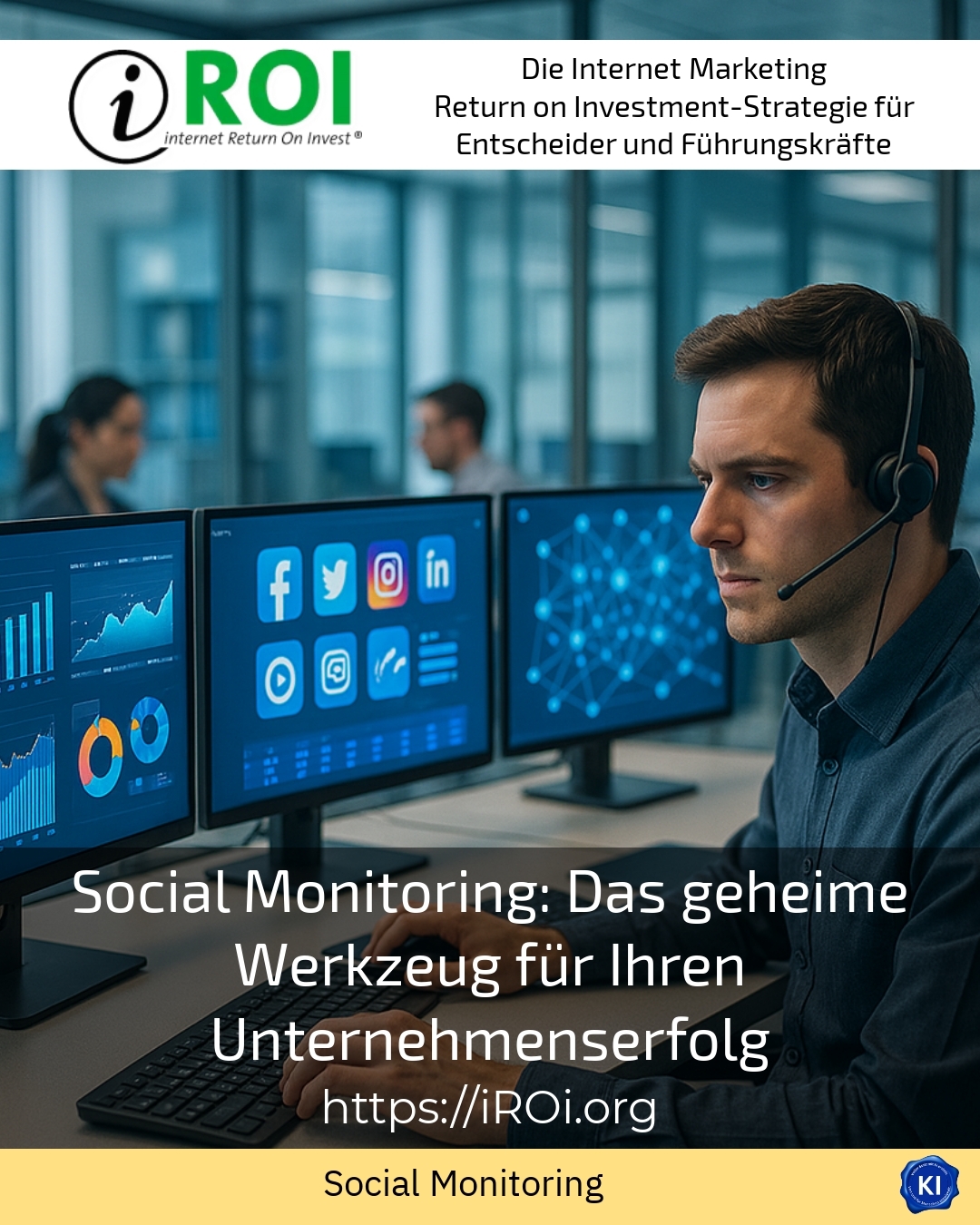
Social monitoring refers to the continuous observation of mentions, comments, and discussions on social media platforms such as Twitter, Facebook, Instagram, YouTube, or specialised forums. This allows companies to specifically observe how and when they are being discussed, which topics are particularly relevant to the target audience, and what trends are emerging. Automated tools are used to track keywords, competitors, and other relevant terms. The real-time data obtained not only supports crisis management but also the optimisation of marketing activities and the further development of products.
Certain industries use social monitoring in a variety of ways: for example, a fashion company can quickly identify which designs are particularly popular with influencers and consumers by analysing current social media posts. An IT service provider gains valuable insights for product development by monitoring forums and specialist groups. Likewise, a food manufacturer can determine, through the analysis of customer feedback via social monitoring, which flavours are particularly appreciated and which expectations are still unmet.
Social Monitoring in Practice – Examples from Different Sectors
In retail, a furniture store tracks in near real-time how customers rate the new collection and what service they appreciate or miss. Here, social monitoring allows for quick reactions to criticism or praise. In the tourism sector, a tour operator analyses which travel destinations are currently in high demand and what guest experiences are being shared. These insights are immediately incorporated into the design of offers.
Through social monitoring in the healthcare sector, a dietary supplement provider can better capture trends in healthy lifestyles and position content and products appropriately. Social monitoring thus demonstrates across industries how companies can better understand customers and tailor their communication accordingly.
The advantages of social monitoring for businesses
Social monitoring offers diverse benefits that go far beyond mere observation:
- It improves customer service through faster responses to complaints, requests, and questions expressed publicly on social media channels.
- It enables a well-founded target group analysis by tracking discussions and posts, allowing marketing strategies to be designed more precisely and effectively.
- It simplifies competitive monitoring by making activities and sentiments surrounding competitors transparent.
- It supports early crisis detection by recognising unusual activity patterns or negative sentiment.
- It provides valuable insights for product development, as customer needs and expectations can be continuously evaluated.
BEST PRACTICE: Social monitoring allowed us to identify a significant deviation in customer opinions regarding a new product for a client (name withheld due to NDA). This enabled timely, targeted adjustments and a successful product launch.
Another example from the financial sector shows how social monitoring improves the perception of services: By closely observing social media threads, customer concerns could be quickly identified and proactively addressed, leading to increased customer satisfaction.
Similarly, a medium-sized technology company uses social monitoring to analyse reactions to an international campaign. Particularly successful communication channels were identified and used for follow-up actions.
Practical tips for successful social monitoring
To use social monitoring effectively, a clear strategy is sensible. It is recommended to first define the relevant keywords and topics and to regularly question and adapt them. Automated tools simplify the work and help to process data in real-time.
It is equally important to share the results from social monitoring within the team and integrate them into decision-making processes. Whether it's marketing, product development, or customer service — collaboration allows the full potential of this method to be exploited.
Best practice: A comprehensive monitoring solution has been implemented for a client (name withheld due to NDA) covering all social channels and enabling automated notifications for critical posts. This allowed the company to react more quickly and precisely to market changes.
Social Monitoring in a Future Context: Seizing Opportunities and Long-Term Support
The benefits of social monitoring continue to grow with increased digital connectivity. Companies can not only track current trends but also tap into innovative business areas by discovering market gaps through monitoring.
The use of social monitoring in conjunction with artificial intelligence, which enables automatic sentiment analysis and predictive modelling, is particularly exciting. These technologies support companies in responding even more quickly to customer needs and expanding competitive advantages.
Many executives report that social monitoring enriches their strategic planning and improves interdepartmental collaboration. As transruptions coaching, we specifically support projects focused on social monitoring to help companies implement and optimise this valuable method.
My analysis
Social monitoring opens up important opportunities for companies to better understand and actively shape the complex network of customer communication. Continuous observation of social media offers a clear competitive advantage because companies can react more quickly to changes. At the same time, it supports the optimisation of service, product development and marketing by providing relevant data in a timely manner. A well-structured monitoring strategy therefore promotes sustainable corporate success and facilitates adaptation to dynamic market conditions.
Further links from the text above:
Social Media Monitoring: How You Map the Route to Successful Communication
6 Reasons for Social Media Monitoring – IONOS
Social Media Monitoring » The Ultimate Guide
Why is social media monitoring so important?
For more information and if you have any questions, please contact Contact us or read more blog posts on the topic internet Return on Investment - Marketing here.











 Deutsch
  English (UK)