
Why do so many executives fail to realize the full potential of their company's data, even though they have access to the latest technologies?
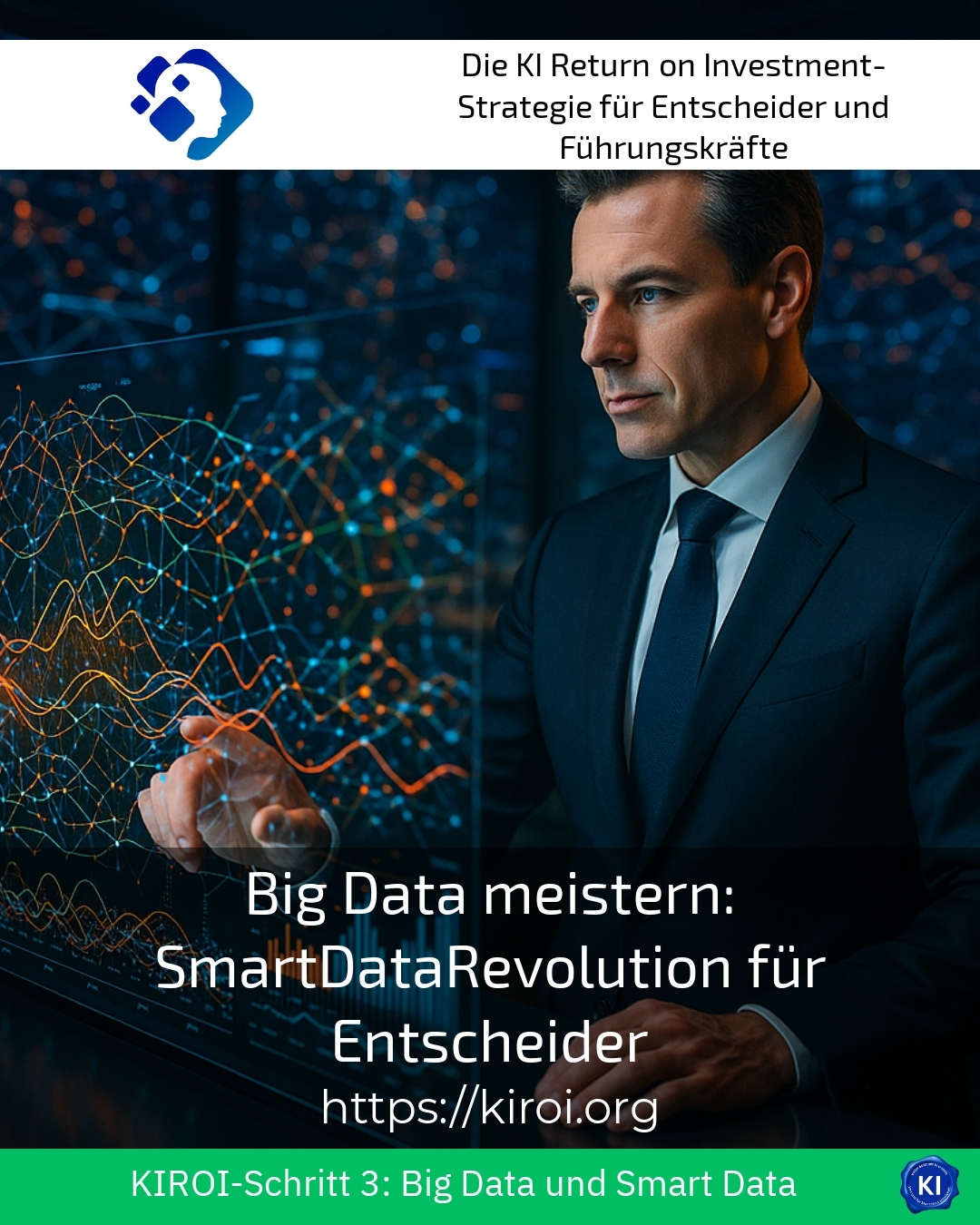
This question concerns decision-makers worldwide. The SmartDataRevolution for Decision Makers Here, they offer a promising approach. Data has long become the most valuable resource of our time. Yet many companies are literally drowning in information flows. They don’t know how to extract these treasures. This is where fundamental rethinking is needed. Executives need new skills and strategies. The traditional approach of dealing with business figures is no longer enough. Instead, a holistic approach is needed. This combines technological understanding with strategic foresight.
Understanding the challenges of modern information landscapes
Companies generate more information today than ever before in history. Production facilities continuously send sensor data to central systems. Customer interactions leave digital traces across various channels. Supply chains produce real-time information about goods flows and inventory levels. This abundance of information holds enormous potential. At the same time, it overwhelms many traditional management structures.
A medium-sized machine manufacturer from southern Germany exemplifies this situation. The company collected production data from various plants over the years. However, no one knew how to extract actionable insights from it. The IT department diligently stored terabytes of information. The management continued to make decisions based on gut instinct and experience. This discrepancy between available resources and actual usage is widespread.
A logistics company experienced a similar situation with its fleet management data. Thousands of vehicles sent position data, fuel consumption, and driver behavior to the central office. The information ended up in databases without ever being systematically analyzed. Only a strategic new approach enabled optimizing routes and significantly reducing costs.
SmartDataRevolution for decision-makers as a strategic compass
The SmartDataRevolution for Decision Makers It goes far beyond technical aspects. It encompasses a cultural change in organizations. Leaders must learn to make decisions based on evidence. This requires new ways of thinking and competencies at all management levels. At the same time, human intuition must not be completely suppressed. Rather, a synthesis emerges from knowledge of experience and analytical precision.
A retail company with several hundred stores illustrates this approach impressively. The management integrated sales data with weather data and local event calendars. This enabled the company to more accurately predict demand peaks. The shelf replenishment was now based on forecasted customer flows. This predictive planning reduced product spoilage by significant percentages.
Best practice with a AIROI customer
An internationally operating manufacturing company approached us with a complex request. The organization had production facilities in several countries and struggled with inconsistent quality data. Each facility used different systems to capture production parameters. A company-wide analysis had become practically impossible as a result. As part of our support, we jointly developed a uniform data architecture. We established standardized capture processes for all relevant quality characteristics. The company implemented a central analysis system that provided real-time insights. Executives were now able to compare production quality across all locations for the first time. Deviations became immediately visible and could be addressed promptly. The rejection rates decreased noticeably within a few months. Employees reported improved collaboration between the plants. This project illustrates how structured support can help with transformation.
Cultural change as the foundation of success
Technology alone does not transform an organization. People must drive and shape the change. This requires intensive communication and training at all levels. Employees need to understand why new working methods are being introduced. They must be able to see the benefits for their daily work. Only then can genuine acceptance of changed processes and structures be achieved.
An insurance company faced this challenge when introducing analytical tools. Initially, employees feared being replaced by algorithms [1]. Management therefore invested significant resources in training and communication. The message was clear: Technology supports the expertise of employees; it does not replace it. This transparent communication created trust and motivation for change.
A private bank pursued a similar approach when introducing data-driven investment advice. Advisors gained access to analytical tools that could optimize client portfolios. Initially, experienced financial experts were skeptical. It was not until the tools were positioned as support for the advisor that the attitude changed. The final decision was always left to the human advisor. This combination of algorithmic analysis and human judgment proved to be excellent.
Practical implementation of the Smart Data Revolution for decision-makers
Practical implementation requires a structured approach with clear milestones. First, organizations must systematically capture their existing information assets. Next, they must define priorities for analysis projects. Not every question is equally suited to data-driven processing. Leaders should start with manageable pilot projects. These deliver quick results and create acceptance for larger initiatives.
One energy provider demonstrated this step-by-step approach in an exemplary manner [2]. The company began by analyzing meter data to predict consumption. The insights gained enabled more precise purchasing decisions in the electricity market. Building on this success, the company continuously expanded its analytical capabilities. Today, it uses real-time data to control the grid and prevent outages.
A telecommunications provider took a similar approach in customer analysis. The company began by analyzing churn patterns. Algorithms identified customers at increased risk of leaving the company. The sales team proactively reached out to these customers and offered them suitable offers. The success rate of these prevention measures significantly exceeded all expectations.
Creating technological foundations
Technical infrastructure forms the backbone of any data-driven transformation. Companies need powerful storage systems and processing capabilities. Cloud solutions often offer flexible and scalable alternatives in this regard. At the same time, security aspects and data protection requirements must be considered. Choosing the right technology partners can determine success or failure.
A pharmaceutical company invested heavily in its technological infrastructure [3]. The sensitive research data required the highest security standards. The company chose a hybrid solution consisting of local and cloud-based infrastructure. Critical information remained in its own data centers. Less sensitive analyses were performed in the cloud. This balance between security and flexibility proved successful in practical use.
Best practice with a AIROI customer
A medium-sized company in the food industry sought guidance for an ambitious project. The organization wanted to systematically link production quality and customer feedback. Until now, this information existed in separate silos without any connection between them. Together, we developed a concept for integrating various data sources. The company initially established uniform standards for recording quality parameters. Customer feedback from various channels was centralized and categorized. An analysis tool now linked production batches with subsequent customer evaluations. This enabled tracing quality issues back to the production line that caused them. Product development received valuable insights from the systematic evaluation of customer feedback. New product variants could be more targeted tailored to customer preferences. The time to market for product innovations has been significantly shortened. This example shows how transruptive coaching can support companies in complex integration projects.
Developing leadership skills for the data-driven era
Decision-makers need to develop new skills to succeed in a data-intensive environment. They need a fundamental understanding of analytical methods and their limitations. At the same time, they must not get lost in technical details. The ability to ask the right questions is becoming increasingly important. Leaders must be able to critically question analytical results and put them into context.
One automotive supplier recognized this need and invested in leadership development. Managers at all levels underwent training programs in analytical fundamentals. They learned to formulate analytical requests accurately and interpret results. This investment in human capital proved to be at least as valuable as technology investments.
A consumer goods manufacturer went one step further in competence development. The company established an internal academy for data-driven decision-making. Executives learned there using real business cases from their own company. This hands-on training significantly accelerated the cultural change. Acceptance of new working methods increased measurably.
Embedding SmartDataRevolution in the hands of decision-makers in practice
The permanent embedding of new working practices requires structural adjustments within organizations. Processes must be designed so that analyses systematically feed into decisions. Incentive systems should encourage and reward evidence-based action. Regular reviews ensure that the assumptions made hold up against reality. This continuous improvement is essential for sustainable success.
A retail conglomerate implemented regular analysis review meetings at the board level. Once a month, specialist departments presented data-driven insights and their implementation. The board discussed deviations between forecasts and actual results in depth. This institutionalized reflection continuously improved the quality of analyses and decisions.
My AIROI Analysis
The transformation towards a data-driven decision-making culture presents organizations with numerous challenges. My experience from numerous mentoring projects shows clear patterns of success. Companies that combine technological investments with cultural change achieve better results. The mere acquisition of analytical tools rarely leads to the desired success. What is crucial is rather the ability of people to use these tools meaningfully.
Clients often report initial resistance within their organizations. Employees fear control or replacement by algorithms. It is essential to take these concerns seriously and address them constructively. Transparent communication about the goals and limits of technological support builds trust. The positioning of analyses as a decision-making aid rather than a substitute for decision-making has proven effective time and again.
The SmartDataRevolution for Decision Makers It requires patience and perseverance. Rapid success is possible, but profound transformation takes time. Leaders should set realistic expectations and communicate. Small pilot projects create opportunities for learning and demonstrate benefits. The gradual expansion of analytical capabilities reduces risks and increases the probability of success. Transruptive coaching can effectively accompany and support organizations in this complex transformation. The combination of methodological knowledge and industry experience provides valuable insights for practical implementation. Decision-makers who consistently pursue this path position their organizations successfully for the future.
Further links from the text above:
[1] McKinsey: The Data-Driven Enterprise
[2] Harvard Business Review: Data Analytics
[3] Gartner: Data om Analytiske Indsigt
For more information and if you have any questions, please contact Contact us or read more blog posts on the topic Artificial intelligence here.









 Deutsch
 English (UK)