
Have you ever wondered why some companies seem to grow effortlessly while others stagnate despite enormous efforts?
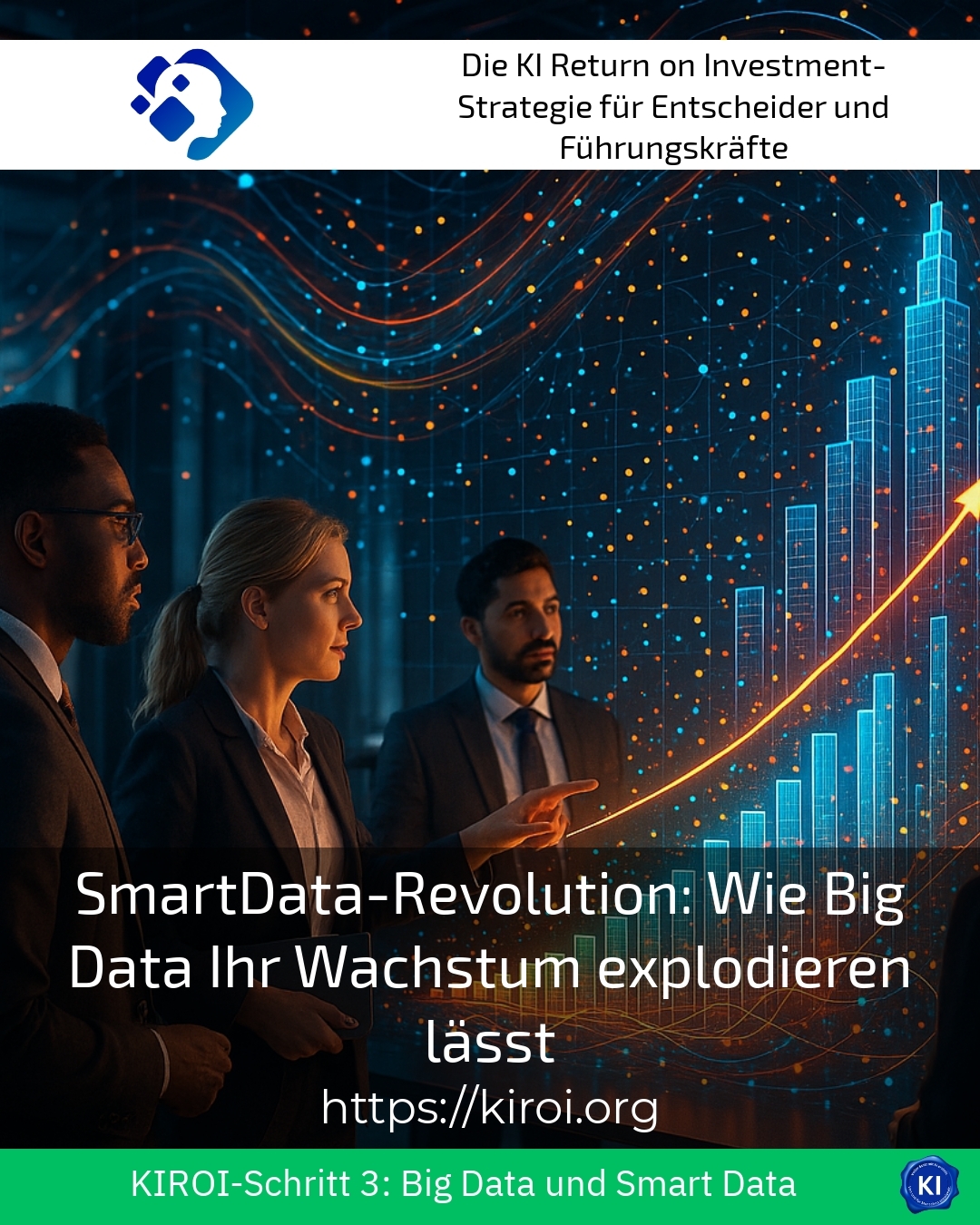
The answer often lies in the way organizations handle the vast amounts of information that are available to them daily. The SmartData-Revolution It fundamentally changes how companies make decisions and align their strategies. It is no longer just about collecting data; it is about extracting insights from the wealth of information that enable real growth. In a world where unimaginable amounts of digital information are generated every day, the ability to intelligently analyze data determines success or failure. Companies that master this skill often report astonishing developments in their market position.
Understanding the fundamentals of the SmartData revolution
Before we delve deeper into the matter, we must first understand what drives this revolution. It is a fundamental change in corporate culture. Traditionally, business decisions were based on experience, intuition, and limited market analysis. Today, however, we have tools that can detect patterns in millions of data points.
For example, a medium-sized trading company was able to optimize its inventory levels. The company analyzed purchasing behavior, seasonal fluctuations, and external factors simultaneously. As a result, storage costs were significantly reduced while the availability of popular products increased. A logistics service provider used similar approaches to dynamically adapt delivery routes. Fuel costs were reduced, and delivery times improved significantly. A manufacturing company, in turn, relied on proactive maintenance of its machinery. Downtime decreased dramatically because potential problems were identified early.
Best practice with a AIROI customer
An established family business in the manufacturing sector turned to our transruptive coaching because it was struggling with stagnating sales. The management felt that it was missing out on important market opportunities, but could not specifically name them. As part of our coaching, we first analyzed the company’s existing information sources. It turned out that valuable customer feedback was scattered across various departments. The sales staff collected information in personal notebooks, while the customer service department kept its own records. We supported the company in breaking down these information silos and building a central knowledge base. By integrating different data sources, the team discovered connections that were previously invisible. Customers who purchased certain product combinations showed significantly higher repeat purchase behavior. This insight led to a tailored sales strategy with targeted additional offers. The company reported a significant increase in sales within a few months.
How intelligent information utilization drives growth
The SmartData-Revolution It is particularly effective where companies are willing to abandon old mindsets. It is not enough to introduce modern technologies and hope for magical results. Rather, successful implementation requires a holistic view of processes, people, and goals. Companies that take this path often discover surprising insights about their own business models.
Through systematic analysis, a retailer discovered that certain product placements significantly influenced sales. The findings contradicted some of the long-standing employees’ previous experience. However, the numbers spoke a clear language, and the company acted accordingly. A financial services provider used similar methods to identify customer churn early. This enabled targeted engagement measures to be implemented before customers actually switched. A healthcare provider optimized its scheduling by analyzing historical patient flows. Wait times decreased significantly, while resource utilization increased.
Practical application areas of the SmartData revolution
The potential applications of intelligent information processing are virtually limitless. In marketing, it enables personalized customer interaction in real time. In sales, it helps prioritize promising leads. In production, it helps with quality assurance and process optimization. In human resources, it facilitates the identification of suitable candidates.
A telecommunications provider used behavioral analytics to develop tailored tariff recommendations. Customer satisfaction increased because offers actually matched individual needs. An insurance company significantly improved its risk assessment through comprehensive data integration. Claims ratios fell, while fair premiums for different customer groups were created. An energy provider optimized its load management through intelligent predictive models. This enabled it to better handle peak loads and reduce costs.
Challenges on the path to a data-driven organisation
Despite all the opportunities, it must not be overlooked that the path to a data-driven organization is fraught with obstacles. Many companies fail not because of a lack of technology, but because of cultural resistance. Employees feel threatened when algorithms are supposed to influence decisions. Executives have difficulty relinquishing control of data-based systems.
An industrial company initially faced strong resistance to the introduction of new analytical tools. The experienced engineers trusted their expertise more than the recommendations of the systems. It was only when the management actively embraced the new culture that the attitude changed. A trading company struggled with fragmented IT landscapes that made a unified data base difficult. The necessary integration projects required significant investment and patience. A service company found that the quality of the existing data was insufficient. Before intelligent analytics could be implemented, extensive cleaning up work had to be done.
Best practice with a AIROI customer
A rapidly growing technology company sought our transruptive coaching because it struggled with scaling despite successful products. The internal processes were not keeping up with the market success, and important decisions were based on incomplete information. Together, we initially identified the critical decision points in the company. We assisted the leadership in clearly articulating their information needs. In the next step, we developed a roadmap for gradually improving data availability. Particularly important was the involvement of employees in this transformation process. We provided guidance for a new decision-making culture that meaningfully combines gut feeling and data analysis. The company established a central team to monitor the quality and availability of information. Executives have since reported more informed decisions and faster response times to market changes. The employees are taking the new working method positively because they were involved in the change process.
Strategies for successful implementation of the SmartData revolution
Successful companies approach transformation systematically and patiently. They start with clearly defined pilot projects that enable rapid success [1]. These successes create confidence and enthusiasm for further steps. In parallel, they invest in their employees’ skills through targeted training.
A machine manufacturer started its journey with a limited quality control project. The positive results convinced even skeptical voices within the company. A trading company formed an interdisciplinary team of IT experts and specialists from various departments. This collaboration ensured both technical expertise and practical relevance. A pharmaceutical company cooperated with external partners to quickly build up the missing expertise [2]. This strategy significantly accelerated the implementation without overloading the internal resources.
The role of ethics and responsibility
With the growing power of intelligent information processing, the responsibility of companies also increases. Data protection and ethical principles must be considered from the very beginning [3]. Customers rightly expect their information to be handled carefully and responsibly. Companies that abuse this trust risk serious reputational damage.
A technology company implemented strict policies for the use of customer data. This transparency strengthened trust and became a competitive advantage. A financial institution established an ethics committee to review critical use cases. This ensures that algorithms do not make discriminatory decisions. A healthcare company developed anonymization methods that enable meaningful analysis with maximum privacy.
My AIROI Analysis
After years of supporting companies on their journey towards a data-driven organization, clear patterns of success emerge. SmartData-Revolution It is not a purely technical matter, but above all a cultural transformation. Companies that embrace this change as a holistic project achieve significantly better results than those that invest solely in technology. The human component remains crucial, because ultimately, people must interpret the insights gained and translate them into action.
Clients often report that they come to us overwhelmed and without direction. The abundance of options overwhelms many organizations, and they don’t know where to begin. Transruptive coaching, however, provides structured guidance and clear prioritization. We provide the impetus for the first step and help build momentum. SmartData-Revolution It is a marathon, not a sprint, and patient endurance pays off. Companies that embark on this journey often discover untapped potential within their own organizations. The future belongs to those who turn information into knowledge and derive action from knowledge.
Further links from the text above:
[2] Harvard Business Review – Data Topics
[3] Federal Commissioner for Data Protection and Information Freedom
For more information and if you have any questions, please contact Contact us or read more blog posts on the topic Artificial intelligence here.









 Deutsch
  English (UK)