
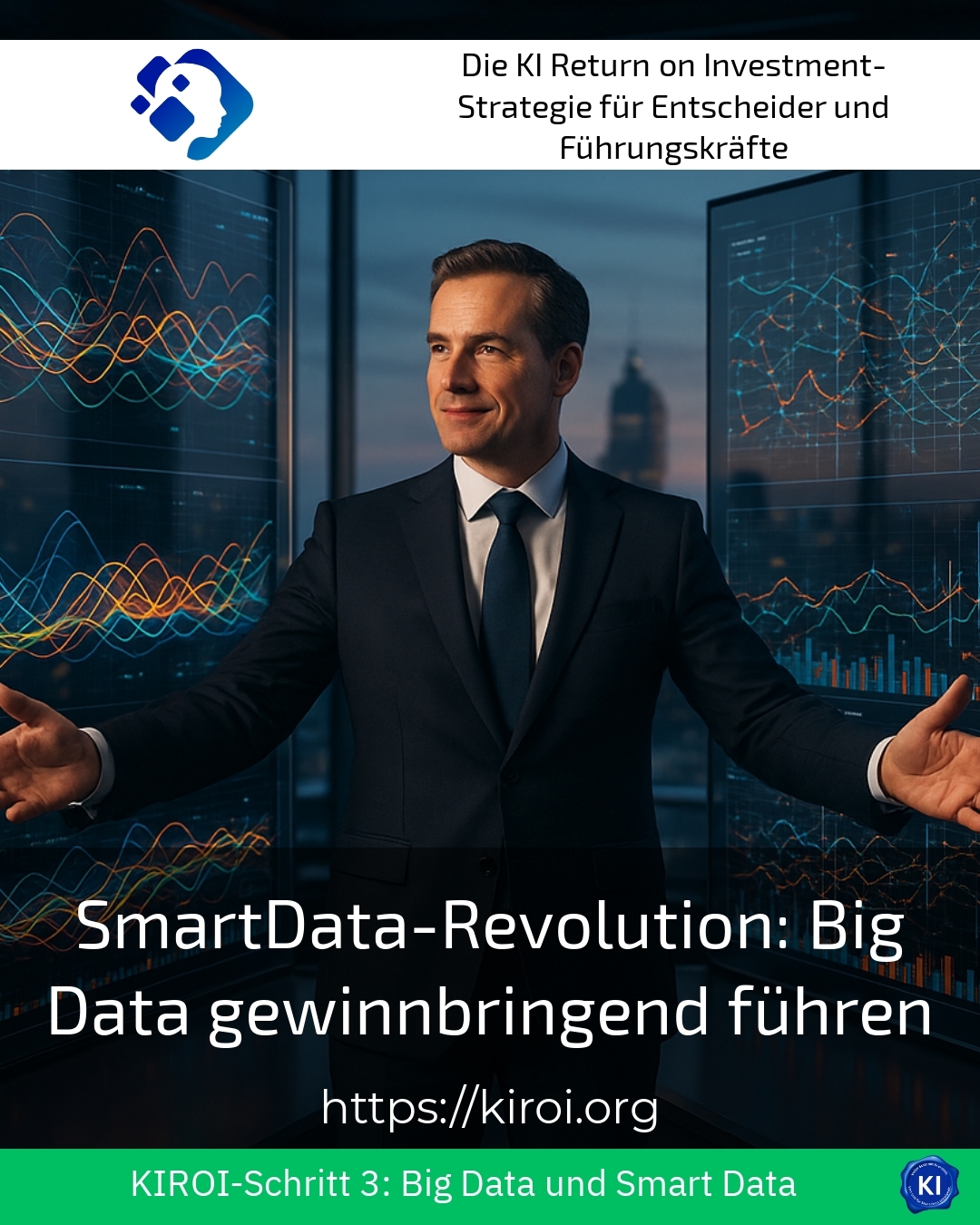
Imagine your company is sitting on a mountain of information, but no one knows what treasures are hidden within. The SmartData-Revolution: Leading Big Data Profitably fundamentally changes how organisations use their data assets. Unimaginable amounts of digital footprints are created every day. This deluge overwhelms many managers. At the same time, it offers enormous opportunities. Those who ignore this development will fall behind. But those who approach it strategically will unlock entirely new value creation potentials. In this post, you will learn how intelligent data strategies work. You will become familiar with concrete approaches. And you will understand why being accompanied by experienced partners can be crucial.
Transforming raw data into strategic insights
Information alone does not create value. It is only its intelligent processing that makes the difference. Many companies diligently collect data from a wide variety of sources. They store customer interactions, production values, and market movements. However, a well-thought-out concept is often lacking. Data silos grow, but insights remain absent. This is precisely where a modern approach comes in. It combines technological possibilities with strategic thinking. It filters relevant signals from the noise. And it translates abstract figures into concrete recommendations for action.
Let us first consider an example from the healthcare sector. Clinics record millions of vital signs daily. Medical devices continuously produce measurement data. Patient records contain years of medical histories. All this information can improve treatments. It can accelerate diagnoses. And it can even predict the course of diseases. Another example can be found in retail. There, advanced systems analyse purchasing behaviour. They recognise patterns in customer flows. They optimise inventory and reduce losses. The logistics sector also benefits significantly. Freight forwarders use real-time data for route planning. They react to traffic disruptions immediately. This saves fuel and time.
The SmartData-Revolution: Leading Big Data Profitably requires new skills. Leaders must be able to make data-driven decisions. They need an understanding of algorithms and their limitations. At the same time, they must not forget the human factor. Technology supports, but does not replace intuition. Transruption coaching can provide valuable impulses in this regard. It accompanies companies in their digital transformation. It helps to overcome resistance and bring teams along.
Best practice with a AIROI customer
A medium-sized mechanical engineering company faced a complex challenge. For years, the company had been collecting sensor data from its production facilities. These data volumes were growing continuously, but no one was using them systematically. Management recognised the untapped potential. Together, we developed a comprehensive data strategy. First, we identified the relevant data sources across the entire production process. Then, we established clear quality standards for data acquisition. In the next step, we implemented an analysis framework. This framework linked machine data with maintenance histories and quality checks. The results surpassed even the most experienced engineers. Suddenly, correlations became visible that had previously remained hidden. Failure patterns could be identified early on. Maintenance intervals could be optimised. Production efficiency increased measurably. The support provided to management was particularly valuable. They learned to make data-driven decisions. They developed a new understanding of digital processes. Today, the company uses its data as a strategic resource.
Technological Foundations and Human Factors
Modern analysis tools offer impressive possibilities. Machine learning identifies patterns in vast amounts of data. Neural networks classify information with high precision. Cloud platforms enable scalable storage and processing. However, technology alone is not enough. Humans must interpret the results. They must establish context. And they must take responsibility for decisions. This connection between human and machine is crucial.
This connection is particularly evident in the financial sector. Banks analyse transaction data in real-time [1]. They detect suspicious patterns immediately. Algorithms raise the alarm for unusual activities. However, humans make the final assessment. They consider factors that machines cannot capture. The energy sector behaves similarly. Utilities use smart grids for load forecasting [2]. They balance supply and demand precisely. Nevertheless, they need experienced engineers for complex decisions. Data-driven approaches are also becoming increasingly important in agriculture. Sensors measure soil moisture and nutrient content. Drones capture plant growth from the air. Farmers receive recommendations for optimal management.
SmartData-Revolution: Leading Big Data Profitably in Practice
Practical implementation requires a structured approach. First, companies must define their data strategy. What information is relevant? Where is it stored? How can it be linked? These questions form the starting point. This is followed by the technical infrastructure. Systems must be able to communicate with each other. Interfaces must be standardised. Security concepts must take effect. Finally, there is organisational integration. Teams must be trained. Processes must be adapted. And the corporate culture must change.
An example from the automotive industry illustrates this complexity. Manufacturers collect vehicle data from connected cars. They know how customers drive and where problems occur. This information improves future models. It enables predictive maintenance. And it creates new business models. Another example comes from the media sector. Streaming services analyse user behaviour intensively. They recommend content based on preferences. They produce formats that precisely match tastes. In tourism, hotels use similar approaches. They personalise offers for regular guests. They optimise prices according to demand. They continuously improve the guest experience.
Challenges and solutions for implementation
Many companies founder on typical hurdles. Data quality often presents the biggest problem. Incomplete or faulty datasets lead to false conclusions. Therefore, quality processes must be established. Data protection forms another central challenge. Regulations like the GDPR set clear boundaries [3]. Companies must ensure compliance. At the same time, they must not squander innovation potential. This balancing act requires expertise and diligence.
Transformational coaching can support you with these challenges. It accompanies leaders through complex change processes. It provides impetus for strategic decisions. And it helps to bring employees along on the journey. Clients often report similar issues. They feel overwhelmed by the sheer volume of data. They don't know where to start. They fear making the wrong decisions. These concerns are understandable and valid. However, with the right support, they can be overcome.
The healthcare sector presents particular challenges. Patient data is subject to the strictest protective regulations. Nevertheless, anonymised analyses can improve treatments. Hospitals can optimise processes and resources with them. In the insurance sector, data analyses enable more individual tariffs. Customers benefit from fair prices. Insurers reduce risks. In the public sector, intelligent systems improve administrative processes. Authorities become more efficient. Citizens receive faster services.
Best practice with a AIROI customer
A retail company with multiple branches approached us. The challenge lay in the complexity of their customer data. Different systems stored different information. The online shop, branch tills and customer cards did not communicate with each other. Management wanted a unified customer view. Together, we embarked on a comprehensive transformation project. First, we analysed the existing system landscape in detail. Then, we developed an integration architecture for all data sources. A central data warehouse was designed and built. In parallel, we supported the management team in several coaching sessions. They learned to work with the new capabilities. They developed an understanding of data-driven decision-making processes. Employees received training on how to use the new tools. After implementation, positive effects quickly became apparent. Marketing campaigns reached the right target group more precisely. Stock-keeping was optimised through better demand forecasts. Customer loyalty measurably increased through personalised offers. The company reports significantly improved competitive positioning today.
The Role of Leaders in the SmartData Revolution: Profiting from Big Data
Leaders play a key role in transformation. They must set the vision and direction. They must provide resources. And they must act as role models. A data-driven decision-making culture starts at the top. If management prioritises gut feeling over facts, employees will follow. Conversely, data-savvy leadership behaviour inspires the entire organisation.
In the manufacturing sector, successful managers rely on transparent key performance indicators. They share production data with their teams. They encourage data-driven discussions. They reward evidence-based suggestions. In the service sector, leading companies continuously measure customer satisfaction. They systematically analyse feedback. They derive concrete improvements. In the technology sector, innovative companies experiment with real-time data. They test hypotheses quickly and cost-effectively. They learn from mistakes and iterate rapidly.
My AIROI Analysis
The intelligent use of company data is a crucial competitive factor today. Organisations that strategically leverage their information assets gain significant advantages. They make better decisions. They react faster to market changes. And they create innovative value propositions for their customers. At the same time, the transformation carries considerable risks. Misinvestments in technology without a clear strategy waste resources. Overwhelmed employees block changes. And a lack of data quality leads to false conclusions.
From my consulting experience, I know that successful transformations combine several factors. Firstly, they need a clear strategic direction. What should be achieved with the data? This question must be answered. Secondly, they require technological expertise. The right tools must be selected. Thirdly, they need cultural change. People must support the change. Fourthly, they benefit from professional support. External perspectives help to identify blind spots. Transruption coaching can offer precisely this support. It assists leaders with complex projects. It provides impetus for strategic decision-making. And it helps prepare the organisation for the journey. Those who consider these factors can truly unlock the potential of intelligent data utilisation.
Further links from the text above:
[1] Bundesbank – Digitalisation and Financial Market Analysis
[2] BDEW - Digitalisation in the energy industry
[3] GDPR – General Data Protection Regulation Information Portal
For more information and if you have any questions, please contact Contact us or read more blog posts on the topic Artificial intelligence here.







 Deutsch
  English (UK)