
Why the analysis of smart data is crucial today
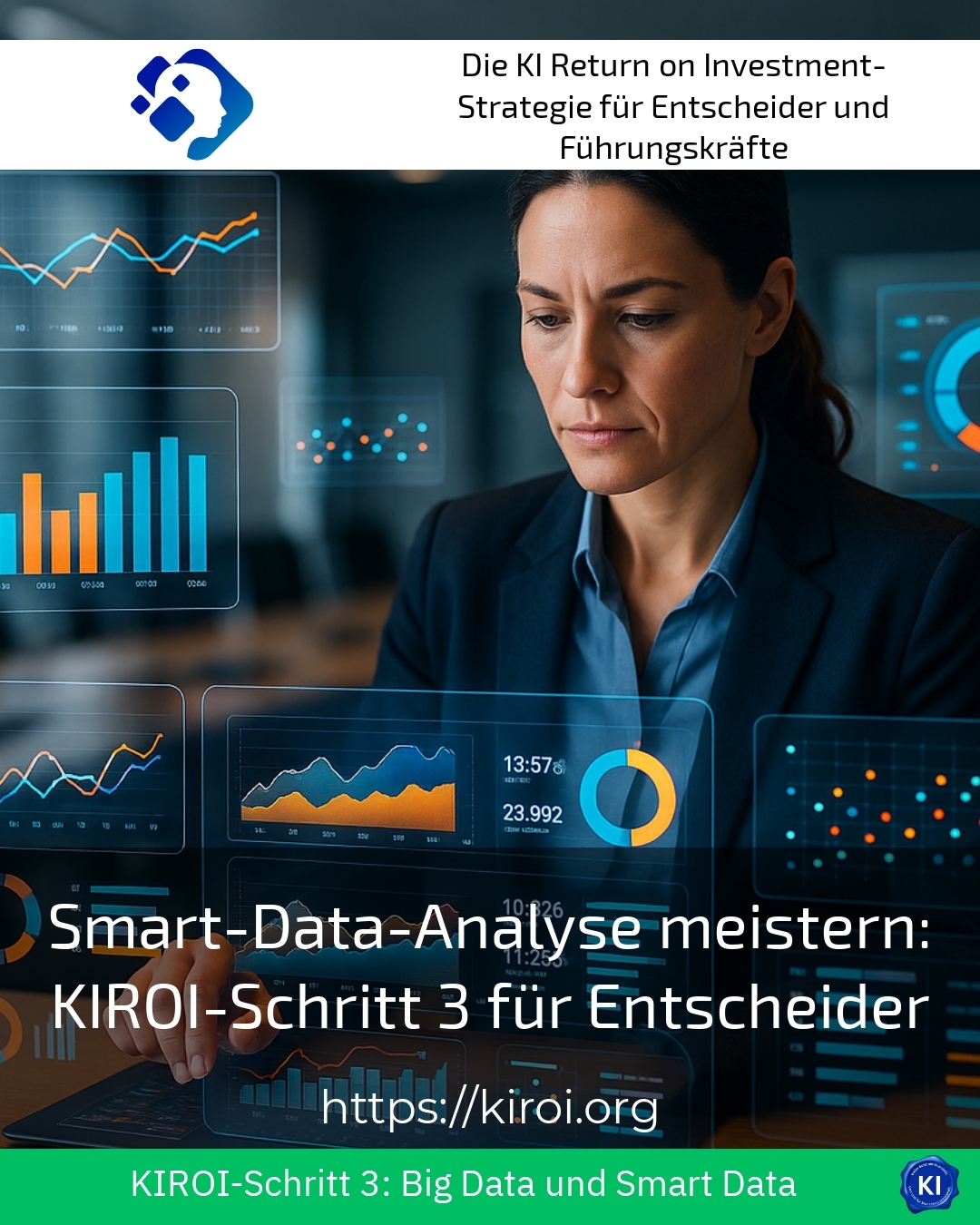
Many decision-makers report facing a flood of data that initially appears to be of little use. However, this is precisely where the Smart Data analysis approach comes in – not only collecting large volumes of data but also filtering and enriching it in a targeted way. Smart Data analysis is not a magic bullet, but a method that accompanies and supports managers in companies in making more informed, data-driven decisions. Clients often report that thanks to this method, they gain better insights and can focus on relevant information.
Smart Data Analysis: From Data Volume to Decision Quality
The journey from a massive flood of data to valuable Smart Data is a challenge that many companies are familiar with. It's about recognising valuable signals within numerous data points to draw clear and viable conclusions. Through intelligent filtering and algorithms, Big Data is ultimately transformed into Smart Data. This strengthens the basis for decision-making without overwhelming employees with irrelevant information.
An example from industry shows how smart data analysis is used in manufacturing and production: sensors collect vast amounts of machine data, but only targeted analysis allows for the early detection of maintenance needs and a significant reduction in downtime. In the financial sector, smart data analysis helps to identify transaction patterns that could indicate fraudulent attempts. In retail, in turn, companies benefit from analysing purchasing behaviour more precisely in order to tailor offers more effectively and manage inventory more efficiently.
The Practice: How KIROI Supports Smart Data Analysis
Guidance from experienced coaching, such as that offered by KIROI, helps decision-makers to better manage the complexity of smart data analysis. The aim is not to understand all the data oneself, but to provide the right impetus for using this data and to implement projects with a clear focus. Questions often arise such as: How do I filter relevant information? Or: How do I structure the data analysis so that it remains manageable in everyday life?
KIROI BEST PRACTICE at company XYZ (name changed due to NDA contract) The company faced the challenge of extracting valuable insights from large volumes of customer data for marketing campaigns. Through targeted smart data analysis, it was possible to adjust the campaign strategy to reduce wastage and significantly refine customer targeting. This led to a measurable increase in customer satisfaction and optimised marketing expenditure.
Another example can be found in the healthcare sector. There, those responsible use smart data analytics to better manage patient flows and anticipate bottlenecks. Support in implementing the data strategy helps to consistently observe data protection and, at the same time, create efficiencies. In the logistics industry, for instance, decision-makers use smart data to identify real-time trends in the supply chain, allowing for quick reactions to disruptions.
Common challenges and how support can help
Many managers report that there is often a lack of suitable methods to manage the data flood. Data quality, appropriate software and skills development are central aspects. Support from experienced coaches like KIROI offers valuable assistance here. They provide impulses for the right prioritisation and help to find pragmatic and comprehensible solutions that fit the respective company situation.
In the automotive industry, for example, complex challenges often arise in the integration of smart data into development processes. With professional support, new approaches can be introduced step by step without overwhelming daily operations. In the energy and utility sector, smart data analysis helps to better understand consumption patterns and thus make management more efficient.
My analysis
Smart data analysis helps decision-makers extract truly relevant information from large datasets for strategic and operational decisions. Support and assistance from experienced partners like KIROI are a valuable component in making the most of data potential. Decision-makers should not expect quick fixes, but rather a sustainable partner who provides impetus, maintains an overview, and points out practical implementation routes.
Further links from the text above:
[1] KIROI Step 3: Big Data and Smart Data
[4] Mastering Data Analysis: KIROI Step 3 to Big & Smart Data
[7] Big Data vs. Smart Data: Valuable Insights to Optimise Operations
For more information and if you have any questions, please contact Contact us on or read further blog posts on the topic Artificial Intelligence Blog here.











 Deutsch
  English (UK)