
Why do so many companies drown in their own data floods while others make groundbreaking decisions with the same information?
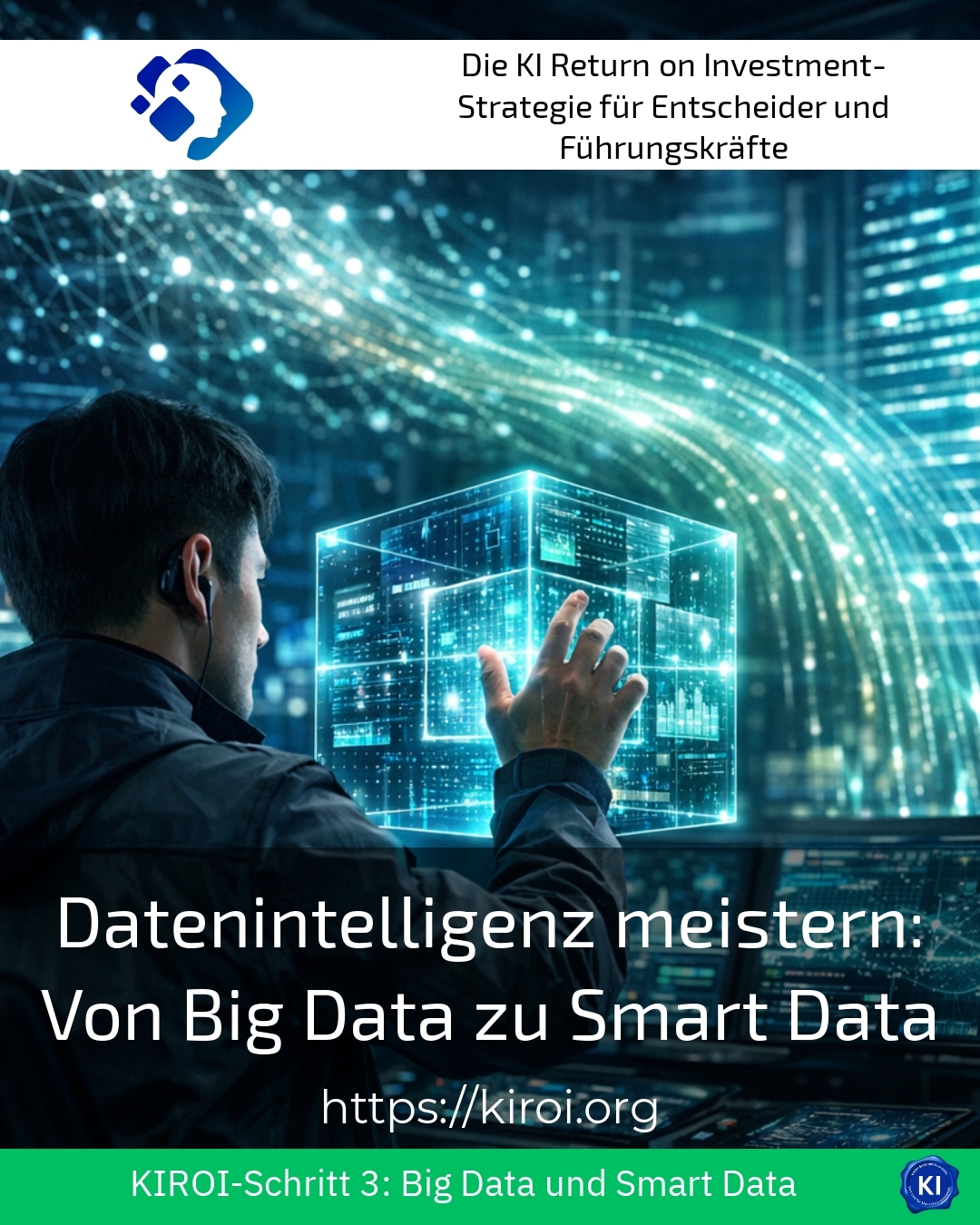
This question concerns executives, analysts, and strategy managers alike. The crucial difference lies not in the quantity of the collected information. Rather, it lies in the ability to extract real insights from raw data sets. This is exactly where the concept of Data intelligence Companies that master this transition from big data to smart data gain significant competitive advantages. They recognize patterns that others miss. They make decisions based on solid foundations. And they react faster to changes in the market because they use their information intelligently.
The evolution of data usage in modern organisations
In recent years, the way organizations handle information has fundamentally changed. In the past, it was sufficient to collect data and store it in large storage systems. Today, that is no longer enough. The sheer volume of available information completely overwhelms traditional analytical methods. Healthcare companies store, for example, patient data, laboratory results, and imaging material in enormous quantities. A medium-sized hospital generates several terabytes of new data every day. However, this information often resides in different systems. They are not interconnected. And it is rarely systematically evaluated.
The same is true in retail, where cash registers, online stores, and customer cards continuously generate transaction data. A large retail company processes millions of data points in a single shopping day. The challenge lies in extracting relevant insights from these streams of information. Which products are purchased together? How does purchasing behavior change under certain weather conditions? Which customers are likely to switch to competitors? These questions can only be answered if companies intelligently process their data.
The financial sector is also facing similar challenges, as banks and insurance companies possess extensive customer data. They know the details of account movements, credit trends, and claims reports. However, integrating this information into a coherent overall picture is rarely achieved immediately. This clearly shows that the transformation of big data into smart data is a complex process that requires strategic planning and technical expertise.
Data intelligence as a strategic success factor
The term Data intelligence Describes the ability to derive actionable insights from available information. It is not about collecting as many data points as possible. Rather, the quality of the analysis is paramount. Intelligent data utilization means asking the right questions and using appropriate methods to answer them. In the logistics industry, for example, advanced companies use sensor data from vehicles and warehouses. They combine this information with weather data, traffic forecasts, and order entries. The result is precise predictions for optimal delivery routes and inventory levels.
The energy industry offers further illustrative examples of intelligent data utilization. Electricity grid operators analyze consumption patterns in real time. They predict the energy demand for the coming hours and days. These predictions enable more efficient control of power plants and storage systems. Renewable energy sources such as wind and solar can be better integrated into the overall system. Supply security increases while costs simultaneously decrease.
Best practice with a AIROI customer
A leading company in the manufacturing industry faced the challenge of reducing unplanned machine downtime. The existing production facilities continuously generated data about temperatures, vibrations, and energy consumption. Although this information was stored, it was not systematically analyzed. As part of a transruptive coaching project, we jointly developed a strategy for intelligent data utilization. First, we identified the relevant data points for predicting maintenance needs. Subsequently, we implemented algorithms that recognize patterns in the sensor data. These patterns indicate the onset of wear and tear long before an actual failure occurs. The results significantly exceeded expectations. Unplanned downtime was reduced by more than forty percent within the first year. At the same time, maintenance costs decreased because components were no longer replaced proactively according to a fixed schedule. Instead, the replacement was carried out based on the analysis results as needed. Clients often report that this approach has also improved collaboration between production and maintenance. The data-based communication replaces subjective assessments and creates a common basis for decisions.
From data collection to data intelligence in everyday life
The transition from mere data collection to real data intelligence requires a cultural change in organizations. Leaders must understand which questions can be answered with data. Employees need training in using analytical tools [1]. And the technical infrastructure must meet the requirements of modern analysis methods. This is particularly evident in the field of telecommunications. Mobile network operators have detailed information about their customers’ usage patterns. They know when and where people are calling. They know the volume of data that individual users consume. This information enables personalized tariff recommendations and targeted marketing measures.
The tourism industry uses similar approaches to optimize its offerings. Hotels systematically analyze booking patterns and guest reviews. They detect seasonal fluctuations and adapt their prices dynamically. Travel agencies combine demographic data with travel histories. This results in customized vacation recommendations that match individual preferences. Customer satisfaction increases measurably as offerings become more relevant.
In the public sector too, intelligent data usage is gaining increasing importance. City administrations analyze traffic flows to optimize traffic light timing. They evaluate reports from citizen portals to more quickly identify problem areas in the city. Educational institutions use data to detect learning difficulties in students. These examples illustrate the wide range of applications of intelligent data usage.
Technological foundations for Smart Data
The technical prerequisites for intelligent data utilization have improved significantly in recent years. Cloud platforms enable the storage and processing of large amounts of data without high initial investment in proprietary hardware [2]. Algorithms from the field of machine learning automatically recognize complex patterns in data sets. Visualization tools make analysis results understandable even for non-experts. The pharmaceutical industry benefits from these developments in particular. In drug development, research teams analyze extensive study data. They look for correlations between active ingredient properties and therapeutic results. Machine learning algorithms significantly accelerate the identification of promising candidates.
In the agricultural sector, satellite data and soil sensors enable precise management of agricultural land. Farmers receive recommendations for optimal irrigation and fertilization based on current measurement data. Harvest yields increase while resource consumption simultaneously decreases. This form of data-driven agriculture is spreading worldwide at increasing speed. Media companies rely on intelligent data analysis to personalize their content. Streaming services recommend movies and series based on previous user behavior. News portals adapt their homepages to the interests of individual readers. The dwell time on the platforms increases measurably through these personalized experiences.
Challenges in the implementation of data intelligence
The introduction of intelligent data utilization is not a self-evident process. Many companies significantly underestimate the necessary effort. Data quality is often the biggest obstacle. Incomplete or erroneous data sets lead to incorrect conclusions. Cleaning and standardizing existing data costs time and resources. In the insurance industry, these challenges are particularly evident. Historical claims data often comes in different formats. Old files were not always fully digitized. Integrating different data sources requires considerable effort.
Data protection requirements represent another important hurdle [3]. Personal information may only be processed under certain conditions. Companies must establish and document transparent processes. The balance between data use and privacy requires careful considerations. In healthcare, these requirements are particularly strict because medical data are considered particularly sensitive.
Best practice with a AIROI customer
A medium-sized retail company wanted to optimize its inventory management and approached us with this specific request. The previous planning was based on experience and seasonal generalities. The transruptions coaching accompanied the development of a data-based forecasting system over several months. First, we analyzed the existing sales data from previous years together with the internal team. We identified factors that influence purchasing behavior, including weather conditions, holidays, and local events. External data sources were systematically integrated to improve the prediction quality. The new system provides weekly ordering recommendations for each branch. Capital tied up in inventory decreased significantly because overstocking was avoided. At the same time, the number of sales situations where requested products were unavailable decreased. Customer satisfaction increased measurably, and employees in the purchasing department report a significant reduction in daily workload. Instead of manually reviewing inventory lists on a daily basis, they are now focusing on strategic tasks and supplier relationships. This transformation was only possible because all parties understood the benefits of intelligent data usage and actively supported the change process.
Human factors and organizational development
Technology alone does not guarantee success in the transformation to a data-driven organization. The human factor plays a crucial role. Employees must be willing to question established decision-making processes. They must learn to integrate data-based insights into their daily work. This change requires guidance and support from experienced leaders. In human resources, the opportunities and risks of data-driven decisions are particularly evident. Recruiting departments analyze application documents with algorithmic support. They identify promising candidates faster than with traditional methods. At the same time, there is the risk that unconscious biases will be reproduced in the algorithms.
The automotive industry is undergoing a profound transformation that would be difficult to manage without intelligent data utilization. Manufacturers collect vehicle data to develop autonomous driving functions. They analyze accident reports to improve safety systems. And they use customer feedback to optimize infotainment offerings. These diverse data sources require a coordinated strategy at the corporate level.
Sport and entertainment offer further interesting applications for data intelligence. Professional sports clubs systematically analyze the performance data of their athletes. They optimize training plans and recovery phases based on scientific findings. Organizers of major events predict visitor flows and plan security measures accordingly. The spectator experience improves through shorter waiting times and better organization.
My AIROI Analysis
Transforming Big Data into Smart Data represents one of the most important strategic challenges of our time for many organizations. My experience from numerous consulting projects shows that the technical aspect is often over-evaluated while organizational and cultural factors are underestimated. Companies invest significant sums in powerful IT systems, but neglect the training of their employees and the adaptation of their decision-making processes.
Data intelligence is not created by buying expensive software; it is created by systematically developing competencies at all levels of an organization. Leaders must understand which questions can be meaningfully answered with data and where the limits lie. Expert professionals need tools that make it easier for them to access relevant analyses without having to become data specialists themselves. And data analysts need a deep understanding of business processes to deliver truly relevant insights.
The examples from various industries illustrate the enormous potential of intelligent data utilization. At the same time, they show that success is not a given. Projects often fail due to poor data quality, unclear objectives, or a lack of commitment from the involved parties. Professional guidance can significantly reduce these risks and pave the way to sustainable results. Transruptions coaching supports organizations in identifying their individual challenges and developing tailored solutions. The focus is not on short-term technical solutions but on building lasting skills and a data-driven corporate culture.
Further links from the text above:
[1] Bitkom – Digital Competencies and Further Education
[2] Gartner – Cloud Computing Insights
[3] Federal Data Protection Commissioner – Information on the GDPR
For more information and if you have any questions, please contact Contact us or read more blog posts on the topic Artificial intelligence here.










 Deutsch
 English (UK)