
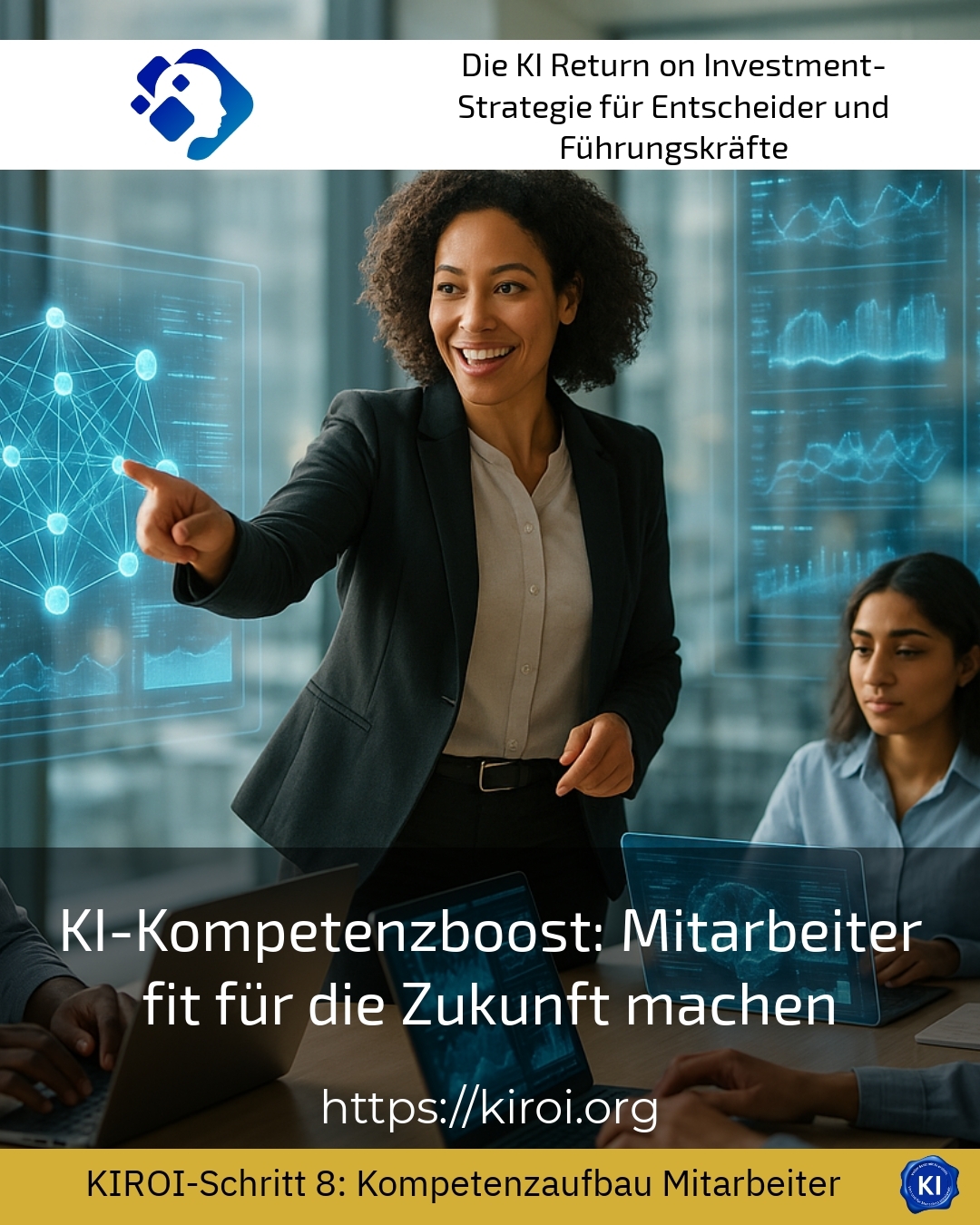
The digital transformation is changing workplaces at a breathtaking pace. Many professionals are wondering if their skills are still sufficient. At the same time, entirely new opportunities are opening up. AI Skills Boost: Getting Employees Ready for the Future This is therefore high on the agenda for many companies. Clients often report uncertainties when dealing with new technologies. These concerns are understandable and widespread. However, those who act early can turn this challenge into a real opportunity.
Why an AI skills boost is essential today
The world of work is undergoing a fundamental transformation. Routine tasks are increasingly being automated. Creative and strategic skills are gaining importance. Companies face the challenge of preparing their teams for this new reality. This is not just about technical knowledge. Rather, the development of a new mindset is paramount.
Many organisations underestimate the effort involved in this transformation. They invest in technology but forget about the people. This often leads to frustration and resistance. Employees feel overwhelmed or left behind. This is precisely where professional support comes in. transruptions-coaching helps to manage these changes systematically.
A medium-sized manufacturing company recently faced this exact challenge. The introduction of intelligent manufacturing systems unsettled the workforce. Experienced machine operators feared becoming redundant. Through targeted further training, they developed into valuable process experts. They suddenly understood how to use the new systems optimally. Their years of experience became an indispensable resource.
Best practice with a AIROI customer
A logistics company with multiple sites was struggling with the integration of automated warehouse management systems. Employees had decades of experience with manual processes, and this expertise suddenly seemed to be of no value. As part of a comprehensive AIROI project, we developed a bespoke qualification programme. First, we thoroughly analysed the existing competencies of all involved. We then identified the interfaces between human experience and machine efficiency. Warehouse staff learned not to view the automated systems as a replacement. Instead, they recognised their new role as process optimisers and quality controllers. Within six months, team satisfaction increased significantly, and the error rate dropped by more than thirty percent. Particularly noteworthy was the employees' initiative. They independently began developing suggestions for improving the systems, which led to further optimisation of the entire process chain.
Understanding the psychological dimension of change
Technological changes trigger anxieties in many people. These reactions are entirely normal and human. They stem from the natural need for security and control. Leaders must take this emotional component seriously. Only then can sustainable transformation succeed.
Clients often report feelings of being overwhelmed. They don't know where to start. The abundance of new possibilities is genuinely crushing them. This requires a structured approach. Small steps and quick successes build confidence.
An insurance company experienced this dynamic very clearly. The introduction of intelligent claims processing initially caused massive resistance. Experienced claims handlers felt their competence was being attacked. Through accompanying workshops, this perception fundamentally changed. Employees recognised the added value for their daily work.
A large retail chain had similar experiences. Intelligent inventory management systems were intended to automate reordering. Store managers feared a loss of control over their product ranges. After intensive training, they understood the systems as valuable decision-making aids. Their local market knowledge remained indispensable for special promotions and regional particularities.
A third example highlights the importance of communication. A hospital introduced intelligent diagnostic support in radiology. Initially, doctors were sceptical about the new systems, fearing for their autonomy and reputation. Only an open dialogue about the limitations and possibilities created acceptance.
AI skills boost through targeted learning formats
Not every learning format is equally suitable for everyone. The variety of offerings can quickly become overwhelming. This is why an individual analysis of learning needs is necessary. Some people learn best through hands-on experience. Others prefer theoretical foundations before application.
A financial service provider developed a multi-stage qualification concept. Employees could choose between different learning paths. Online modules offered flexible knowledge transfer. Face-to-face workshops enabled intensive exchange and practical exercises. Mentoring programmes ensured the transfer to everyday work.
An auditing firm went down a similar path. It established internal centres of excellence for various fields of application. Experienced colleagues took on the role of internal coaches. This peer-learning approach proved to be particularly effective. The inhibition threshold for asking questions dropped significantly.
A major energy supplier also opted for innovative learning formats. It developed gamified learning modules for its technical employees. Playful elements noticeably increased motivation. Learning outcomes improved considerably compared to traditional training.
Leaders as Pioneers of Transformation
The role of leaders cannot be overstated. They significantly shape company culture through their behaviour. If they are open to new things themselves, then teams will follow. Skepticism at the top, on the other hand, poisons any change initiative.
transruptions-Coaching supports leaders through this demanding process. It involves reflecting on one's own stance. Unconscious resistances must be recognised and addressed. Only then can leaders authentically champion change.
An automotive supplier experienced this dynamic very clearly. Middle management initially blocked the introduction of intelligent quality control. The managers feared a loss of importance for their departments. Intensive coaching conversations helped to address these fears. Ultimately, these managers themselves became the biggest advocates.
Best practice with a AIROI customer
An international pharmaceutical company faced a unique challenge. The research department was tasked with implementing intelligent systems for drug development. Initially, the highly qualified scientists were very reserved. They felt their expertise was being devalued by the new technologies. As part of our AIROI support, we developed a special approach. We organised workshops where the researchers could define application cases themselves. This fundamentally shifted their perspective. The scientists recognised the systems as tools for their own work. They began to develop creative uses that we hadn't initially considered. Acceptance increased dramatically within weeks. Today, the department is utilising the new possibilities extensively and successfully. The collaboration between human creativity and machine analysis has led to remarkable research findings. Several patent applications can be directly attributed to this new way of working.
Making employees fit for the future – concrete recommendations for action
The path to a sustainable workforce requires a strategic approach. Impulsive individual measures usually fizzle out ineffectively. Instead, a well-thought-out overall plan is needed. This plan should consider and align various dimensions.
To begin, an honest assessment of existing competencies is recommended. What skills are already present? Where are the biggest gaps? This analysis should be participative. Employees themselves can contribute valuable insights.
A telecommunications company implemented this recommendation very consistently. It introduced comprehensive competency profiles for all employees. These profiles formed the basis for individual development plans. The employees greatly appreciated this personal attention.
An insurance group went one step further. It developed a company-wide competency model for the digital future. This model defined clear development stages for different functional areas. Employees could track and manage their own progress.
A large retail group also invested in systematic competence development. It established its own academy for digital qualification. This academy offered programmes for all hierarchical levels. From apprentices to management, everyone found suitable offers.
The importance of a learning-conducive corporate culture
Technical training alone is not enough. It must be embedded in a culture of continuous learning. This culture does not arise by itself. It must be consciously designed and nurtured.
Mistakes must be understood as learning opportunities. The willingness to experiment needs protected spaces. Curiosity should be rewarded rather than ridiculed. These principles sound simple, but require consistent action.
A mechanical engineering company established so-called innovation labs. In these labs, employees could safely try out new technologies. Errors had no negative consequences here. This freedom unleashed astonishing creative energies.
A bank introduced regular learning circles. In these circles, employees exchanged experiences. They openly shared successes and failures alike. This exchange significantly accelerated the organisational learning process.
A chemical company integrated learning time firmly into the daily workflow. Each employee received two hours per week for further training. This time could be freely used for self-chosen topics. Acceptance of this measure was very high from the outset.
My AIROI Analysis
Qualifying employees for the digital future is not a one-off measure. It requires a fundamental shift in corporate culture and leadership philosophy. My experiences from numerous AIROI projects clearly show that technical training alone is not enough. The human factor remains crucial for the success of any transformation.
It seems particularly important to me to honestly address fears and resistances. These emotions are not obstacles to be overcome. Rather, they are valuable signals that point to unresolved issues. Those who take them seriously gain deeper insights into the organisation.
The practical examples described demonstrate that different paths can lead to the goal [1]. There is no one-size-fits-all solution for all companies. Instead, tailored concepts are needed that fit the respective culture. These concepts are best developed in close cooperation with those affected.
The AI skills boost is most successful when it's understood as a collaborative project. Employees shouldn't just be recipients of training measures. They can and should become active drivers of the transformation. This involvement increases acceptance and improves results [2]. transruptions Coaching supports companies in establishing precisely this culture of joint development.
Further links from the text above:
[2] World Economic Forum – The Future of Jobs Report
For more information and if you have any questions, please contact Contact us or read more blog posts on the topic Artificial intelligence here.






 Deutsch
  English (UK)