
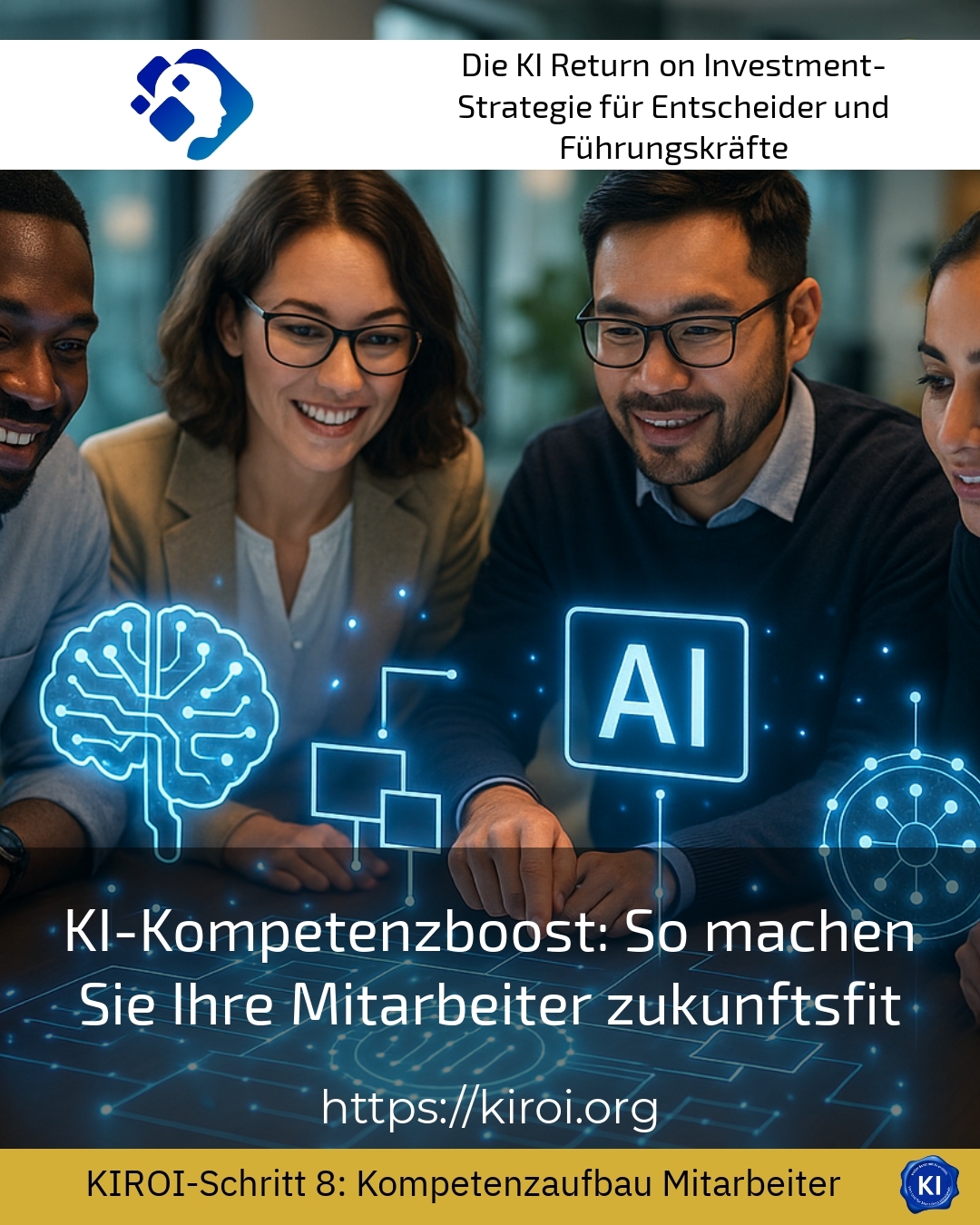
Imagine your workforce using intelligent technologies as naturally as they use email or spreadsheets today. The AI Skills Boost opens up entirely new possibilities for companies. This isn't about replacing human labour, but rather about meaningfully complementing existing skills. Many leaders are currently wondering how they can best prepare their teams for this transformation. The answer lies in a systematic approach that imparts both technical understanding and practical application competence. In the following sections, you will learn which concrete steps can lead to success.
Why the AI skills boost is becoming crucial now
The world of work is changing at a breathtaking pace. Companies of all sizes recognise the enormous potential of intelligent systems. At the same time, there is often a shortage of qualified specialists with the necessary knowledge. This gap can lead to significant competitive disadvantages. Therefore, forward-thinking organisations are investing specifically in the further development of their existing teams.
A medium-sized engineering company faced the challenge of optimising its production processes. Employees in quality management initially received basic training in automated analysis methods. Within a few months, they were able to independently reduce error rates and significantly lower scrap rates. Another example can be found in the area of logistics. There, a distribution centre used intelligent forecasting systems for inventory planning. Warehouse employees learned to interpret these predictions and make decisions based on them. The added value is also clearly evident in customer service. A telecommunications provider trained its service employees in handling chatbot support. Processing times decreased, while customer satisfaction simultaneously increased.
Understanding the psychological dimension of change
Changes initially cause uncertainty or even anxiety for many people. Leaders should take these natural reactions seriously and address them actively. Transparent communication about goals and expected impacts builds trust. Employees want to know what role they will play in the future. They need the assurance that their experience and expertise will continue to be valued.
A pharmaceutical company accompanied the introduction of intelligent documentation systems with regular information events. The workforce was able to ask questions and voice concerns. This open atmosphere significantly promoted acceptance. In an insurance company, so-called change agents were appointed from within the team. These individuals acted as multipliers and points of contact for their colleagues. A traditional trading company also relied on participative approaches. Employees were able to contribute their own ideas for application areas. This involvement significantly increased commitment and identification with the transformation process.
Best practice with a AIROI customer
An internationally active manufacturing company approached us because its workforce had significant reservations about the planned digitalisation initiative. Employees feared being replaced by automated systems. Together, we developed a comprehensive support programme that combined technical training with psychological support. Initially, we conducted workshops in which the concrete benefits for daily work were made tangible. Participants could try out for themselves how intelligent assistance systems can take over monotonous routine tasks. It became clear that this created more time for more demanding activities. The transruption coaching supported managers in communicating empathetically with their teams. We developed individual conversation guides and practised challenging situations in role-playing exercises. After six months, the initial scepticism had transformed into constructive curiosity. The staff turnover rate even fell below the level before the project began. Clients often report similar positive developments when they appropriately consider the human side of change.
Practical steps for a sustainable AI skills boost
Successful employee qualification requires a well-thought-out strategy. First, companies should analyse their workforce's current skill levels. Based on this, customised learning paths can be developed. These should take into account varying prior knowledge and learning speeds. In contrast, a one-size-fits-all programme for all employees is rarely effective.
An energy supplier launched an anonymous survey regarding existing digital skills. The results revealed significant discrepancies between various departments. Based on this, tailored training programmes were developed. In the area of network monitoring, the focus was on the interpretation of sensor data. Colleagues from billing, on the other hand, received training on automated verification processes. Customer service representatives also benefited from specific training on the use of intelligent conversation support.
Designing learning formats for diverse needs
People learn best in different ways. Some prefer classic in-person training with personal interaction. Others value the flexibility of online courses, which they can complete at their own pace. Still others benefit most from learning by doing directly in the workplace. A smart strategy combines different formats into a coherent overall concept.
An auditing firm achieved impressive results using a blended learning approach. The theoretical foundations were taught in short video units. Subsequently, participants deepened their knowledge in interactive in-person workshops. There, they worked on realistic case studies from everyday auditing. A healthcare provider chose a different path and established peer-learning groups. More experienced employees passed on their knowledge to colleagues. This method also fostered team cohesion. In the automotive supply sector, so-called learning islands were created directly on the production line. There, employees could test new applications under realistic conditions.
Best practice with a AIROI customer
A financial services provider with several hundred employees sought support in designing its training programme. The challenge was to accommodate highly diverse target groups. Together, we developed a modular system with various entry points and opportunities for deeper learning. The foundational modules conveyed a common understanding of technological possibilities and limitations. Building on this, employees could choose specialised modules according to their areas of activity. A unique aspect of this approach was the integration of reflection phases between learning units. During these phases, participants applied what they had learned practically and gained initial experience. Subsequently, they exchanged experiences regarding successes and difficulties in moderated sessions. The "transruption coaching" specifically supported managers in guiding their teams through this process. The impulses from the coaching sessions helped them provide individual support. Upon completion of the programme, the company had a broad base of qualified specialists with practical application experience.
Leaders as key figures of transformation
The success of qualification initiatives depends crucially on the attitude of leadership [1]. They shape the learning culture in their areas and send important signals. If superiors themselves show interest and commitment, it has a motivating effect on their teams. Conversely, skeptical or uninterested leaders can undermine even the best programmes.
In a media company, the managing directors actively participated in the training sessions. This gesture was perceived by the workforce as a sign of genuine appreciation. A chemical company established special leadership modules that took place before the employee training sessions. This enabled the managers to act as competent points of contact. A construction company also invested specifically in the qualification of its project leaders. They subsequently cascaded their knowledge down to their teams.
Anchoring the AI competence boost sustainably
One-off training sessions are not sufficient to build lasting competencies. Knowledge that is not regularly applied is quickly forgotten. Therefore, companies need structures that promote and support continuous learning. This includes regular refreshers as well as opportunities for informal exchange.
A major bank established internal Communities of Practice where interested parties regularly exchange ideas [2]. These groups independently organised lunch-and-learn sessions on current developments. A technology company integrated learning time firmly into its workflows. One hour was allocated for further training activities every Friday afternoon. A food manufacturer also found a creative approach and established an internal mentoring programme. Experienced users guided newcomers over several months.
Measurable successes and realistic expectations
The effectiveness of qualification measures should be regularly reviewed. It is important to define and collect appropriate key figures for this. These can be both quantitative and qualitative in nature. A realistic assessment of what is achievable within which timeframes is important.
A logistics company tracked the development of process efficiency in trained areas. The results showed significant improvements in various key figures after a few months. A hotel chain regularly collected employee satisfaction with technical support systems. The increasing values demonstrated growing acceptance and competence. A mechanical engineering company also used systematic surveys for self-assessment of learned skills.
Best practice with a AIROI customer
A medium-sized industrial company approached us with the request to better assess the effects of its previous qualification efforts. The management had already made significant investments but was unsure about the actual benefits. Together, we developed a multidimensional evaluation concept that took various perspectives into account. On an individual level, we captured the competence development of individual employees through self-assessments and peer reviews. On a process level, we analysed changes in lead times, error rates, and similar key figures. On an organisational level, we examined innovation capabilities and the overall learning climate. The transruption coaching supported the management in interpreting and communicating the results. The data revealed a nuanced picture with strengths and areas for development. On this basis, the company was able to strategically adjust its approach and deploy resources more efficiently. The transparent presentation of successes also had a motivating effect on the workforce and strengthened trust in the transformation strategy.
My AIROI Analysis
The systematic development of competencies in dealing with intelligent technologies presents a central challenge for companies across all sectors. My experience from numerous consulting projects shows that success depends on several factors. Firstly, organisations need a clear understanding of their current situation and their strategic goals. Without this orientation, training measures often remain ineffective or do not meet actual needs.
Secondly, the involvement of employees proves to be crucial for acceptance and engagement. People who understand the purpose of changes and can help shape them actively support them. Thirdly, companies must not underestimate the emotional dimension of change. Fears and uncertainties are human and require empathetic support. Transruption coaching can provide valuable impetus here and support leaders in their role.
Fourthly, it repeatedly becomes clear that sustainable competence development takes time and requires continuous effort. Quick fixes or one-off measures rarely lead to lasting results. Instead, I recommend a long-term approach with regular learning loops and reflection phases. Fifthly, the role model function of managers cannot be overestimated. Their attitude shapes the learning culture and significantly influences how employees adopt new technologies. Overall, the AI Skills Boost enormous potential to make companies future-proof and open up new development opportunities for employees [3].
Further links from the text above:
[1] Harvard Business Review – Leadership
[2] McKinsey – People & Organisational Performance Insights
[3] World Economic Forum – Future of Jobs Report
For more information and if you have any questions, please contact Contact us or read more blog posts on the topic Artificial intelligence here.






 Deutsch
  English (UK)